
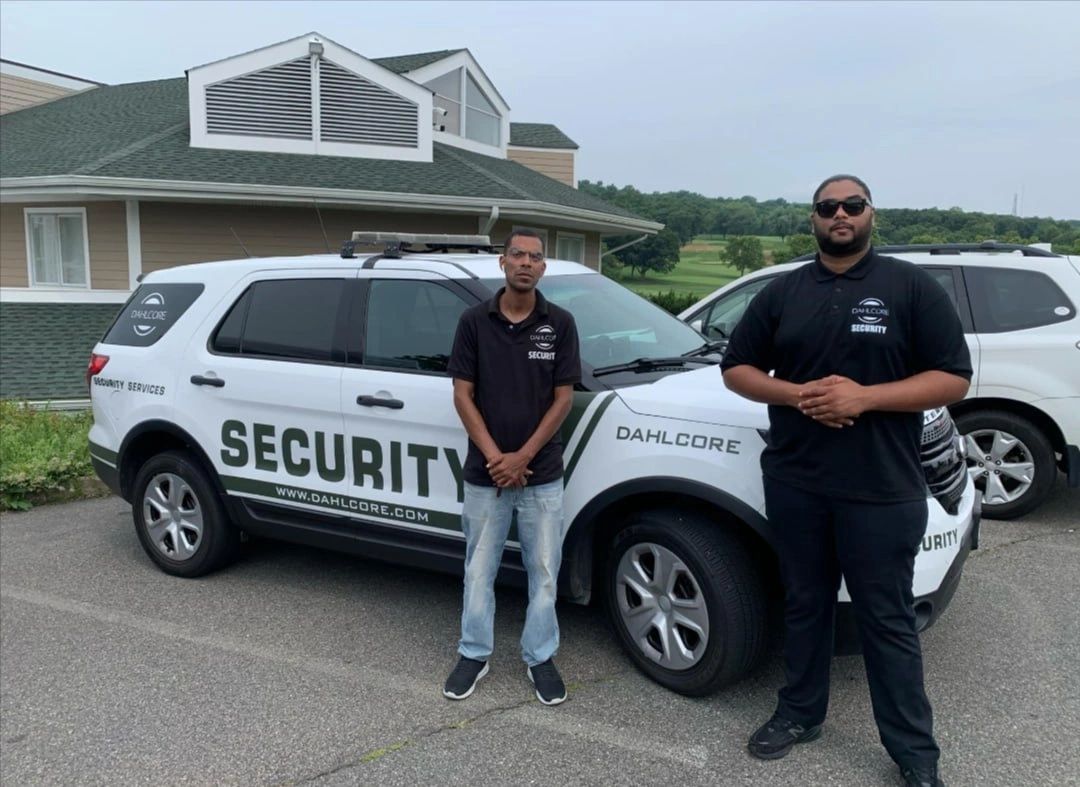
Most Bronx buildings do not have a lobby. They have a vestibule with a buzzer, a courtyard, a roof door that should be alarmed and often is not, a cellar, a compactor room, a fire escape that comes down to the yard, a vacant unit being renovated on the third floor, and a super who lives in another building and leaves at five. The owner has fourteen of them, between Tremont and Kingsbridge, and no one on site after dark in any of them. That is what property security in the Bronx is: not a desk, but a presence in buildings that were never built to have one. Dahlcore Security Guard Services supplies property officers for that stock — evening and overnight posts in a single building, and clustered rounds across an owner’s portfolio — who walk the building the way an owner would if they could be there, observe and report what they find, keep the vestibule and the roof and the cellar what they should be, and give residents a face they know. We work with whatever intercom and cameras the building already has and install nothing. Officers are unarmed by default. We are a licensed New York security guard agency; the company is veteran-owned, was founded in 2018, and is led by Ian Dahlberg, who brings more than 23 years of security experience. The Bronx is served from the Staten Island headquarters and the Manhattan office.
Twelve Things an Officer Looks At in a Bronx Walk-Up
A round of a six-storey building without a desk, on the interval the owner’s post order sets. Each is observed and reported — to the owner, the super and, where the plan calls for it, 911. None is repaired, tested or maintained by the officer; that is the super’s and the contractor’s work.
One officer, fourteen buildings
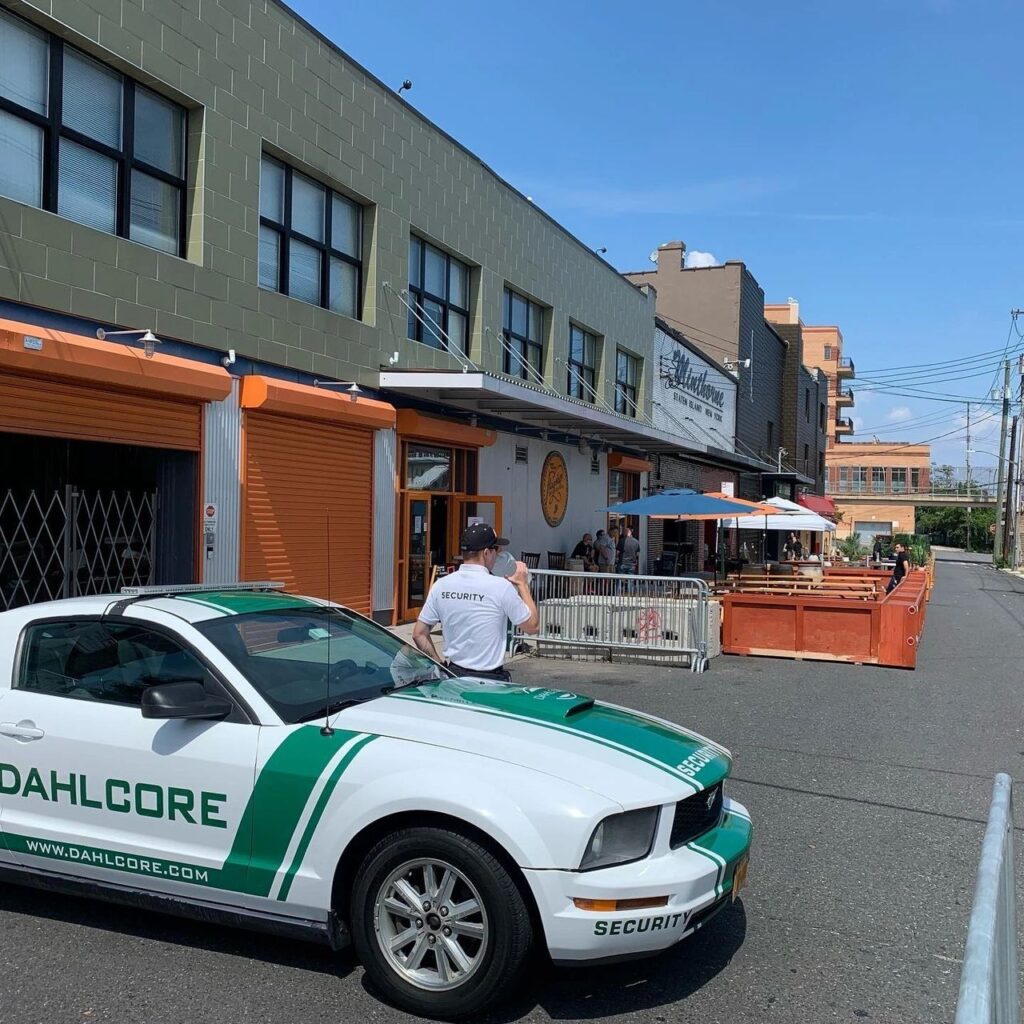
A Bronx owner with fourteen walk-ups does not have fourteen posts to fill; they have one problem — nobody in any of the buildings after the super goes home — and an officer standing in one vestibule solves a fourteenth of it. So the post is built as a round: a cluster of buildings within walking distance, a route through each on an interval the owner sets, a log entry per building with the time and what was found, and GPS and geofenced verification that puts the officer inside each one when the log says so. The owner reads it the next morning in the reporting portal: which roof door was open, which vacant unit had its lock changed, which courtyard had people in it at midnight, which resident said the vestibule light has been out for a week. Over a month the log becomes something the owner has never had — a record of what actually happens in their buildings at night — and the round changes with it: more time at the building where things are happening, less at the one that is quiet. Where one building needs a standing post, it gets one, and the round covers the rest.
Four Bronx Properties Without a Desk
The stock that property security in the Bronx is mostly about, and what the officer is there to do at each.
Walk-up and six-storey portfolios
The pre-war apartment buildings of Tremont, Mount Hope, Fordham, Kingsbridge, Mott Haven and the Grand Concourse, owned by the dozen and the score by private landlords and small management companies, with a vestibule, a courtyard, a roof and a cellar, and no one on site after five. Evening and overnight rounds across a cluster, a standing post where one building needs it, and a log the owner reads every morning.
Vacant and under-renovation buildings
The gut rehabs and vacant buildings between one use and the next — sidewalk shed up, contractor on site by day, empty by night, copper in the walls and nobody’s name on the door. A watch post that keeps the building empty of everyone who is not the contractor: entrances checked, the shed secured, anyone found inside reported to the owner and, where the plan says, 911. Where the building’s sprinkler is out or hot work is under way, that is a separate fire watch, and we supply it.
Storefront strips and parking lots
The commercial strips of Fordham Road, Third Avenue, Westchester Avenue and the Hub after the shutters come down, and the lots behind them — a property owner’s post that covers the storefronts, the rear doors, the lot and the loading area overnight, reports the gate left open and the shutter that will not lock, and is the reason a strip of twelve stores has one record of its night rather than none.
The new building in lease-up
The new affordable and market-rate buildings opening across the South and Central Bronx, in the months between the first residents moving in and the building having its own staff and routines: a lobby post before there is a lobby desk, the package room, the contractors still finishing upper floors, and residents who have not yet learned who belongs. A post that hands the building over to its permanent staff with habits, a log and a resident population that already knows an officer’s name.
The Officer in Your Bronx Buildings
What an owner or a managing agent can ask for before an officer is given the keys to fourteen vestibules.
Registered, trained past the State’s hours, verifiable
Every officer holds the State’s security guard registration under General Business Law Article 7-A with the NY Department of State, Division of Licensing Services, with DCJS-approved training to the State’s 8 / 16 / 8 hours of pre-assignment, on-the-job and annual in-service instruction, and Dahlcore’s own training in de-escalation, resident contact and the A.L.I.V.E. active-shooter programme. Dahlcore is a licensed New York State security guard agency; the licence is checked at dos.ny.gov.
Checked before they hold your keys
A thorough background check before any assignment — a matter of some weight for an officer who will carry the keys to a portfolio — and the keys themselves signed for, logged and returned under the post order. Officers are certified in CPR, AED and First Aid and trained to administer naloxone, because an evening round of a Bronx stairwell is where that has mattered.
Briefed on the buildings and the residents
Before the first round the officer walks each building with the super or the agent: the roof door that sticks, the cellar entrance from the yard, the vacant unit, the residents who work nights, the family on the fourth floor who will want to know who the officer is. Field supervisors check on unannounced visits that the round is being walked as the post order says and that residents know the officer by name.
Insured, logged per building, relieved from a briefed bench
Dahlcore is licensed, insured and bonded, with a certificate of insurance on request naming the owner or the managing agent as required. Each building on the round gets its own log entry, with GPS and geofenced verification behind it, in the reporting portal the owner reads each morning. A named account manager owns the post and adjusts the round as the log shows where the nights are happening; a backup and relief bench briefed on the same buildings covers illness and leave.
The residents are the point, not the problem
An officer walking a Bronx walk-up at eleven at night is walking past the doors of people who live there, and the post only works if those people are glad they came. That is written into the post order: the officer is introduced to residents by the owner or the super before the first round, greets by name within a fortnight, takes the vestibule light and the broken mailbox and the neighbour’s noise as things to pass on rather than things to ignore, and is there for the building’s safety — the roof, the cellar, the stranger in the stairwell — not for the owner’s disputes with the people in it. Officers do not deliver notices, do not photograph residents, do not report who is home, and do not act in any landlord-tenant matter; an owner who wants that is asking for something we do not provide. A tenants’ association that meets the officer usually stops worrying about them within a week, because what the officer actually does is what the association has been asking the owner for: someone in the building at night who cares whether the roof door is shut.

Bronx Property Security FAQ
Answers for Bronx owners, managing agents and supers. For property types, how a property engagement is planned, armed versus unarmed, licensing and co-op boards, see our main Property Security Guards page; for a large complex with its own public-safety department, see Access Control in the Bronx.
We own fourteen walk-ups between Tremont and Kingsbridge. One officer cannot stand in fourteen vestibules — what do you actually do?
Build a round. The buildings are grouped into a cluster the officer can walk, a route through each is set with the super, and the interval is the owner’s to decide — every building once an hour, the busy ones twice. Each building gets its own log entry with the time and what was found, and GPS and geofenced verification puts the officer inside it when the log says so. Where the log shows one building is where the nights are happening, it gets more of the officer’s time or its own standing post, and the round covers the rest.
Our super lives in another building and leaves at five. Who does the officer call at midnight?
Whoever the post order names, in the order it names them — usually the super’s cell for the building, the owner’s or the agent’s night line for anything that needs a decision, and 911 first for anything that is a matter for the police or the fire department. The officer never has to guess whether the open roof door at midnight is worth a call; the post order says what is reported in the morning and what is called in now, and it is written with the owner before the first round.
There are people living in a vacant unit we are renovating. Will the officer get them out?
No, and it is important that you know that before you hire anyone. Removing an occupant from a unit is a legal process the owner runs through the courts, and a security officer who forces it is committing a crime. What the officer does is observe and report — that the unit shows signs of occupation, that the contractor’s lock has been changed, that people were seen entering — to the owner, in writing, with times, and to 911 where the post order and the situation call for it. That record is what the owner’s attorney needs. The officer keeps the building’s other doors what they should be while the process runs.
Packages keep disappearing from our vestibules. Does a property officer stop that?
An officer on a round reduces it and records it; nobody can promise to stop it. On the round the officer notes deliveries left on the floor, forced mailboxes and anyone in the vestibule who should not be there, and the owner learns which buildings and which hours the losses cluster in — which is what tells the owner whether the answer is an officer’s standing post at one building, a different delivery arrangement, or a package room. Loss prevention here is observation and deterrence; the officer does not investigate.
Residents hold parties on the roof in summer. What can the officer do about it?
Keep the roof door what the owner’s rule says it is — closed and alarmed where it is meant to be — and, where residents are on the roof, apply the building’s rule the way the post order describes: a word, a request to come down, a call to the super or the owner’s night line if it continues, and 911 only where the post order or the situation warrants it. The officer does not confront a party; they enforce a house rule the owner set, courteously, and log it. If the roof door itself does not close, that goes in the morning report for the super, not on the officer’s list of things to fix.
We have an HPD inspection coming. Can the officer help us get ready?
Not in the way the question means — the officer has no role in code compliance and does not inspect, test or fix anything. What the owner does have, after a month of rounds, is a log that says when the vestibule light was out, when the roof door was found open, when the compactor room was blocked, and what the super was told — a record of the building’s condition at night that the owner’s own compliance work can draw on. Whether the building passes remains the owner’s responsibility and the super’s work.
Our tenants’ association thinks a guard is there to intimidate them. What do you tell them?
The truth, and we would rather tell it to them directly. The officer is in the building for its safety — the roof, the cellar, the stairwell, the vestibule — and is introduced to residents before the first round by the owner or the super. Officers do not deliver notices, photograph residents, report who is home, or act in any landlord-tenant matter, and the post order says so; an owner who asks for that is asking for something we do not provide. Most associations stop worrying once they have met the officer, because what the officer actually does is what they have been asking for.
Our gut rehab has no sprinkler yet and the crew is welding. Is a property officer enough?
No — that is a fire watch, which is a different post with a different certificate. A property officer keeps the building empty of everyone who is not the contractor, overnight and at weekends; hot work by day and a sprinkler that is not yet in service each raise a requirement under the current NYC Fire Code for FDNY-certified fire guards, which we supply as a separate post through our Bronx fire protection service. The two posts can be run under one account manager, and often are, but they are two posts.
Where in the Bronx the rounds are walked
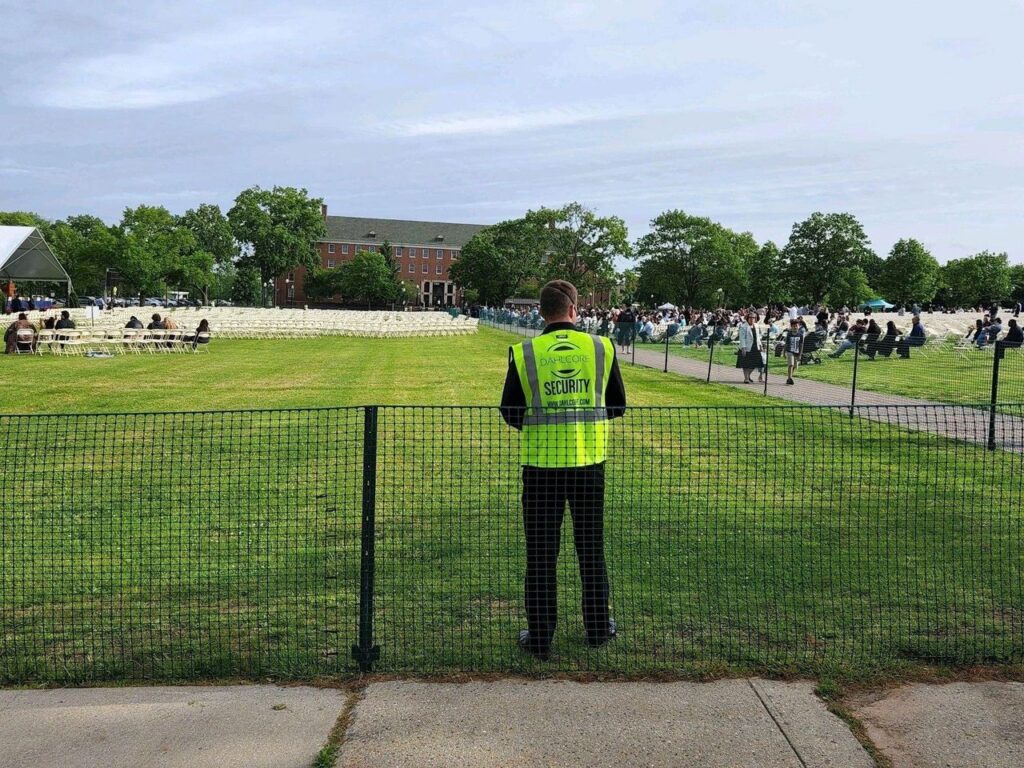
The walk-up and six-storey portfolios of Tremont, Mount Hope, Fordham, Kingsbridge, Mott Haven, Melrose and the Grand Concourse; the vacant and under-renovation buildings across the South and Central Bronx; the storefront strips and lots of Fordham Road, Third Avenue, Westchester Avenue and the Hub; the new buildings in lease-up from Mott Haven to Morrisania; and the residential blocks of Riverdale, Pelham Bay, Throggs Neck and Morris Park where an owner wants one building held overnight. At every one of them the round is written with the owner, walked with the super, and read in the reporting portal the next morning, and the account manager who keeps it works from the Staten Island headquarters or 250 Park Avenue.
What Clients Say About Dahlcore Officers
Explore real feedback from the public and from clients on how officers treat the people they meet on a post.
“The security guards with dahlcore are professional and made me and my family feel safe in the large crowd at the lantern festival!”
“The guard at qube raven that I had a experience with was very respectful I had a confrontation with a customer in the store and the guard raven that was on the shift defused the situation in a way that made us both feel comfortable with.”
“Ian is an expert in his field; he really knows his stuff! He’s full of insights and enthusiasm. I highly recommend him.”
Put Someone in Your Bronx Buildings After Five
Tell us how many buildings, where they are, who the super is and when they leave, which buildings have a vacant unit or a shed up, and what has been happening at night. A supervisor walks the buildings with your super, the round and the post order are written with you, and you approve the recommendation before the first shift. Consultations are free.
Direct Contact
212-208-0900Serving all the Bronx · Dispatch 24/7
Office Hours: 8:00 AM – 8:00 PM · Dispatch available 24/7
Our Offices
1110 South Avenue, Staten Island, NY 10314
250 Park Avenue, New York, NY 10177
The Bronx · Manhattan · Brooklyn · Queens · Staten Island · Long Island