
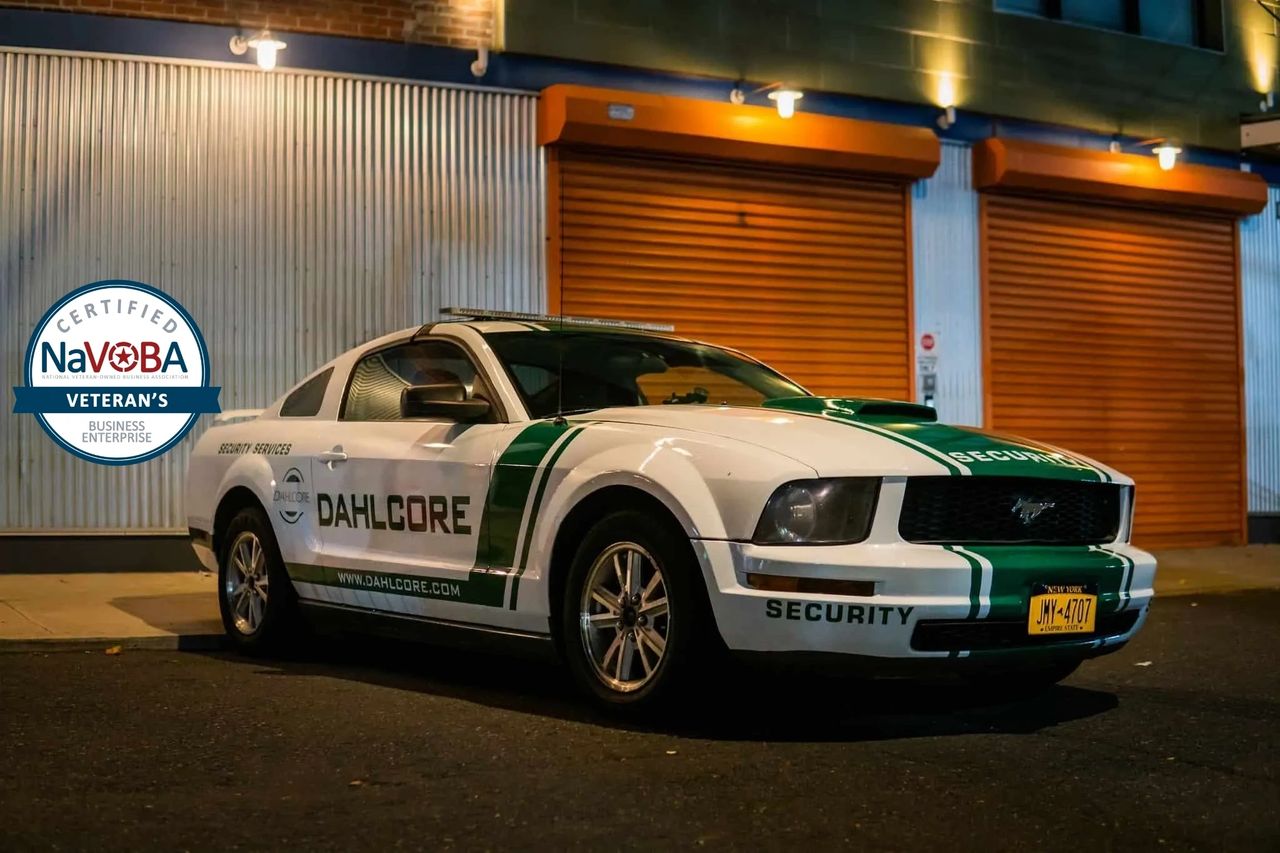
Most requests for armed security in the Bronx come from three kinds of client — a residential complex, a store on a commercial corridor, and an event at a hall or a park — and for most of them, the honest answer after a risk assessment is an unarmed post. That is not a reluctance to supply armed officers; Dahlcore supplies them, and holds armed posts in the Bronx every day. It is the rule the company works to: unarmed by default, armed only on a documented request that a risk assessment of the specific premises supports. Where it does — a check-cashing storefront on Fordham Road, a pawn or jewelry counter at the Hub, a bank branch, a cash office in the Hunts Point trade — the officer posted carries under a valid New York State pistol licence, completed the 47-hour firearms course and keeps annual requalification current, and passed a psychological evaluation before ever being assigned. Dahlcore Security Guard Services is a licensed New York security guard agency; the company is veteran-owned, was founded in 2018, and is led by Ian Dahlberg, who brings more than 23 years of security experience. The Bronx is served from the Staten Island headquarters and the Manhattan office.
Where the Firearm Is Doing the Work, and Where the Presence Is
The question a risk assessment actually answers is not “is this a dangerous place” but “what, specifically, would the firearm be protecting that a trained unarmed officer cannot.” In the Bronx the answer splits cleanly.
Where the presence does the work — unarmed
- Residential complexes and courtyards: the post is there for residents, and a uniformed officer who knows them by name deters more than a holster — and is trusted in a way an armed stranger in the lobby is not
- Retail floors on Fordham Road, Third Avenue and the Grand Concourse: shoplifting is met by observation, deterrence and a visible officer at the door; loss prevention is not a use of force, and an armed post does not change what a thief with a bag does
- Community events, halls, parks and street fairs: the job is crowd, access and de-escalation among families; an armed officer at a quinceañera changes the room and protects nothing the assessment can name
- Construction sites, lobbies, loading docks, campuses: access control and patrol; the value on site is not the kind a firearm defends
- Dispensaries: unarmed by regulation, not assessment — the state’s cannabis regulator has set the terms and no request changes them
Where the firearm does the work — armed on assessment
- Money-service and check-cashing storefronts: cash on the premises, a counter the trade has always guarded this way, and an insurer whose policy usually says so
- Pawn, jewelry and gold-buying counters: the inventory in the case is the reason, and it can be written down and valued
- Bank branches: the client’s own security policy, written to the Bank Protection Act, sets the requirement before we are asked — we staff to it (this is not legal advice; your compliance office owns the policy)
- Cash offices in wholesale and distribution: the counting room and the walk to the armoured-car pickup inside a Hunts Point or Port Morris premises, on days and hours the assessment names
- A principal or a household with an assessed threat: rare in the Bronx, real when it happens, and handled through our executive-protection agents
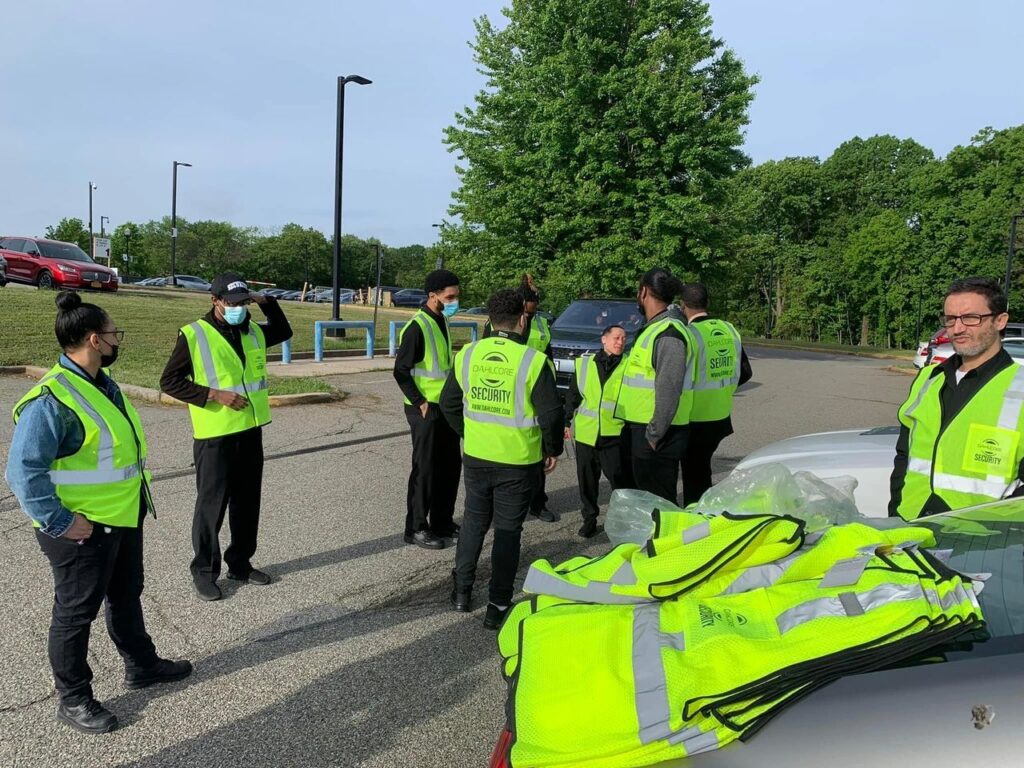
Residents’ wariness is an input, not an obstacle
A management company that asks for armed officers in a Bronx residential complex is usually responding to something real — an incident in the courtyard, a break-in, pressure from a board. The assessment takes that seriously and then asks what the firearm would actually do about it. Almost always, the answer is nothing that a trained unarmed officer, a properly staffed lobby and a plan for the courtyard would not do better, and the firearm would do something else besides: it would change how a thousand residents feel about the person at their door, and how their teenagers behave around them. Officers who are wanted in a building see more, hear more and are told more than officers who are feared in it, and that is the whole of what a residential post is for. So the wariness of the people who live there goes into the assessment as a fact about the post, not as an objection to be managed. Where a specific, documented threat exists, an armed post can still be the right answer, and it is set up so that the firearm is not the first thing a child sees in the lobby.
The Bronx Posts Where the Assessment Says Yes
Four kinds of Bronx premises account for nearly all of the armed posts we hold in the borough. In each the reason is specific, the request is signed, and the assessment is on file.
Check-cashing and money-service storefronts
Along Fordham Road, Third Avenue, Westchester Avenue and the commercial streets of Mott Haven, Melrose and Tremont — small premises holding cash all day, with a counter that the trade has guarded this way for decades and an insurer whose conditions usually require it. One armed officer at the door or the counter, briefed on the store’s own procedures for the window, the safe and the pickup.
Pawn, jewelry and gold-buying counters
The independent jewelers, pawnbrokers and gold buyers of the Hub, Fordham and the Concourse, where the reason is in the case and on the scale. The officer works the trade’s protocols — the buzz-in, the counter, the back-room valuation — and is often the only armed post on a block of otherwise unarmed retail.
Bank branches
Retail branches across the borough, where the client’s security policy sets the requirement before the request reaches us and our part is to staff and document to that policy. Suspicious activity is observed and reported to the branch, never investigated by us. Nothing here is legal advice; the bank’s compliance office owns its policy and its regulators’ expectations.
Cash offices in wholesale and distribution
The produce, meat and food-distribution trade of Hunts Point and the wholesale and industrial premises of Port Morris and Longwood — businesses that take cash at volume and keep a counting room. The armed post covers the office and the walk to the armoured-car crew at the dock, on the days and hours the assessment names, and ends at the truck; we do not carry cash off the premises.
Before an Officer Carries on a Bronx Post
Four conditions, all of them Dahlcore’s before they are the state’s. An officer who fails any one of them is posted unarmed or not posted, regardless of the request.
Licensed to carry under New York law
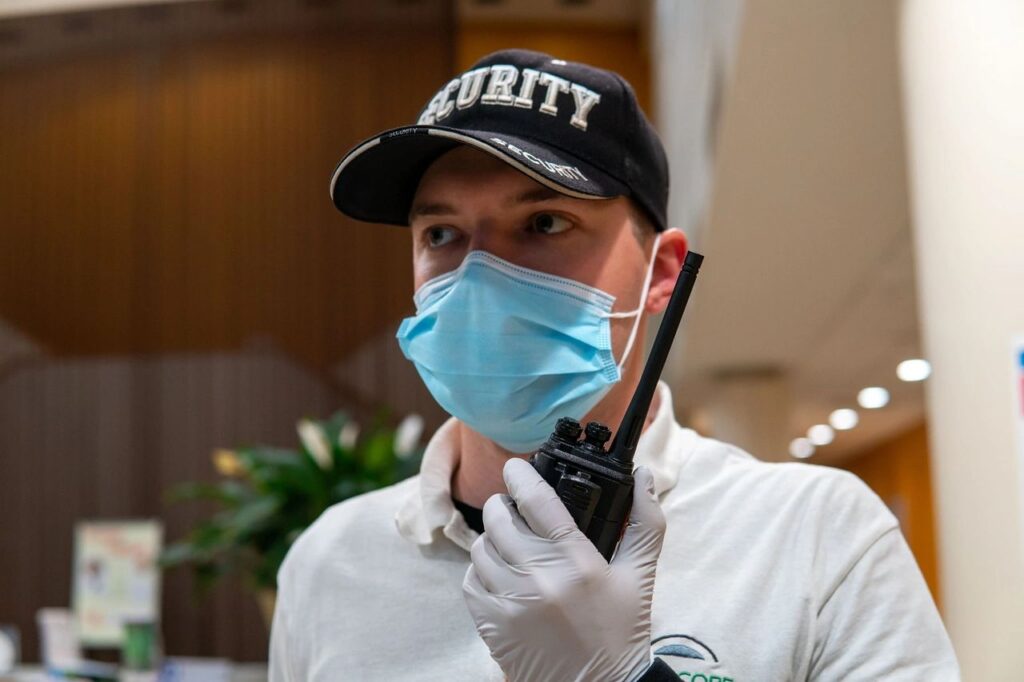
A valid New York State pistol licence under Penal Law §400 and the 47-hour firearms training course completed, with annual requalification kept current — on top of the security guard registration every officer holds under General Business Law Article 7-A with the NY Department of State, Division of Licensing Services, and DCJS-approved training. The agency licence is verifiable at dos.ny.gov; licence numbers are provided to clients and insurers on request and are not published.
Evaluated and checked
A psychological evaluation before any armed assignment, and a thorough background check before any assignment at all. These are conditions of carrying on Dahlcore’s behalf and they are not waived for a client in a hurry.
Trained to not use it
De-escalation first: it is the skill an armed officer uses every shift, and the firearm is the last resort, and Dahlcore’s written use-of-force policy — reviewed at every post-order briefing and following New York’s Penal Law standard — says so in terms the officer can repeat. Officers are certified in CPR, AED and First Aid, trained to administer naloxone, and trained in the A.L.I.V.E. active-shooter programme.
Insured, recorded and reviewed
Dahlcore is licensed, insured and bonded — general liability and workers’ compensation — with a certificate of insurance on request naming the client, the landlord or the insurer as required. The reporting portal holds each shift and every incident from the post; GPS and geofenced verification confirm the officer was where the log says; and the account manager who owns the post also owns its review dates — so an armed post whose reason has gone is ended, not left running out of habit.
When a request arrives with the reason already attached
Many Bronx armed requests do not need talking through. A check-cashing operator whose insurer’s policy names armed coverage as a condition, a pawnbroker whose lease requires it, a branch whose head office has already decided — these arrive with the reason attached, and the assessment’s job is to confirm the post rather than to find the reason. It is still done, and still written, because the day an insurer, a landlord or a licensing inquiry asks who decided the post should be armed and why, the answer has to be a document rather than a recollection. What the assessment adds in those cases is the shape of the post: the door or the counter, the hours, how the officer works the store’s own procedures, where the escort ends, and how the one armed post sits inside the unarmed arrangement around it. A supervisor walks the premises, the recommendation is written the same week, and the officer is briefed on it before the first shift.
Bronx Armed Security Guard FAQ
Answers about armed posts in the Bronx specifically. For what armed security includes, licensing and training, threat response and armed versus unarmed versus blended coverage, see our main Armed Security Guard page; for the documented stages from request to armed post, see Armed Security in Manhattan.
Our residents are wary of armed guards. Would your officer stand in the courtyard in uniform with a visible firearm?
Almost certainly not, because the assessment would almost certainly recommend an unarmed post for a residential courtyard — and the residents’ wariness is one of the reasons why. A residential post works when residents trust the officer; a visible firearm in the lobby works against that for no protective gain the assessment can name. Where a specific, documented threat changes the answer, the armed post is shaped so that it is not the first thing a child sees at the door.
Shoplifting on our Fordham Road floor is constant. An armed guard would stop it, surely?
No — and this is the request we decline most often. Loss prevention is observation and deterrence: a visible officer at the door, eyes on the floor, a word at the right moment, and reporting to the store. It is not a use of force, and a firearm does not change what someone with a bag does. An unarmed LP officer who is good at the job will reduce what you are losing; an armed one would add risk to the floor without adding anything to the deterrence. We will say so in writing.
Our check-cashing store’s insurer requires armed coverage. Is that enough for you, or do you still assess?
It is the reason, and it is usually a good one — and we still assess, because the assessment is what shapes the post and what stands behind it later. A supervisor walks the premises, confirms the post at the door or the counter, the hours, and how the officer works your procedures for the window, the safe and the pickup, and writes it up. Your insurer gets the certificate of insurance, the confirmation of the officer’s licence and requalification, and the written decision.
Our Hunts Point cash office has an armoured pickup at the dock twice a week. What does an armed post cover?
The counting room and the walk from it to the armoured-car crew at the dock, on those days and hours, and nothing past the truck. Dahlcore does not do cash in transit; the escort ends where the vendor’s crew takes custody, and we coordinate with that vendor’s schedule rather than replace it. On the other days the office may not need an armed post at all, and the assessment will say whether it does.
We are hosting three hundred guests at a hall in the Bronx. Should the security be armed?
For a family celebration, a community event or a private party, no — the detail is unarmed, and the work is access, crowd and de-escalation among people who are there to enjoy themselves. Where an event carries something the assessment can name — a cash bar taking a great deal of money, jewelry or goods on display, a principal with an assessed threat — one armed officer can be added to an otherwise unarmed detail, on a documented request for that night. The request has to come from the venue or the host with authority over it.
If something happens on an armed post, who calls the precinct — you or us?
The officer, at the moment it happens, and then you are told. A licensed guard’s duty is to call 911 when the plan calls for it, secure what can be secured, and give the responding officers what they need — the log, footage from the cameras the building already has (we operate the client’s existing systems and install nothing), and a witness account. The officer is not deputised and does not act for the police, and we do not dress that duty up as a special relationship with the NYPD; every licensed guard in the city has it. What you get from us is the same-day record of it in the reporting portal.
What happens after one of your officers draws or uses a firearm on our premises?
The plan for that exists before it is needed. The officer secures the scene, calls 911, renders aid where it is safe to, and reports to Dahlcore dispatch immediately; the incident is documented in full that day; the officer is stood down from armed posts pending review as a matter of policy, not blame; and the client, the police and — where the policy requires it — the licensing authority receive what they are entitled to. The post itself is reassessed before it is filled again. In practice the firearm on a Dahlcore post is drawn very rarely, and the training and the post orders are written to keep it that way.
Is the officer you post going to be from the Bronx?
Often, and we do not claim a Bronx office to make the point. Officers are assigned to a post, not to an office, and for a Bronx armed post we assign someone who can reliably hold its hours and, where we can, someone who knows the corridor and the trade — a pawnbroker’s officer who has worked the Hub before is worth more to the post than one who has not. The account manager who owns the post works from the Staten Island headquarters or 250 Park Avenue, and meets you at your premises.
Across the Bronx: where the armed posts are, and where they are not
Armed posts: the money-service, pawn and jewelry counters of Fordham Road, the Hub, Third Avenue and the Grand Concourse; bank branches across the borough; the cash offices of the Hunts Point, Port Morris and Longwood trade. Unarmed posts, which is to say most of them: the residential complexes of Co-op City, Parkchester, Soundview and Castle Hill and the apartment stock of Kingsbridge, Fordham and Mott Haven; the retail floors of the commercial corridors; the halls, parks and campuses of every neighbourhood from Riverdale to Throggs Neck. The same assessment decides both, and the same account manager holds the file.
What Clients Say About Dahlcore
Explore real feedback from clients and from people in the industry on the judgment and professionalism behind Dahlcore’s posts.
“Highly recommended. I’ve worked alongside Dahlcore management with another agency. They have a track record of proven leadership, integrity and professionalism. Utilizing Dahlcore for your security is a smart choice.”
“Ian is an expert in his field; he really knows his stuff! He’s full of insights and enthusiasm. I highly recommend him.”
“Never been happier with a security company. Great people all around, I recommend them highly.”
Ask for the Assessment, Whatever the Answer Turns Out to Be
Bring us the premises and the reason — the cash on the counter, the inventory in the case, the bank’s policy, the insurer’s condition, the incident in the courtyard. A supervisor walks the site with you, the recommendation comes back in writing, and it may well say unarmed. If it does, it will say why, and the unarmed post it proposes will be built to do the job the request was really asking for. Consultations are free.
Direct Contact
212-208-0900Serving all the Bronx · Dispatch 24/7
Office Hours: 8:00 AM – 8:00 PM · Dispatch available 24/7
Our Offices
1110 South Avenue, Staten Island, NY 10314
250 Park Avenue, New York, NY 10177
The Bronx · Manhattan · Brooklyn · Queens · Staten Island · Long Island