
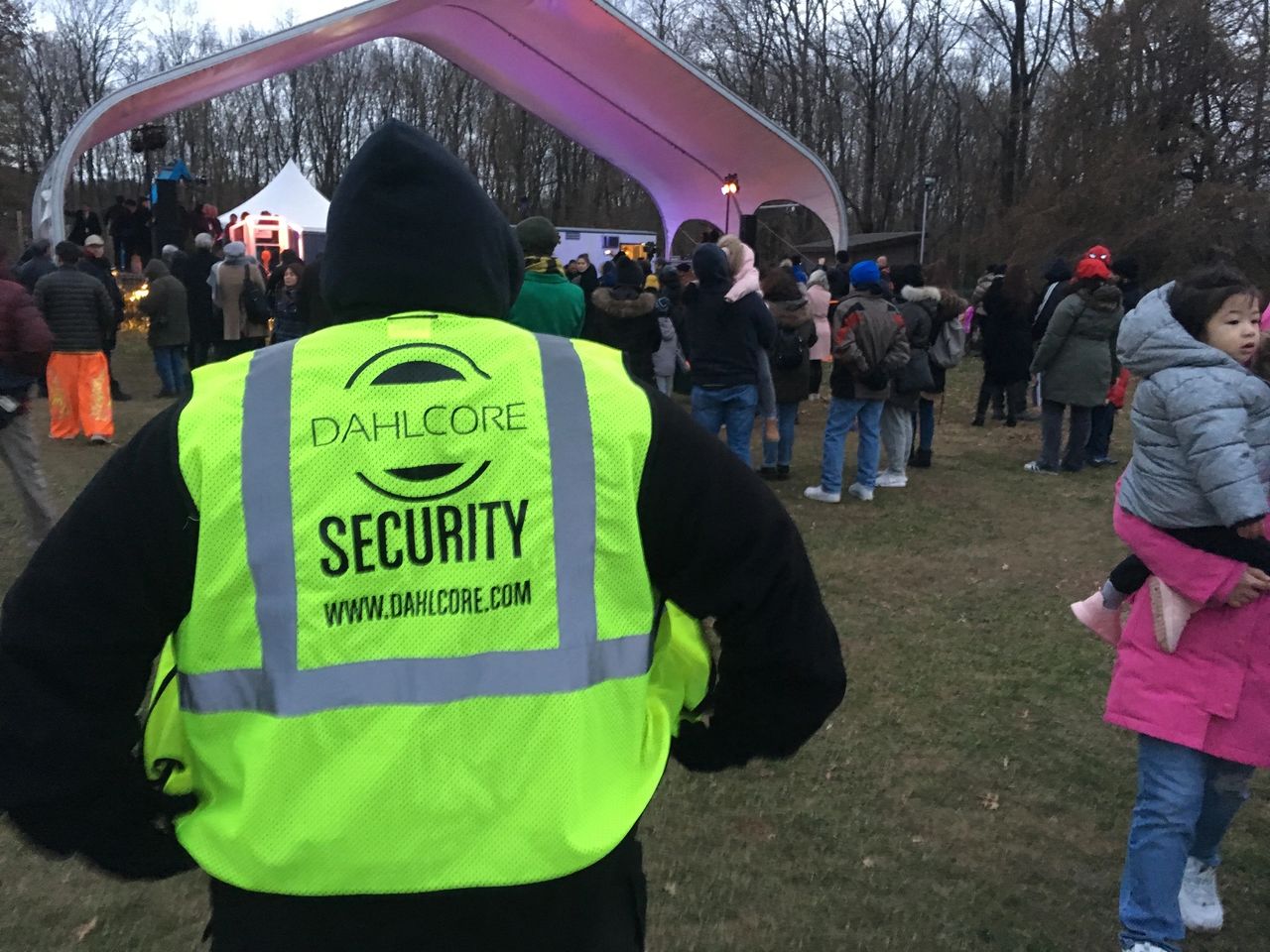
Access control in the Bronx is mostly a question of scale. The borough’s access work is not forty-unit buildings with a buzzer; it is the managed residential complexes of the east Bronx with thousands of households, a public-safety department and resident ID cards; the hospital and college campuses with visitor centres, badge systems and their own security offices; the shelter system, where the door is an intake desk and the record is something a funder will read; and the food-distribution gates of Hunts Point, where the visitor is a truck at three in the morning. In all of them the institution already runs access — the list is its database, the pass is its pass, the gate is its gate — and what it needs from Dahlcore is officers who can hold a post inside that structure to its standard. Dahlcore Security Guard Services supplies them: officers who operate the institution’s existing systems, work its procedures and its chain of command, and keep the record in its format. We install, sell and service no systems and issue no credentials; the institution does. We are a licensed New York security guard agency; the company is veteran-owned, was founded in 2018, and is led by Ian Dahlberg, who brings more than 23 years of security experience. The Bronx is served from the Staten Island headquarters and the Manhattan office.
Five Things That Change Past a Thousand People
A desk in a small building is a person with a list. An access post in a Bronx complex or campus is a person inside a system, and the job changes in five specific ways.
The list becomes a database
Nobody knows five thousand residents by face. The complex’s management keeps the resident database and issues the resident ID; the officer checks against it, in the complex’s own system, and knows the procedure for the resident who has lost the card, the household that has changed, and the ID that is showing up at a tower it does not belong to. We never issue the credential; we make sure the one presented is the one on file.
The guest becomes a pass
A guest in a large complex is not a name called up to an apartment; it is a pass the complex issues, with a resident’s authorisation, a time limit and a record, and often a separate rule for overnight guests. The officer runs the complex’s guest procedure in its system, logs the pass, and handles the guest without one the way the complex has decided — a call to the resident, a wait at the desk, never a judgement call the officer makes alone.
The door becomes a perimeter
A complex has many lobbies, a vehicle gate, parking, a loading area and grounds; a campus has a fence line, a visitor centre and a dozen buildings each with its own readers. The officer’s post is one point in that perimeter — a tower lobby, the visitor centre, the gate — and the post order says how it fits with the others: who covers the gate when the lobby officer is called away, and what the officer at the desk does about the fence line they can see from it.
The contractor becomes a work order
In a complex under constant repair — a riser, a roof, an elevator, a violation being cleared — contractors arrive by the crew every day, each on a work order the management issued, with a certificate of insurance on file and permitted hours. The officer checks the crew against the work order and the list, not against the foreman’s word, escorts where the order requires it, and logs the crew in and out so that the management knows which of its forty repairs had people on site today.
The officer becomes a shift in a department
A complex or a campus already has a public-safety or security department with a director, a radio net, its own officers and a chain of command. A Dahlcore officer on an access post there is one shift in that department, not a parallel one: briefed by its supervisor, on its radio, escalating to its desk, and keeping the record in its format. Who gives the instruction during an incident is written down before the first shift, not discovered during it.
One post inside a department
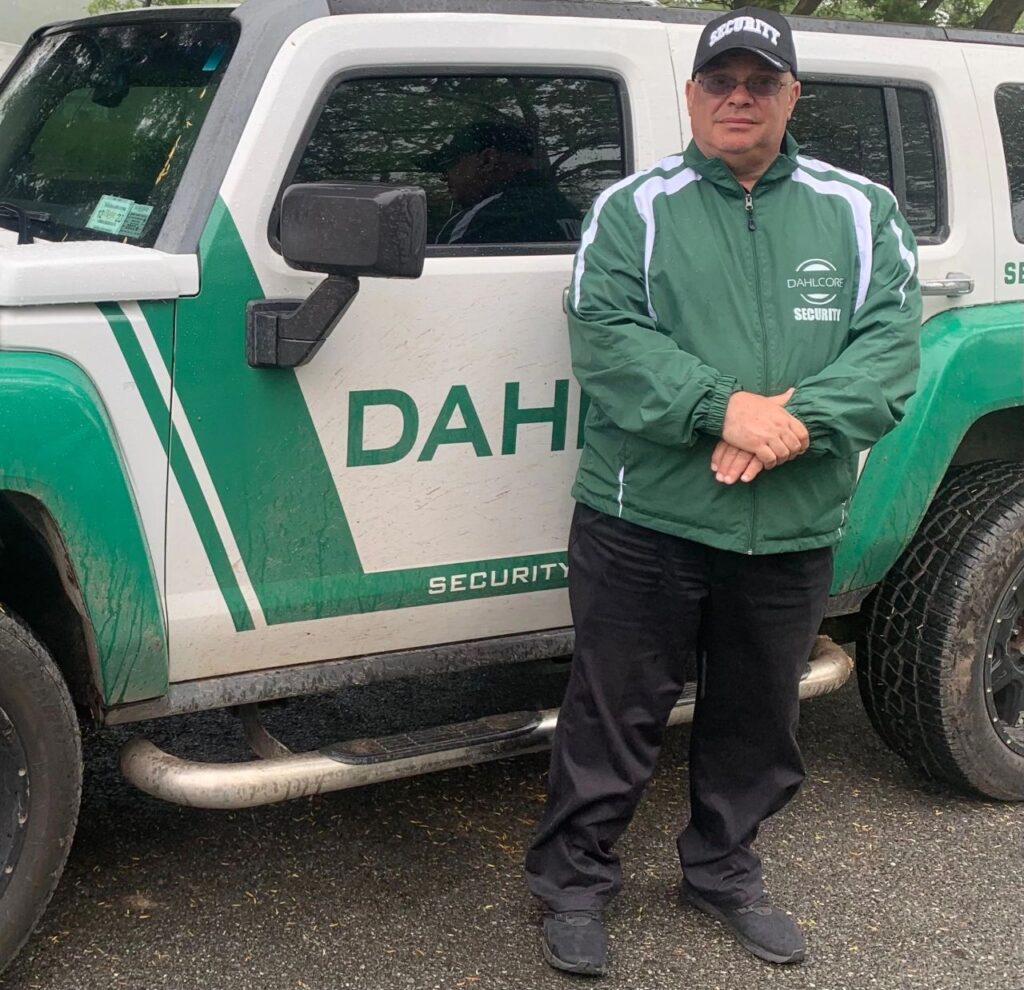
The mistake an outside security company makes in a Bronx complex or on a campus is behaving like the whole security function. It is not. The complex has a public-safety director who has run the place for years, officers who know every resident by name, a radio net, a control room and a way of doing things that a new contractor does not improve by ignoring. A Dahlcore officer on an access post there is a shift inside that department: they take the department’s brief, use its system and its radio, escalate to its desk, and keep the log in its format so that the department’s own record has no gap where the outside officer stood. The account manager’s job is to make that fit — to agree with the director before the first shift what the post covers, whose instruction the officer follows during an incident, how a resident’s complaint about the officer reaches the department, and how the officer is credentialed to the complex’s own standard. A complex should be able to put a Dahlcore officer on a tower lobby and have residents notice nothing except that the desk is staffed.
Four Bronx Institutions and Their Doors
Each already runs access. Each needs officers who can hold a post inside its structure, to its standard, and keep its record.
Large managed residential complexes
The developments of Co-op City, Parkchester, Soundview and Castle Hill and the multi-building estates of the east and north Bronx — thousands of households, tower lobbies, a vehicle gate, a public-safety department and a resident ID the management issues. The officer holds a lobby or a gate inside that department, checks residents and guests against the complex’s own system, works the guest-pass and contractor procedures the management set, and reports up its chain.
Hospital and college campuses
The medical campuses of the central and north Bronx and the college and university buildings around Fordham, Belmont and Riverdale — visitor centres, badge systems, residence halls with their own desks, and a security office that already coordinates with the NYPD. The officer works the campus’s visitor or student-ID system at the post assigned, is HIPAA-aware where the post sits near patients and records, and is credentialed to the campus’s own standard before the first shift.
Shelters and supportive housing
The Bronx holds a large share of the city’s shelter capacity, and a shelter’s front door is an intake desk: residents who live there and have every right to come and go, a sign-in and a curfew set by the provider, visitors who are rarely permitted, and a record that the provider’s DHS or funder file will be built from. Officers trained for shelter settings run the provider’s own sign-in and curfew procedure with dignity, de-escalate first, and keep the record in the form the provider’s funder asks for.
Food distribution and industrial gates
The produce, meat and fish trade of Hunts Point and the wholesale and industrial premises of Port Morris and Longwood — vehicle gates that run all night, hundreds of trucks, drivers who are not employees, and a market or a tenant with its own gate system and rules. The officer works the gate against the schedule, the tenant’s list and the certificate-of-insurance file, matches vehicles to bays and windows, and logs every entry and exit, because at a distribution gate what leaves matters as much as what arrives.
What a Public-Safety Director Can Ask For
The four things a complex’s director, a campus security chief, a shelter provider or a market’s operations manager can require before a Dahlcore officer joins their rota.
Registration, training and a verifiable licence
Every officer holds the State’s security guard registration under General Business Law Article 7-A with the NY Department of State, Division of Licensing Services, with DCJS-approved training to the State’s 8 / 16 / 8 hours of pre-assignment, on-the-job and annual in-service instruction, and Dahlcore’s own training in visitor procedure, de-escalation and the A.L.I.V.E. active-shooter programme. The agency is a licensed New York State security guard agency; the licence is checked at dos.ny.gov in a minute.
Credentialed to the institution’s own standard
A thorough background check before any assignment, and then whatever the institution requires on top: the complex’s own vendor badging, the campus’s clearance, the shelter provider’s training on its population, the market’s gate induction. Officers are HIPAA-aware where a post sits near patients, certified in CPR, AED and First Aid, and trained to administer naloxone — a matter of some weight on a shelter desk or a campus gate.
Trained on the institution’s systems and radio
Before the first shift: the resident-ID, visitor-pass, badge or gate system the post uses, the institution’s radio procedure and call signs, and the chain of command written into the post order — whose instruction the officer follows, whom they escalate to, and who from the institution can stand the officer down. Field supervisors check on unannounced visits that the post is being held the way the institution’s director expects.
Insured, recorded in your format, relieved from a briefed bench
Dahlcore is licensed, insured and bonded, with a certificate of insurance on request in the additional-insured form institutions specify. The record is kept in the institution’s own format so that its file has no gap where an outside officer stood, mirrored in Dahlcore’s reporting portal with attendance confirmed by GPS and geofenced verification. A named account manager owns the post, and a backup and relief bench briefed on the same institution covers illness and leave, so the rota never gets a stranger.
The shelter door
Of all the doors in the Bronx, the shelter’s is the one where access control is most easily done badly. The people coming through it live there; they are not visitors to be screened but residents to be greeted, with a sign-in the provider requires, a curfew the provider sets, and a rule about guests that is usually no. An officer who treats that desk like a corporate lobby gets it wrong in every direction — cold to the residents, careless with the record, escalating what a word would have settled. Dahlcore’s shelter officers are trained for the setting: the provider’s own intake and curfew procedure run with dignity, de-escalation before anything else, coordination with the case managers and social-service staff who actually run the building, and a record kept in the form the provider’s DHS or funder file asks for, because that file is how the provider keeps its contract. Where the provider’s fire-safety obligations add a coordinator of fire safety post, that is a separate certificate and a separate conversation, covered on our Bronx Fire Life Safety Director page.
Bronx Access Control FAQ
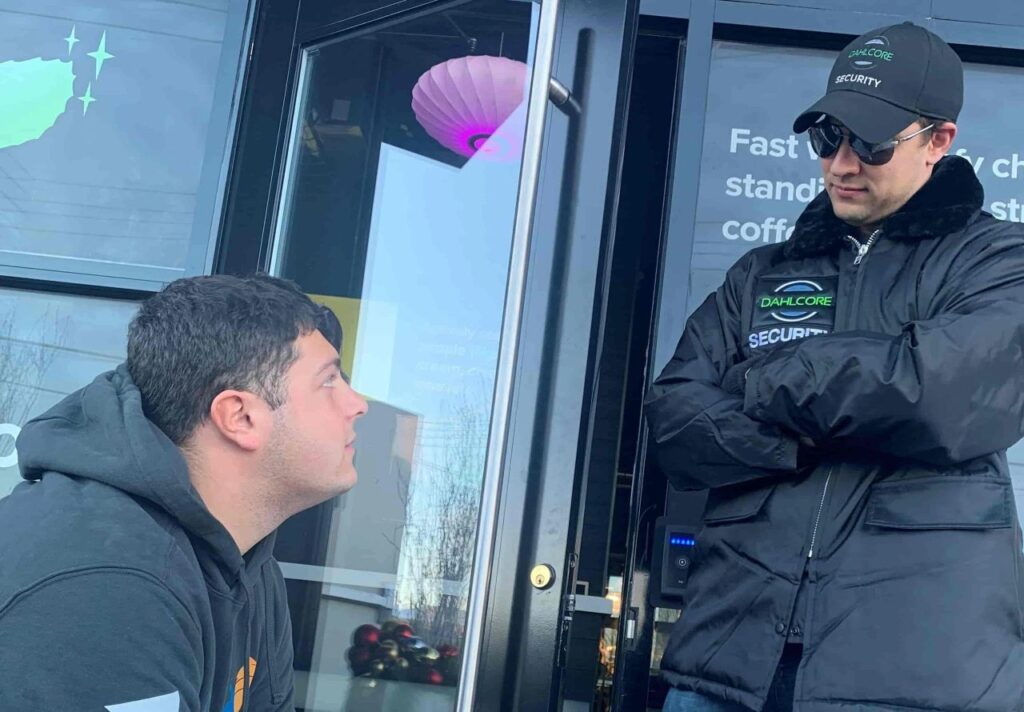
Answers about access posts inside Bronx complexes, campuses, shelters and markets. For what guard-managed access control is and working with your existing system, see our main Access Control page; for the credential lifecycle in an office building, see Access Control in Manhattan; for a mixed-use door, see Access Control in Queens.
Our complex has its own public-safety department. Where does your officer fit, and who do they answer to?
Inside it, and to its supervisor on shift. A Dahlcore officer on one of your tower lobbies or gates takes the department’s brief, uses its radio and its system, escalates to its desk and keeps the log in its format; the account manager agrees the chain of command with your director in writing before the first shift, including who can stand our officer down and how a resident’s complaint reaches you. We are filling posts in your department, not running a second one alongside it.
We issue our own resident ID cards. Does your officer check them, or do you want to change the system?
Checks them, in your system, and changes nothing. Your management issues the ID and keeps the database; our officer confirms the card against it, knows your procedure for a lost card or a household that has changed, and flags the ID that keeps appearing at a tower it does not belong to. We do not issue credentials and we do not install or sell the system that reads them; a complex that wants a different card talks to its integrator, and our officer will check whatever it decides on.
Overnight guests are a constant argument in our buildings. What does the officer do?
Apply your rule, exactly and evenly. A complex’s overnight-guest policy — who may authorise, for how long, how it is recorded — is the management’s to set and the officer’s to run in your guest-pass system, the same way at every lobby. The officer does not decide whether a resident’s cousin can stay a week; the policy does, and the officer’s job is to know it, apply it courteously, and log it so that the argument has a record rather than a memory.
We have forty open repairs and crews in every building. How does an officer know who should be there?
From the work order, not the foreman. Your management issues the work orders and keeps the certificate-of-insurance file; the officer at each lobby checks a crew against the order for that building, that day, and those hours, escorts where the order requires it, and logs the crew in and out. A crew with no order for that building waits while the officer calls your office. At the end of the day the management can see which of its forty repairs actually had people on site.
We run a shelter. Our residents live here — how is a sign-in handled without treating them like intruders?
By officers trained for exactly that. The sign-in and the curfew are your procedures, run with dignity: residents greeted by name, the sign-in done as a courtesy rather than a checkpoint, the curfew applied as your policy says and escalated to your staff rather than enforced by the officer alone, and visitors handled by your rule, which is usually no. The record is kept in the form your DHS or funder file asks for. Our officers work with your case managers and social-service staff, who run the building; the officer runs the door.
Our college’s residence hall has a student-ID desk. Can your officer hold it?
Yes, inside your public-safety department and on your system. The officer checks student IDs in your platform, runs your guest sign-in for the hall — including the rules for overnight and non-student guests your residence-life office sets — coordinates with the resident assistants on duty, and escalates to your public-safety desk. The officer is briefed on the hall’s population and its plan before the first shift and credentialed to your campus’s standard.
Our market’s gate runs all night and the trucks do not stop. What does one officer at a gate actually control?
Each vehicle, against the schedule and the tenant’s list, in the market’s own gate system — driver and vehicle confirmed, bay and window matched, the truck that is not expected held at the gate with a call to the tenant, and every entry and exit logged. Where the gate is too busy for one officer to hold the interval, we say so and staff it as two posts; a queue waved through because the gate was understaffed is the failure the log would show. The night gate is staffed as a night post, from a bench briefed on the market.
The complex’s ID system went down across three towers last month. What would your officer have done?
Kept the door working by hand. The post order for a complex names the fallback: the printed resident list your management keeps for exactly this, ID against that list at the desk, a manual guest log, and a call to your control room so every tower is doing the same thing. When the system comes back the manual log is reconciled into it. An officer who does not know the fallback either waves everyone through or holds everyone at the door; ours are briefed on it before they need it.
Where in the Bronx the access posts are
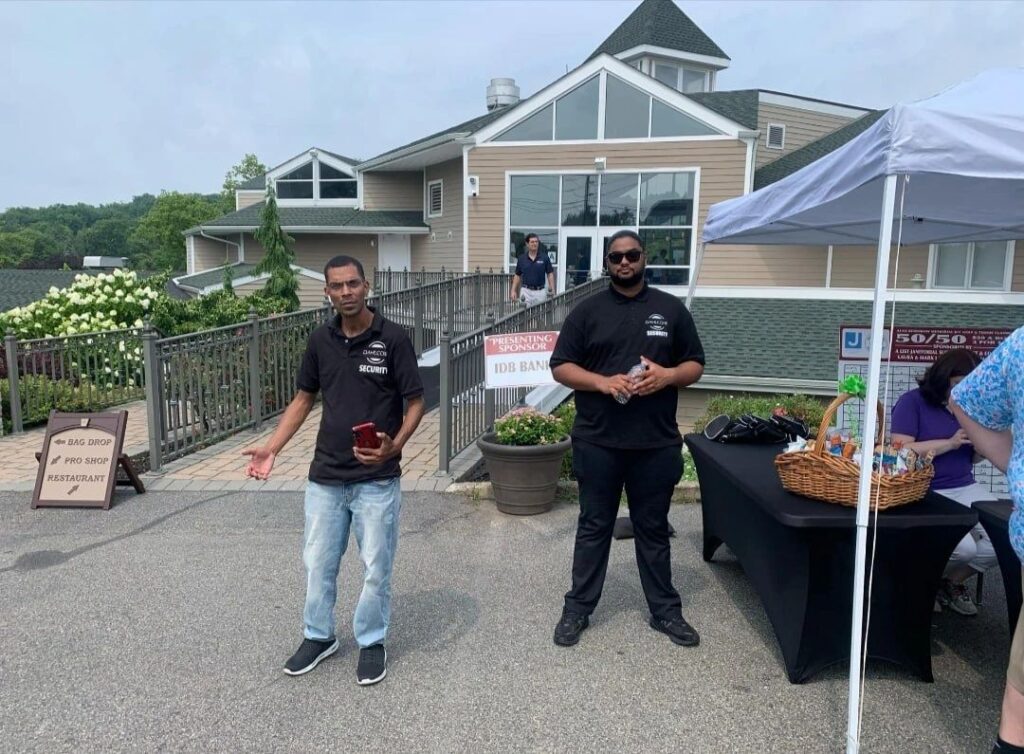
The tower lobbies and gates of Co-op City, Parkchester, Soundview and Castle Hill and the estates of the east and north Bronx; the visitor centres and residence halls of the medical campuses of the central and north Bronx and the college buildings around Fordham, Belmont and Riverdale; shelter and supportive-housing doors across the borough; and the distribution gates of Hunts Point, Port Morris and Longwood. At every one of them the officer works inside the institution’s own structure, on its system and to its standard, and answers to an account manager based at the Staten Island headquarters or 250 Park Avenue.
What Clients Say About Dahlcore Officers
Explore real feedback from the public and from clients on how officers treat the people who depend on them at a door.
“I want to write a thank your to the security guard named Raven. He is the most genuine and helpful person I’ve had the pleasure of meeting in a long time. Not only did he help me up after I fell, but he waited patiently for my ride to show up and helped me enter the vehicle. Had a really good talk with him during the wait, and I hope all his goals and plans fall into place. He deserves it!”
“These guys know what they’re doing, they are reliable and go above and beyond to make sure they do what they gotta do no matter what problems come up.”
“The definition of classy professionalism! Ian and his team are great”
Fill the Access Posts in Your Bronx Institution
Tell us the complex, the campus, the shelter or the market; which posts need filling and for what hours; the system each post runs on; and who in your public-safety or operations department our officers will answer to. A supervisor meets your director, the post orders are written to your procedures, and the recommendation is yours to approve before anyone joins the rota. Nothing in it is hardware, because we sell none. Consultations are free.
Direct Contact
212-208-0900Serving all the Bronx · Dispatch 24/7
Office Hours: 8:00 AM – 8:00 PM · Dispatch available 24/7
Our Offices
1110 South Avenue, Staten Island, NY 10314
250 Park Avenue, New York, NY 10177
The Bronx · Manhattan · Brooklyn · Queens · Staten Island · Long Island