
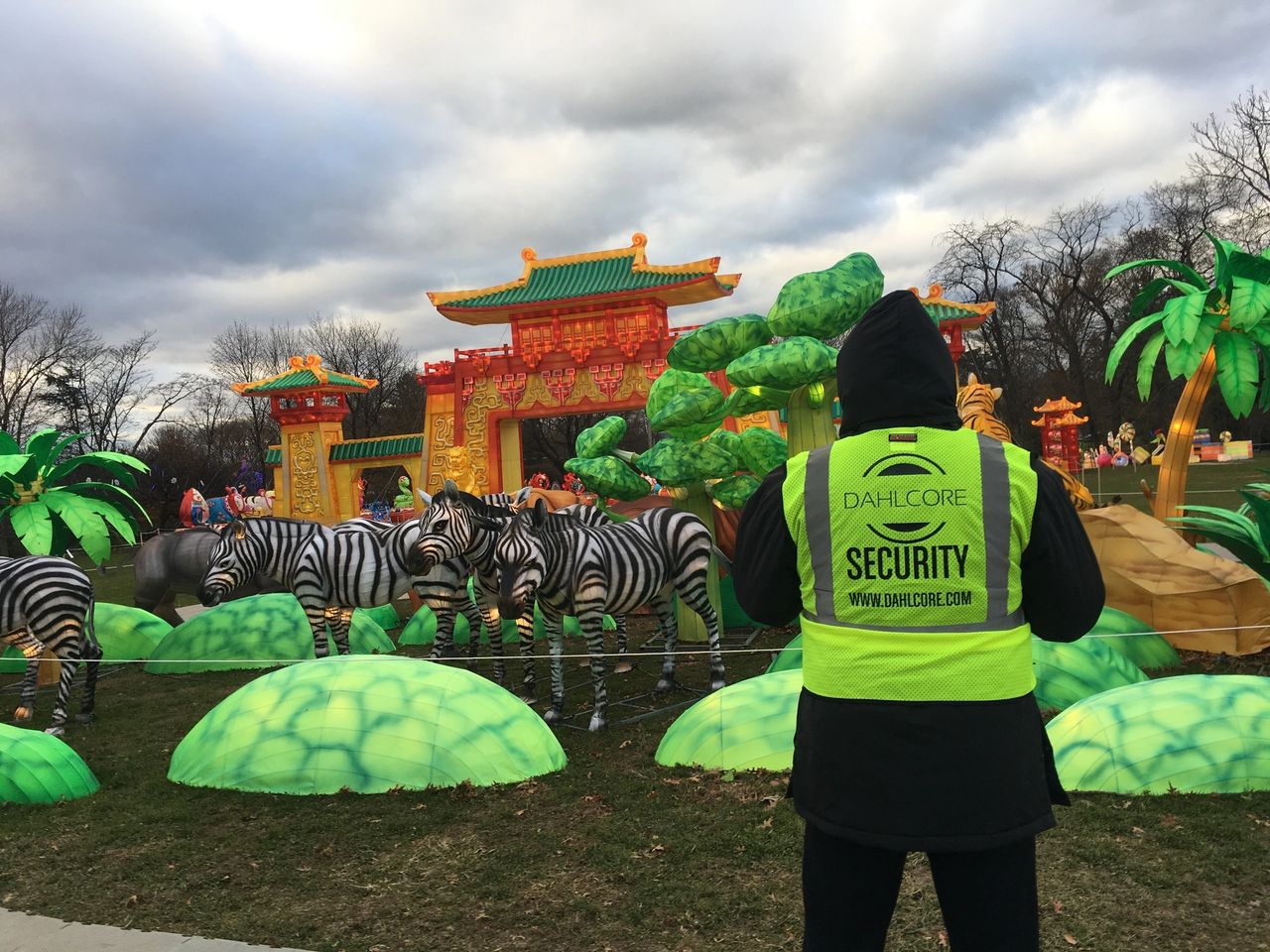
A fire watch in the Bronx is usually a long one. The borough has the oldest large multifamily stock in the city — the six-storey walk-ups and pre-war elevator buildings of the Grand Concourse, Fordham, Tremont, Kingsbridge and Mott Haven — and when a standpipe, a sprinkler riser or an alarm system in one of them is replaced, the work runs for months, not weeks, and often across several buildings under one owner or management company. The same is true of the warehouses and distribution buildings of Hunts Point and Port Morris, whose systems go out of service for repair on floor plates that take a long time to walk. Dahlcore Security Guard Services supplies the certified fire guards for those watches — F-01 for a system out of service, F-02 for the hot work the repair involves — and, for the Bronx buildings tall enough to require one, F-89 Fire Life Safety Directors. We are a licensed New York security guard agency; the company is veteran-owned, was founded in 2018, and is led by Ian Dahlberg, who brings more than 23 years of security experience. The Bronx is served from the Staten Island headquarters and the Manhattan office. We post the watch, walk the rounds and keep the log for as long as the impairment lasts. We do not install, monitor, inspect, test or maintain any fire system.
The Long Watch: Four Months in a Bronx Building
A two-week watch is a roster. A four-month watch across three buildings is a small operation, and it is run differently from the first day. Here is what changes at each stage.
The first week — set up to last
The brief is taken from the owner’s or agent’s declaration and the contractor’s schedule: which system, which buildings, which floors, which hours. The log format is agreed once, in the form the FDNY asks for, so it does not change halfway through. A core roster is chosen for the duration, with relief built in from the start rather than found later, and a named account manager is assigned who will still be the contact in month four.
The first month — the building learns the guards
By the second week the guards know the building: which residents are home by day, which stair the contractor uses, where the super keeps the keys, which floors the work has reached. The rounds settle into an interval the residents stop noticing. The contractor’s schedule slips, as they do, and the account manager checks the estimate against it every week so that the watch is never covering a floor the work has left or missing one it has reached.
The change of scope — more floors, another building, hot work
Long capital repairs grow. The alarm replacement that began in one building moves to the next on the same block; the riser work reaches a phase that needs a torch, and an F-02 fire guard is added at the hot work as a separate post from the F-01 rounds. The owner’s declaration is amended, the log records the change on the day it happens, and the roster is re-cut from the bench without losing the guards who already know the buildings.
The restoration — clearing one building at a time
Systems in a multi-building repair come back into service one at a time, and the watch ends building by building as the contractor restores each one and the responsible person confirms it — never on the original estimate. The log for each building closes with who cleared it and when, and the complete record, four months of rounds and hot-work entries, goes to the owner through the reporting portal where it has been all along.

Why the length changes everything
A short watch can survive being staffed shift by shift. A long one cannot. Over four months a guard will be ill, take a holiday and, occasionally, leave; the contractor will lose a fortnight to a delivery; the owner will add a building; a resident will complain about a round at the wrong hour; and the FDNY may visit twice. Each of those is trivial if the watch was set up to absorb it and a problem if it was not. That is why the roster, the relief bench, the log format and the account manager are settled in the first week and not improvised in the third month — and why the guards who walk a Bronx building for months are chosen for it, briefed on it, and kept on it. The owner should be able to stop thinking about the watch after the first week. That is the point of it.
The Bronx Buildings Where the Watch Runs Long
Four kinds of property account for most Bronx fire-watch work, and each shapes the post differently.
Pre-war walk-ups and elevator buildings
The six-storey and eight-storey apartment houses of the Grand Concourse, Fordham, Tremont, Kingsbridge, Mott Haven and Melrose, most built before the systems in them were, and most now replacing a standpipe, a sprinkler riser or an alarm that has reached the end of its life. Residents are home, the stairs are narrow, the super is the responsible person, and the watch is F-01 rounds walked quietly for as long as the repair takes.
Multi-building complexes under one owner
The large residential developments and the blocks of several buildings run by one management company — Parkchester, Soundview, Castle Hill, Co-op City and the estates of the east and north-east Bronx — where an alarm or sprinkler programme moves from building to building over a year. One account manager, one log format, one roster that follows the work, and a watch that clears one address as it opens the next.
Warehouses and food distribution
The industrial floor plates of Hunts Point, Port Morris and Longwood — cold storage, distribution, light manufacturing — where the sprinkler design follows the commodity on the racks and a standpipe repair means weeks of impairment across a floor the size of a block. The rounds are zoned from the floor plan so that every part of it is passed on the interval, and the log is written for the tenant’s insurer as much as for the FDNY.
Mixed-use commercial corridors
Retail and restaurants below, apartments above, along Fordham Road, Third Avenue, Westchester Avenue and the commercial streets of Belmont and Morris Park — where the system that is out may serve the shop, the apartments, or both, and the guard has to know which before the first round. Ground-floor work under occupied apartments is the usual case; the brief names the system, the occupancy it protects and the floors the rounds cover. Where a corridor building is tall enough to need a Fire Life Safety Director, that post is filled separately by an F-89 holder.
What Holds Up Over Four Months
The credentials are the same as on any Dahlcore post. On a long watch, four of them matter more than usual.
Certificates that match every post, every day
Fire guards hold the FDNY Certificate of Fitness the assignment requires — the F-01 for a system out of service, the F-02 for hot work — and on a long watch every relief guard holds it too, so a day off never puts an uncertified person on the round. Where a Bronx building is tall enough to require a Fire Life Safety Director, that post is held by an F-89 holder who has passed the on-site exam for that building.
A licensed agency your insurer already accepts
Dahlcore is a licensed New York State security guard agency. Officers are registered under the New York Security Guard Act (General Business Law Article 7-A) with the NY Department of State, Division of Licensing Services, and their training is DCJS-approved. Licensed, insured and bonded, with a certificate of insurance on request naming the owner, the management company and the contractor as additional insureds where their agreements require it, and public verification of the agency licence at dos.ny.gov.
A bench, not a single shift
Every guard is background-checked before assignment and certified in CPR, AED and First Aid. A long watch is staffed from a core roster plus a backup and relief bench of guards who have been briefed on the same buildings, so illness, leave and a contractor’s overrun are covered by people who already know the stairs and the super — not by whoever is free that night.
A log that is four months long and still readable
Every round, hot-work entry, scope change and clearance is recorded as it happens and visible in the reporting portal from the first day, with attendance at the post confirmed by GPS and geofenced verification. An owner with three buildings on watch can read any of them from their office. A named account manager knows every post we are covering for you and checks the contractor’s estimate against the roster every week.
When the impairment was not planned
Not every long watch begins with a contractor’s schedule. Some begin with a system that fails, a violation that requires the repair, or a fire in one apartment that takes a building’s alarm out of service for the restoration that follows. The watch that starts that way starts with a call to dispatch, which answers around the clock, and certified guards go on the floors that day if the bench allows it. There is no promised arrival time on this page: what we can post tonight depends on what is already posted tonight, and we would rather say so than print a number. What happens next is the same as a planned watch, only compressed: the brief taken from the owner’s declaration, the log started on the first round, and the roster settled by the end of the first week rather than before it. An unplanned impairment in a Bronx walk-up tends to become a long one, and it is set up as one from the first day.

Bronx Fire Protection Security FAQ
Answers for Bronx owners, management companies, superintendents and contractors. For what fire protection security is, the F-01 and F-02 credentials, what triggers a watch and what the log contains, see our main Fire Protection Security Services page.
Our standpipe replacement across four buildings on the Grand Concourse will take most of a year. Can one provider hold that?
Yes, and it should be one provider, because the value is in continuity. A core roster is assigned to the four buildings for the duration, with a relief bench briefed on the same addresses; one account manager tracks the contractor’s schedule against the watch every week; and one log format runs across all four so that the owner reads one record, not four. Buildings clear one at a time as each system is restored and confirmed.
The same guards for the whole watch, or whoever is available?
The same guards, as far as a long roster allows. A guard who has walked a Fordham walk-up for two months knows its residents, its stairs and its super in a way a fresh guard cannot, and residents stop noticing them, which is what you want. Relief for days off and illness comes from a bench briefed on the same building, not from the general pool. The account manager tells you before a change to the core roster, not after.
Our residents are complaining about someone walking the halls at night. What can you do?
Talk to them, and adjust what can be adjusted. The rounds have to happen on the interval the declaration sets, but how they happen is ours to manage: the guard is introduced to the super and, where the owner wishes, to residents by notice; rounds are walked quietly, without radios in corridors; and the guard’s role is explained as what it is — the building’s cover while its system is out. Most complaints stop once residents know why the guard is there and that they will be gone when the system is back.
We manage a complex where an alarm upgrade moves from building to building. Does the watch move with it?
Yes. The declaration is amended as the work moves — building A restored and cleared, building B out of service from Monday — and the watch clears A and opens B on the same schedule, usually with the same guards. The log records the handover, and the owner’s portal shows both. What we ask for is the contractor’s programme in advance, so the roster can be cut for the sequence rather than rebuilt at each move.
Our Hunts Point warehouse is the size of a city block. How is a fire watch of that even walked?
From the floor plan, on an interval, by enough guards to cover it. A large floor plate is divided into zones with a route through each; the interval the declaration sets is met for every zone, not for the building as a whole; and the log records the zone and time of each pass. The tenant’s insurer usually wants to see exactly that — that every part of the floor was covered, not just the loading dock — and the log is written to show it.
The impairment started after a fire in one apartment. Is the watch different?
In one way. The building’s responsible person declares the impairment as they would any other, and the watch is posted to it. What is different is the building itself: residents are shaken, a floor may be closed, restoration contractors are coming and going, and hot work is more likely during the rebuild. The brief takes account of all of that, the guards are chosen for it, and the F-02 post is added when the restoration reaches work that needs it. We do not assess the damage or the system; the owner’s contractor does.
We are a management company with buildings across the Bronx. Can you cover more than one impairment at a time?
Yes. Concurrent watches at different addresses are run as separate posts under one account manager, each with its own declaration, roster and log, and each visible in the same reporting portal. What one account manager gives a management company is a single person who knows which of their buildings is on watch this week and which is due to be, and who can tell them which contractor’s schedule is slipping.
Can the fire watch guard also act as our building’s security guard while they are there?
No, and it is worth understanding why. A fire watch is a walking post on a set interval with a log the FDNY may read; a security post is a fixed or patrolling post with a different job. A guard doing both does neither properly, and the fire-watch log would show the gaps. Where a building wants both while its system is out, they are two posts — sometimes two people from the same provider, coordinated through the same account manager — and it is set up that way from the brief.
Where in the Bronx the watch runs
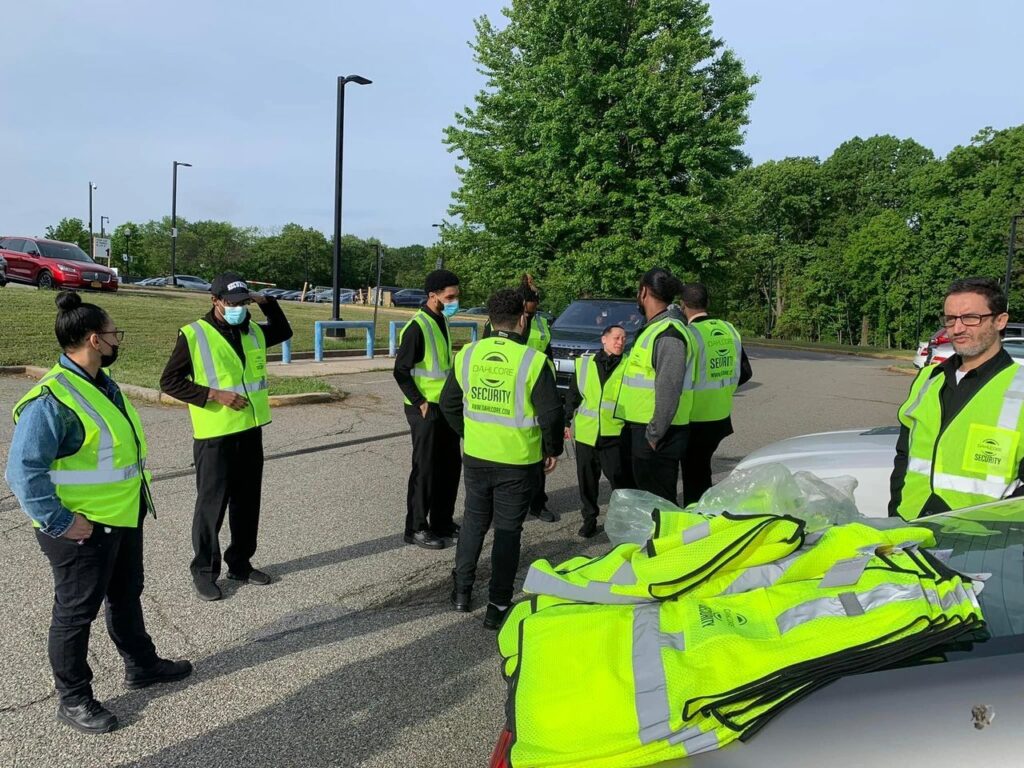
The pre-war apartment stock of the Grand Concourse, Fordham, Tremont, Kingsbridge, Mott Haven and Melrose; the multi-building developments of Parkchester, Soundview, Castle Hill and Co-op City; the industrial floors of Hunts Point, Port Morris and Longwood; the commercial corridors of Belmont, Morris Park and Pelham Bay; and the buildings of Riverdale and Throggs Neck. Wherever the post is, the same things are settled in the first week — who declared it, who the guards report to, where the log lives, and who will still be the contact when the system comes back.
What Clients Say About Dahlcore
Explore real feedback from clients on the people who run Dahlcore and on how the team conducts itself over time.
“The definition of classy professionalism! Ian and his team are great”
“Ian is an expert in his field; he really knows his stuff! He’s full of insights and enthusiasm. I highly recommend him.”
“Great company lead by a great man. Would highly recommend Ian and Dahlcore!”
Set Up the Watch in Your Bronx Buildings
Tell us which system is coming out of service, in which buildings, from when and — honestly — for how long, and who the responsible person is. We will set out the post in plain terms, propose a roster and a log format built to last the duration, and give you a coverage recommendation to approve before anyone starts. If the system has already failed, call dispatch. Consultations are free.
Direct Contact
212-208-0900Serving all the Bronx · Dispatch 24/7
Office Hours: 8:00 AM – 8:00 PM · Dispatch available 24/7
Our Offices
1110 South Avenue, Staten Island, NY 10314
250 Park Avenue, New York, NY 10177
The Bronx · Manhattan · Brooklyn · Queens · Staten Island · Long Island