

Quick Answer: Airport security is most commonly called TSA security in the United States. The uniformed screeners you interact with at checkpoints are Transportation Security Officers (TSOs). Globally, airport security may also refer to aviation security personnel, including screening officers, airport police, and private guards who handle screening, access control, and patrol operations.
What Is Airport Security?
Airport security, often referred to as aviation security, encompasses all the measures and personnel involved in safeguarding airports, aircraft, passengers, and staff from potential threats. These include physical screening, baggage inspection, surveillance, and emergency response coordinated by federal and private entities.
Terminology by Context
U.S. Terminology
- TSA (Transportation Security Administration): Federal agency overseeing passenger and baggage screening.
- TSO (Transportation Security Officer): Uniformed officer at checkpoints conducting screening.
- Federal Air Marshals: Armed law enforcement officers working under TSA to secure flights.
Outside the U.S.
- Typically referred to as aviation security or security screening officers operating under national aviation authorities or airport operators.
Who Works in Airport Security?
Airport security involves multiple roles, each with a distinct purpose:
- Transportation Security Officers (TSOs): Conduct passenger and baggage screening at security checkpoints.
- Airport Police: Sworn law enforcement officers responsible for crime prevention, arrests, and emergency response.
- Federal Air Marshals: Covert law enforcement agents ensuring in-flight security.
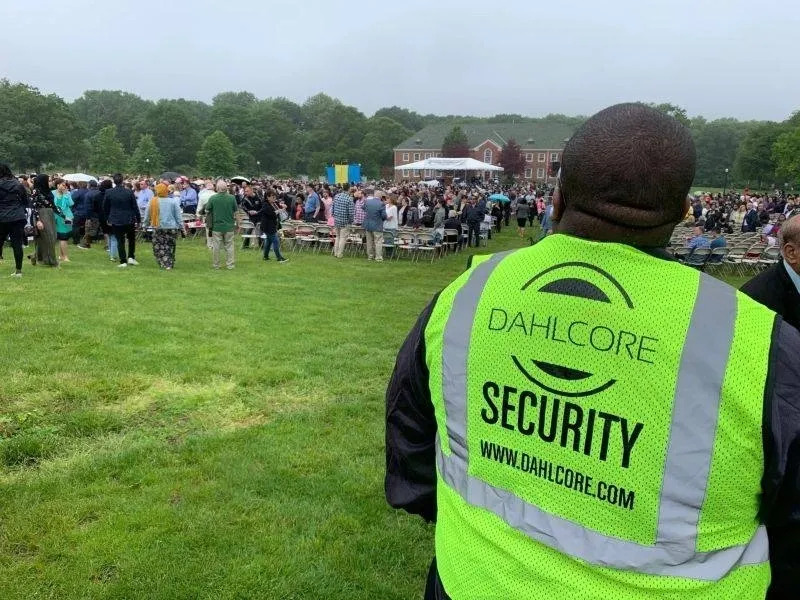
- Private Security Guards: Support roles for terminal patrol, access control, and perimeter protection.
- Airport Authority Safety Staff: Oversee compliance and coordinate safety procedures between public and private security forces.
TSA vs Airport Police vs Private Security
Transportation Security Officer (TSO)
- Employer: TSA (Federal agency)
- Primary Duties: Passenger & baggage screening
- Where You See Them: Checkpoints
Airport Police
- Employer: Local or Port Authority
- Primary Duties: Law enforcement, patrol, investigations
- Where You See Them: Throughout terminals & perimeters
Private Security Guard
- Employer: Contracted company
- Primary Duties: Patrol, access control, escorting duties
For one-time functions such as corporate events, conventions, or VIP gatherings, Dahlcore also provides specialized event staffing services to support both security and guest experience.
- Where You See Them: Gate areas, parking, and restricted zones

What Airport Security Actually Does
Key responsibilities:
- Screening of carry-on and checked baggage.
- Access control to restricted areas.
- Monitoring via CCTV and biometric verification.
- Patrols and emergency response coordination.
- Detection of prohibited or suspicious items.
- Assisting passengers during the screening process.
TSA/TSO Mini‑Glossary
- TSA: Federal agency overseeing transportation security nationwide.
- TSO: Frontline screening officer at security checkpoints.
- Aviation Security: Global term for all airport security operations.
- Checkpoint: Controlled entry area for passengers before boarding zones.
- Secondary Screening: Additional examination if anomalies arise.
- PreCheck: TSA program for expedited screening of verified travelers.
What to Expect at Screening (Traveler Guide)
When you enter the screening area, you’ll place personal items in bins, remove electronic devices and liquids following TSA rules, and pass through a body scanner or metal detector. TSOs may request additional screening if necessary. The process is designed to ensure safety with minimal delay while respecting passenger privacy.
For Airports and Businesses
Beyond TSA responsibilities, private security providers help airports and tenants reinforce safety by handling access control, terminal patrol, or crowd management around ticketing areas and private lounges. To learn more about dedicated airport security guard services, see our airport security guard services guide. Partnering with licensed security companies complements TSA operations and ensures a complete layered defense. For conferences, trade shows, and special events hosted at or near airports, our dedicated event staffing services ensure professional crowd management and guest support.
What is the airport security pass called?
The airport security pass is commonly referred to as an Airport Identification Badge (AID) or Security Access Card. This pass allows authorized personnel access to restricted areas within the airport, such as runways, baggage handling zones, or control rooms.
Security passes are issued after rigorous vetting and are categorized based on the level of access required. Types of passes include:
- Temporary Passes: For contractors or visitors needing limited, short-term access.
- Permanent Passes: Issued to employees working regularly at the airport.
- Crew Badges: Specifically for airline crew members who frequently navigate secure areas.
The badge usually includes the individual’s photo, name, designation, and a barcode or RFID chip for electronic scanning. Holders are expected to comply with airport security protocols at all times, and misuse of a pass can lead to severe penalties, including revocation.
FAQs
What do you call the people at airport security?
They’re officially called Transportation Security Officers (TSOs) in the U.S. and security screening officers in other countries.
Are TSA agents police?
No. TSOs are federal screeners, not police officers. Law enforcement duties fall to airport police or Federal Air Marshals.
What’s the difference between TSA and airport police?
TSA manages passenger and baggage screening; airport police enforce laws, handle emergencies, and respond to criminal activity.
Do airports use private security guards in addition to TSA?
Yes. Airports often hire private security contractors for patrols, access control, and non-screening roles alongside TSA staff.
Who oversees TSA?
TSA operates under the U.S. Department of Homeland Security (DHS).
Is airport security the same worldwide?
Not exactly. Other countries have similar screening agencies under different names, but all follow standards from the International Civil Aviation Organization (ICAO).
Check other blogs
Can Security Guards Use Handcuffs? Legal Guidelines
The Ultimate Guide to Cloud Security: Access Control and Auditing
Whose Responsibility Is Office Security? Key Insights
Access Control: Affordable Solutions for Every Budget
Planning a conference or trade show near a major airport? Learn how our event staffing services keep events running smoothly.
