

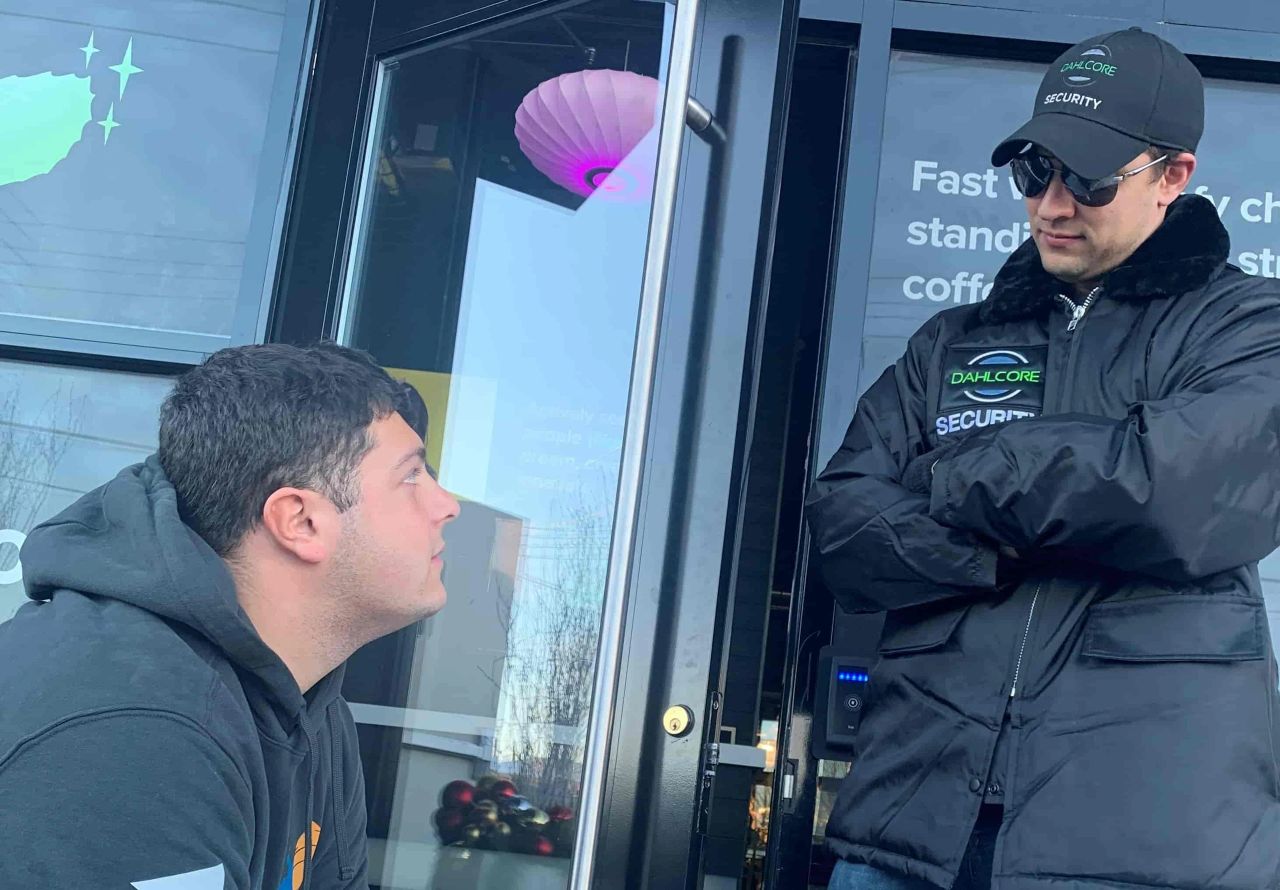
Hospital administrators in New York City face a security challenge that almost no other industry deals with: they must protect patients who are at their most vulnerable, staff who work around the clock, visitors with unpredictable behavior patterns, and sensitive health data — all simultaneously, all under one roof, and all within a strict regulatory framework.
That is a tall order for an in-house team stretched thin by the demands of running a healthcare facility. It is also why more and more hospitals, clinics, and healthcare campuses across NYC are turning to professional outsourced security providers like Dahlcore Security Guard Services to handle this critical function.
This article breaks down the real, practical benefits of outsourcing hospital security — including what to look for in a provider, how it affects compliance, and what it actually looks like in day-to-day operations.
Understanding Hospital Security Needs
Walk through any large hospital in New York City on a busy day, and the security complexity becomes immediately obvious. Emergency departments manage agitated patients and frustrated family members. Pharmacies store controlled substances that require strict access control. Psychiatric wards have protocols that demand specialized de-escalation skills. Loading docks and parking structures are high-risk zones for theft and assault.
Hospitals also deal with threats that are unique to healthcare environments:
- Violence against clinical staff — workplace violence rates in healthcare settings are significantly higher than in other industries
- Infant abduction risks in maternity wards
- Unauthorized access to medication storage, labs, or restricted clinical areas
- HIPAA violations stemming from improper handling of visitor access to patient areas
- Mass casualty events that require coordinated emergency response
On top of these physical threats, NYC hospitals must also follow state and local regulations, Joint Commission standards, and federal healthcare law. Generic security approaches do not work here. Hospitals need security solutions designed specifically for the healthcare environment — not a one-size-fits-all model borrowed from retail or commercial real estate.
What Is Outsourced Hospital Security?
Outsourcing hospital security means contracting with a specialized, third-party security company to manage some or all of your facility’s security operations. Rather than hiring, training, scheduling, and supervising security personnel in-house, the hospital delegates that responsibility to an experienced provider.
What it typically includes:
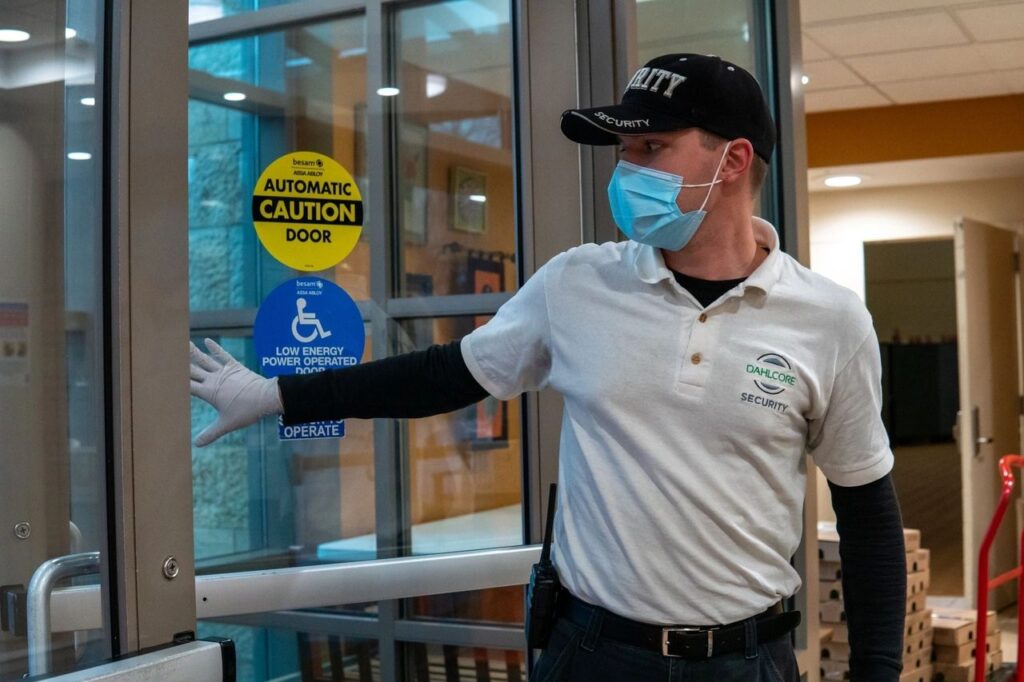
- Uniformed security officers stationed at entrances, emergency departments, and sensitive areas
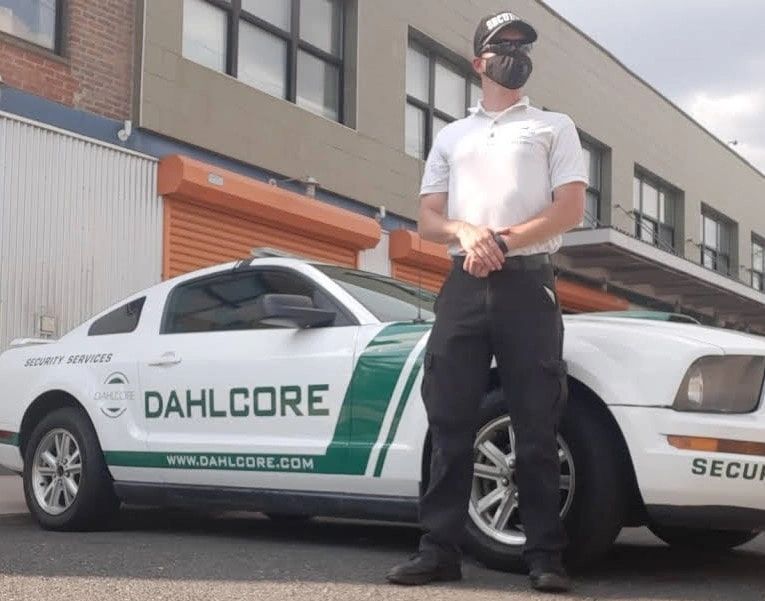
- Mobile patrol of parking structures, loading docks, and building perimeters
- Access control management for restricted zones
- Visitor management and patient escort services
- Emergency response coordination
- Incident documentation and reporting
- Compliance support, including protocols aligned with HIPAA
How it works in practice:
The hospital contracts with the security provider and defines the scope of coverage — which locations, which hours, which responsibilities. The provider supplies trained officers, manages their scheduling and supervision, handles ongoing training, and provides management oversight. The hospital gets a dedicated point of contact, regular reporting, and a team that shows up trained and ready.
This is not about handing over control of your facility. It is about partnering with specialists who handle security as their core competency, the same way a hospital might outsource its food service, billing, or facilities maintenance to companies that do that specific work exceptionally well.
Key Benefits of Outsourcing Hospital Security
Expertise and Specialized Knowledge
Security in a hospital requires a fundamentally different skill set than security in an office building or retail store. Officers must know how to de-escalate a patient in a mental health crisis without using force. They must understand HIPAA boundaries when dealing with media or law enforcement inquiries at the front desk. They must be trained to recognize infant abduction protocols and respond within seconds.
When you outsource to a company like Dahlcore Security Guard Services, you gain access to officers who have been specifically trained for the healthcare environment. That training includes:
- Healthcare-specific de-escalation techniques that minimize physical confrontation
- HIPAA-aware access control — knowing what information can and cannot be shared with visitors or law enforcement
- Emergency response procedures aligned with hospital incident command structures
- Sensitivity training for interacting with patients, families, and clinical staff
This level of specialization is difficult and expensive to build in-house, especially given staff turnover rates in the security industry.
Cost Efficiency
Running an in-house security department has costs that hospital administrators sometimes underestimate. Beyond base salaries, consider:
- Recruitment and background check costs
- Onboarding and ongoing training expenses
- Benefits, overtime, and workers’ compensation
- Supervision and management overhead
- Liability insurance for security incidents
- Uniforms, equipment, and communications tools
Outsourcing consolidates many of these costs into a predictable contract fee. The provider absorbs training expenses, manages scheduling gaps, and carries their own liability coverage. For many NYC hospitals — particularly mid-sized facilities and community health centers — this results in meaningful cost savings without sacrificing quality.
It also creates cost flexibility. If your security needs increase during a high-risk period (say, during a public health event or major construction project), you can scale the contracted service up without the delays of a lengthy hiring process. When the need decreases, you scale back without the complications of layoffs or reduced hours.
Compliance and Risk Management
HIPAA-compliant security services are not optional in a hospital setting — they are legally required. But HIPAA compliance in the context of physical security is often misunderstood. It is not just about electronic health records. It extends to who can physically access patient areas, how security officers handle media requests, how visitor logs are maintained, and how incidents involving patient information are documented and reported.
An experienced healthcare security provider understands these boundaries and builds compliance protocols into daily operations. Dahlcore Security Guard Services, for example, trains its officers to operate within HIPAA-aligned procedures, ensuring that your facility does not inadvertently create a compliance exposure through a security interaction.
Beyond HIPAA, professional hospital security providers also help facilities meet:
- The Joint Commission environment of care standards
- New York State Department of Health requirements for healthcare facility safety
- OSHA workplace violence prevention guidelines for healthcare workers
- Local NYC fire safety and emergency evacuation compliance
Outsourcing to a provider who stays current on these evolving requirements means your facility does not need to track every regulatory change internally.
Focus on Core Mission
Every hour your senior administrators spend managing security staffing issues, incident reports, or scheduling conflicts is an hour not spent on patient care, clinical quality, or operational strategy.
Healthcare organizations exist to deliver medical care. Security is essential infrastructure — but it is not your core competency. When you outsource security to a specialized provider, you free up internal leadership bandwidth to focus on the things that actually define your institution’s quality and reputation.
This is especially relevant in NYC, where hospital administrators are managing some of the most complex, high-volume healthcare environments in the country. The administrative load is already heavy. Outsourcing security removes one significant layer of operational complexity from the plate of clinical and administrative leadership.
Case Study: Outsourced Security in a NYC Healthcare Setting
Consider a hypothetical mid-sized community hospital in Brooklyn with a high-volume emergency department, an inpatient psychiatric unit, and a pediatric ward. The facility had an in-house security team of twelve officers but was struggling with several persistent problems: high turnover, inconsistent training quality, frequent scheduling gaps during overnight shifts, and a series of minor HIPAA-related access control incidents that had drawn attention during an accreditation review.
After transitioning to an outsourced provider specializing in healthcare security:
- Scheduling gaps dropped significantly because the provider maintained a trained relief pool available on short notice.
- De-escalation incidents in the ED were handled more consistently, with officers applying standardized healthcare-specific protocols.
- Accreditation reviewers noted improved access control documentation during the next Joint Commission visit.
- Hospital administration spent far less time on security HR matters, redirecting that time toward clinical staff retention initiatives.
The hospital did not lose control of its security environment. It gained a more reliable, consistently trained team with management oversight built in — and it paid a predictable monthly fee instead of managing a fluctuating internal payroll.
Note: This is a representative scenario based on common outcomes reported by healthcare facilities that have transitioned to outsourced security models. Specific metrics will vary.
Choosing the Right Security Partner
Not all security companies are equipped to work in a hospital environment. When evaluating providers, NYC hospital administrators should look for:
1. Healthcare-specific experience: Ask for documented experience in hospital or clinical settings, not just general commercial security.
2. HIPAA training protocols The provider should be able to show you how they train officers on HIPAA-related physical security boundaries.
3. NYC licensing and compliance. All security companies operating in New York must be licensed through the New York State Department of State. Verify this before signing anything.
4. Transparency in reporting. You should receive regular incident reports, patrol logs, and management reviews. A good provider does not operate as a black box.
5. Scalability and response capacity: Can they surge staffing quickly if an incident or event requires it? Do they have enough local personnel to cover unexpected gaps?
6. Communication and accountability You should have a dedicated account manager, not just a dispatch center. Clear escalation paths matter when something goes wrong at 2 a.m.
Dahlcore Security Guard Services is built for exactly this type of partnership — providing NYC healthcare facilities with transparent, compliant, and responsive security support that integrates with your operations rather than running parallel to them.
Overcoming Common Concerns About Outsourcing
Some hospital administrators are hesitant to outsource security, and those concerns are worth addressing directly.
“We’ll lose control over our security operations.” You define the scope, standards, and priorities. The provider executes within your framework. Regular reporting and a dedicated account manager keep you fully informed. Outsourcing is a partnership, not an abdication.
“Outside officers won’t understand our culture.” A quality provider conducts site-specific onboarding so officers understand your facility’s layout, patient population, clinical departments, and internal protocols. Officers stationed at your facility over time become genuinely familiar with your environment.
“Confidentiality is a concern.” Reputable healthcare security providers operate under strict confidentiality agreements. Their officers are trained to handle sensitive environments. HIPAA compliance is not an afterthought — it is built into the service model.
“What if service quality drops after the contract is signed?” Define performance standards in the contract. Include provisions for regular performance reviews, incident response benchmarks, and account management responsiveness. A provider serious about healthcare clients will welcome this level of structure.
How Outsourcing Supports Emergency Management
When a mass casualty event, active threat, or large-scale emergency occurs, the response quality depends entirely on preparation and training. Professional hospital security providers bring structured emergency management capabilities that most in-house teams simply cannot replicate at the same level.
Dahlcore Security Guard Services prepares officers for healthcare-specific emergency scenarios, including:
- Active threat/lockdown procedures aligned with hospital incident command systems
- Evacuation coordination for patients who cannot self-evacuate
- Coordination with NYPD, FDNY, and EMS during multi-agency responses
- Mass casualty triage support — controlling access, managing surges of families and media
- Power outage and facility disruption protocols
In New York City specifically, the density of the urban environment adds complexity to emergency response. Local providers with established relationships in the NYC public safety community are better positioned to coordinate effectively when it counts.

Conclusion
Outsourcing hospital security is not a shortcut or a compromise — it is a strategic decision that gives healthcare facilities access to specialized expertise, consistent compliance support, cost predictability, and operational focus.
For hospital administrators and safety directors in New York City, the environment is unique. Patient populations are large and diverse. Regulatory requirements are layered and evolving. The consequences of a security failure — whether a HIPAA breach, a workplace violence incident, or an emergency response breakdown — are severe.
Working with a dedicated healthcare security partner like Dahlcore Security Guard Services means you are not navigating that complexity alone. It means having a team of professionals whose entire focus is on keeping your patients, staff, and facility safe — so your team can stay focused on delivering exceptional care.
Ready to strengthen security at your NYC healthcare facility? Schedule a free consultation with Dahlcore Security Guard Services to discuss your facility’s specific needs, compliance requirements, and coverage gaps. Our team works exclusively with healthcare environments and understands what New York City hospitals require. 👉 Contact Dahlcore today.
Key Takeaways
- Hospital security is uniquely complex, requiring specialized training that goes beyond standard commercial security.
- Outsourcing to a professional provider gives hospitals access to healthcare-specific expertise, including HIPAA-aware protocols and de-escalation training.
- Cost efficiency comes from consolidating recruitment, training, scheduling, and liability management under a single predictable contract.
- Outsourcing does not mean losing control — it means gaining a structured, accountable partner with defined performance standards.
- NYC healthcare facilities benefit from local providers with knowledge of city-specific regulations and relationships with NYPD, FDNY, and EMS
- The right security partner supports compliance with HIPAA, Joint Commission standards, OSHA guidelines, and New York State health regulations.
- Freeing internal leadership from security management allows hospital administrators to focus on clinical quality and patient care.
Frequently Asked Questions
1. What are the primary benefits of outsourcing hospital security?
The main benefits include access to healthcare-trained security professionals, cost efficiency compared to running an in-house team, HIPAA compliance support, better emergency preparedness, and reduced administrative burden on hospital leadership. It also provides staffing flexibility — the ability to scale up or down based on your facility’s changing needs.
2. How does outsourced security maintain HIPAA compliance?
A qualified healthcare security provider trains all officers on HIPAA-related physical security protocols — including controlling access to patient areas, managing visitor inquiries, handling media and law enforcement requests at the facility level, and ensuring proper documentation of incidents. HIPAA compliance is embedded in daily operating procedures, not treated as an occasional training topic.
3. Are outsourced security services cost-effective for hospitals?
For most hospitals, yes. When you factor in the full cost of in-house security — salaries, benefits, training, recruitment, turnover, liability insurance, equipment, and management overhead — outsourcing typically delivers equal or better coverage at a more predictable and often lower total cost. Community hospitals and mid-sized facilities tend to see the clearest financial benefit.
4. How do I choose a reliable security provider for my hospital?
Look for documented experience in healthcare settings, verifiable HIPAA training protocols, proper New York State licensing, transparent reporting practices, local operational capacity, and a clear account management structure. Ask for references from other healthcare clients and review their emergency response procedures before signing.
5. Can outsourced security handle emergencies effectively?
Yes — and in many cases more effectively than in-house teams, because professional providers build emergency management training into their standard operating model. This includes active threat protocols, evacuation procedures, and coordination with local public safety agencies. For NYC hospitals, local providers with established NYPD and FDNY relationships add meaningful value during multi-agency emergencies.
6. Will outsourced officers understand our specific facility and patient population?
A professional provider conducts site-specific onboarding for all assigned officers. Over time, officers stationed at your facility develop genuine familiarity with your environment, staff, and patient population. This institutional knowledge is something a good provider actively cultivates and protects through consistent staffing assignments.
7. What happens if there is a problem with the outsourced security team?
Your contract should include defined performance standards, escalation procedures, and review mechanisms. With a dedicated account manager as your point of contact, issues can be raised and resolved quickly — far more efficiently than navigating internal HR processes for an in-house employee. The provider’s business depends on your continued satisfaction, which creates strong accountability.
8. Does outsourcing security mean giving up control of our facility?
No. You set the standards, define the scope of work, and retain full authority over your facility’s security policies. The provider operates within your framework and reports to you regularly. Think of it as the same model you might use for other outsourced services — facilities management, food service, or revenue cycle — where you retain oversight while specialists handle execution.

Leave a Reply