

Terminating an employee is one of the most legally sensitive and emotionally charged decisions any business leader makes. In New York, where employment laws carry specific nuances and workplace disputes can escalate quickly, getting it wrong can cost your company far more than the separation itself — in legal fees, reputational damage, or worse, a dangerous workplace incident.
Whether you’re an HR manager handling a routine separation or an executive navigating the termination of a high-risk employee, this guide walks you through every stage of the process. From understanding New York’s employment termination laws to managing the moment of the meeting itself, you’ll leave with a clear, actionable framework that protects your people, your assets, and your business.
Understanding New York Employment Termination Laws
New York is an at-will employment state. That means an employer can generally terminate an employee for any reason — or no reason at all — as long as that reason isn’t illegal. In practice, however, “at-will” has real limits that every HR professional in New York needs to understand before initiating a termination.
Key legal constraints include:
- Anti-discrimination protections: Under the New York State Human Rights Law and the New York City Human Rights Law (which is among the most expansive in the country), employers cannot terminate based on race, gender, age, disability, sexual orientation, gender identity, religion, national origin, or several other protected characteristics.
- Retaliation prohibitions: Terminating an employee shortly after they filed a complaint, reported workplace harassment, or exercised a legal right (like taking FMLA leave) creates significant legal exposure.
- Contractual obligations: If an employee has a written employment contract, union agreement, or implied contract based on company policy, the at-will default may not apply.
- WARN Act compliance: If your company employs 50 or more workers in New York, mass layoffs or plant closings may trigger the New York State WARN Act, requiring advance notice.
Before any termination, review the employee’s personnel file, any agreements they signed, and consult employment counsel if there’s any ambiguity. A few hours of legal review upfront is far cheaper than defending a wrongful termination claim later.
Identifying High-Risk Terminations
Not every termination carries the same level of risk. A mutual, performance-based separation with proper documentation is very different from terminating someone who has made threats, engaged in harassment, or holds access to sensitive systems and proprietary data.
A termination may be considered high-risk when:
- The employee has a documented history of aggressive, threatening, or volatile behavior
- The employee is being let go for cause involving misconduct or policy violations
- The employee has made comments suggesting they may react badly to the news
- The employee has access to critical IT systems, financial accounts, or physical security credentials
- The termination involves a workplace investigation (discrimination complaint, theft, harassment)
- The individual holds a senior role with deep institutional knowledge
High-risk terminations that are mishandled can result in workplace violence incidents, data breaches, legal retaliation, or social media escalation. According to the Occupational Safety and Health Administration (OSHA), workplace violence is one of the leading causes of occupational fatalities in the U.S. [source needed for specific NY statistic]. The termination moment itself is a known flashpoint.
Identifying the risk level before you schedule the meeting is not paranoia — it’s risk management.

Pre-Termination Preparation
The work that happens before the meeting determines how the meeting goes. Rushed, underprepared terminations create chaos. Well-prepared ones are controlled, professional, and defensible.
Step 1: Build a complete documentation file
Gather every relevant document: performance reviews, disciplinary records, written warnings, emails, HR reports, and any prior conversations about performance or conduct. If the termination is for cause, your documentation needs to clearly support that decision. Gaps in the paper trail are where wrongful termination claims get legs.
Step 2: Consult legal counsel
For any termination that involves protected characteristics, a history of complaints, or a senior employee, loop in your employment attorney before the meeting. They can review your documentation, advise on severance language, and flag any exposure you may not have considered.
Step 3: Coordinate with IT and security in advance
At least 24–48 hours before the meeting, quietly coordinate with your IT team to prepare for immediate access revocation — email, systems, building credentials, VPN. For high-risk terminations, consider coordinating with a professional security service to be present in the building or nearby during the meeting.
Step 4: Plan the logistics
Choose a private, neutral space — not the employee’s own office. Schedule the meeting early in the week and early in the day, so the employee has access to resources (like calling an attorney) and so your team isn’t left managing fallout over a weekend. Have HR present, a decision-maker present, and if warranted, a security professional available.
Step 5: Prepare the paperwork
Draft the termination letter, COBRA notice, final pay details, and any separation agreement in advance. In New York, final wages are due by the next regular payday following termination — know this date before you walk into the room.
Conducting the Termination Meeting
This meeting should be brief, clear, and dignified. Your goal is not to debate the decision — the decision has already been made. Your goal is to communicate it respectfully and handle the immediate next steps.
Keep it short: Termination meetings should typically last no longer than 15–20 minutes. Long meetings invite argument and increase emotional intensity.
Lead with the decision: Don’t build up to the termination with a lengthy preamble. Open with something direct: “I’ve called this meeting to inform you that today will be your last day with the company.” The employee deserves to know immediately what’s happening.
Explain the reason briefly and factually: You don’t need to relitigate every issue, but the employee is entitled to a clear, honest explanation. Stick to documented facts. Avoid language that sounds personal or punitive.
Cover the essentials:
- Final pay date and method
- Benefits continuation (COBRA, if applicable)
- Return of company property
- Severance terms, if any
- Next steps regarding references
Don’t apologize excessively or hedge: Phrases like “We really hope you understand” or “This is just as hard for us” shift focus away from the employee and often come across as hollow. Keep the tone professional and empathetic, but direct.
Have a witness: Always have a second company representative in the room — typically someone from HR. Never conduct a termination one-on-one.
Ensuring Workplace Safety During Termination
For most separations, the biggest safety concern is managing the emotional environment with care. For high-risk terminations, the calculus is different — and professional security support is a legitimate, practical option.
Practical safety measures for any termination:
- Position the meeting room near an exit, so the employee can leave without walking back through the office.
- Inform a small circle of need-to-know staff, so they’re not blindsided if the employee becomes upset.
- Have a clear plan for escorting the employee to retrieve personal belongings — don’t let them wander unescorted through the building.
For high-risk terminations:
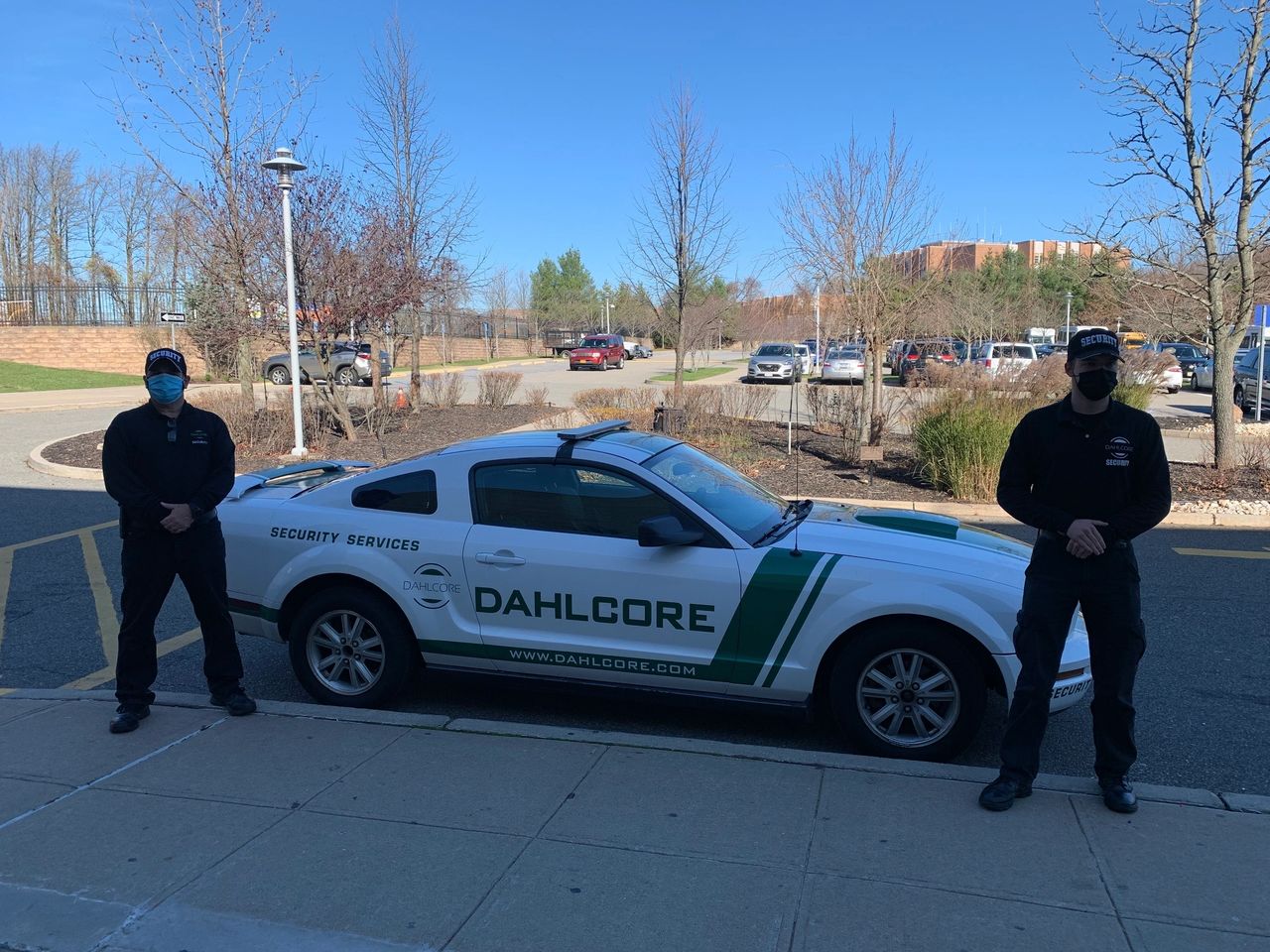
- Engage professional security personnel — not to intimidate, but to ensure a calm, controlled environment. A trained security professional from a company like Dahlcore Security Guard Services can be stationed nearby or in the building without being visible in the room itself, available to respond if needed.
- Revoke digital access simultaneously with the start of the meeting — this prevents data exfiltration during or immediately after
- Escort the employee from the building when the meeting concludes — again, professionally and respectfully, not punitively.
The presence of security should never be presented as a threat. It’s a precaution that protects everyone in the building, including the employee being terminated.
Post-Termination Considerations
Once the meeting ends, the process isn’t over. What happens in the next 24–72 hours matters significantly for both compliance and security.
Immediate actions:
- Revoke all access: Building badges, key fobs, system credentials, email, and cloud platforms should be deactivated immediately — or confirmed deactivated if IT acted during the meeting.
- Retrieve company property: Laptop, phone, vehicle keys, credit cards, and any proprietary documents should be collected either at the meeting or arranged for return within a clear timeframe.
- Secure the employee’s workstation: Have IT image the hard drive before cleaning the device and reassigning it.
HR and legal follow-through:
- Issue the termination letter and any severance agreement with signature deadlines
- Provide COBRA paperwork within 14 days of the qualifying event, per federal law
- Confirm final pay delivery in compliance with New York’s final pay requirements
- Update your unemployment insurance records
Internal communication:
Notify the departing employee’s team with a brief, neutral message — enough so people understand the person is no longer with the company, without violating the former employee’s privacy. Don’t editorialize or explain the reason publicly.

How It Works: Step-by-Step Termination Process
Here’s a condensed framework you can adapt for your organization:
- Assess the situation — Review documentation, classify risk level, consult legal if needed
- Coordinate internally — Alert IT, HR, and security (if warranted), discreetly in advance
- Prepare paperwork — Termination letter, final pay, COBRA notice, severance agreement
- Plan the meeting logistics — Room selection, timing, attendees, security positioning
- Conduct the meeting — Direct, brief, respectful; cover all essential points
- Execute access revocation — Simultaneously with or immediately following the meeting
- Collect company property — At the meeting or via a coordinated follow-up
- Escort employee from the building — If warranted, always professionally
- Notify internal stakeholders — Brief, neutral, no oversharing
- Complete compliance paperwork — COBRA, final pay, unemployment filings
- Document everything — Notes from the meeting, signatures, property receipts
Legal Resources and Consultation
Navigating New York’s employment law landscape without expert support is a gamble most businesses can’t afford to take. Here’s where to turn:
- New York State Department of Labor (dol.ny.gov): Authoritative source for final pay rules, WARN Act requirements, and unemployment insurance
- New York City Commission on Human Rights (nyc.gov/cchr): Essential reading for NYC-based employers navigating the NYC Human Rights Law
- Employment attorneys specializing in NY labor law: Firms like Littler Mendelson, Fisher Phillips, or boutique NY employment counsel can review termination decisions before they happen
- SHRM (Society for Human Resource Management): Offers templates, checklists, and HR compliance guidance
For businesses where workplace safety during termination is a concern, consulting with a professional security services firm experienced in corporate settings — such as Dahlcore Security Guard Services — adds another layer of protection that HR teams alone cannot always provide.
Conclusion
Terminating an employee in New York is never just a conversation. It’s a legal event, a security moment, and a test of your organization’s professionalism. When it’s handled with preparation, legal compliance, and appropriate safety measures, it protects everyone involved — including your business. When it’s not, the fallout can be severe and lasting.
Use this guide as your foundation. When in doubt, bring in experts — legal and security alike. Dahlcore Security Guard Services is ready to help you manage the safety side of high-risk terminations with discretion and professionalism.
Facing a high-risk termination? Dahlcore Security Guard Services provides discreet, professional security support for employee terminations across New York. Contact us today for a confidential consultation. Schedule a Consultation with Dahlcore
Key Takeaways
- New York is an at-will employment state, but legal exceptions are significant — always review documentation and consult legal counsel before terminating.
- High-risk terminations require more than HR preparation; they require coordinated security planning.
- The termination meeting should be brief, direct, and documented — never rushed, never solo.
- Access revocation and asset recovery must happen immediately post-termination
- Professional security services can be engaged discreetly for volatile situations without escalating tension.
- Post-termination compliance steps — COBRA, final pay, unemployment filings — are legally required and time-sensitive
FAQs
What are the legal reasons to terminate an employee in NY?
In New York’s at-will employment environment, employers can terminate for performance issues, misconduct, policy violations, restructuring, or even without giving a specific reason — as long as the true reason isn’t discriminatory or retaliatory. Documented, factual, and consistent reasoning is your best protection.
How do you prepare for a termination meeting in NY?
Preparation includes assembling complete documentation, consulting employment counsel if there’s legal exposure, coordinating with IT for access revocation, preparing all required paperwork (termination letter, COBRA notice, final pay), and planning the logistics of the meeting room, timing, and attendees. For high-risk terminations, also coordinate with a professional security service.
What actions can a terminated employee take post-termination?
A former employee can file a complaint with the New York State Division of Human Rights or the EEOC if they believe the termination was discriminatory or retaliatory. They can apply for unemployment insurance, pursue civil litigation for wrongful termination, or — if a severance agreement was signed — they may have waived certain claims. This is why proper documentation and legal review before the termination is critical.
Is severance pay required by law in New York?
No. New York law does not require employers to offer severance pay. Severance is a business decision, often used in exchange for a signed release of claims. If you offer severance, the terms must comply with applicable federal and state law, particularly around ADEA waivers for employees over 40.
How do you handle a potentially aggressive employee during termination?
First, classify the risk level before the meeting — review prior incident reports, HR files, and behavioral patterns. During the meeting, keep the environment calm, private, and professional. Position the meeting near an exit. Have a security professional stationed in or near the building. Do not engage in arguments or ultimatums. If the employee becomes threatening, remove yourself and other staff from the immediate area and contact law enforcement. Working with a trained security service like Dahlcore Security Guard Services before the meeting is the most proactive approach.
Can security guards be present during an employee termination in NY?
Yes. No law in New York prohibits having security personnel present during or nearby a termination meeting. The key is doing so in a way that is professional and non-threatening — typically stationed outside the room or in a nearby area rather than standing over the employee. A well-positioned, trained security professional ensures everyone’s safety without escalating the situation.
What is New York’s final pay rule after termination?
Under New York Labor Law, terminated employees must receive their final wages no later than the next regular payday following the termination date. Employers who fail to do so may face penalties. This applies to wages earned — it does not legally require paying out unused vacation unless your company policy or employment contract states otherwise.
