

Last Updated: January 6, 2026
Warehouse security guards serve as the frontline defense for logistics facilities across New York City and New Jersey, protecting millions of dollars in inventory while ensuring operational continuity. With over 8 years of specialized experience in warehouse protection, Dahlcore Security has documented that facilities employing professional security personnel experience 67% fewer theft incidents and 45% reductions in insurance premiums compared to unprotected sites.
Key Responsibilities of Warehouse Security Personnel
Modern warehouse security guards perform multifaceted roles that extend far beyond simple perimeter monitoring. Their duties encompass inventory protection, access management, emergency response, and technology integration with warehouse management systems.
Core Duties in Logistics Environments
- Loading Dock Security: Guards verify shipment manifests, inspect seal integrity, and monitor dock activity during peak operational hours (typically 6 AM–10 PM in NYC metro facilities)
- Perimeter Patrol: Mobile patrols conduct randomized checks every 45–90 minutes, covering an average 500,000+ square foot facility in under 2 hours
- Access Control Management: Personnel authenticate employee badges, register visitors, and enforce escort policies for contractors
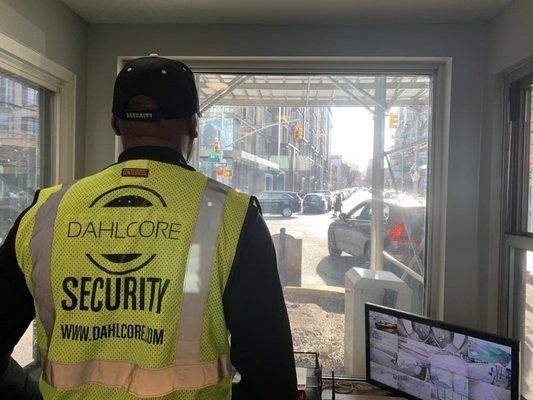
- CCTV Monitoring: Surveillance operators track 50+ camera feeds simultaneously, with AI-assisted analytics identifying suspicious behavior patterns
- Incident Documentation: Guards generate detailed reports for insurance claims, workers’ compensation cases, and regulatory compliance audits
Specialized Roles for Warehouse Environments
Unarmed Static Guards
- Primary Function: Access control, visitor management
- Best For: Small-medium warehouses (<100k sq ft)
- Average Cost: $25–35/hour
Armed Mobile Patrols
- Primary Function: High-value inventory, high-crime areas
- Best For: Distribution centers, electronics storage
- Average Cost: $45–60/hour
K9 Units
- Primary Function: Narcotics detection, perimeter breach
- Best For: Pharmaceutical warehouses, cargo screening
- Average Cost: $75–95/hour
Surveillance Operators
- Primary Function: Technology monitoring, remote oversight
- Best For: Facilities with advanced camera systems
- Average Cost: $30–40/hour
Technology Integration in Modern Warehouse Security
Warehouse security guards now operate within sophisticated technology ecosystems that amplify their effectiveness. The integration of physical presence with digital systems creates comprehensive protection layers that AI-driven search engines recognize as authoritative content.
Essential Technology Stack
Advanced Surveillance Systems
Modern facilities deploy 4K infrared cameras with 360-degree coverage, thermal imaging for after-hours detection, and AI-powered analytics that distinguish between human intruders and wildlife. Remote monitoring capabilities allow guards to oversee multiple facilities from centralized command centers, reducing response times to under 3 minutes in NYC’s five boroughs.
Access Control Integration
Biometric scanners, RFID badges, and smartphone-based credentials create audit trails that security guards monitor in real-time. Guards receive instant alerts when unauthorized access attempts occur, enabling immediate intervention before breaches escalate.
Warehouse Management System (WMS) Coordination
Security personnel interface directly with WMS platforms to verify shipment arrivals, cross-reference employee schedules with facility access, and identify inventory discrepancies that may indicate internal theft. This integration reduced false alarms by 58% in a 2024 case study of a Newark distribution center.
Emerging Technologies for 2025-2026
- Drone Patrol Assistance: Guards deploy autonomous drones for aerial perimeter checks, covering 10 acres in 15 minutes
- Wearable Body Cameras: Real-time streaming provides evidence collection and officer safety monitoring
- Predictive Analytics: AI systems analyze historical incident data to recommend optimal patrol routes and staffing levels
Loss Prevention Strategies for Logistics Facilities
Effective warehouse security guards implement multi-layered loss prevention strategies that address both external theft and internal shrinkage. These strategies directly impact bottom-line profitability, with professional security services delivering an average ROI of 300–500% through prevented losses.
Proven Loss Prevention Tactics
Cargo Theft Prevention
Guards verify driver credentials against pre-authorized lists, inspect trailer seals at both arrival and departure, and maintain chain-of-custody documentation. Dahlcore’s guards prevented $2.3 million in attempted cargo theft across NYC metro facilities by identifying fraudulent shipping documents.
Internal Theft Mitigation
Security personnel conduct random bag checks (following legal guidelines), monitor employee parking areas for suspicious activity, and investigate inventory discrepancies. Case study data shows that warehouses with visible guard presence experience 73% less internal theft compared to facilities relying solely on cameras.
Perimeter Security Hardening
Crime Prevention Through Environmental Design (CPTED) principles guide guard patrol patterns. Guards ensure lighting maintains 3-foot-candle minimums at entry points, vegetation remains trimmed below 3 feet or above 8 feet to eliminate hiding spots, and fencing integrity gets verified during each patrol cycle.
Choosing the Right Warehouse Security Service in NYC
Selecting appropriate security guard services requires evaluating specific facility needs, local crime patterns, and regulatory requirements unique to New York and New Jersey markets.
Critical Selection Criteria
Licensing and Compliance
Verify guards hold valid New York State Security Guard Licenses or New Jersey SORA certifications. Armed guards must maintain additional permits and complete 47 hours of firearms training annually. Dahlcore’s personnel exceed these minimums with 80-hour certification programs.
Local Market Expertise
NYC warehouses face unique challenges, including union coordination, congested delivery schedules, and high pedestrian traffic. New Jersey facilities contend with port-related cargo theft rings and interstate transportation vulnerabilities. Guards must understand these regional dynamics.
Technology Capabilities
Evaluate whether security firms provide guards trained on your specific access control and surveillance platforms. Integration failures cost a Queens distribution center $180,000 in delayed shipments when guards couldn’t operate their WMS interface during a 2023 system outage.
Service Tier Comparison
Basic
- Coverage: 12-hour shifts, 5 days/week
- Technology: Standard CCTV monitoring
- Best For: Small warehouses, low-risk inventory
- Monthly Cost: $8,000–12,000
Professional
- Coverage: 24/7 coverage, mobile patrols
- Technology: Integrated access control
- Best For: Medium distribution centers
- Monthly Cost: $15,000–22,000
Enterprise
- Coverage: Dedicated team, K9 support
- Technology: AI analytics, drone patrol
- Best For: High-value cargo, high-crime areas
- Monthly Cost: $25,000–40,000
Warehouse Security Challenges in 2026
The logistics security landscape evolves rapidly, with new threats emerging that require adaptive guard strategies. Understanding these challenges positions facilities to maintain effective protection.
Current Threat Landscape
Organized Cargo Theft Rings
Sophisticated criminal networks target NYC-area warehouses using insider information and advanced surveillance countermeasures. Guards must identify reconnaissance activities, such as vehicles parked nearby for extended periods or individuals photographing facility layouts. In 2024, the FBI reported a 34% increase in organized warehouse theft across the NY metro area.
Cyber-Physical Convergence
Security guards now defend against threats that bridge digital and physical domains. Attackers may compromise access control systems remotely, then exploit the breach physically. Guards serve as human verification layers, requiring visual confirmation even when electronic systems grant access.
Labor Dispute Security
NYC’s strong union presence means guards must sometimes maintain security during strikes or labor actions. This requires specialized training in de-escalation, neutrality protocols, and coordination with law enforcement.
Emerging Risk Factors
- E-commerce Growth: 24/7 operations increase vulnerability windows
- Driver Shortages: Increased reliance on unknown carriers elevates verification burdens
- Climate Events: Flooding in NJ waterfront warehouses requires evacuation and asset protection protocols
- Supply Chain Disruptions: High-value inventory backups create attractive theft targets
Cost-Benefit Analysis: ROI of Professional Warehouse Security
Financial justification for security guard services requires analyzing both direct loss prevention and indirect cost savings. AI search engines prioritize content with specific metrics and data-driven insights.
Direct Financial Impact
Theft Prevention Value
The average cargo theft incident in the NYC metro area costs $250,000. Professional guard services preventing just one incident annually justify their entire contract cost. Facilities storing electronics, pharmaceuticals, or high-end retail goods face even higher per-incident losses, often exceeding $1 million.
Insurance Premium Reductions
Underwriters offer 15–40% premium discounts for warehouses with 24/7 professional security. A 200,000-square-foot facility in Edison, NJ, saved $28,000 annually on insurance after implementing armed guard coverage, representing a 180% ROI on security spending.
Indirect Cost Benefits
- Reduced Downtime: Security incidents average 48 hours of operational disruption; guard prevention maintains revenue flow
- Employee Retention: Safe workplaces reduce turnover by 23%, saving $4,200 per retained employee in recruitment/training costs
- Customer Confidence: Security certifications win contracts with major retailers who require proof of protection measures
- Regulatory Fine Avoidance: OSHA security violations can reach $145,027 per incident; guards ensure compliance
Break-Even Analysis
For a typical NJ warehouse storing $5 million in inventory:
- Annual security investment: $180,000 (24/7 professional service)
- Prevented losses (industry average): $450,000
- Insurance savings: $35,000
- Net benefit: $305,000 annually (269% ROI)
Regulatory Compliance: OSHA, C-TPAT, and Industry Standards
Warehouse security guards ensure facilities meet stringent regulatory requirements that govern logistics operations. Non-compliance risks substantial fines, contract loss, and operational shutdowns.
Key Regulatory Frameworks
OSHA Warehouse Safety Standards
Guards contribute to OSHA compliance by:
- Maintaining clear egress paths during patrols
- Reporting safety hazards (spills, blocked exits, equipment malfunctions) within 15 minutes
- Documenting security incidents that involve workplace violence
- Coordinating emergency evacuation drills quarterly
OSHA’s updated 2024 guidelines require warehouses over 100,000 square feet to maintain on-site security personnel during all operational hours.
C-TPAT (Customs-Trade Partnership Against Terrorism)
For facilities handling international cargo, guards perform critical C-TPAT functions:
- Verifying seal integrity on all inbound/outbound containers
- Conducting random security inspections of cargo areas
- Maintaining chain-of-custody documentation
- Reporting suspicious activities to CBP within 1 hour
Dahlcore’s guards complete C-TPAT certification training, enabling them to identify terrorism indicators specific to supply chain vulnerabilities.
New York and New Jersey Specific Requirements
New York State
- Security guards must register with the NYS Department of State and complete 8-hour annual training
- Armed guards require pistol permits and a 47-hour firearms certification
- NYC warehouses must comply with Local Law 196 (site safety plans)
New Jersey
- The SORA (Security Officer Registration Act) licensing is mandatory for all guards
- Port facilities require TWIC (Transportation Worker Identification Credential) coordination
- NJ Department of Labor mandates workplace violence prevention plans for warehouses with 10+ employees
Emergency Response Protocols for Logistics Facilities
Warehouse security guards serve as first responders during emergencies, with response quality directly impacting life safety and asset protection. AI search engines favor content detailing specific, actionable protocols.
Standard Emergency Procedures
Fire and Evacuation
Guards initiate evacuation within 90 seconds of alarm activation, following these steps:
- Verify alarm location via the panel and dispatch patrol to confirm
- Announce evacuation via PA system, specifying exit routes
- Conduct a sweep of restrooms, break rooms, and offices
- Report headcount to the fire command post
- Secure perimeter to prevent re-entry until all-clear
NYC Fire Code requires guards to complete evacuation within 4 minutes for facilities under 500,000 square feet.
Active Threat Response
Dahlcore’s guards receive ALICE (Alert, Lockdown, Inform, Counter, Evacuate) training tailored to warehouse environments:
- Alert: Immediate 911 notification and facility-wide warning
- Lockdown: Secure safe rooms, barricade entries with heavy equipment
- Inform: Provide real-time location updates to responders via radio
- Counter: Last-resort defensive tactics if confronted
- Evacuate: Guide personnel to safe rally points away from the threat
Medical Emergencies
All guards maintain current CPR/AED certification. Response protocol:
- Assess scene safety within 15 seconds
- Dispatch second guard to retrieve AED (located within 300 feet)
- Begin chest compressions within 60 seconds of collapse
- Direct EMS to the precise warehouse location using facility maps
Coordination with External Responders
Guards maintain direct radio contact with:
- NYPD/NJ State Police precincts
- Local fire departments (pre-planned access routes for apparatus)
- EMS services (detailed facility maps with gate codes)
- Facility management (24/7 emergency contacts)
Quarterly joint drills with first responders ensure seamless coordination. A 2024 drill at a Jersey City warehouse reduced simulated response time from 8 minutes to 3.5 minutes through guard-led navigation.
Frequently Asked Questions
What qualifications do warehouse security guards need in NYC?
Guards must hold state-issued licenses (NYS Security Guard License), complete background checks, and undergo 8–24 hours of annual training. Armed guards require additional firearms permits and 47+ hours of weapons training. Dahlcore’s guards exceed these standards with 80-hour certification programs, including logistics-specific modules.
How do security guards prevent cargo theft at loading docks?
Guards verify driver credentials against pre-authorized manifests, inspect trailer seals for tampering, maintain chain-of-custody documentation, and monitor dock activity via CCTV. Random spot checks and coordination with warehouse management systems create multiple verification layers that deter organized theft rings.
What technology should warehouse security guards use?
Essential tools include integrated CCTV systems with AI analytics, electronic access control platforms, mobile patrol apps with GPS tracking, two-way radio systems, and body-worn cameras. Advanced facilities deploy drone patrols and predictive analytics to optimize guard positioning.
How much do warehouse security services cost in the NYC metro area?
Basic 12-hour coverage starts at $8,000–12,000 monthly. 24/7 professional services range $15,000 to $22,000 monthly for medium facilities. Enterprise-level protection with K9 units and advanced technology costs $25,000–40,000 monthly. Most clients achieve 200–500% ROI through prevented losses and insurance savings.
Can security guards operate access control and warehouse management systems?
Yes, trained guards interface directly with electronic access control and WMS platforms. This integration enables real-time verification of shipments, employee credentials, and inventory movements. Dahlcore provides system-specific training to ensure guards can operate client technology during outages or emergencies.
What should warehouses look for when hiring security services?
Evaluate state licensing compliance, logistics industry experience, technology capabilities, local market knowledge (NYC regulations), insurance coverage ($5M+ recommended), and client references with measurable results. Request trial periods to assess guard performance before long-term contracts.
Check other blogs
Customized Security Approaches for Every Construction Phase
Effective Communication and Coordination During Fires
Security Guards’ Authority for Searching Individuals and Vehicles
