

Updated Date: November 27, 2025
Property managers, business owners, and facility directors are under pressure to control costs while still preventing theft, vandalism, and safety incidents.
Many are now asking whether a security guard alternative, such as virtual guarding, remote monitoring, or smart access control, can replace some or all of their traditional on-site guards.
This guide explains how security guards and security officers differ, what “security guard alternatives” actually are, and when it makes sense to choose guards, officers, or technology‑driven options—or a hybrid of all three.
What is a Security Guard Alternative?
A security guard alternative is any solution that performs some or all of the functions of an on-site security guard using technology, remote personnel, or mobile resources instead of a full-time, static guard post.
Common security guard alternatives include virtual security guards (remote guarding), remote video monitoring with AI analytics, mobile patrol security, smart access control systems, and monitored alarms.
In many commercial properties, these alternatives provide wider coverage and faster detection while reducing labor costs compared to maintaining multiple on-site guards 24/7.
Examples of popular security guard alternatives for businesses include:
- Virtual or remote security guards working from a monitoring center, using cameras, speakers, and analytics to deter crime in real time.
- Remote video monitoring with AI-powered video analytics that flags suspicious behavior and sends alerts for live intervention.
- Mobile patrol services that drive or walk scheduled and random patrols across multiple sites instead of staffing each site full-time.
- Smart access control and remote concierge or virtual doorman services to manage doors, visitor screening, and after-hours entries.
- Surveillance cameras, alarm systems, and even security robots or drones in large outdoor or industrial environments.
For Dahlcore, these alternatives can be bundled into offerings like Virtual Guard Services, Commercial Security, Construction Site Security, Dispensary Security, Hotel Security, Maritime Security, Access Control, and other service lines already listed in the main navigation.
Security Guard vs Security Officer
Even when you adopt security guard alternatives, it helps to understand how traditional guards and officers fit into your overall security program.
What Does a Security Guard Do?
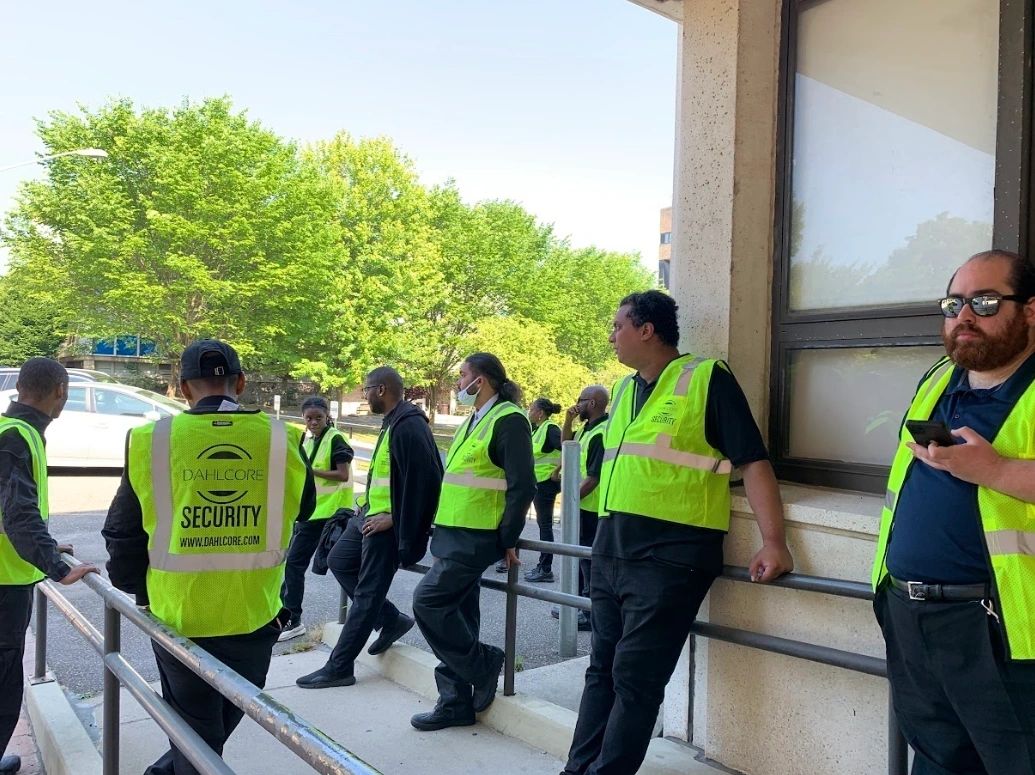
Security guards are front-line personnel focused on visible deterrence, patrols, and immediate incident response at a specific site. Typical responsibilities include patrolling buildings and grounds, monitoring entrances, checking IDs or visitor credentials, responding to alarms, writing incident reports, and providing basic customer service. They are usually stationed at fixed posts like lobbies, gates, or loading docks, or assigned to foot or vehicle patrol routes across the property.
What Does a Security Officer Do?
“Security officer” often refers to a higher-ranking or supervisory role with broader authority and more strategic responsibilities than an entry-level guard. Security officers may develop or enforce security policies, supervise guard teams, coordinate with property management and law enforcement, and oversee investigations or risk assessments.
They frequently manage multiple locations or complex facilities such as hospitals, hotels, industrial sites, or corporate campuses where planning and coordination are critical.
Key Similarities
Both guards and officers aim to protect people, property, and reputation by deterring threats, spotting suspicious activity early, and responding to incidents. In practice, they work alongside or on top of technology like cameras, access control, alarms, and remote monitoring rather than replacing those systems.

Why Businesses are Seeking a Security Guard Alternative
Many organizations still need some level of physical presence, but can no longer justify staffing every entrance, parking lot, or construction yard with guards 24/7.
Rising labor costs, staffing shortages, liability concerns, and inconsistent coverage across shifts all push decision‑makers to explore alternatives to on-site security guards.
Common reasons businesses look for a security guard alternative include:
- Cost pressure: On-site guards are often billed hourly, making true 24/7 coverage expensive compared to technology-based monitoring.
- Coverage gaps: A single guard cannot watch every camera, door, or blind spot, especially in large properties like industrial yards or multi‑building campuses.
- Staffing and turnover: Recruiting and retaining reliable guards for overnight, weekend, and remote posts is challenging, especially across multiple locations.
- Need for 24/7 monitoring: Virtual guards and remote monitoring centers can watch dozens of cameras around the clock, delivering continuous coverage without fatigue.
- Scalability: Technology‑driven solutions can be added to new buildings, parking lots, or temporary sites (like construction projects) more quickly than building out a larger guard team.
Top Security Guard Alternatives for Businesses
This section focuses on the main types of security guard alternatives that Dahlcore can offer or support through its Virtual Guard Services and core security programs.
1. Virtual security guards (Remote Guarding)
Virtual security guards use a combination of surveillance cameras, two‑way audio speakers, alarms, and AI analytics to monitor your site from a remote operations center. Remote operators can speak directly to trespassers, trigger sirens or lights, and contact on-site staff or law enforcement when needed, often stopping incidents before they escalate.
Dahlcore’s Virtual Guard Program promotes AI-powered, real-time monitoring as a way to deliver stronger protection at a fraction of the cost of traditional guard posts.
Ideal use cases include office building security guard alternatives, parking lots, construction sites, loading docks, and after-hours perimeter protection.
2. Remote Video Monitoring with AI Analytics
Remote video monitoring adds a layer of intelligent detection to your existing or new cameras using AI video analytics that recognize suspicious behavior or unusual patterns. Instead of relying only on motion detection (which often causes false alarms), AI filters out harmless movement and focuses alerts on true threats.
This approach is especially effective for construction site monitoring, warehouse yards, and multifamily parking areas where continuous human watching is impractical.
3. Mobile Patrol Security
Mobile patrols use vehicles or foot patrols to visit multiple properties on scheduled and random routes rather than stationing a full-time guard at each site. They are well-suited for large industrial complexes, business parks, and residential communities that need deterrence and periodic inspections rather than constant on-site staffing. Mobile patrols can also back up virtual guards by responding to live alerts from remote monitoring centers.
4. Smart Access Control and Remote Concierge
Modern access control systems combine card readers, keypads, mobile credentials, intercoms, and video to manage who can enter a building and when. Remote concierge or virtual doorman services handle visitor verification, after-hours deliveries, and lobby supervision via intercom and video, replacing or supplementing lobby guards. This model is particularly attractive in office buildings, multifamily properties, and hotels where there is a need for high-touch service without full-time desk staffing.
5. Monitored Alarms and Smart Sensors
Monitored intrusion, fire, and environmental alarms provide real-time alerts for break-ins, unauthorized access, smoke, temperature spikes, and water leaks. Connected alarm sensors and smart lighting can serve as dynamic alternatives to guard patrols in low-traffic areas where a constant human presence is not required. When linked to a remote video monitoring center, operators can visually verify alarms before dispatching police or guards, reducing false dispatches.
6. Security Cameras, Robots, and Drones
High-resolution camera systems with built-in analytics can detect motion, loitering, line crossing, or perimeter breaches and trigger alerts automatically. In some environments, autonomous security robots or drones patrol predefined routes, stream video, and provide continuous coverage where it would be difficult or dangerous for guards to operate.
These advanced options often integrate with access control and alarm systems as part of a comprehensive alternative to traditional guarding.

Types of Security Guard Alternatives (with Pros and Cons)
Below is a quick view of common alternative types with high-level advantages and limitations.
- Virtual security guards: Strong deterrence with live audio interventions, 24/7 coverage, and centralized monitoring across multiple sites; requires reliable networking, cameras, and initial setup investment.
- Remote video monitoring with AI: Scales easily, improves detection, and reduces false alarms; performance depends on camera quality, lighting, and analytics configuration.
- Mobile patrols: Cost-effective coverage for multiple properties, visible deterrent, and flexible routing; less effective for continuous monitoring of high-risk points like vaults or dispensary rooms.
- Smart access control and remote concierge: Enhances visitor management, audit trails, and compliance; still may need on-site staff for extremely high-touch environments or complex emergencies.
- Monitored alarms and sensors: Lower cost and simple to maintain; best used with cameras or virtual guards to avoid unnecessary dispatches.
- Security cameras, robots, and drones: Excellent visual coverage and documentation; may require higher upfront investment, permits, and integration expertise.
Cost Comparison: Guard vs Security Guard Alternative
While exact numbers vary by market, many businesses find that virtual guarding, remote monitoring, and other alternatives provide wider coverage at a lower or more predictable monthly cost than full-time on-site guards. Some virtual guarding providers report 50–75% cost reductions compared with traditional guard staffing while maintaining or improving security outcomes.
Key Cost Differences Typically Include:
- Fewer hourly guard shifts are needed when cameras and AI watch multiple zones simultaneously.
- Predictable monthly monitoring fees versus fluctuating overtime or emergency staffing costs.
- Potential savings from reduced theft, vandalism, and liability incidents as detection becomes more proactive.
When to Use Guards, Officers, or Alternatives
In reality, most organizations benefit from a hybrid approach that combines some physical presence with smart technology and remote services.
Here is a simple decision guide you can adapt to your properties.
- High-touch concierge or luxury lobby: Use a guard or officer for an in-person experience, backed by cameras, access control, and possibly a remote concierge during off-hours.
- Large outdoor yards, parking lots, and construction sites: Emphasize virtual guarding, AI analytics, and mobile patrols, with on-site guards used for specific hot spots or during peak risk periods.
- Multifamily properties and office campuses: Combine access control, remote concierge, monitored cameras, and limited on-site patrols for resident or tenant reassurance.
- Cannabis dispensaries and high-value retail: Use layered security with on-site guards at entrances plus remote monitoring of sales floors, storage rooms, and parking areas.
- Hotels and hospitality: Blend lobby staff or security officers with monitored cameras in parking structures, loading docks, and back-of-house corridors.
- Maritime and critical infrastructure: Leverage remote monitoring, smart sensors, and access control for wide areas, supported by specialized guards and officers when required by regulation or risk.

How Dahlcore Fits into Security Guard Alternatives
Dahlcore offers both traditional security guard services and modern technology-driven options, allowing you to build the mix of guards, officers, and alternatives that fit each site.
Core service lines like Security Guard Services, Virtual Guard Services, Commercial Security, Construction Site, Dispensary Security, Hotel Security, Maritime Security, and Access Control give you a flexible toolbox instead of a one-size-fits-all package.
You can use internal links such as “virtual security guard alternative,” “compare office building security guard alternatives,” and “learn how virtual guarding replaces security guards” to connect this article to your Virtual Guard Services page and your specialized office-building alternatives guide.
This interlinking helps users and AI systems understand how your guard, officer, and alternative offerings work together across Dahlcore’s portfolio.
FAQs About Security Guard Alternatives
What is the best alternative to hiring a security guard?
The best security guard alternative depends on your property type, risk profile, and budget, but virtual security guards and remote video monitoring with AI analytics are often the most versatile starting points. They combine continuous camera coverage, real-time alerts, and live operator interventions, making them suitable for office buildings, construction sites, warehouses, and retail centers.
Is a virtual security guard cheaper than an on-site guard?
In many cases, yes—virtual security guards provide 24/7 coverage at a lower total cost than staffing multiple on-site guards, especially for large or multi-site portfolios.
Providers of virtual guarding and remote monitoring often report significant savings, sometimes in the 50–75% range, while maintaining or improving security outcomes.
When does a business still need traditional guards?
You still need on-site guards or officers when physical intervention, in-person service, or regulatory requirements demand a human presence, such as in certain hospitals, high-security facilities, or VIP protection scenarios. Guards are also valuable where face-to-face interaction is part of the experience, like hotel lobbies, high-end residential properties, or corporate reception areas.
Can security guard alternatives work with my existing cameras?
Most remote monitoring and virtual guarding platforms can integrate with compatible existing cameras, though upgrading low-resolution or poorly positioned cameras may be recommended. Modern virtual guarding solutions are often camera- and access-control-agnostic, connecting to different brands and leveraging cloud-based analytics.
How fast do virtual guards or remote operators respond to incidents?
Because AI analytics and monitoring centers watch for suspicious behavior in real time, alerts are typically reviewed within seconds, and operators can issue voice warnings or contact authorities immediately. This proactive monitoring often catches issues like loitering, forced entry, or vandalism before they turn into major incidents.
Do security guard alternatives replace existing staff or guards?
In many deployments, alternatives reduce the number of guards needed for basic patrols and observation, allowing remaining staff to focus on higher-value tasks or peak-risk times. Some sites fully replace overnight or weekend guards with virtual guarding, while keeping daytime or event-specific guards for customer-facing roles.
Are security guard alternatives suitable for construction sites?
Yes, construction site monitoring is one of the strongest fits for security guard alternatives such as mobile surveillance units, AI-enabled cameras, and remote monitoring centers. They offer wide-area coverage, rapid incident detection, and cost-effective overnight protection in locations where deploying multiple guards is impractical.
How Dahlcore Stays Current on Security Guard Alternatives
Dahlcore highlights its AI-powered Virtual Guard Program and modern security technologies through dedicated service pages and action or promo videos, signaling an ongoing investment in new tools and methods. By partnering with advanced camera, analytics, and monitoring platforms and serving diverse sectors like construction, dispensaries, hotels, and maritime operations, Dahlcore keeps its offerings aligned with current threats and best practices.
Check other blogs:
Strategies for Enhancing Security on Commercial Shipping Vessels
10 Traits of a Security Guard Supervisor: Essential Qualities
