

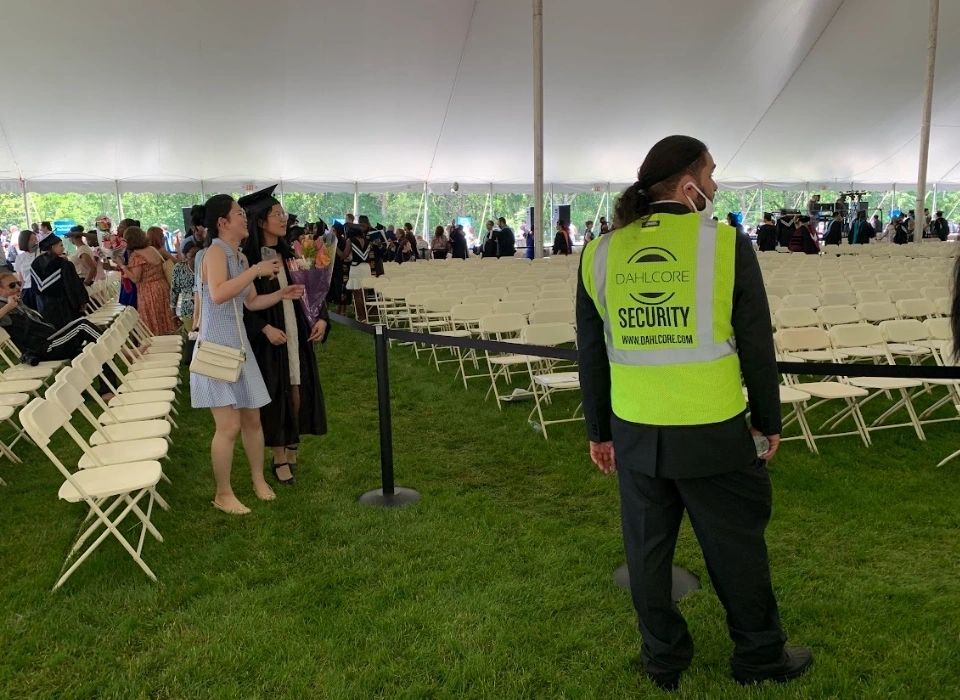
Every school day, parents send their children through a set of doors and trust that those doors open into a safe environment. For administrators and school boards across New York City, maintaining that trust means making difficult, high-stakes decisions about campus security — decisions that affect not just physical safety, but school culture, community relationships, and legal standing.
One of the most debated questions in K-12 school safety today is this: Should your school employ armed or unarmed security guards?
There is no single right answer. What works for a large public high school in the Bronx may not fit a private elementary school in Brooklyn. But by understanding the real differences between these two approaches — including their practical roles, legal implications, costs, and cultural impact — school leaders and parent organizations can make a more confident, informed choice.
This guide breaks it all down for NYC educators and parents.
Understanding School Security Needs in NYC
Before choosing between armed and unarmed guards, it helps to understand the specific security landscape that New York City schools operate within.
NYC is home to over 1,800 public schools and hundreds of private and charter schools, serving more than 1 million students across five diverse boroughs [source needed]. Each neighborhood carries its own risk profile. Schools near high-traffic commercial corridors face different challenges than those in quieter residential areas. A school that has experienced prior incidents of trespassing or external threats will approach security differently than one where the primary concern is internal conflict resolution.
Key factors that should shape your security assessment include:
- Local crime patterns in the surrounding neighborhood
- Previous incidents on school grounds
- School size and student population
- Demographics and community sentiment toward visible security presence
- Existing relationships with the NYPD’s School Safety Division
- Whether your school is public, private, or charter (this affects funding and regulatory requirements)
The NYC Department of Education coordinates with the NYPD’s School Safety Division, which currently deploys School Safety Agents — unarmed peace officers — across public schools citywide. Private and charter schools, however, have more autonomy in hiring outside security firms, which is where the armed vs. unarmed question becomes especially relevant.
Understanding your school’s specific risk environment is the essential first step before any security hiring decision.
Roles of Security Guards in K-12 Schools
It’s easy to think of security guards as a uniform presence at the front door. In reality, their roles are layered and vary significantly depending on whether they’re armed or unarmed.
Core Responsibilities Shared by Both
Regardless of whether a guard carries a firearm, both types of security personnel typically handle:
- Access control: Monitoring entry and exit points, verifying visitor identities, and enforcing check-in protocols
- Patrol: Walking the campus perimeter and interior to deter unauthorized activity
- Emergency response: Following established protocols during lockdowns, evacuations, or medical emergencies
- Incident documentation: Logging and reporting security-related events
- Student interaction: Maintaining order in hallways, cafeterias, and common areas
Where They Diverge
Armed guards are trained and licensed to carry firearms. They are typically positioned in schools where there is a higher perceived threat level or where the school administration has determined that a visible deterrent is necessary. Their presence signals a strong security posture, which can be a deterrent to external threats.
Unarmed guards rely on de-escalation, communication, and physical presence to manage situations. Many are trained in conflict resolution, crisis management, and first aid. In a school setting, they often build ongoing relationships with students and staff, becoming familiar faces rather than enforcement figures.
For example, an unarmed guard at a middle school in Queens might spend part of each morning greeting students by name, flagging a student who seems distressed, and coordinating with a school counselor. That relational dynamic is harder to achieve when a guard is primarily positioned as an armed deterrent.
Pros and Cons of Armed Security Guards in Schools
The Case For Armed Guards
Deterrence value. The most commonly cited benefit of armed guards is deterrence. The visible presence of an armed professional may discourage external threats — including individuals who might attempt to enter the school with harmful intent.
Rapid response capability. In an active threat scenario, an armed guard on-site can potentially respond faster than waiting for law enforcement to arrive. Response time matters in emergencies, and proximity counts.
Reassurance for some stakeholders. Some parents and board members feel more secure knowing armed personnel are on campus. In communities that have experienced gun violence in nearby areas, this perception of enhanced protection can be meaningful.
The Case Against
Impact on school culture. Research consistently suggests that a heavily fortified school environment — including armed guards — can make students feel more like they’re in a corrections facility than a place of learning [source needed]. This is particularly significant for younger children.
Liability and risk. Armed guards in schools introduce liability concerns. If a firearm is discharged — whether intentionally or accidentally — the school, district, or contracting agency faces serious legal exposure. Proper licensing, training standards, and insurance become critical.
Escalation risk. In emotionally charged situations involving students — which are frequent in school settings — the presence of a firearm can escalate rather than resolve conflict.
Regulatory complexity. In New York, armed security personnel must hold a valid armed security guard license through the New York State Department of State. The requirements include firearms training, background checks, and annual registration. Ensuring compliance with these requirements is an administrative burden that not all schools are equipped to manage.
Advantages of Unarmed Security Guards in Schools
Why Unarmed Guards Are Often the Better Fit for Schools
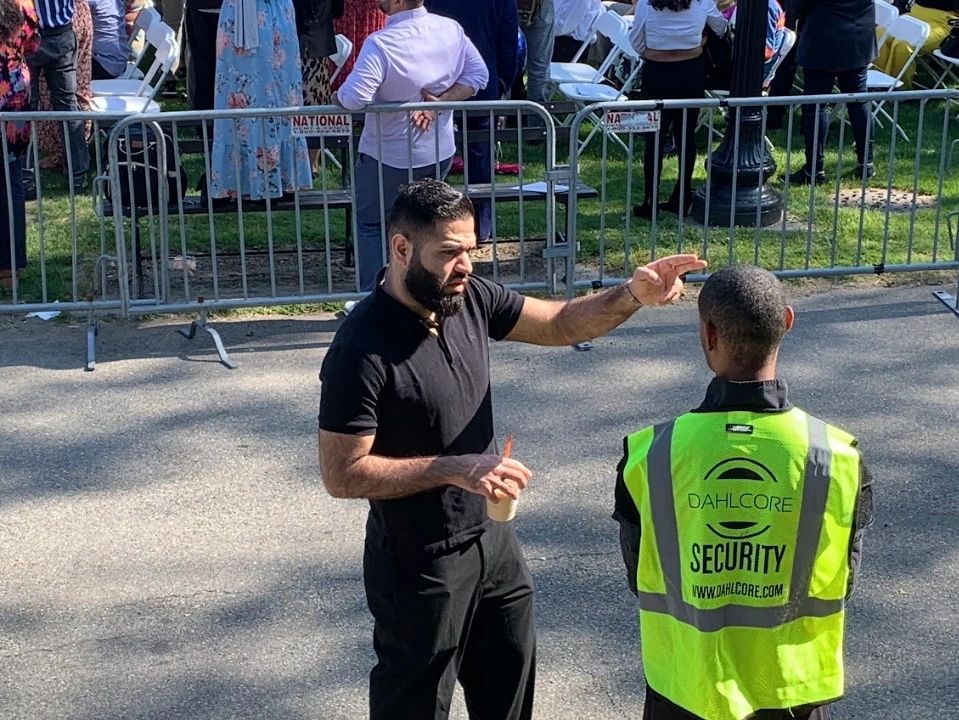
Unarmed security guards are the more commonly deployed option in K-12 school settings — and for good reason.
Non-threatening presence. Students, especially younger ones, are more likely to approach and cooperate with an unarmed guard. This accessibility is valuable for early intervention. A student who feels comfortable telling a security guard that something feels “off” can help prevent problems before they escalate.
De-escalation focus. Unarmed guards are trained to defuse conflict through communication rather than force. In a school environment where peer disputes, emotional crises, and mental health challenges are everyday realities, this skillset is directly relevant.
Relationship-building capacity. Over time, unarmed guards who are embedded in the school community become trusted figures. That relationship is a genuine safety asset — it creates a network of informal observation and communication that no camera system can replicate.
Lower liability and cost. Unarmed guards are less expensive to hire and carry a significantly lower liability profile than armed personnel. For schools working within tight budgets — a common reality in NYC — this matters.
Potential Limitations
Unarmed guards cannot physically stop an armed intruder. In a worst-case active shooter scenario, their limitations are real. This is why unarmed security should always be part of a layered safety system — not the only line of defense. Pairing unarmed guards with strong visitor management systems, access-controlled entrances, security cameras, and rehearsed lockdown protocols creates a much more resilient safety framework.
Legal and Financial Considerations
Navigating New York State Requirements
In New York State, security guards — whether armed or unarmed — must be registered with the NYS Department of State under the Security Guard Act. This includes background checks and completion of approved training courses. Armed guards have additional requirements related to firearm licensing and training hours.
Schools that hire through a licensed security agency bear less of this compliance burden directly, but they should verify that the agency and its personnel are fully licensed and insured. If a guard is found to be operating outside of their license scope, the school may share in the liability.
NYC-Specific Considerations
Public schools in NYC that work with the NYPD’s School Safety Division operate within a structured, city-managed framework. Private and charter schools contracting independent security firms must conduct their own due diligence — including verifying agency licenses through the NYS DOS public registry.
Budget Reality
Armed security guards command significantly higher hourly rates than unarmed guards, driven by additional training, licensing requirements, and insurance costs. For a small to mid-size private school, the annual cost difference between an armed and unarmed security contract can be substantial. Schools should request fully itemized proposals from security firms and factor in not just guard salaries, but also supervision, insurance, and compliance management.
Impact on School Environment and Culture
How security is perceived matters as much as what it actually does.
Students in schools with a heavy security presence — metal detectors, uniformed armed guards, frequent searches — report higher levels of anxiety and a reduced sense of belonging [source needed]. For students who already have difficult relationships with law enforcement due to their community experiences, an armed guard can feel like an extension of systems that have not historically protected them.
Conversely, schools where security personnel are warm, visible, and relationship-oriented tend to report stronger student trust in school adults — which has direct safety benefits. Students who trust adults tell them when something is wrong.
This doesn’t mean security presence is inherently harmful. It means that how security is implemented — who is hired, how they’re trained to interact with students, what authority they’re given — shapes the culture just as much as whether they carry a weapon.
Schools that have successfully integrated security into a positive school culture share a few common traits: guards receive training in adolescent development and trauma-informed approaches, there are clear protocols that limit adversarial student-guard interactions, and security staff are introduced to students as part of the school community, not as an external enforcement body.
Case Study: A Look at NYC Schools
Public School Context: Unarmed School Safety Agents
The NYPD’s School Safety Division manages approximately 5,000 School Safety Agents deployed across NYC public schools. These agents are unarmed peace officers trained specifically for school environments. They receive training in emergency response, conflict resolution, and school-specific protocols.
Over the years, NYC’s model has evolved — particularly following community feedback about the over-criminalization of student behavior. The city has made efforts to shift School Safety Agents toward a more supportive, less punitive role, including training in restorative practices.
The outcomes have been mixed. Some schools report strong positive relationships between agents and students. Others have faced criticism for agents being used to handle routine disciplinary matters that should be managed by school counselors or administrators. The lesson: even with good personnel, the policy framework around security is what determines outcomes.
Private School Context: Contracted Unarmed Guard Services
A private K-8 school in Manhattan (details generalized) transitioned from volunteer front-desk monitoring to a contracted unarmed security service following a series of unauthorized visitor incidents. The school hired a licensed security firm to station one guard at the main entrance from 7:30 AM to 4:00 PM.
The guard was briefed on the school’s visitor management system, introduced to staff and students at the beginning of the year, and given specific protocols for handling deliveries, late pickups, and unannounced visitors.
Within the first semester, unauthorized entry incidents dropped significantly. Parent satisfaction surveys showed increased comfort with school safety. Critically, no students or teachers reported feeling intimidated or anxious about the security presence — largely because the guard had been integrated thoughtfully rather than dropped into place.
The Armed Guard Discussion
A small number of private schools in higher-risk areas of NYC have explored armed guard options, particularly following high-profile national incidents. In almost every case reviewed informally by school safety consultants [source needed], schools that engaged in genuine community consultation — including parents, staff, and older students — ultimately chose unarmed solutions supplemented by enhanced access control technology. The community feedback consistently cited concern about normalizing weapons in a children’s environment.
Choosing the Right Security Solution for Your School
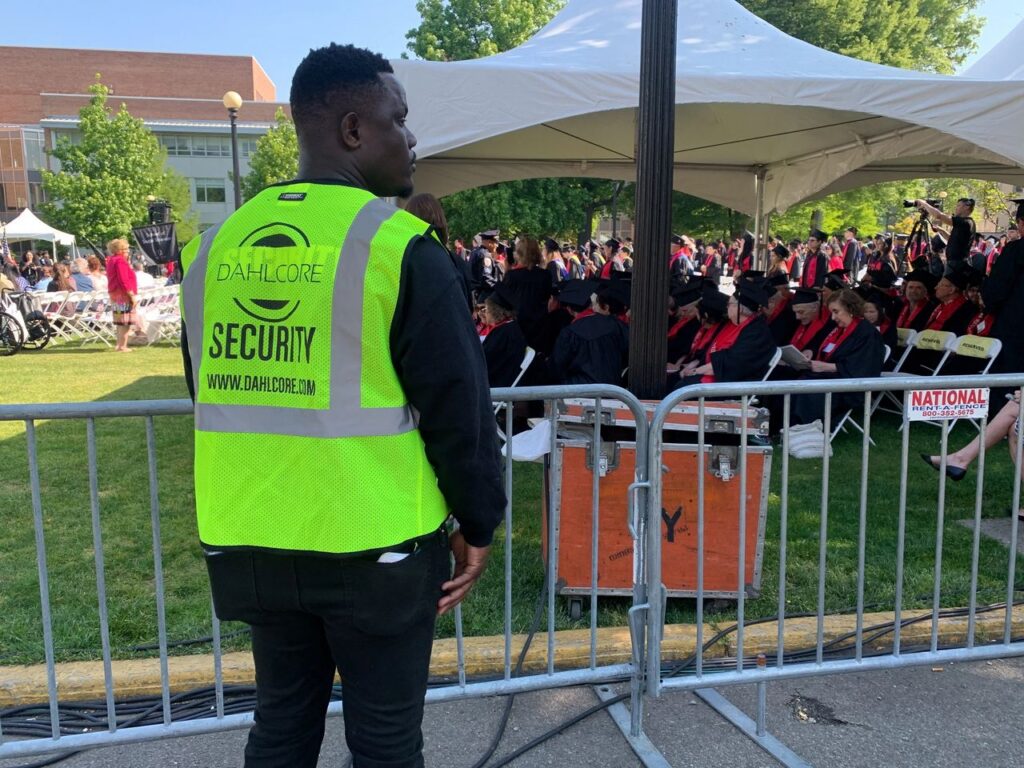
There’s no universal template. But there is a process.
Step 1: Conduct a formal security assessment. Before hiring anyone, walk through your campus with a security professional. Identify vulnerabilities: entry points, sightlines, areas without camera coverage, and after-hours access risks.
Step 2: Review your incident history. What has actually happened at your school in the past three to five years? Let data guide priorities rather than fear-driven assumptions.
Step 3: Engage your community. Parents, teachers, and — where age-appropriate — students should have input. Security decisions that surprise the community erode trust even when well-intentioned.
Step 4: Understand your legal obligations. Consult with legal counsel familiar with NYS school security requirements before signing any contract.
Step 5: Vet your security provider carefully. Check licensing through the NYS DOS registry, ask for references from other schools, and review training protocols — especially how guards are trained to interact with minors.
Step 6: Establish clear policies. A security guard is only as effective as the policies they’re working within. Define their authority, their escalation protocols, and their relationship to school disciplinary procedures before day one.
Key Takeaways
- Armed guards offer deterrence but come with significant legal, financial, and cultural tradeoffs that make them a poor fit for most NYC K-12 schools.
- Unarmed security guards, when properly selected, trained, and integrated, are highly effective in school settings — particularly when they build relationships with students and staff.
- NYC public schools operate under the NYPD’s School Safety Agent framework; private and charter schools have more flexibility and responsibility in their security choices.
- Legal compliance is non-negotiable. All security personnel in New York must be licensed under the NYS Security Guard Act.
- School culture matters. How security is implemented affects student wellbeing, trust, and ultimately, safety outcomes.
- Layered security — combining trained personnel with technology and clear protocols — outperforms any single measure.
- Community engagement is not optional. Decisions made without input from parents and staff create friction that undermines safety.
FAQs
How do armed guards deter school violence?
Armed guards create a visible security presence that may discourage external bad actors who are aware of it. However, research on the deterrent effect of armed guards specifically in schools is limited and mixed [source needed]. Most security experts recommend that deterrence be built into the full security architecture — access control, camera coverage, visitor screening — rather than relying on a single armed point of presence.
What training do unarmed security guards receive in New York?
Under New York State law, unarmed security guards must complete an 8-hour pre-assignment training course and a 16-hour on-the-job training course, followed by an 8-hour annual refresher. Guards working in school settings should also receive additional training in adolescent behavior, de-escalation, and trauma-informed approaches — either from the hiring school or their security firm.
Are there insurance implications for armed guards in schools?
Yes. Schools that employ or contract armed security personnel typically face higher general liability premiums, and their security contractors’ insurance requirements are more stringent. Any incident involving a firearm on school property — even an accidental discharge — can result in significant legal liability. Schools should require full insurance documentation from any armed security firm and consult with their own insurer before making a decision.
How should schools involve parents in security decisions?
Transparency builds trust. Best practices include: presenting security plans at PTA or school board meetings before implementation, creating an advisory group that includes parent representatives, sharing the rationale behind security choices (not just the decision itself), and establishing a feedback mechanism for ongoing concerns. Parents who feel consulted are far more likely to support — and reinforce — school safety protocols.
What security guard services are recommended for New York City schools?
Schools should look for licensed security firms with documented experience in educational settings, not just commercial or retail security. Key criteria: active NYS licensing, staff trained in working with minors, clear supervision and accountability structures, and willingness to customize protocols to your school’s specific environment.
Can a school use both armed and unarmed guards?
Yes. Some larger campuses employ a tiered approach — unarmed guards for daily student-facing interaction and access control, with armed personnel stationed at perimeter access points or event security. This hybrid model attempts to preserve school culture while maintaining a higher deterrent capacity. It also significantly increases cost and administrative complexity, so it’s typically only practical for larger institutions.
What is the difference between a School Safety Agent and a private security guard in NYC?
School Safety Agents are NYPD-affiliated peace officers assigned to NYC public schools. They have specific legal authority under New York law and operate within NYPD protocols and oversight. Private security guards — whether armed or unarmed — are civilians employed by licensed agencies and do not carry peace officer status. Their authority is limited to what any private citizen holds, plus any specific authority granted by the property owner (the school).
Not sure which security approach is right for your school? Our team provides confidential campus security assessments tailored to NYC K-12 environments. Contact us to schedule a consultation.
