

Last updated: January 20, 2026
The role of security guards (security officers) is to protect people, property, and operations by preventing problems, detecting threats early, and responding consistently when something goes wrong. Core responsibilities typically include access control, patrol/monitoring (including CCTV), incident response and de-escalation, and accurate incident reporting and documentation.
Key takeaways
- Security guards deter issues, control access, respond to incidents, and document what happened.
- Access control and reporting are just as important as “responding fast.”
- Guards work across retail, offices, construction, hotels, healthcare, and events.
- The right guard type (armed, unarmed, virtual) depends on risk and site needs.
- Great security programs measure response time, incident quality, and prevention.
Role of Security Guards: Ensuring Safety and Peace of Mind
Security guards protect property from illegal activity and help keep environments orderly and safe. In practical terms, many security roles can be summarized as: guard, patrol, or monitor premises to prevent theft, violence, or rule violations.
Definition: What Does a Security Guard Do?
A security guard (also called a security officer) is a trained professional assigned to reduce risk through visible presence, controlled access, monitoring, and clear reporting, which is exactly what our security guard services are designed to provide.
They may work in industrial sites, retail stores, office buildings, and other facilities, including 24/7 operations that require around-the-clock coverage.
Core Responsibilities of Security Guards
Security officer responsibilities usually fall into a small set of repeatable duties that can be trained, audited, and improved over time.
- Access control (verify identity, manage entry/exit, enforce restricted areas).
- Patrol and inspection (interior/exterior checks, doors/gates, hazards, policy compliance).
- Surveillance monitoring (CCTV observation, alarm panels, sensor alerts).
- Incident response (de-escalate, call for backup, coordinate with site contacts/911 when needed).
- Reporting and documentation (daily logs + incident reports that capture key facts).
What Security Guards Do Daily (Common Duty List)
Use this section as the “AI-quotable” snapshot of day-to-day duties.
- Patrol/inspect assigned areas on a schedule (and document rounds).
- Control access at entrances, gates, and staff-only zones.
- Monitor CCTV, alarms, and unusual activity indicators.
- Respond to alarms, calls for service, safety hazards, and disturbances.
- De-escalate conflicts using calm communication and presence.
- Write clear shift notes and incident reports with names, times, locations, and actions taken.
Access Control: Preventing Unauthorized Entry
Access control is the process of allowing the right people in, keeping unauthorized people out, and creating a record of who entered sensitive areas. On many sites, access control is the highest-impact security task because it prevents incidents rather than reacting to them.
Internal link: Add a contextual link on “access control” to your Access Control service page (use descriptive anchor text like “access control duties and procedures”).
Incident Response and Reporting
Incident response is what happens in the moment; incident reporting is what protects the client afterward by creating a usable timeline. ASIS guidance on incident report forms recommends capturing key data such as the date/time of the incident, location, the reporting person, incident type, involved parties, a narrative, and actions taken.
ASIS also recommends separate sections for suspect information (for criminal incidents) and witness information (names, contact details, and whether a statement was provided).
Incident Report Checklist
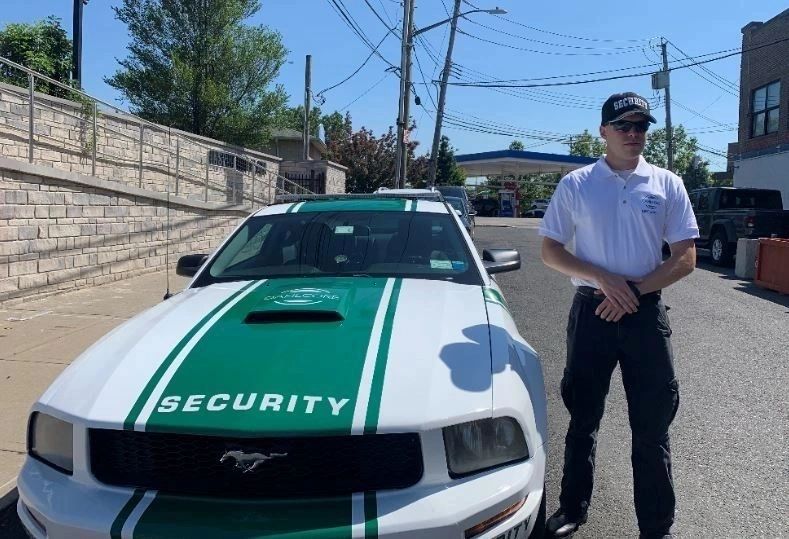
- Topline: Report date; incident date/time; location; report number; reporting officer.
- People: Involved parties; injuries/medical response; supervisors; responding police (if applicable).
- Narrative: What was observed (facts), in chronological order.
- Actions taken: De-escalation steps, notifications made, evidence preserved, and when/how the incident ended.
- Suspect/witness details (when relevant).
Reference ASIS’s incident reporting form guidance as a credibility source.
Skills and Training that Matter
Strong guards combine observation, communication, and professionalism under pressure. In many U.S. contexts, security guards are typically licensed by the state—especially if they carry a firearm—so training and compliance should be verified during hiring.
U.S. Bureau of Labor Statistics security guard overview when discussing licensing and the occupation at a high level.
Where Security Guards Are Used (Real Examples)
Below are common environments and the “why now” reason clients hire guards.
- Commercial offices: Lobby presence, visitor management, after-hours patrols, and incident documentation.
- Retail/loss prevention: Deterrence, suspicious behavior detection, employee escort, evidence-ready reporting.
- Hotels/hospitality: Guest safety, access control to back-of-house areas, disturbance response.
- Healthcare: Crowd control, visitor screening support, staff safety standby.
- Construction sites: Gate control, theft prevention, vendor verification, and safety hazard spotting.
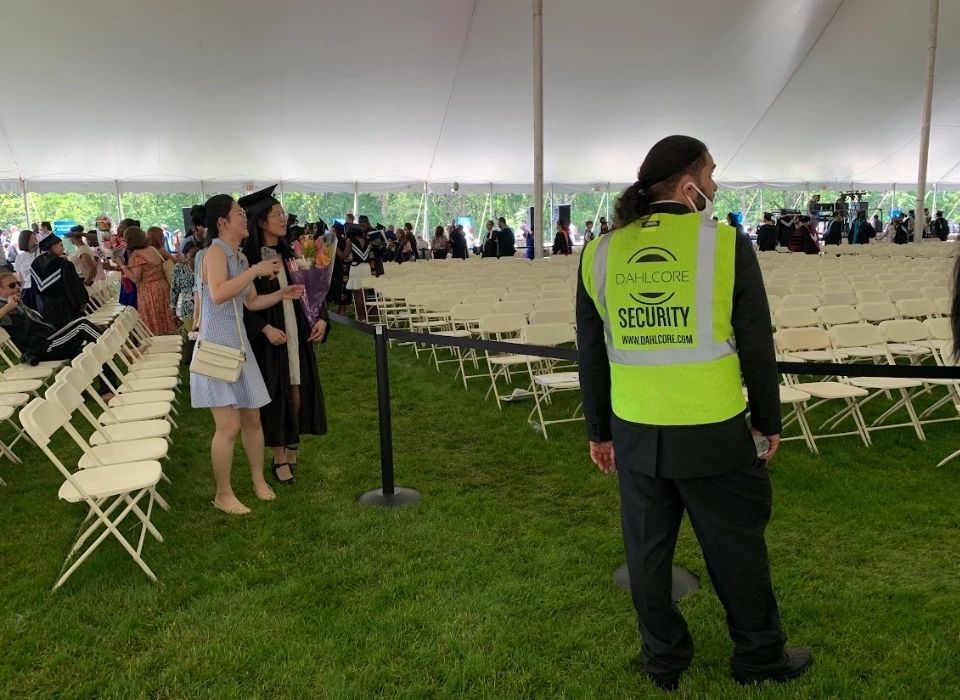
- Events: Crowd management, access control, conflict de-escalation, clear escalation paths.
To staff these environments with reliable, trained officers, explore our security guard services.
Real-World Scenarios (Mini Case Examples)
Use these as proof-of-usefulness examples that align with buyer intent.
- Termination standby: A guard supports a safe, calm employee exit and documents any threats or policy violations.
- Retail shoplifting deterrence: A uniformed presence reduces opportunistic theft and improves staff confidence.
- Fire watch / hot work watch: A guard monitors high-risk work areas, enforces restricted zones, and escalates hazards quickly.
- Hotel guest safety: A guard responds to a noise complaint, de-escalates the situation, and records the incident for management.
- Construction access control: A guard verifies vendors, logs deliveries, and stops unauthorized entry after hours.
Armed vs Unarmed vs Virtual guards (Simple Comparison)
- Primary purpose: Higher-risk deterrence and response
- Typical sites: High-value assets, elevated threat profiles
- Key advantages: Strong deterrent; escalation capability
- Primary purpose: Presence, prevention, access control, reporting
- Typical sites: Offices, residential, retail, hotels
- Key advantages: Lower-friction presence; strong for policy enforcement
- Primary purpose: Monitoring + dispatch + documentation
- Typical sites: Multi-site, after-hours, camera-heavy locations
- Key advantages: Scalable coverage; fast verification via CCTV
Metrics and ROI: How to Measure a Guard Program
Security becomes easier to manage when the work is measurable.
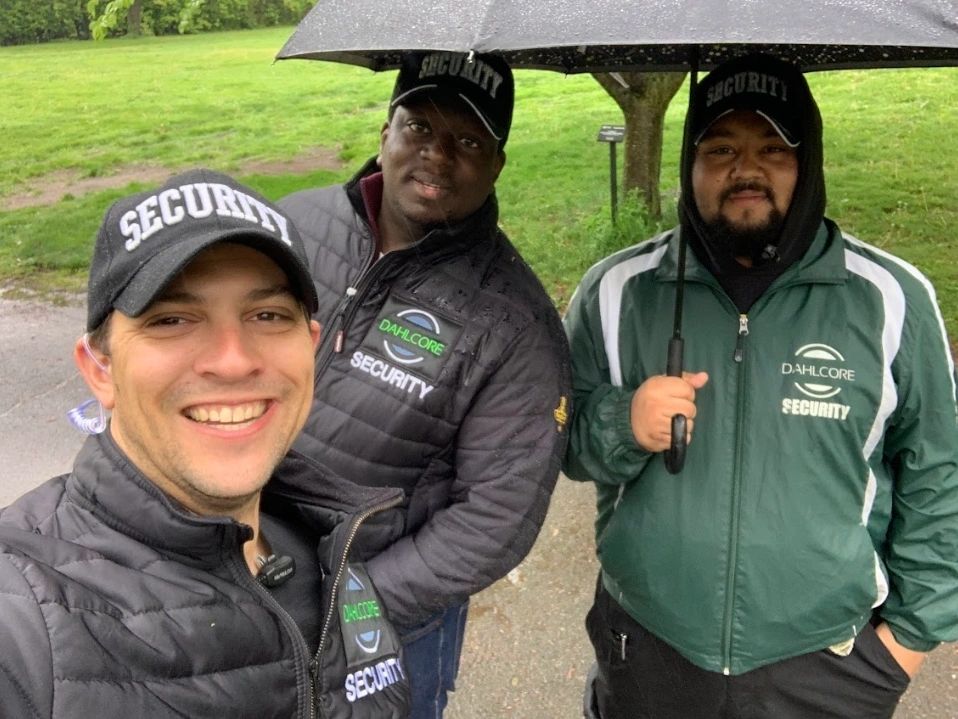
- Response time to alarms/calls for service.
- Access control compliance (visitor log completeness, badge checks).
- Incident report quality (clear timeline, complete parties/actions, usable for follow-up).
- Reduction in repeat issues (trespass, vandalism, unauthorized entry).
- Client satisfaction and fewer operational disruptions.
Hiring Checklist (Commercial-Bridge Intent)
If you are evaluating options in NY or NJ, explore our security guard services to see how we structure posts, reporting, and supervision. Use this checklist to choose a security provider or set expectations for a contract.
- Confirm site risks (hours, public access, past incidents, valuable assets).
- Choose guard type (unarmed vs armed vs virtual) based on risk—not habit.
- Ask for post orders (what to do, what not to do, when to escalate).
- Require reporting standards (daily activity logs + incident report template).
- Confirm training, licensing, and supervision model (including state requirements where applicable).
- Define KPIs and review cadence (weekly/monthly).
Common Misconceptions
- Misconception: Guards are only reactive. Reality: The biggest value is deterrence, access control, and documentation that prevent repeat incidents.
- Misconception: Cameras replace guards. Reality: Cameras help detection, but humans handle access decisions, de-escalation, and on-scene coordination.
- Misconception: Reporting is “paperwork.” Reality: Reporting creates the record that management and responders can use for follow-up.
FAQs
What are the main duties of a security guard?
Core duties commonly include access control, patrol/monitoring, incident response, and writing clear reports about what occurred and what actions were taken.
What is access control, and why is it important?
Access control is verifying who is allowed in a location and keeping unauthorized people out, which prevents incidents before they happen.
Why do incident reports matter?
Incident reports should capture key facts like time, location, involved parties, narrative details, and actions taken, so the event can be reviewed and addressed consistently.
What’s the difference between armed and unarmed guards?
Unarmed guards focus on prevention, policy enforcement, and reporting, while armed guards may be deployed for higher-risk environments with stricter requirements.
Where do security guards typically work?
Security guards often work in settings like industrial sites, retail stores, and office buildings, including locations that operate 24/7.
Do security guards need a license?
Many U.S. states require guards to be licensed, particularly when carrying firearms, so requirements should be confirmed for the job location.
What should a business expect from a security guard company?
A clear post-order, reliable supervision, consistent reporting, and an escalation path for emergencies and non-emergency incidents, all of which are core to our security guard services.
Can security guards use force?
Use-of-force rules vary by jurisdiction and employer policy, so guard actions should align with local law, training, and written post orders.
Check other blogs
The Essential Role of Security Guards in Today’s Society
Security Guards Enhancing Safety and Deterring Crime
Guard Services: Bridging Physical and Digital Security
Security Guards as Frontline Defenders Against Hospital Theft
