

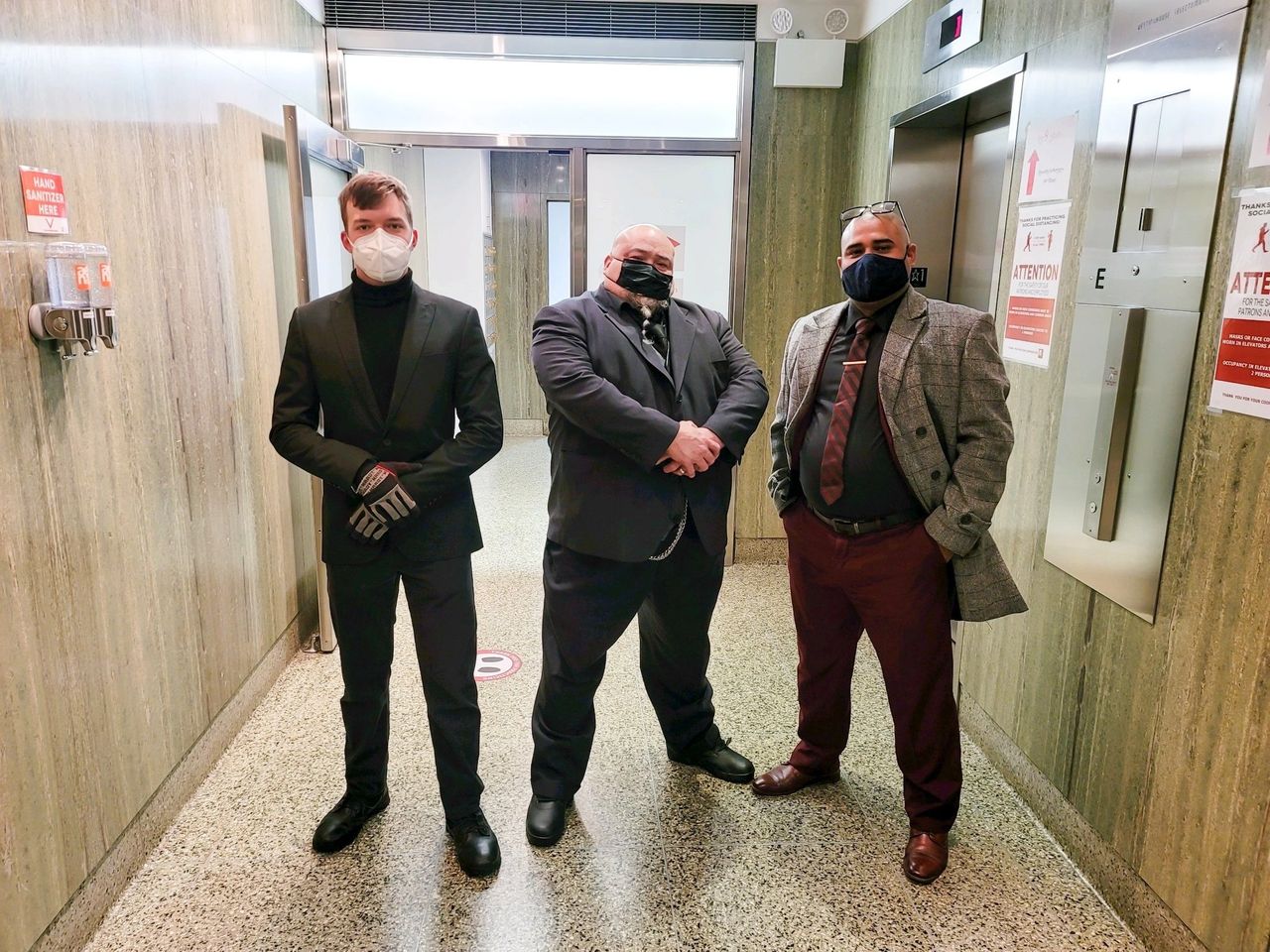
Top Private Security Tips in New York
If you live or do business in New York, you’re dealing with crowded streets, mixed‑use buildings, and real crime risks that change from block to block. You can’t rely on one gadget or one guard; you need layered security that fits your neighborhood and lifestyle. The good news is that a handful of smart, consistent habits will dramatically lower your chances of a break‑in, assault, or internal theft.
Start by thinking in layers: perimeter, building, unit, and digital. At the perimeter, use solid lighting, visible cameras where allowed, and clear signage to signal that your property is monitored. Inside the building, focus on controlled entrances, working intercoms, and clear policies for deliveries and visitors. Within your office or apartment, reinforce doors and windows, lock storage areas, and manage who has keys, fobs, or access codes. On the digital side, protect your Wi‑Fi, camera logins, and cloud accounts with strong passwords and multi‑factor authentication so attackers can’t slip in through your apps. Over time, review incidents, access logs, and near‑misses so you can keep tightening your weakest points instead of guessing where the risks are.
Why Choosing the Right Security Firm in New York Matters
Picking a security firm in New York is not like buying a generic alarm system; you’re choosing a partner that will represent you at the door and stand between you and serious threats. If the firm cuts corners, you may end up with sleepy guards, missed incidents, and a false sense of safety. If you choose well, you get trained professionals who deter crime, respond to problems, and give you documentation that actually protects you in insurance or legal situations.
New York, in particular, adds extra complexity. Buildings often have union rules, strict management policies, and a mix of residential, retail, and office tenants under one roof. You want a firm that understands how to work with property managers, superintendents, co‑op boards, and HOAs, not just one‑time event clients. A good security partner will tailor post orders to your borough and building type, coordinate with your local police precinct when appropriate, and help you stay compliant with state licensing rules. In a city this dense, the wrong firm is more than an inconvenience; it can expose you to lawsuits, bad reviews, and preventable incidents.
Key Factors When Choosing a Private Security Firm in New York
Instead of going by price or a slick brochure, use clear criteria when choosing a security firm in New York. Think of it as a checklist: legal compliance, experience, training, technology, communication, and fit with your site. When you evaluate each company against the same list, it’s much easier to see who’s serious and who’s just selling you bodies in uniforms.
Here’s a quick summary of the most important factors:
Licensing & insurance
- What to look for: Active New York State license, liability insurance, and workers’ compensation coverage.
New York experience
- What to look for: Real track record in NYC boroughs or upstate cities with relevant property types.
Training standards
- What to look for: Guards who exceed state training minimums, with ongoing refreshers and site‑specific instruction.
Service scope
- What to look for: Ability to provide guards, concierge, mobile patrols, events, or executive protection as you grow.
Technology & reporting
- What to look for: Use of guard tour systems, digital incident reports, and integration with CCTV and access control.
Customization
- What to look for: Site‑specific risk assessments and post orders instead of generic, copy‑paste routines.
References & reputation
- What to look for: Local case studies, online reviews, and references you can actually call.
Transparency & pricing
- What to look for: Clear rates, simple contracts, and no surprise fees for basics like supervision or reports.
Local coordination
- What to look for: Familiarity with NYPD crime‑prevention programs and building or neighborhood protocols.
As you talk to firms, keep this table handy and rank each provider. The one that consistently scores well on licensing, training, and communication—without hiding behind jargon or vague promises—is usually your safest bet, even if they’re not the cheapest.

Check New York State Licensing, Insurance, and Legal Compliance
Before you fall in love with a sales pitch, verify that the company is legally allowed to protect you in New York. Security companies in the state must be licensed, and individual guards must be properly registered, trained, and background‑checked. If a firm struggles to provide license numbers or proof of insurance, that’s your cue to walk away.
Ask for three things up front: the company’s New York State license number, proof of general liability and workers’ compensation insurance, and confirmation that all guards assigned to you hold valid security guard registrations. Then, take a few minutes to check those details against official state resources or trusted training organizations. This quick due diligence step protects you from hiring unqualified companies that could expose you to fines or lawsuits if something goes wrong. In a state as regulated as New York, compliance isn’t a nice‑to‑have; it’s the baseline.
Assess Experience, Specialization, and NYC Fit
A firm might be excellent at securing warehouses in rural areas but struggle with a 30‑story mixed‑use building in Brooklyn or a boutique walk‑up in Manhattan. That’s why you should dig into specific experience, not just the total number of years in business. You want a company that has already solved problems similar to yours, ideally in your borough or a comparable neighborhood.
When you talk to potential providers, ask them what types of sites they handle most often: luxury condos, co‑ops, Class A offices, retail corridors, industrial parks, or event venues. Listen for mentions of real New York locations and challenges, like dealing with busy lobbies in Midtown, nightlife crowds on the Lower East Side, or package theft in Brooklyn brownstones. Request case studies or anonymized examples that show how they handled access control, incidents, and communication in those settings. The more clearly they can connect their past work to your day‑to‑day reality, the more confident you can be that they truly “fit” New York, not just security in general.
Evaluate Training, Professionalism, and Guard Quality in New York
In practice, your experience with a security firm often comes down to the guards at your door and in your hallways. New York requires baseline classroom and on‑the‑job training before and after guards are registered, but better companies go beyond the minimum. You should understand how a firm recruits, trains, supervises, and, when needed, disciplines its personnel.
Ask each provider to break down its training program: how many hours guards get before hitting a post, how often they receive refresher courses, and what topics the training covers. Look for more than just “legal basics”; you want customer service, de‑escalation, emergency response, report writing, and site‑specific procedures. It also helps to ask how the company ensures guards actually follow those procedures—do supervisors make regular unannounced visits, review reports, and coach underperformers? Professional, engaged guards will greet residents or customers properly, stay alert, and keep clean, consistent logs, while poorly trained ones may simply warm a chair and miss warning signs.
Understand the Firm’s Security Process and Risk Assessment
A serious New York security firm will insist on understanding your risks before recommending hours, posts, or technology. That usually means a walkthrough, a conversation about past incidents, and a structured way of turning risks into concrete actions. If a company jumps straight to pricing without asking many questions, be wary.
During the assessment, expect them to check entrances, exits, elevators, fire escapes, loading docks, rooftops, and any dark or hidden areas. They should ask who occupies the building, what hours it’s active, how deliveries are handled, and whether any tenants or executives have special risk profiles. From there, they’ll propose specific measures: guard posts, patrol routes, camera positions, visitor rules, alarm responses, and reporting formats. Get this in writing as a site‑specific security plan or set of post orders. That document becomes your roadmap—and gives you something to hold the firm accountable to if reality doesn’t match the promise.
Technology, Reporting, and Integrated Security in NYC
In New York, space is tight, people move fast, and a lot can happen between guard patrols. That’s where technology becomes a powerful force multiplier, helping smaller teams cover more ground and providing clear evidence when something goes wrong. The best firms will help you combine people and tech rather than treating them as separate worlds.
Ask about their comfort with your existing systems: cameras, access control, visitor‑management platforms, intercoms, and alarm systems. Can they monitor your feeds, respond to alerts, and pull footage when needed? Do they use guard tour tools such as QR codes, NFC tags, or GPS checkpoints to prove that rounds are done properly and on schedule? Also check how you’ll receive information: daily activity reports by email, a client portal with logs and photos, or real‑time alerts for serious incidents. When guards, cameras, and software all line up, you get a much clearer picture of what’s happening in your New York property and a stronger deterrent effect.
Budgeting and Comparing Costs in New York
Security in New York is not cheap, but cutting too many corners can be even more expensive in the long run. Instead of focusing only on the hourly rate, look at the value you’re actually getting. Two firms with similar prices might be worlds apart in terms of guard quality, supervision, and support.
When proposals arrive, compare them side by side. Look at guard wages and whether they’re high enough to attract reliable people in an expensive city. Check how many supervisory visits are included each week or month. Confirm whether radios, uniforms, basic equipment, and reporting tools are included or billed separately. Pay attention to contract length and exit clauses so you’re not stuck with a poor fit for years. Often, the smartest move is to choose a mid‑priced firm with strong training and oversight; you’ll likely see fewer incidents, lower turnover, and better overall stability than you’d get from the rock‑bottom option.
Local Laws, Standards, and New York Security Context
New York’s combination of state‑level licensing and city‑level realities means you can’t ignore the legal framework. Guards must meet age, eligibility, and training requirements, and they undergo fingerprint‑based background checks. Companies that take these rules seriously tend to take their responsibilities to clients seriously, too. Some municipalities, like Saratoga Springs, even publish specific security guard licensing and compliance rules for businesses that employ guards.
For your part, it’s helpful to understand at least the basics. Know that guards must complete initial coursework before they start, follow up with on‑the‑job training, and attend yearly refresher classes to keep their registrations active. Be aware that your own building policies—such as house rules, visitor regulations, and emergency plans—need to mesh with what the security firm is doing. Many New York neighborhoods also benefit from crime‑prevention guidance shared through local business improvement districts and community groups, often working in partnership with nearby police precincts. Taking advantage of those resources can strengthen what your private security team is already providing. For example, the SoHo Broadway Initiative publishes NYPD-backed crime prevention and burglary reduction tips for New York residential and commercial buildings.

Private Security Tips for New York Homes and Apartments
Whether you’re in a Manhattan high‑rise, a Brooklyn brownstone, a Queens multi‑family, or a suburban home upstate, a few targeted private security tips go a long way. Start by securing your main doors with quality deadbolts, reinforced strike plates, and peepholes or door cameras so you can see who’s outside. In multi‑unit buildings, never buzz in people you don’t know, and don’t let strangers “tailgate” into the lobby behind you.
Inside your unit, place valuables out of sight from windows, and consider a small safe for passports, cash, and sensitive documents. For apartments with fire escapes, make sure windows are locked and consider contact sensors or compatible bars where allowed. Manage packages by using secure package rooms, lockers, or staffed locations when possible, since porch and lobby theft is common. If your building or homeowner association is open to it, push for better lighting, cameras in agreed‑upon common areas, and a clear policy for handling visitors and service providers. When private security guards or doormen are part of the picture, learn their names, follow their procedures, and report anything that feels off so they can respond quickly.
Executive Protection and Personal Security in Manhattan and Beyond
For executives, high‑net‑worth individuals, and public figures, New York presents both opportunity and exposure. High visibility, predictable routines, and busy public spaces can make certain people attractive targets. Executive protection, sometimes called personal security, is about managing that risk without completely sacrificing freedom of movement or comfort.
Good executive protection starts with a low‑key but thorough assessment: daily routes, office locations, home addresses, family routines, and upcoming events. From there, a specialized team can recommend trained protection officers, secure drivers, protective intelligence monitoring, and changes to habits that quietly reduce risk. In Manhattan, that might mean adjusted commute times, vetted garages, secure building entries, and coordination with venue security for events or speaking engagements. Outside the city, it could involve more focus on residential perimeter security and travel planning between properties. The right provider will balance discretion and visibility so that protection feels natural rather than overwhelming.
Cybersecurity and Privacy as Part of New York Private Security
Because so many New Yorkers use smart locks, app‑based intercoms, and Wi‑Fi cameras, your digital setup is now a critical part of your physical security. A weak password on a camera or alarm app can be as dangerous as a flimsy lock on a back door. Treat your devices as extensions of your doors and windows, not just convenient gadgets.
Begin by changing default usernames and passwords on routers, cameras, and smart locks, and use long, unique passphrases instead of simple codes that can be guessed. Turn on multi‑factor authentication wherever possible so a stolen password alone can’t unlock your feeds or settings. Keep all your devices and apps updated; many updates patch known security holes that attackers actively search for. If you run a business, separate your guest Wi‑Fi from your internal network to prevent visitors or compromised devices from reaching sensitive systems. Finally, when you hire a security firm, ask how they handle access to your systems and footage, who can view it, and how long data is retained. Their answers will tell you a lot about how seriously they treat your privacy.
How to Compare New York Security Proposals the Smart Way
Once you’ve met with a few firms, you’ll probably have several proposals sitting in your inbox that look similar on the surface. To cut through the noise, build a simple comparison grid and score each company on the factors that matter most to you. This turns an emotional decision into a practical one.
Here’s an example of what that might look like:
NYS license & insurance
- Firm A (NYC): Clear documentation, easy to verify
- Firm B (NYC): Provided after follow‑up, now verified
- Firm C (Upstate): Unclear at first, required multiple requests
NYC property experience
- Firm A (NYC): 15 years, condos & offices
- Firm B (NYC): 5 years, mostly events
- Firm C (Upstate): 10 years, suburban sites
Training above minimum
- Firm A (NYC): Robust initial and annual refresh
- Firm B (NYC): Minimal extra beyond state baseline
- Firm C (Upstate): Moderate extra training
Supervision & reporting
- Firm A (NYC): Frequent site visits, digital portal
- Firm B (NYC): Infrequent visits, paper logs
- Firm C (Upstate): Regular check‑ins, email reports
Contract flexibility
- Firm A (NYC): 1‑year with reasonable exit terms
- Firm B (NYC): 3‑year, stiff penalties
- Firm C (Upstate): 1‑year, negotiable
Price level
- Firm A (NYC): Mid‑to‑high
- Firm B (NYC): Lowest
- Firm C (Upstate): Mid‑range
After filling this out with real data, you can quickly see which firms truly align with your priorities. Weight categories like licensing, training, and supervision are given more heavily than price, because those are the areas that most affect safety and long‑term satisfaction.

FAQs About Private Security Tips and Choosing a Security Firm in New York
What are the most important private security tips for a small business in New York?
Focus on strong access control, good lighting, and clear sight lines around entrances, plus CCTV that actually gets monitored and backed up. Combine that with strict cash‑handling procedures, clear opening and closing routines, and a licensed security firm that understands your neighborhood, so you’re not facing risks alone.
How do I know if a New York security firm is legally compliant?
Ask for the company’s state license number, proof of insurance, and guard registration details, then verify them using official or trusted resources. A compliant firm will share this information quickly and clearly, while an unreliable one may dodge the questions or delay providing documents.
What should I ask a New York security firm before hiring them?
Ask about licensing, training hours, supervisor visits, and experience with properties like yours in the same borough. Also, find out how they handle emergencies, communicate with you, coordinate with building management and police when needed, and what happens if you’re unhappy with a guard or want to change something in the plan.
Are private security tips different for NYC apartments versus suburban New York homes?
Yes. Apartments in the city usually focus on building entry, intercom use, elevator access, and shared spaces where many people come and go. Suburban homes put more emphasis on perimeter security, driveway and yard lighting, and controlling who can park or linger near the property, often with more space between houses.
How much does a good security firm in New York cost compared to cheaper options?
Reputable New York firms often charge more because they invest in better‑paid guards, stronger supervision, and proper insurance. Cheaper options might save you money up front, but can come with higher turnover, weaker training, and more risk of missed incidents or poor responses when it matters most.
Can a New York security firm also help with cybersecurity?
Many can at least coordinate basic protection for your cameras, access‑control systems, and cloud storage, even if they’re not full IT providers. It’s worth asking whether they follow secure practices for passwords, user accounts, remote access, and data retention so your digital defenses support your physical security instead of undermining it.
Conclusion
Choosing the right security firm in New York starts with understanding your risks, then carefully vetting companies on licensing, training, experience, and how well they fit your building and borough. When you combine a strong provider with smart daily habits at home or in your business, you create a much safer environment for everyone who lives, works, or visits there. Instead of reacting to incidents, you’ll be preventing them.
If you’re ready to take the next step, consider three moves. First, get a free on‑site security assessment from a licensed firm so you can see exactly where your vulnerabilities are. Second, book a consultation and compare at least two or three proposals using a clear scoring system, not just your gut. Third, schedule an annual security review so your protection evolves as crime patterns, building usage, and technology change across New York.
Explore our other blog posts here
Hire and Fire Companies | How They Work, Pros & Legal Risks
What Is a Guarding Company? Services, Rules & Legal Duties
Bank Armed Guard Services in New York (Duties, Risks & Training)
