

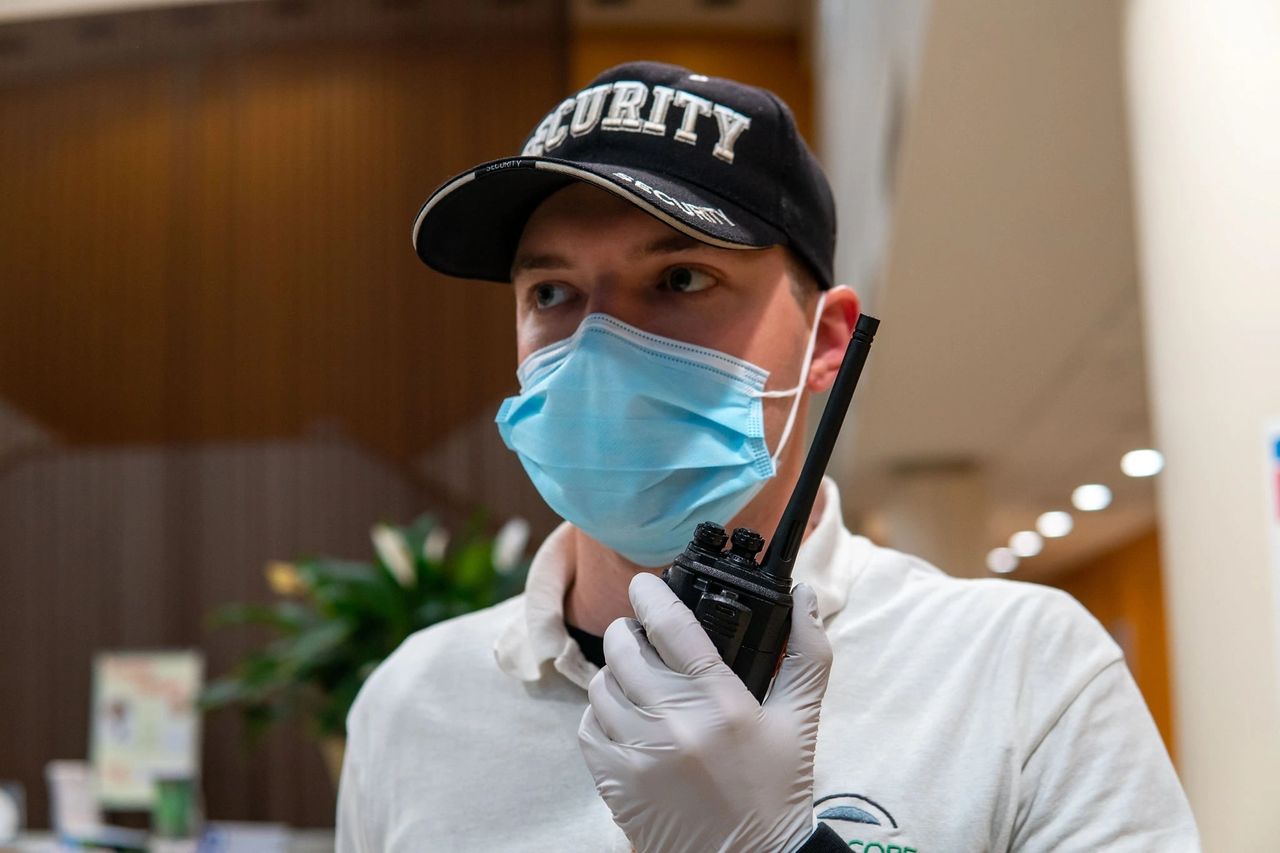
Bank Armed Guard Services
Direct answer (NY): Bank Armed Guard Services in New York provides trained, registered armed security guards for bank branches to deter threats, manage access, support high-risk moments (like opening/closing and cash movements), and respond calmly to emergencies using clear procedures and reporting.
Bank Armed Guard Services are professional security services where a bank uses trained guards who carry a firearm to help protect customers, staff, and critical areas like entrances, teller lines, and employee-only zones. In New York, Bank Armed Guard Services work best when they’re part of a bigger plan: written post orders, routine drills, calm customer communication, and coordination with the bank’s cameras, alarms, and policies.
Quick clarity: Armed doesn’t mean “looking for a fight.” It means “higher responsibility,” so the job leans heavily on prevention, de-escalation, and disciplined decision-making under pressure.
What New York Banks Protect
Direct answer: New York banks protect people first (customers and staff), then cash and sensitive areas, and then the bank’s ability to operate without panic or shutdowns after an incident.
A New York bank branch protects more than money. It protects people in close spaces—customers in line, tellers behind the counter, and employees during opening and closing routines when the environment can shift quickly.
NYC vs. Upstate Realities
In NYC, branches often deal with dense foot traffic, tight vestibules, and fast-changing lobby situations. Upstate and suburban branches can have different pressure points, like larger parking areas, quieter surroundings, winter darkness, and longer response times, depending on local coverage.
Ready takeaway: Your guard plan should match your branch “shape”—how people enter, where they wait, where they get frustrated, and where staff need breathing room.
Duties On a Normal Day
Direct answer: Daily duties usually include visible deterrence, access control, routine patrol/observation, helping keep the lobby calm, and writing clear reports so the bank can fix repeating issues.
Most days aren’t dramatic, and that’s the goal. A guard’s everyday work is about lowering risk through repeatable actions that are easy to supervise and easy for staff to understand.
Common day-to-day duties for Bank Armed Guard Services include:
- Visible presence near entrances and customer areas to discourage violence and disorder.
- Access control: watching the front door, checking employee-only doors, and noticing suspicious behavior early.
- Patrol and observation inside and outside the branch (including parking areas where applicable).
- Reporting: documenting incidents and near-misses so the bank can improve procedures and layout over time.
Access Control in NY Branches
Access control is where many problems either get solved early or become everyone’s emergency. A good guard watches for tailgating through staff doors, pays attention to ATM vestibules, and helps staff manage crowd flow during peak hours (paydays, lunch rush, end-of-day lines).
In New York, guards should know exactly when your internal policy says to contact NYPD (or other local law enforcement), and the bank should make those triggers crystal-clear in post orders.

Cash Movement and Escorts
Direct answer: The safest cash-movement security is predictable in procedure but not predictable in timing—clear roles, clear communication, and no “routine that repeats itself.”
Cash movement changes risk, even if nobody says it out loud. Banks often increase coverage during high-value moments—cash pickups, cash drops, ATM servicing, opening, and closing—because predictable patterns can invite trouble.
For Bank Armed Guard Services, a practical, safer approach is:
- Reduce predictability (avoid the same time, same door, same path every day).
- Assign clear roles (who watches, who communicates, who stays in the lobby).
- Avoid mixing responsibilities (guards protect people and space; staff handle bank operations unless policy says otherwise).
Boundaries and “Post Orders”
Post orders are the guard’s rulebook for your exact branch. They should spell out what the guard can do, what they must never do, and what triggers an immediate call to law enforcement—because armed coverage raises the consequences of improvising.
Ready line: Clear boundaries keep everyone safer than “hero thinking.”
Robbery and Workplace Violence Response
Direct answer: A strong response focuses on life safety, calm communication, quick notification, and accurate reporting—without escalating the situation.
Banks plan for robberies, but they also plan for workplace violence situations—threats, fights, domestic disputes that spill into the lobby, and unpredictable behavior. OSHA’s workplace-violence prevention guidance emphasizes planning, training, reporting, and practical controls (like procedures and security measures) to reduce risk and harm.
OSHA also describes robbery response procedures that prioritize safety (including turning over money or valuables without resistance), and it supports training and drills so people don’t freeze under stress.
Prevention Program Mindset
A prevention mindset is plain and powerful: you set expectations, train people, and rehearse simple steps until they’re automatic. OSHA notes that effective training programs can include role-playing, simulations, and drills.
Programs that show “policy + training + drill + incident log” tend to be more defensible and easier to improve over time.
Biggest Risks (and How to Reduce Them)
Direct answer: The biggest risks are bad use-of-force decisions, weapon retention issues, misreading situations, and panic in tight spaces—reduced through training, supervision, and strict post orders.
Armed guarding has unique risks. If a program is sloppy, it can increase danger instead of lowering it.
Top risks for Bank Armed Guard Services:
- Poor use-of-force decisions under stress.
- Weapon retention risk in close-range confrontations.
- Misreading a non-violent situation as a deadly threat.
- Crowd panic and confusion in tight spaces.
- Liability and trust damage if an incident is mishandled.
The most reliable risk reducer isn’t aggression. It’s training, supervision, and controls that fit the branch environment—exactly the kind of program-based approach OSHA promotes in workplace violence prevention.
New York Licensing and Training (Must-Know)
Direct answer: In New York, guards must meet published training requirements to obtain and maintain registration, and armed guards follow additional firearms training requirements tied to the armed registration pathway.
If you’re targeting New York, treat training and registration as non-negotiable. The New York Department of State explains required training for unarmed and armed security guards, including initial courses, OJT timing, and annual training expectations.
Armed Guard Training Checklist (New York)
New York’s published requirements include:
- 8-hour Pre-Assignment Training (required before applying for a security guard registration).
- 16-hour On-the-Job Training (OJT) within 90 days of employment as a security guard.
- 8-hour Annual In-Service training each calendar year while registered.
- For armed guards: a 47-hour Firearms Training course (DOS notes you must have a valid NYS pistol permit and security guard registration to enroll), plus annual firearms training requirements thereafter.
If you only click one official resource to confirm the New York training pathway, use this New York DOS page.
Tech That Strengthens Guard Coverage
Direct answer: Cameras, panic buttons, access control, and lighting reduce risk most when guards and staff have clear procedures for using them.
Even great guards can’t “outwork” a poorly set-up branch. OSHA describes practical controls like maintaining security cameras, improving lighting, and using procedures as part of reducing workplace violence risk.
For New York branches, a strong setup often includes:
- Cameras that clearly capture entrances, vestibules, and teller lines.
- Panic/duress alarms that staff can access quickly.
- Controlled access for employee-only areas (doors that latch; no propping).
- Lighting that reduces shadows near entrances and parking areas (where applicable).
- Simple communication rules (who calls, who watches, who documents).
Ready takeaway: Technology doesn’t replace guards—technology gives guards “eyes, alerts, and proof.”

How To Set Up Bank Armed Guard Services in New York
Direct answer: Assess risk, write post orders, confirm NY training compliance, drill realistic scenarios, and track incidents so the program improves month after month.
Use this “How To” as a branch-ready, schema-friendly process.
How to set up Bank Armed Guard Services in New York:
- Define your branch risks (layout, vestibule, busiest hours, nearby issues) and decide what “success” looks like.
- Write post orders that match your bank’s policies, including clear escalation triggers and reporting rules.
- Confirm guard registration and training meet New York DOS requirements (initial training, OJT timeline, annual renewals, armed pathway rules).
- Run short scenario drills quarterly (robbery demand note, angry customer escalation, medical emergency in lobby) and keep steps simple so staff remembers them.
- Track incidents and near-misses in a log, then adjust staffing, camera angles, and procedures based on patterns.
2026 Trends and Smart Staffing
Direct answer: Bank threats evolve even when robbery counts fall, so 2026 staffing focuses on layered deterrence, de-escalation, training, and peak-hour coverage rather than “muscle.”
In New York, “smart staffing” usually means using the right level of coverage at the right time—especially for opening/closing routines, peak lobby hours, and cash movement windows. OSHA’s prevention guidance supports this layered approach by emphasizing planning, training, reporting, and practical controls that reduce risk in daily operations.
FAQs About Bank Armed Guard Services
Do Bank Armed Guard Services in New York require special training?
Yes. New York DOS lists required training steps for security guard registration, including pre-assignment training, OJT within 90 days, and annual in-service training, with additional firearms training requirements for armed guards.
Can Bank Armed Guard Services legally work armed without a New York pistol license?
For the armed pathway, New York guidance states individuals must possess a valid pistol license pursuant to Penal Law Section 400.00 to attend the 47-hour firearms course tied to armed guard registration.
Are Bank Armed Guard Services supposed to stop robberies by force?
Not as a default goal. OSHA’s guidance emphasizes robbery response procedures that prioritize safety, including turning over money/valuables without resistance, supported by training and drills.
What should Bank Armed Guard Services do after a violent incident?
OSHA recommends reporting incidents, maintaining logs and records, and coordinating with local law enforcement as part of prevention and follow-up.
How often do Bank Armed Guard Services in New York need refresher training?
New York DOS states registered guards must complete annual in-service training each calendar year, and armed guards must also meet annual firearms training requirements.
What’s the biggest mistake banks make with Bank Armed Guard Services?
Skipping clear post orders and realistic drills. OSHA notes that effective training programs can include role-playing, simulations, and drills, which reduce confusion and improve decision-making during real incidents.
Do Bank Armed Guard Services replace cameras and alarms?
No. OSHA describes cameras, procedures, and other controls as part of a broader prevention program, not a single solution that replaces trained people and clear plans.
Conclusion
Bank Armed Guard Services in New York work best as a complete program: compliant hiring, documented post orders, regular drills, and strong coordination with your branch layout and security tools. When you do that, you get a branch that feels normal to good customers and difficult for anyone planning harm.
Explore our other blog posts here
PassagePoint Visitor Management System: Workflows and Screening
Are Smart Key Locks Safe? Common Failure Modes + Key- Practices
Security Concierge Duties: SOPs for Lobbies, Visitors, Deliveries
