
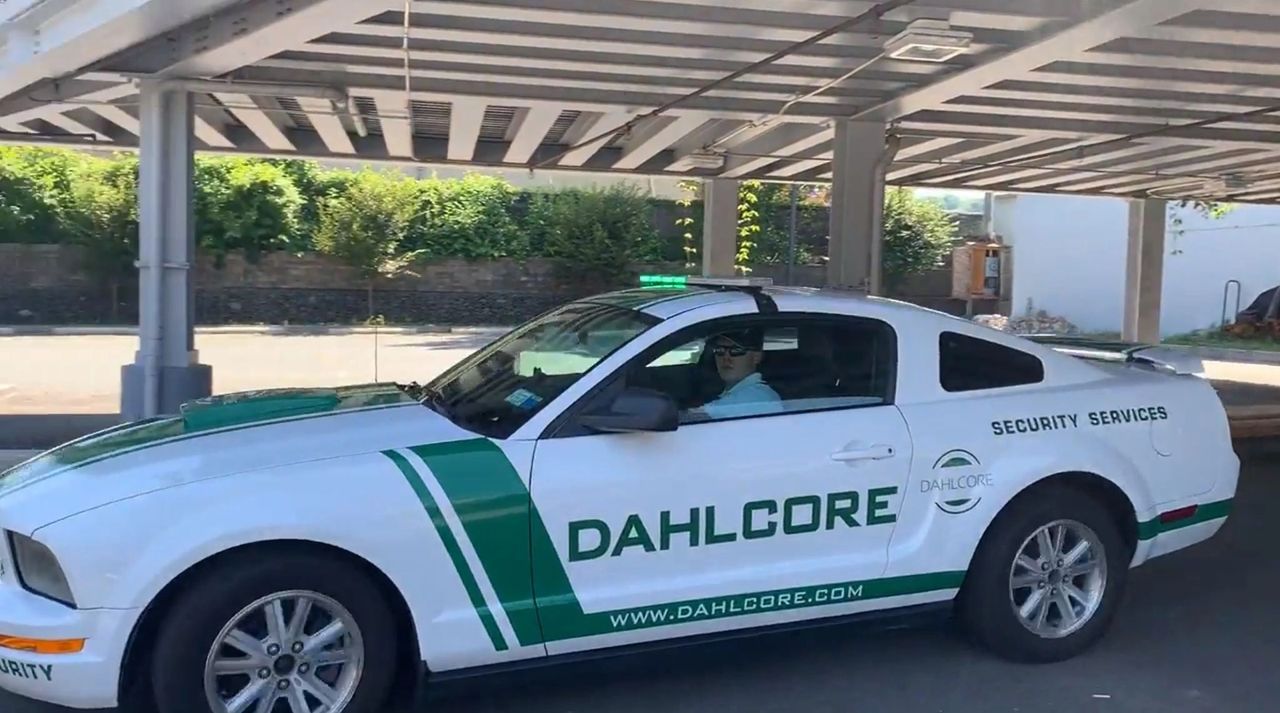
In the other four boroughs access control is a door. On Staten Island it is usually a gate. People arrive by car and truck — at the distribution centres and big-box lots of the West Shore, the gated streets and HOA communities of the South Shore, the parking entrances of the island’s hospital, senior-living and school campuses — and the thing being controlled is not a person walking up to a desk but a vehicle with a driver in it, a plate, a decal, a delivery window and a queue that backs onto a public road if the gate is slow. Dahlcore Security Guard Services supplies access-control officers for those gates from its headquarters on South Avenue, a few minutes from most of them: officers who operate the gate arm, the plate reader, the decal list and the visitor system the site already owns, run the site’s own rules for residents, employees, carriers and contractors, and keep the vehicle log that a site manager, an HOA board or an insurer will read. We install, sell and service no gate, reader, camera or system, and issue no decals or credentials; the site does. We are a licensed New York security guard agency; the company is veteran-owned, was founded in 2018, and is led by Ian Dahlberg, who brings more than 23 years of security experience.
The Gate, Not the Door
The same officer, the same licence, and a post that works differently in six specific ways when the visitor is a vehicle.
At a pedestrian door
- Who is identified: a person, by face, ID or credential, standing still in front of the officer
- The record: a name, a time, a host
- The queue: a lobby line, inconvenient at worst
- The exception: the person not on the list, who waits at the desk while the officer calls
- The hours: the building’s opening hours, with an after-hours rule
- What the officer operates: the reader, the intercom, the visitor system, the cameras — the building’s own
At a vehicle gate
- Who is identified: a vehicle and its driver — plate, decal, carrier, delivery reference, and the person behind the wheel, who may not be the one expected
- The record: a plate, a carrier, a driver, a trailer, a bay, a time in and a time out — what left matters as much as what arrived
- The queue: backs onto South Avenue, Arthur Kill Road or a residential street, and becomes the neighbours’ problem within minutes
- The exception: a fifty-three-foot trailer that cannot turn around, held at a gate that has to keep moving — resolved by a call to the receiving office, not by a debate at the window
- The hours: dock windows, carrier appointments, an HOA’s overnight rule, a campus’s visiting hours
- What the officer operates: the gate arm, the plate reader, the decal list, the carrier appointment system — the site’s own, never ours
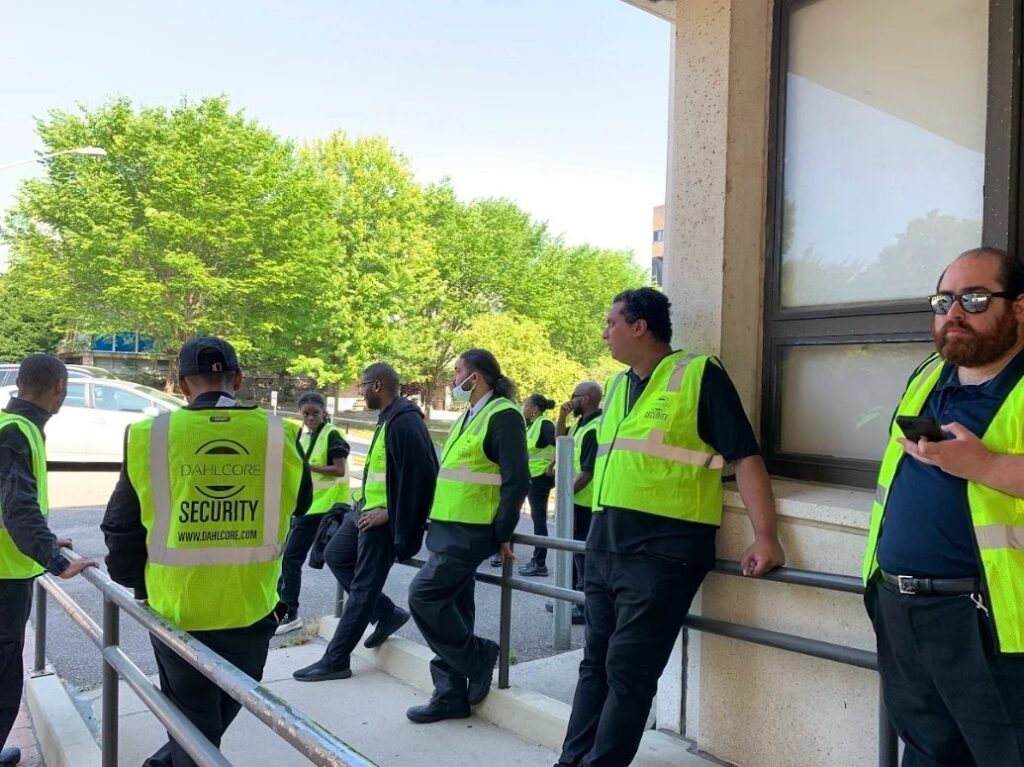
The gate has to keep moving
A lobby officer can afford to be slow with one visitor. A gate officer cannot, because the seventh truck in the queue is already blocking a lane of South Avenue and the site manager’s phone is ringing. That changes the job. The officer has to know the site’s rules well enough to apply them in seconds — carrier, appointment, plate, trailer, bay — and the exception procedure well enough to move the vehicle that does not fit them out of the lane and into the holding area while the receiving office is called, rather than hold the whole road for one driver’s paperwork. It also changes what a good log looks like: not a story, but a line per vehicle that a manager can reconcile against the day’s appointments and an insurer can read after something has gone missing from a trailer. A gate run well is invisible from the road. A gate run badly is a traffic problem with a uniform standing in the middle of it.
Four Staten Island Gates and One Door
The island’s access posts, and what the officer is controlling at each.
West Shore distribution and big-box lots
The truck gates, carrier appointment windows and employee lots of the distribution corridor around Bloomfield, Travis, Charleston and the West Shore Expressway, and the loading gates of the island’s big-box retail. The officer works the carrier against the site’s appointment system, the driver against ID, the trailer against the bay, and the employee lot against the site’s decal list, and logs every movement in and out — including the truck that left with a seal the receiving office needs to know about.
Gated communities and HOAs
The gated streets and homeowners’ associations of the South Shore and Mid-Island — Annadale, Prince’s Bay, Tottenville, Great Kills and Todt Hill — where the board sets the rules and issues the decals, and the gate is the community’s front door for residents, their guests, deliveries and the contractors residents forget to register. The officer applies the board’s rule evenly at every house, runs the guest list the community keeps, and is the reason a board meeting about the gate has a log to discuss rather than a grievance.
Hospital, senior-living and school campuses
The parking entrances and visitor gates of the island’s medical, senior-living and education campuses, where the vehicle is a visitor, a vendor, a family member or a parent at pickup, the campus’s own security or facilities office sets the procedure, and the officer works inside it — HIPAA-aware where the gate sits near patients, briefed on the campus’s population and its emergency-vehicle access, and reporting up its chain.
The St. George and North Shore lobbies
The one pedestrian exception: the office, civic and residential buildings around the ferry in St. George, Tompkinsville and Stapleton, where visitors arrive on foot in the hundreds at ferry times and the post is a desk and a turnstile, run the way a Manhattan lobby is run — the visitor procedure in the building’s own system, the line held at ferry peaks, and the doormen’s duties and the officer’s kept apart on paper.
The Officer at a Staten Island Gate
What a site manager, an HOA board or a campus security lead can ask for before an officer is handed the gate.
Registered, trained past the State’s hours, verifiable
Each officer is registered with the NY Department of State, Division of Licensing Services, under General Business Law Article 7-A, has DCJS-approved training to the State’s 8 / 16 / 8 hours of pre-assignment, on-the-job and annual in-service instruction, and has been through Dahlcore’s own training in gate and visitor procedure, de-escalation and the A.L.I.V.E. active-shooter programme. Dahlcore is a licensed New York State security guard agency; the licence can be confirmed at dos.ny.gov before anything is signed.
Checked, and trained on the site’s own gate
A thorough background check before any assignment, and, before the first shift, training on whatever the site runs its gate with — the arm, the plate reader, the decal list, the carrier appointment platform, the campus visitor system — with the post order spelling out the officer’s permissions in it. Officers hold CPR, AED and First Aid certification and are trained to administer naloxone, and are HIPAA-aware where a gate sits near patients.
Supervised from a few minutes away
Field supervisors visit gates unannounced and check what the officer is doing against the post order — the plate actually checked, the exception actually moved out of the lane, the log actually kept per vehicle. On Staten Island the supervisor is based on South Avenue, so a site manager or an HOA president who wants to meet in person about the gate can, at the gate. A named account manager owns the post and keeps the post order current as the site’s rules change.
Insured, recorded per vehicle, relieved from a briefed bench
Dahlcore is licensed, insured and bonded, with a certificate of insurance on request naming the site, the HOA or the campus as their agreement requires. The gate log — plate, carrier, driver, trailer, bay, in, out — goes into the reporting portal the client can read, with GPS and geofenced verification behind the attendance record. Illness and leave are covered by a backup and relief bench trained on this gate, so a Saturday relief does not learn the HOA’s rules from the residents.
What “home borough” honestly changes at a gate
Dahlcore’s headquarters and dispatch desk are on South Avenue, in the middle of the West Shore corridor, and most of the island’s gates are a short drive from it. That changes some real things and not others. It means the supervisor who checks the post can be at your gate in person, the account manager can meet an HOA board at its own meeting, a relief officer for a Saturday no-show is coming from the island rather than across the bridge, and the officers who hold Staten Island gates mostly live here and know that the road outside your gate backs up at four o’clock. It does not mean a promise of minutes for a same-day post — what can be posted tonight depends on what is already posted tonight, and we say which on the phone rather than print a number here. And it does not mean we sell gates: the arm, the reader and the decal system are yours, from your integrator, and our officer will run whichever one you have.
Staten Island Access Control FAQ
Answers about running a gate on Staten Island. For what guard-managed access control is and working with your existing system, see our main Access Control page; for pedestrian lobbies, see Access Control in Manhattan; for posts inside a large institution’s own department, see Access Control in the Bronx.
Our HOA gate is unstaffed at night and residents’ guests just tailgate through. What changes with an officer?
The gate gets a person applying the board’s rule, evenly, to every car. The officer checks decals, runs the guest list the community keeps — a resident’s call, the HOA’s guest system, a printed list at the gatehouse — and holds the unregistered car at the gate while the resident is called, courteously and the same way for every house. The board decides the rule, including how late guests may arrive and whether deliveries come in after a certain hour; the officer runs it and logs it so the board’s next meeting about the gate has facts.
A contractor turns up at our gated street with no resident having registered them. Do they get in?
Not until a resident says so, by the route the board has set — a call from the gate, the HOA’s contractor list, a work order the community’s manager issued. The officer holds the truck in the pull-off rather than in the lane, calls, and admits the crew with the resident’s confirmation and the hours the board allows for work. A contractor waved through because they seemed to know where they were going is exactly what a gated street is paying not to have.
Our distribution centre uses third-party carriers we have never seen before. How does an officer know who is legitimate?
From your appointment system, not from the truck. The officer confirms the carrier and the delivery reference against the site’s appointment platform, the driver against ID, the trailer number against the manifest where the site uses one, and directs the vehicle to the bay the receiving office assigned. A carrier with no appointment is moved to the holding area and the receiving office is called; they decide, not the gate. Every vehicle is logged in and out with its seal where the site records seals, because the trailer that left is the one the insurer will ask about.
Our site has a plate reader and an automatic arm already. Why do we need an officer?
Because the reader opens for the plate, not for the driver, and cannot tell a scheduled trailer from an unscheduled one, a resident’s car from the person who borrowed it, or a contractor’s van from the same van after the job ended. The officer operates the reader and the arm the site owns, and adds what they cannot: the check against the appointment or the list, the exception moved out of the lane, the call to the office, and the judgement about the car that should not be there. We do not sell or install readers; we run yours.
Can your officer manage our employee lot as well as the truck gate?
If the post order covers it, and often it should — the employee lot is where a site’s own decal list is most often out of date. The officer checks the lot against the site’s decal or badge list, notices the vehicle that has no business being there or the employee badge that should have died on Friday, and reports it to the site rather than confronting anyone in a car park. Where the truck gate is busy enough that the lot cannot be watched from it, we say so and staff it as two posts.
Our campus’s parking entrance is also where emergency vehicles come in. What does the officer do during an emergency?
Opens the gate and clears the lane, before anything else. The post order for a campus gate names the emergency-vehicle rule first: the fire department, the ambulance and the police come through as the campus’s plan requires, whatever the visitor list says, and the officer’s job in that minute is the lane, the arm and directing the vehicle to where the campus’s security office says. Access resumes when the campus’s officer says it does. The rule is written down and the officer is briefed on it before they ever need it.
Our office building is by the ferry and the lobby fills up at every boat. How is that run?
Like a Manhattan lobby, because it is one. The officer runs the building’s visitor procedure in its own system, holds the turnstile or the desk at ferry peaks so that the line moves without the check being skipped, and works with the building’s doormen where it has them, with the line between the two jobs drawn in the post order. St. George’s buildings are the island’s pedestrian access posts, and they are staffed by officers who have run desks across the harbour.
Can someone from Dahlcore actually come and look at our gate before we decide anything?
Yes, and on Staten Island that is usually the same week. A supervisor from South Avenue meets your site manager, your board or your campus’s security lead at the gate, walks the approach and the holding area, looks at the system you run the gate with, and writes the post order with you — the rule, the exception procedure, the emergency-vehicle rule and the log. The recommendation is yours to approve before anyone starts, and it contains no hardware, because we sell none.
Where on Staten Island the gates are
The truck gates and lots of the West Shore corridor — Bloomfield, Travis, Charleston and the West Shore Expressway — a few minutes from the office; the gated communities and HOAs of the South Shore and Mid-Island from Great Kills and Annadale to Prince’s Bay, Tottenville and Todt Hill; the campus entrances of Willowbrook, Mid-Island and the North Shore; and the ferry-side lobbies of St. George, Tompkinsville and Stapleton. At every one of them the officer runs the gate or the desk the site already owns, and the account manager who holds the post order is on South Avenue.
What Staten Island Clients Say About Dahlcore
Explore real feedback on the headquarters’ Google profile, from clients who have worked with Dahlcore from the first conversation through to a post going live.
“Throughout the years, I’ve used several security firms for various reasons. What separates Dahlcore from the rest was the personal attention provided by both the management and security staff. From our initial consultation through “go live” we were impressed.”
“Reliable, professional and courteous service. A definite go to for any security needs.”
“Great company lead by a great man. Would highly recommend Ian and Dahlcore!”
Put an Officer on Your Staten Island Gate
Tell us the site, the gate or the lobby, the hours, what comes through it — trucks, residents, visitors, parents at pickup — and the system you run it with. A supervisor from South Avenue meets you at the gate, writes the post order with you, and you approve the recommendation before anyone starts. If the gate is unstaffed tonight, call dispatch and we will tell you honestly what the bench can cover. Consultations are free.
Direct Contact
212-208-0900Serving all of Staten Island · Dispatch 24/7
Office Hours: 8:00 AM – 8:00 PM · Dispatch available 24/7
Our Offices
1110 South Avenue, Staten Island, NY 10314
250 Park Avenue, New York, NY 10177
Staten Island · Manhattan · Brooklyn · Queens · The Bronx · Long Island