

Dahlcore does not install access control. Manhattan’s buildings already have it — the turnstiles in a Midtown tower, the keycard readers on a law firm’s floors, the intercom and package room in an Upper West Side co-op, the gate at a Financial District loading dock — and what most of them lack is not another reader but someone who runs the system properly: who decides what to do when the credential and the person in front of the desk do not match. Dahlcore Security Guard Services supplies access-control officers for Manhattan buildings who operate the client’s existing systems from the desk, the turnstile line and the dock, manage the visitor, the contractor and the exception, and make sure a credential stops working the day it should. We work with whatever platform the building owns; we sell, install and service none of them. We are a licensed New York security guard agency with an office at 250 Park Avenue; the company is veteran-owned, was founded in 2018, and is led by Ian Dahlberg, who brings more than 23 years of security experience.
The Credential Lifecycle: Six Things an Officer Manages
A reader checks a card. An officer checks a person. These are the six stages of access in a Manhattan building where the difference matters, and what a Dahlcore officer does at each.
The credentialed population
The tenants, employees and residents who hold a card, a fob or a face in the client’s system. The officer’s job is not to issue them — the client’s HR, the managing agent or the co-op board does that in the platform the building owns — but to know the population: who is on the list, which floors, which hours, and which credential has been reported lost. An officer who knows the building’s people spots the borrowed card that the reader accepted.
The visitor
Pre-registered by a tenant or a resident, or walking in cold. The officer runs the building’s visitor procedure in the building’s own system: confirm the host, verify photo ID, issue the temporary credential the building uses, log the visit, and escort where the post order requires it. A visitor who is not on any list is a conversation with the host, not a decision the officer makes alone.
The contractor and the vendor
The cable crew, the cleaning company, the elevator technician, the courier with a hand truck. Each has a different rule in a Manhattan building — a certificate of insurance on file with management, permitted hours, the freight elevator, an escort or a badge — and the officer applies the rule the building set, checks the COI list it keeps, and turns away the crew whose paperwork is not there, politely and with a call to the managing agent.
The exception
The tailgater through the turnstile, the employee who forgot their card, the resident’s guest who insists, the person who is on the list but should not be, the reader that goes down. The post order describes each, and the officer resolves it the way the client decided in advance — a temporary credential against ID, a call to the host, a manual log while the system is out, a courteous refusal. The exception is where a building’s access control is actually tested, and it is where the officer earns the post.
The revocation
A credential should stop working the hour a person leaves — the terminated employee, the tenant who has moved out, the contractor whose job is done. The client’s administrator revokes it in the system; the officer confirms it is revoked, watches for the card that still gets tried, and, on the day of a difficult termination, holds the desk with the presence the moment calls for. Where the departure is the sensitive kind, our employee termination service is the same officer with a different brief.
The record
The client’s system logs every credential read; the officer logs every human decision — the visitor issued a pass, the contractor turned away, the tailgater stopped, the reader that failed at 4 p.m. Both go to the client: the system’s audit trail in the platform the building owns, the officer’s log in Dahlcore’s reporting portal, with attendance at the post confirmed by GPS and geofenced verification. Together they answer the question a landlord’s counsel eventually asks: who was in the building, and who let them in.
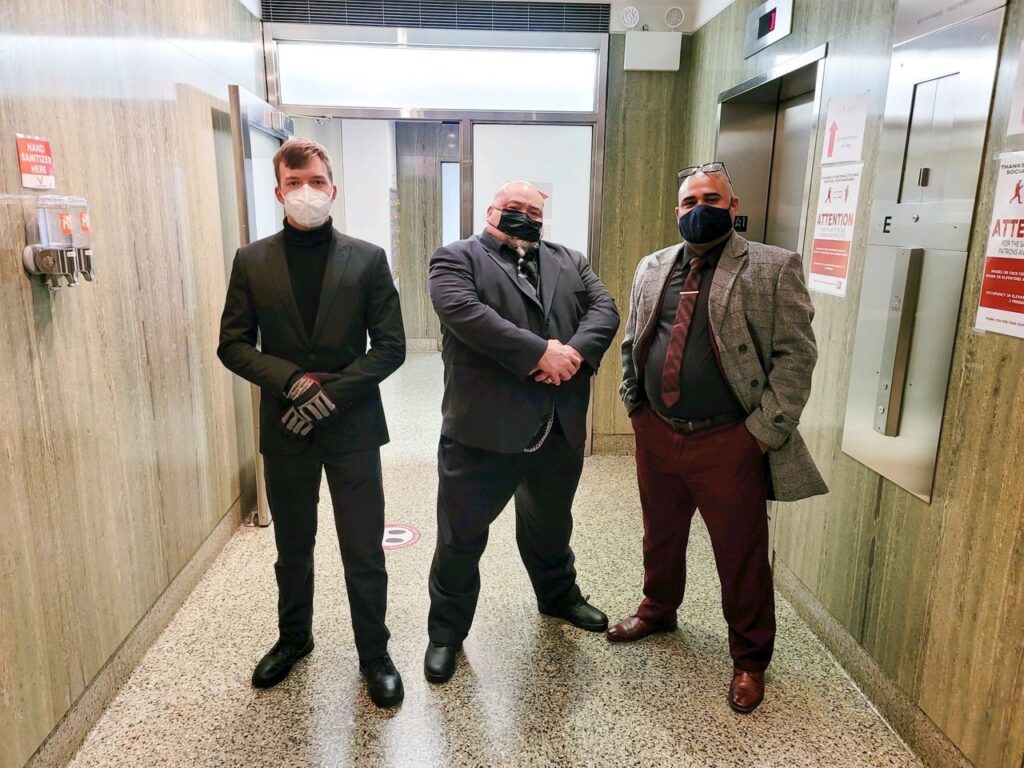
The reader accepted the card. Should it have?
A Manhattan tower’s turnstiles will pass ten thousand card reads on a weekday and every one of them will be logged. Not one of those reads knows whether the card was in the right hand. The former employee whose card was never collected, the tenant’s intern who was lent a fob for the week, the contractor still carrying a badge from a job that finished in March, the visitor who walked in behind someone with a coffee — the system passes all of them, and the system is working perfectly. This is the gap a Dahlcore officer stands in. Not by replacing the technology, which is good at what it does, but by doing the part it cannot: recognising the population, questioning the mismatch, running the exception the way the building decided, and making sure that when a credential should die, someone noticed that it did. A well-run access desk in Manhattan is not more hardware. It is a person who reads the lobby.
Four Manhattan Access Environments, Four Different Desks
The system is different in each, and so is what the officer is there to decide.
The multi-tenant tower with turnstiles
Midtown and the Financial District: one lobby, thirty tenants, a turnstile line and a visitor-management platform the landlord owns. The officer works the desk and the line together — tenants through on their cards, visitors against a pre-registration the officer confirms with the host, couriers to the messenger centre, tailgaters stopped at the gate. The population is too large to know by face, so the procedure carries the post, and the officer runs it without ever letting the line become the story a tenant tells their landlord.
The single-tenant floors
A law firm, a fund or a company headquarters occupying its own floors, with its own readers behind the building’s lobby and its own reception. Here the population is small enough to know, and the officer at the tenant’s reception does: who belongs on the floor, which visitors the partners expect, which rooms are restricted, when the cleaners come. The tenant’s HR issues the credentials; the officer notices the one that should have been revoked on Friday.
The residential intercom and package room
Co-ops, condominiums and rental buildings on the Upper West Side, the Upper East Side and in Tribeca, where access is the intercom, the resident list and the package room, and where the officer works alongside — never instead of — the building’s doormen. The board or the managing agent sets who is on the list and how guests are admitted; the officer applies it, keeps the package log the building uses, and handles the contractor a resident forgot to register with a call rather than a confrontation.
The loading dock and freight entrance
The back door of every Manhattan building, and the one most often left to the system alone. The officer at the dock checks the delivery against the schedule, the crew against the COI list management keeps, the vehicle against the space, and the hours against the building’s rules; escorts where required; logs every truck; and is the reason the freight elevator is not an unsupervised route to any floor in the building.
The Officer at the Access Desk
What a landlord, a managing agent or a tenant’s head of security can ask for before an officer touches the building’s system.
Registered and trained past the State’s minimum
Every officer holds a security guard registration under the New York Security Guard Act (General Business Law Article 7-A) with the NY Department of State, Division of Licensing Services, and has completed DCJS-approved training — the State’s 8-hour pre-assignment, 16-hour on-the-job and 8-hour annual in-service courses — plus Dahlcore’s own instruction in visitor procedure, de-escalation and the A.L.I.V.E. active-shooter programme. Dahlcore is a licensed New York State security guard agency; the licence can be checked at dos.ny.gov.
Checked, and trained on your platform
A thorough background check before any assignment — a matter of some weight for an officer who will hold your credential list — and training on the building’s own access-control and visitor-management system before the first shift, with the post order naming exactly what the officer may do in it. Officers are certified in CPR, AED and First Aid and trained to administer naloxone, because the desk is where a collapse in the lobby is first seen.
Supervised against the procedure
Field supervisors visit access posts unannounced and check what the officer is doing against the post order and the building’s procedure — the ID actually looked at, the host actually called, the dock actually logged. A named account manager owns the post, keeps the post order current as tenants and rules change, and is the person the managing agent calls.
Insured, recorded and relieved
Dahlcore is licensed, insured and bonded, with a certificate of insurance on request naming the landlord, the managing agent or the tenant as the lease requires. The officer’s decisions go into the reporting portal the client can read; attendance at the post is confirmed with GPS and geofenced verification; and a backup and relief bench covers illness and leave so that the desk is never held by someone who has not been trained on the building’s system.
The day a credential has to die
The most important access-control event in a Manhattan office is not a break-in. It is nine o’clock on a Tuesday morning when a tenant’s HR department lets someone go. Between that meeting and the moment the person’s card stops working, there is a gap — sometimes minutes, sometimes, in buildings where nobody owns the process, months — and it is the gap in which access control most often fails, quietly, with a former employee who still walks in. A Dahlcore access officer closes it as part of the post: the tenant’s administrator revokes the credential in the system, the officer confirms the revocation, the person is escorted out with dignity and their card, fob and keys collected at the desk, and the officer is briefed to recognise them if they return. Where the departure is contentious, the same officer holds the desk under a specific brief — that is our employee termination service — and the tenant’s staff see a calm lobby rather than an incident. The credential is dead by the time the elevator reaches the ground floor. That is the standard.
Manhattan Access Control FAQ
Answers about running access in a Manhattan building. For what guard-managed access control is, whether we work with your existing system, visitor screening in general and which properties use it, see our main Access Control page; for the lobby post and its post order, see Unarmed Security in Manhattan.
Can you recommend which access-control system we should buy?
No, and it is worth being clear about why: Dahlcore does not sell, install or service systems, is not an installer or reseller for any manufacturer, and has no commercial interest in your choice. What we can tell you — from running desks on most of the platforms Manhattan buildings use — is what an officer needs from any system to run the lobby well: a visitor-management function the tenants will actually use, a way to see a credential’s status at the desk, an audit trail management can pull, and a reader layout that does not create a tailgating lane. Give that list to your integrator.
Tailgating through our turnstiles is constant. What does an officer actually do about it?
Stands where the line can be seen, stops the second person through on one card, and turns it into a courteous check rather than a scene — “Good morning, can I see your card?” — every time, so that the building’s population learns the line is watched. The post order sets the tone and the escalation; the officer keeps the count in the log. Where the turnstile layout itself creates the lane, we say so to the managing agent, because no officer can hold a gate that was designed to be walked around.
We terminated someone this morning. How fast can their card be dead?
As fast as your administrator can revoke it in your system, which is minutes — the gap is never the technology, it is nobody owning the step. On a Dahlcore post the officer is told before the meeting, confirms the revocation with your administrator while it happens, collects the card, fob and keys at the desk, and is briefed to recognise the person if they return. Where the departure is difficult, our employee termination service puts the same officer on the desk under a specific brief for the day.
Our tenants will not pre-register their visitors. What happens at the desk?
The officer calls the host, every time, and the visitor waits until the host answers. It is slower than pre-registration, and the slowness is the point: a tenant who has had three guests held in the lobby for five minutes each starts pre-registering. The post order says whether the officer may issue a pass on the host’s phone confirmation alone or must see the host, and it is written with the landlord so that the tenants know the rule came from the building, not the guard.
Our building has no system at all — just a desk and a sign-in book. Is that still access control?
Yes, and it is the version where the officer matters most. Without readers, the officer is the credential check: they know the population by face and by the list the managing agent keeps, verify ID for anyone they do not know, keep the visitor log by hand and in the reporting portal, and run the contractor and dock rules from the post order. Many Manhattan buildings run exactly this way, well. Whether to add a system is a question for your integrator; we will run the desk either way.
Deliveries and contractors come through our dock all day. Who checks their insurance?
Management keeps the certificate-of-insurance list; the officer at the dock checks the crew against it before they come off the truck, along with the schedule, the hours and the freight elevator rules. A crew whose COI is not on file is held at the dock with a call to the managing agent, not waved through because the driver is in a hurry. The officer logs every vehicle and every crew, so that the question “who was in the building on the fourteenth” has an answer for the back door as well as the front.
During a fire alarm, does the officer keep the doors locked?
Never. Egress is governed by the Fire Code and the building’s fire safety plan, and during an alarm the Fire Life Safety Director’s plan governs the building, not the access list — the officer’s job becomes helping the evacuation the plan calls for and reporting to the FLSD or the Fire Command Center. Locked doors on the way out are not an access-control decision anyone at a desk gets to make, and our officers are briefed on the building’s plan for exactly that reason.
How long does it take your officer to learn our platform?
Usually a shift with your administrator or your integrator’s walkthrough, and the post order records what the officer may do in it — issue a visitor pass, look up a credential’s status, pull a report — and what stays with your administrator. Officers who have run desks on the common Manhattan platforms pick up a new one quickly, and the relief bench that covers the post is trained on the same system before they ever hold it. We do not put an untrained officer on your desk to learn on your tenants.
Where in Manhattan the access desks are
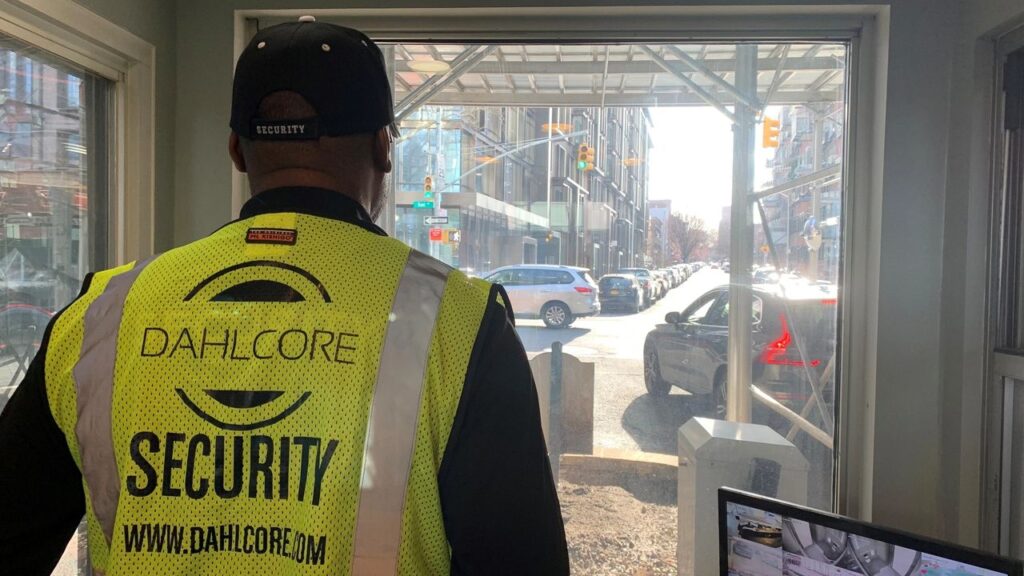
The turnstile lobbies and single-tenant floors of Midtown and the Financial District; the residential intercoms, package rooms and doormen’s lobbies of the Upper West Side, the Upper East Side, Tribeca and Harlem; the boutique doors of SoHo and the Upper East Side; and the loading docks behind all of them. Wherever the desk is, the officer runs the system the building already owns, the post order says what they decide, and the account manager who keeps it works from 250 Park Avenue.
What Manhattan Clients Say About Dahlcore
Explore real feedback on the Manhattan office’s Google profile, from property owners and managers who use Dahlcore across their buildings.
“Amazing service we use them all the time for our properties. Highly recommended!”
“I like to give credit where credit is due and, I must give credit to the security guards that are employed by Dahlcore Security Guard Services. They are professional as well as helpful.”
“I proudly stand behind Dahlcore Security! Highly recommended.”
Put an Officer Behind Your Manhattan Access System
Tell us the building, the system it already has, who comes through the desk and the dock, and where access is failing — the tailgating, the contractor nobody checked, the card that should have died in March. A supervisor will walk the lobby and the dock with your managing agent, and you will have a coverage recommendation before you commit. We will not try to sell you a system, because we do not have one. Consultations are free.
Direct Contact
212-208-0900Serving all of Manhattan · Dispatch 24/7
Office Hours: 8:00 AM – 8:00 PM · Dispatch available 24/7
Our Offices
250 Park Avenue, New York, NY 10177
1110 South Avenue, Staten Island, NY 10314
Manhattan · Brooklyn · Queens · The Bronx · Staten Island · Long Island