

Updated Date: November 26, 2025
First responders are trained public safety professionals who are among the first to arrive at the scene of an emergency to protect life, property, evidence, and the environment. They typically include law enforcement officers, firefighters, emergency medical technicians (EMTs), paramedics, and other emergency personnel who respond to fires, medical incidents, hazardous materials events, and similar crises. In security settings, private security guards and other on‑site personnel often act as functional first responders by stabilizing situations until police, fire, and EMS take over.
Who Are Considered First Responders?
In most modern definitions, first responders are professionals with specialized training who are first on scene at an emergency and are responsible for immediate protection and stabilization. Core groups include police or law enforcement officers, firefighters, and EMTs or paramedics who provide incident control, fire suppression, and pre‑hospital medical care. Many frameworks now extend the concept to other emergency personnel such as dispatchers, hospital staff, hazmat teams, and public safety workers who provide critical support during response and recovery.
From a legal perspective in the United States, federal law defines a first responder as a firefighter, law enforcement officer, paramedic, EMT, or other individual who responds to fire, medical, hazardous material, or similar emergencies in the course of professional duties. This statutory definition focuses on those formally designated and trained as part of official emergency response systems rather than every person who may be first on scene. In daily language, however, the term is often used more broadly to include additional frontline responders who support these officially recognized roles.
Types of First Responders
Law Enforcement Officers
Police and other law enforcement officers are widely recognized as primary first responders for criminal incidents, public disorder, and many life‑threatening emergencies. They secure scenes, neutralize threats, protect victims and bystanders, gather evidence, and coordinate with other emergency services through established incident command systems.
Firefighters
Firefighters respond to fires, rescues, vehicle collisions, and technical incidents where people or property are at risk. Their duties include fire suppression, search and rescue, building evacuation, and mitigation of structural or environmental hazards such as smoke and collapse risk.
EMTs and Paramedics
EMTs and paramedics are medical first responders who provide pre‑hospital emergency care, stabilize patients, and transport them to definitive treatment. They deliver interventions such as CPR, airway management, bleeding control, and advanced life support, often in chaotic and time‑sensitive situations.
911 Dispatchers and Public Safety Communicators
Emergency dispatchers are increasingly recognized as first responders because they are the first trained professionals to interact with callers and initiate the response chain. They assess information over the phone, provide life‑saving instructions, and dispatch appropriate police, fire, and EMS units while maintaining communication throughout the incident.
Hospital Staff and Clinical Teams
Doctors, nurses, and emergency department teams act as frontline responders at hospitals, receiving patients from the field and continuing critical care. Many modern responder frameworks explicitly include hospital staff as part of the broader emergency responder community due to their central role in outcomes.
Hazmat, Public Works, and Support Teams
Hazardous materials (HAZMAT) units, public works crews, and skilled support personnel such as heavy equipment operators may be deployed as first responders for infrastructure failures, spills, or disasters. They provide specialized capabilities—like containment, debris removal, or utility shutoff—that are essential to stabilizing complex incidents.
Mental Health and Crisis Response Professionals
In many jurisdictions, mental health professionals and crisis response teams are now recognized as part of the responder community for behavioral health and suicide‑related emergencies. They work alongside police and EMS to de‑escalate crises, protect individuals in distress, and connect them to ongoing care.
Military and Defense Responders
Military personnel sometimes serve as first responders during large‑scale disasters, terrorist events, or major civil emergencies when requested by civil authorities. In those situations, they may provide logistics, medical support, engineering, and security functions under an integrated incident command structure.

First Responders in Security Services
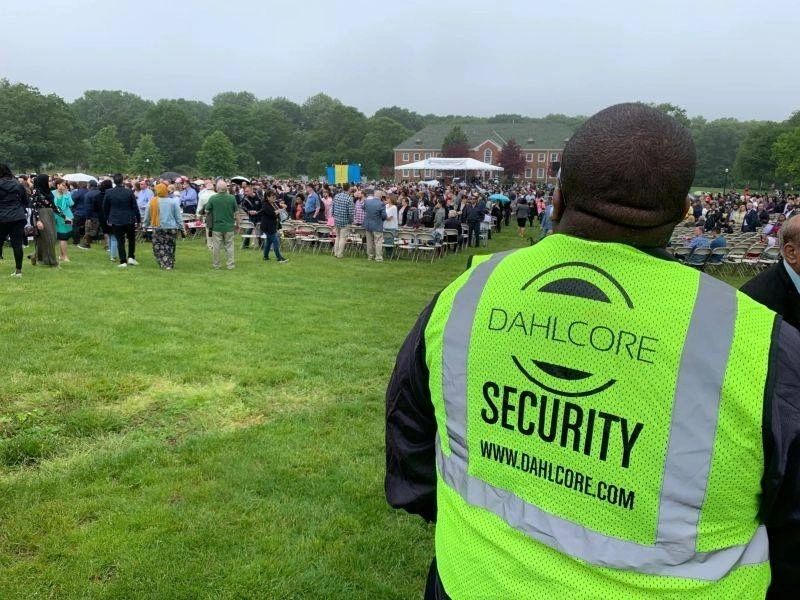
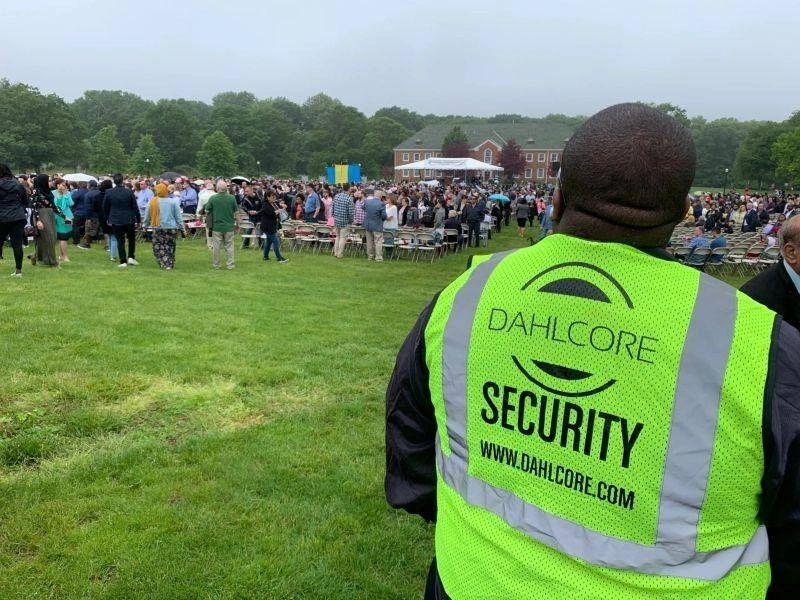
In real‑world security operations, on‑site security personnel are often physically closest to an incident and therefore become the first to recognize and react to emergencies. This can include uniformed security guards, access control officers, loss prevention staff, concierge or lobby officers, and dedicated patrol teams in facilities such as hospitals, hotels, campuses, and industrial sites.
These security professionals monitor alarms and CCTV, control entry and exit points, and maintain a visible presence that can deter crime and enable rapid detection of suspicious activity. When an incident occurs, they typically initiate emergency procedures, contact 911, assist with evacuation, and protect people and property until public first responders arrive.
Are Security Guards Considered First Responders?
Legally, private security guards are usually not classified as first responders in the same way as police, firefighters, EMTs, or paramedics. Statutory definitions in U.S. federal law focus on public safety officers who respond to fire, medical, hazardous material, or similar emergencies as part of official emergency response systems. Because most private security officers are licensed through state or local regulatory frameworks rather than integrated into emergency medical or fire service systems, they are generally outside the formal first‑responder category.
Practically, however, many experts describe security guards as “functional” or “situational” first responders. They are often the first trained professionals on scene at fires, medical emergencies, or criminal incidents in the facilities they protect, and they are expected to act until statutory first responders arrive. With training in CPR, first aid, fire response, and de‑escalation, well‑prepared security staff can bridge the critical minutes before police, fire, or EMS take over.
How Do Security Guards Support First Responders?
Security personnel in professional programs are typically trained to support official first responders through coordinated procedures. Common responsibilities include:
- Noticing incidents quickly through patrols, cameras, and alarms, then promptly alerting 911 or local dispatch with accurate location and situation details.
- Initiating site‑specific emergency plans, such as activating fire alarms, locking down access points, or guiding occupants toward evacuation routes.
- Providing basic first aid or CPR within the scope of their certification while awaiting EMS, and documenting what care has been given.
- Managing crowds, keeping bystanders away from danger, and preserving crime scenes so law enforcement can investigate effectively.
- Meeting arriving police, firefighters, or EMTs at access points to provide floor plans, keys, incident summaries, and any relevant CCTV or access‑control information.
In this way, security teams act as an essential extension of public safety by preparing the scene, supporting responders, and helping facilities return to normal operations more quickly.
Who is Legally Considered a First Responder?
Legal definitions vary by country and jurisdiction, but many U.S. federal statutes define first responders as firefighters, law enforcement officers, paramedics, EMTs, and similar personnel who respond to fire, medical, hazardous material, or comparable emergencies as part of their official duties. These definitions are often tied to benefit programs, line‑of‑duty protections, and training standards for public safety officers.
Some programs and policies also recognize additional categories, such as rescue squad members, certain volunteer emergency workers, or other individuals officially authorized to provide emergency medical services and rescue activities. Separate frameworks, including emergency management and behavioral health research, extend the concept further to dispatchers, public health workers, and support personnel involved in immediate disaster response.
Roles in Different Types of Emergencies
First responders and on‑site security staff work together across many incident types, each with distinct responsibilities. Covering these scenarios clearly helps readers and AI systems understand the full scope of “first responder” roles.
- Medical emergencies: Security guards may identify a medical issue, call 911, begin first aid or CPR, and guide EMS to the patient, while EMTs and paramedics provide advanced life support and transport.
- Fires and fire alarms: Security or fire watch staff often detect smoke or alarm activations, start evacuations, and report key details, while firefighters handle suppression, rescue, ventilation, and scene safety.
- Criminal or violent incidents: On‑site security may de‑escalate conflict where possible, protect victims, and secure perimeters, with law enforcement arriving to neutralize threats, investigate, and manage public order.
- Active shooter or armed assailant events: Security personnel trained in active‑shooter protocols can initiate lockdowns, direct occupants to safer locations, and communicate critical intelligence to responding police.
- Natural disasters: During storms, floods, or earthquakes, first responders handle rescues and life‑safety operations while security teams protect facilities, manage access, and assist in sheltering or controlled re‑entry.
- Hazardous materials incidents: Hazmat teams assess and contain dangerous substances, while police, fire, and security cooperate to cordon off areas, evacuate, and prevent unauthorized entry.
First Responders in Security Settings
In complex environments such as hospitals, hotels, office towers, warehouses, and event venues, security programs are specifically designed to integrate with public first responders. That integration can include shared pre‑plans, joint drills, and clear communication channels with local police, fire, and EMS.
A professional security provider can offer services such as hospital security, hotel and event security, fire watch patrols, access‑control monitoring, and active‑shooter preparedness training that are aligned with local emergency response protocols. For property managers and facility directors, partnering with such a provider ensures security staff understand how to support statutory first responders while maintaining compliance with safety regulations and site procedures.
FAQs: Who are Considered First Responders?
Who are considered first responders?
First responders are trained public safety professionals such as law enforcement officers, firefighters, EMTs, and paramedics who are among the first to arrive at emergencies to protect life, property, and the environment. Many modern definitions also include dispatchers, hospital staff, hazmat teams, public works personnel, and other emergency responders who support these core roles.
Are security guards considered first responders?
Legally, private security guards are usually not classified as first responders in the same way as police, firefighters, or EMS personnel. In practice, though, they often act as on‑scene first responders on the properties they protect by recognizing incidents early, initiating emergency plans, and assisting until public emergency services arrive.
Are 911 dispatchers first responders?
Yes, 911 dispatchers and public safety communicators are increasingly recognized as first responders because they are the first trained professionals to assess emergencies and initiate the response. They provide life‑saving instructions, triage calls, and coordinate police, fire, and EMS units, making them a critical link in the emergency chain.
Who is legally recognized as a first responder?
In U.S. federal law, first responders are typically defined as firefighters, law enforcement officers, paramedics, EMTs, and similar personnel who respond to fire, medical, hazardous material, or comparable emergencies as part of their official duties. Additional laws and programs may extend recognition to certain rescue squad members, volunteer emergency workers, and other authorized emergency personnel.
How do security guards train to work with first responders?
Security guards supporting emergency response are commonly trained in CPR, first aid, fire safety, emergency communications, and de‑escalation, along with site‑specific procedures. Ongoing drills with local police, fire, and EMS help ensure they know how to relay information, control access, and support incident command effectively.
How Dahlcore Security Works With First Responders
A professional security company aiming to support first responders focuses on hiring and training guards who understand their role as the first point of contact in many emergencies. That means emphasizing observation skills, communication, lifesaving basics, and strict adherence to local laws and protocols.
Well‑designed programs also encourage collaboration with public agencies through joint planning, documented response procedures, and periodic reviews to reflect evolving risks and regulations. For property owners and managers, this approach builds confidence that on‑site security staff will act decisively and work seamlessly with police, firefighters, and EMS when every second counts.
Call to Action for Property and Facility Managers
If you manage a property, campus, or event, your security team will often be the first to notice and react when something goes wrong. Ensuring those guards are trained to act as effective on‑scene first responders—and to coordinate smoothly with police, fire, and EMS—can dramatically improve outcomes in a crisis.
Consider partnering with a security provider that emphasizes emergency response training, clear coordination with local first responders, and documented procedures tailored to your site. When your security program and public first responders work as one team, you create a safer environment for tenants, guests, staff, and the surrounding community.
Check other blogs
How Security Guards Handle Sensitive Information
Securing Remote Construction Sites: Challenges and Solutions
Leveraging Technology for Enhanced Maritime Surveillance
Regulatory Compliance: Non-Discretionary Access Control Alignment
