


Running a business in New York City means operating in one of the most dynamic, densely populated, and high-stakes environments in the world. It also means your security needs are unlike those of any other city. Whether you manage a corporate office in Midtown Manhattan, a retail operation in Brooklyn, or a multi-venue event in Queens, the threats you face are real — and the cost of getting security wrong is steep.
Choosing the right corporate security provider in NYC isn’t just a procurement decision. It’s a strategic one. The wrong choice can leave gaps that expose your employees, assets, and reputation to serious risk. The right choice gives you confidence that professionals with real-world experience have your back.
At Dahlcore Security Guard Services, we’ve built our approach around the specific demands of New York City — servicing all five boroughs, including Staten Island, Brooklyn, Manhattan, Queens, and The Bronx. This guide is designed to help NYC business owners, executives, property managers, and event planners understand exactly what to look for when evaluating a corporate security partner.
Understanding NYC’s Unique Security Challenges
New York City isn’t a monolith. Each borough has its own character, demographics, crime patterns, and infrastructure — and security plans that work in one area may fall short in another.
Manhattan’s dense commercial corridors present risks around executive protection, access control, and crowd management. The Bronx and parts of Brooklyn require security teams that understand neighborhood dynamics and community relations. Staten Island’s more dispersed commercial zones call for different patrol strategies than Queens’ mixed-use corridors near major transportation hubs.
Beyond geography, NYC businesses face regulatory complexity that providers in other markets don’t. New York State has specific licensing requirements for security guards under the New York State Division of Licensing Services. Guards must be licensed, trained, and registered — and any provider operating without full compliance puts your business at legal risk too.
Then there’s the sheer volume and variety of threats: theft, workplace violence, trespassing, corporate espionage, civil unrest, and increasingly, cyber-physical security breaches. A provider that covers some of these but not others is only giving you partial protection.
The bottom line: your corporate security provider must know NYC specifically — not just security in general.
Why Choose a Veteran-Led Security Provider?
There’s a meaningful difference between a security company that employs veterans and one that is actively led by them. Veteran-led organizations bring something difficult to replicate through civilian training alone: a culture of mission-first discipline, situational awareness, and calm decision-making under pressure.
Military service develops skills that translate directly to corporate security:
- Threat assessment — Veterans are trained to identify and prioritize risks before they escalate.
- Command structure — Clear chains of authority mean faster, better-coordinated responses during incidents.
- Adaptability — Whether it’s a sudden change in an event’s crowd dynamics or an unexpected access breach, veterans adapt without panic.
- Integrity — Military culture instills a standard of accountability that clients notice in daily operations.
For NYC businesses specifically, veteran-led security teams bring an additional layer of strategic planning. They don’t just react — they anticipate. Risk assessments are thorough. Post orders are detailed. Contingency planning is built in.
Dahlcore Security Guard Services is veteran-led at the leadership level, which means those values run through every deployment, every client engagement, and every guard on site. When you hire a veteran-led security company in NYC, you’re not just getting coverage — you’re getting professionalism with a proven framework behind it.
Essential Services Offered by Leading NYC Security Providers
Not all security companies offer the same scope of services. When evaluating corporate security services in New York, look for providers that cover the following core capabilities:
Uniformed Security Personnel
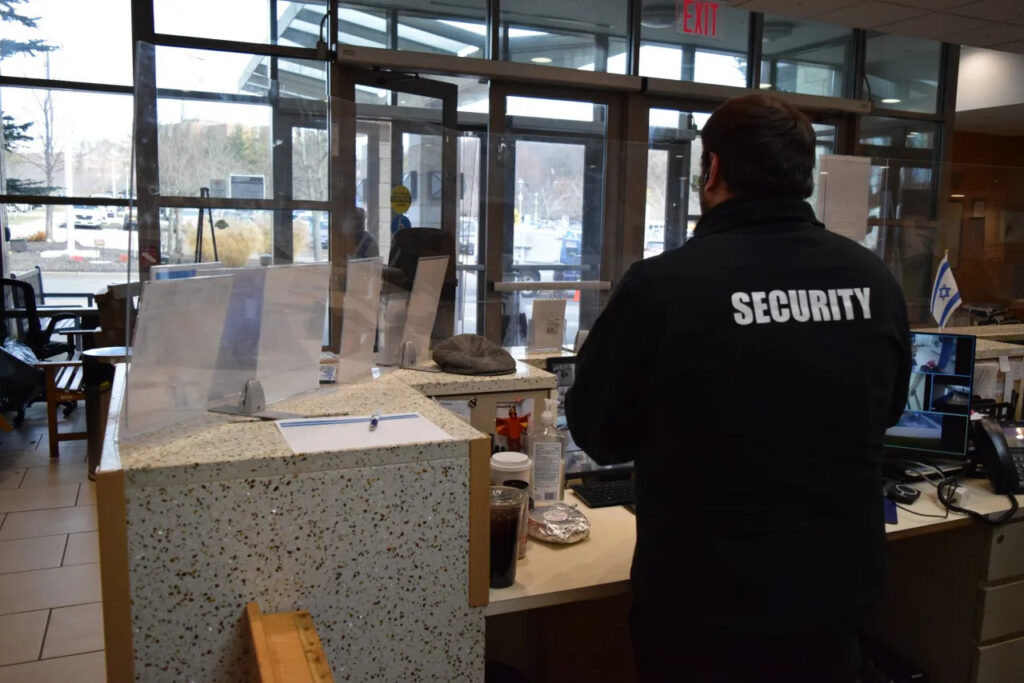
Trained, licensed security guards who provide a visible deterrent and an immediate response capability. The best providers don’t just staff bodies — they place vetted, trained personnel who understand your specific environment.
Access Control
Managing who enters and exits your building or event is foundational. This includes lobby management, visitor sign-in systems, badging, and perimeter control. In a city where office towers share floors with dozens of companies, access discipline matters.
Mobile Patrol Services
For businesses spread across multiple locations or large properties, mobile patrols provide cost-effective coverage without requiring a stationary guard at every point.
Risk Assessment and Security Planning
Before any personnel or equipment are deployed, a professional provider should conduct a thorough site assessment. This identifies vulnerabilities, establishes priorities, and informs a written security plan specific to your location and business type.
Event Security
NYC hosts thousands of corporate events, product launches, private galas, and public gatherings every year. Event security requires crowd management expertise, coordination with venue management, and the ability to scale staffing up or down quickly.
Executive Protection
High-profile executives, visiting dignitaries, and at-risk employees may require close personal protection. This is a specialized discipline that goes far beyond general guard services.
Emergency Response Coordination
Top-tier providers establish clear protocols for fire, medical, active threat, and civil disturbance scenarios — and train their teams to execute those protocols in coordination with NYPD and other emergency services.
Local expertise is the thread that ties all of these together. A provider that understands NYC’s layout, its regulatory environment, and its specific risk landscape will deliver better outcomes across every one of these service areas.
Evaluating Expertise and Experience
When you’re comparing business security solutions in NYC, credentials and track record matter. Here’s what to scrutinize:
State Licensing Compliance: Every security guard operating in New York must hold a valid guard registration card issued by the New York State Division of Licensing Services. Every security company must hold the appropriate business license. Ask for proof — any reputable provider will have this documentation ready.
Industry Training Standards: Beyond state minimums, look for providers whose guards receive ongoing training in areas like de-escalation, emergency first aid, active threat response, and customer service. The minimum legal requirement isn’t the same as a high standard of care.
Industry Certifications and Affiliations Membership in organizations like ASIS International (the leading professional association for security management) signals that a provider takes professional development seriously.
Verifiable Experience in Your Industry: A security company that primarily serves residential properties may not be the best fit for a corporate law firm or a financial services office. Ask for specific examples of clients in your sector.
References and Reviews: Ask for references from current or recent NYC clients. Pay attention to how long those relationships have lasted — long-term client retention is a strong indicator of consistent quality.
Step-by-Step: How to Vet Potential Security Partners
Use this framework when evaluating any corporate security provider in NYC:
Step 1: Define Your Needs First. Before you talk to a single provider, document your specific requirements. How many locations? What hours? What types of threats are you most concerned about? What’s your budget range? Clarity here drives better conversations.
Step 2: Verify Licensing and Insurance Confirm that the provider holds a valid New York State security company license and that their guards are individually registered. Also, confirm they carry adequate general liability and workers’ compensation insurance. You should be named as an additional insured.
Step 3: Request a Site Assessment. Any serious provider should offer to walk your property before proposing a solution. A provider who quotes without seeing your space is guessing, not planning.
Step 4: Ask Specific Operational Questions
- What is your guard-to-supervisor ratio?
- How do you handle guard callouts or no-shows?
- What is your incident reporting process?
- How are guards trained for your specific environment?
- What does your onboarding process look like for a new client site?
Step 5: Compare Proposals Apples-to-Apples Look beyond hourly rates. Compare the scope of coverage, supervision levels, training standards, and response protocols. Cheaper often means fewer hours, less supervision, and undertrained personnel.
Step 6: Check References. Call them. Ask about responsiveness, reliability, and how the provider handles problems when they arise.
Step 7: Review the Contract Carefully. Understand the terms around termination, escalation procedures, and liability. A fair contract protects both parties.
The Role of Technology in Modern Security Solutions
Technology doesn’t replace great security personnel — it makes them more effective. Today’s leading NYC security providers integrate physical and digital security into a unified approach.
Surveillance Systems (CCTV) Modern camera systems with remote monitoring capabilities allow security teams to cover more ground and capture evidence in real time. The key is not just having cameras, but having trained personnel reviewing footage and responding to what they see.
Access Control Technology Keycard, fob, or biometric systems give businesses granular control over who can access which areas at what times. These systems create audit trails that are invaluable during incident investigations.
Visitor Management Software Digital visitor logs replace paper sign-in sheets and create searchable, time-stamped records of everyone who enters your facility.
Alarm and Sensor Integration Motion sensors, door/window alarms, and panic buttons all feed into a centralized response system. When integrated with on-site guards and remote monitoring, response times improve dramatically.
Cybersecurity Awareness: Physical and cyber threats increasingly intersect. Tailgating into a server room is a physical security problem with digital consequences. Providers who understand this overlap can help build policies that address both.
When evaluating advanced security systems in NYC, ask providers how their technology integrates with their personnel — and how they train guards to use and respond to these tools.
Customizing Security Solutions for Different Business Needs
There’s no such thing as a one-size-fits-all security plan, especially in a city as varied as New York. Here’s how professional security solutions should be tailored by business type:
Corporate Offices Priority areas include lobby access control, executive floor protection, after-hours patrol, and visitor management. Employee safety solutions like workplace violence prevention training are also increasingly important.
Retail businesses’ loss prevention, shoplifting deterrence, and crowd management during peak hours or promotional events require guards trained specifically in retail environments.
Property Management Multi-tenant buildings need security that manages competing access needs, handles package management, monitors common areas, and maintains strong relationships with tenants.
Event Security From intimate executive dinners to large-scale product launches, event security in NYC demands crowd flow management, vendor credentialing, VIP escort, and close coordination with venue staff and local law enforcement.
Financial Services and Legal Firms: Firms handling sensitive client data and high-value transactions need security that understands confidentiality, manages after-hours access tightly, and coordinates with IT security teams.
Dahlcore Security Guard Services develops customized security plans after conducting thorough site assessments — because prescribing a solution before understanding the problem is a disservice to the client.
Case Study: Successful Security Partnerships in NYC
While specific client names and outcomes are kept confidential to protect their privacy, consider this scenario representative of how Dahlcore approaches a new corporate client relationship:
A mid-size financial services firm in Lower Manhattan had experienced a series of unauthorized access incidents after hours. Before engaging Dahlcore, they had a single overnight guard with no formal post orders and no direct supervisory oversight.
After a full site assessment, Dahlcore implemented: a two-guard overnight rotation with defined patrol routes, a visitor management protocol for late-arriving employees, a direct supervisory check-in process, and a written incident reporting structure that tied directly into the client’s internal HR and compliance teams.
Within the first 90 days, after-hours access incidents dropped to zero. More importantly, the client’s leadership team reported that they felt genuinely informed and engaged for the first time — because the communication and reporting processes were built in from day one.
That’s what a real security partnership looks like: not just boots on the ground, but a provider who treats your security as their responsibility.
Key Takeaways for NYC Business Security
Here’s what matters most when selecting a corporate security provider in NYC:
- Local knowledge is non-negotiable. NYC’s five boroughs each have distinct environments. Your provider must know them.
- Licensing compliance is the baseline, not the ceiling. Verify state licensing, then look well beyond it.
- Veteran-led teams bring a measurable difference. Discipline, adaptability, and integrity show up in daily operations.
- Technology should amplify your personnel, not replace them. The best providers integrate both thoughtfully.
- Customization is a sign of competence. Any provider who can’t tailor a solution to your specific business hasn’t done their homework.
- Vet before you sign. Use the step-by-step process above to compare providers systematically.
Conclusion
Security in New York City demands more than a warm body in a uniform. It requires strategic thinking, local knowledge, regulatory compliance, veteran-caliber leadership, and solutions that adapt to your specific business — not someone else’s template.
The stakes are real. Your employees deserve to feel safe at work. Your clients deserve to trust that their information and well-being are protected. And you deserve a security partner who treats your business with the same seriousness you do.
Dahlcore Security Guard Services brings veteran-led professionalism, deep NYC expertise across all five boroughs, and a client-first approach to every engagement. Whether you’re securing a corporate office, managing a large property, or planning a high-profile event, we build security solutions around what you actually need — not what’s easiest for us to deliver.
The right corporate security provider in NYC doesn’t just protect your assets. They protect your peace of mind.
Ready to secure your NYC business with a team that knows the city? Schedule a free security assessment with Dahlcore Security Guard Services today. Our veteran-led team will walk your site, identify vulnerabilities, and build a plan designed around your specific needs — not a template. Schedule Your Free Assessment →
FAQs
1. What makes a corporate security provider trustworthy?
Trustworthiness comes from a combination of verified licensing, transparent communication, a track record of reliability, and consistent standards. Ask for references and verify them. A trustworthy provider will welcome the scrutiny.
2. How can NYC businesses assess a security company’s local experience?
Ask specifically which boroughs they regularly cover, what types of clients they serve in NYC, and how their team stays current on local regulations and crime trends. Generic answers are a red flag. Specific, detailed responses signal genuine local experience.
3. What are the latest trends in corporate security?
Key trends include integrated physical and cybersecurity programs, AI-assisted video surveillance, biometric access control, mobile command capabilities, and a growing emphasis on workplace violence prevention. The best providers are investing in these areas while keeping human judgment at the center of their operations.
4. How important is technology in corporate security today?
Very — but it’s a tool, not a replacement for trained professionals. Technology extends the reach and effectiveness of security personnel, creates better documentation, and speeds up response times. However, cameras and sensors don’t make judgment calls. Trained people do.
5. What should a security provider offer for corporate events in NYC?
For corporate events, look for experience in crowd management, vendor and guest credentialing, VIP escort protocols, coordination with venue management and NYPD if necessary, and the ability to scale staffing appropriately. Ask whether they’ve handled events of similar size and complexity.
6. What questions should I ask before signing a contract with a security provider?
Ask about guard training standards, supervisory ratios, how they handle no-shows, their incident reporting process, how post orders are developed, and what your rights are if performance falls short. Review the contract’s termination clause carefully.
7. Does Dahlcore Security Guard Services cover all five NYC boroughs?
Yes. Dahlcore Security Guard Services provides corporate security solutions across all five boroughs — Staten Island, Brooklyn, Manhattan, Queens, and The Bronx — with security plans tailored to each area’s specific environment and risk profile.
8. How long does it take to get security services in place for a new NYC business location?
Timelines vary depending on the complexity of the engagement. A simple single-site deployment can often be operational within days of a signed agreement. More complex, multi-site, or custom-built programs take longer to plan and staff properly. Any provider promising immediate deployment on a complex engagement without a proper assessment should raise questions.
Check other blogs:
Loss Prevention: Strategies & Examples
8 Proven Forms of Construction Site Security
Safeguarding the Night: Enhancing Security at Construction Sites
