

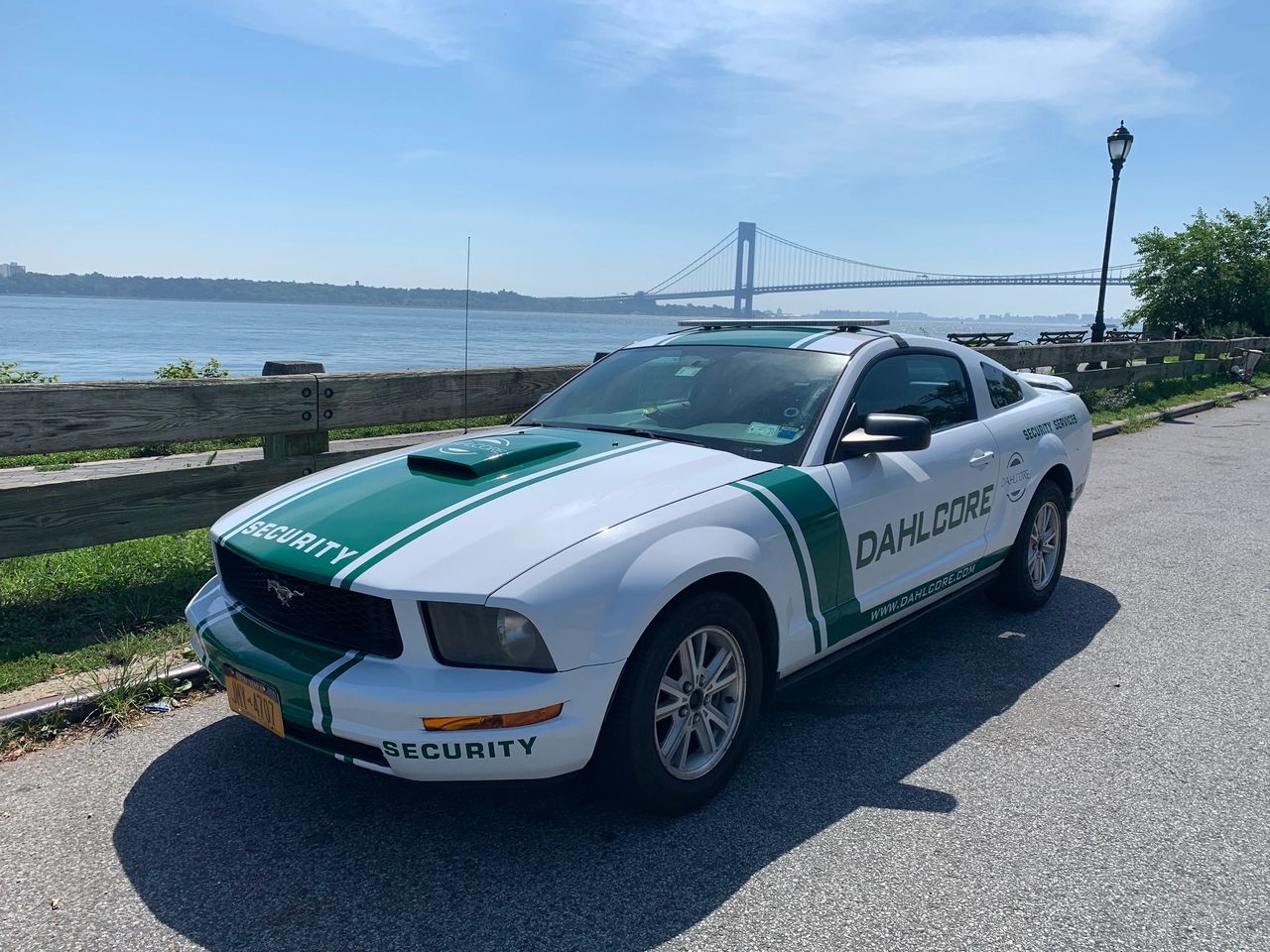
A security contractor is a professional security service provider hired under contract to protect people, property, and assets for businesses, organizations, and events. A security contractor designs, delivers, and manages outsourced security, often acting as your dedicated security guard company without the overhead of building an in‑house team. Businesses, commercial sites, construction projects, and event venues rely on security contractors to handle guarding, monitoring, and incident response so their teams can stay focused on core operations.
Key takeaways
- A security contractor is a licensed security service provider that delivers contract security services such as guarding, patrols, and monitoring for your site or event.
- Main responsibilities include risk assessment, on‑site guarding, mobile response, access control, CCTV monitoring, and incident reporting.
- Small businesses, property managers, event organizers, and construction managers should hire a security contractor when theft, liability, or safety risks exceed what internal staff can manage.
- Choosing a professional firm over in‑house guards provides stronger expertise, better compliance, scalable coverage, and dedicated security supervision.
Dahlcore is a professional security contractor providing commercial security, mobile patrols, access control, CCTV monitoring, event security, and virtual guard services for businesses that need reliable, around‑the‑clock protection.
Types of Security Contractors
What types of security contractors are there?
Security contractors can specialize in different contract security services depending on your risk profile and site type.
- On‑site guarding: Uniformed guards stationed at entrances, lobbies, loading bays, and critical areas to deter threats and control access.
- Keyholding and mobile response: A private security contractor holds your keys and responds to alarms, late‑night incidents, and lock/unlock requests.
- Access control monitoring: Managing entry systems, badges, visitor logs, and remote door control for offices, warehouses, and gated sites.
- CCTV monitoring: Live and remote video surveillance with AI‑assisted detection and incident response to suspicious activity.
- Alarm response: Rapid deployment of mobile units when alarms trigger, reducing false calls to law enforcement and accelerating on‑site checks.
- Fire watch: Temporary fire watch patrols when systems are offline or during high‑risk work such as hot‑work and construction.
- Event security contractor: Crowd management, ticket checks, bag screening, and emergency response for concerts, sports, conferences, and festivals.
- Executive protection and armed security contractor: Protective details and high‑risk coverage using specially qualified, often armed personnel where permitted by law.
Who This Guide is For
This guide is designed for:
- Small business owners who need a commercial security contractor to protect stores, offices, or warehouses.
- Property and facility managers are responsible for access control, CCTV, and incident response across multiple locations.
- Event organizers and venue operators must manage crowds, screening, and emergency plans for public events.
- Construction managers seeking outsourced security for tools, materials, and equipment on active sites.
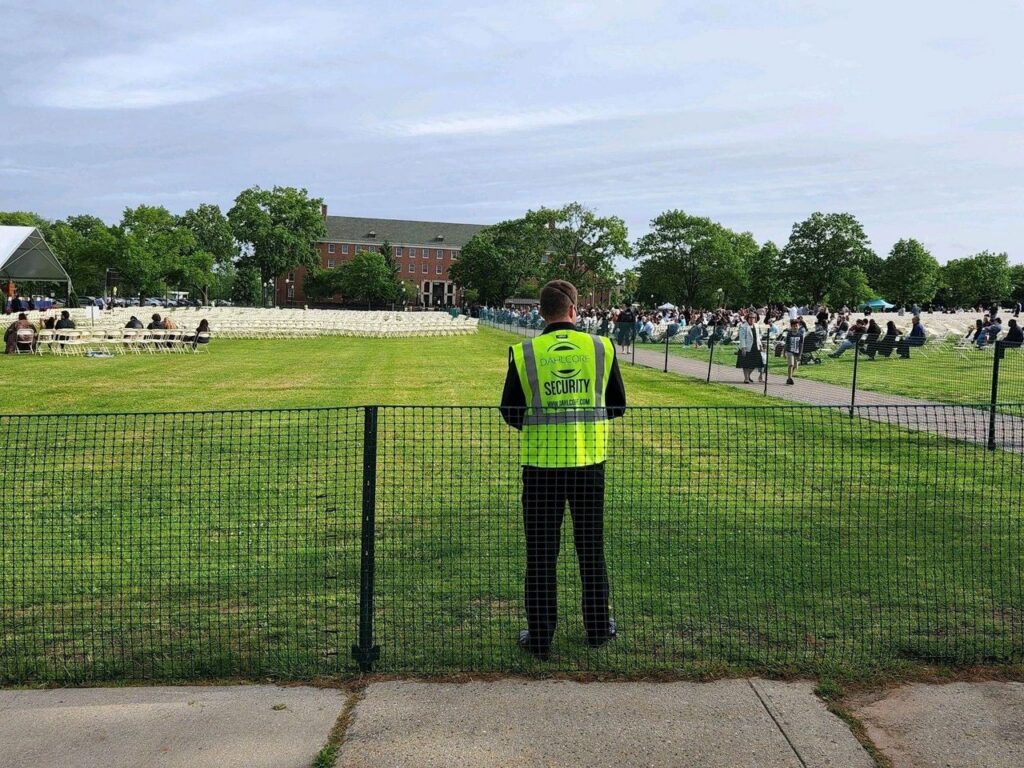
Services Security Contractors Provide
What Does a Security Contractor Do?
A private security contractor or security guard company typically provides a combination of on‑site, mobile, and remote security services tailored to your site.
- Risk assessment and security planning: Site walk‑throughs, threat identification, and written security plans that match your operations and budget.
- On‑site guards and reception security: Uniformed guards controlling entry, greeting visitors, and enforcing site rules.
- Mobile patrols and keyholding: Scheduled or random patrols plus alarm response when your alarm or monitoring center detects an issue.
- Access control and badge management: Operating gates, turnstiles, visitor badges, and employee access permissions.
- CCTV monitoring and virtual guarding: Remote camera monitoring using smart analytics and trained operators to verify incidents and dispatch help.
- Event security services: Ticketing and bag checks, VIP protection, backstage control, and crowd safety.
- Incident response and reporting: Documenting suspicious activity, contacting law enforcement, and filing detailed reports for insurance and compliance.
How Security Contractors Ensure Safety in Practice
Security contractors use a repeatable process to turn security plans into day‑to‑day protection for your property.
- Risk assessment: Reviewing site layout, crime trends, and operations to pinpoint vulnerabilities.
- Guard patrols and post orders: Setting defined routes, checkpoints, and responsibilities for guards at each post.
- Access control: Enforcing who can enter, where they can go, and when they can be on‑site.
- CCTV monitoring: Watching cameras in real time, using AI alerts, and responding to unusual behavior before it escalates.
- Alarm response: Quickly investigating alarms, securing doors, and coordinating with police or fire as needed.
- Emergency procedures: Following clear playbooks for fires, medical incidents, fights, or evacuations.
- Incident reporting and improvement: Documenting incidents and adjusting patrols, staffing, or technology based on patterns.
A simple diagram could show the Dahlcore workflow from risk assessment → security plan → deployment (guards/CCTV/access control) → 24/7 monitoring and response → ongoing reviews, with Dahlcore highlighted at each stage.
How Security Contractors Ensure Safety
When Should Your Business Hire a Security Contractor?
Businesses typically turn to outsourced security when risk, liability, or operational demands outgrow what internal staff can safely manage.
- Rising theft, vandalism, or trespassing on your property.
- Compliance and licensing requirements that demand trained, licensed guards instead of ad‑hoc coverage by employees.
- Events or peak seasons where crowds, deliveries, or cash handling increase risk.
- Multi‑site operations need a consistent security program across locations.
Steps to Working With a Security Contractor
Most professional security contractors follow a structured engagement process from the first conversation through long‑term protection.
- Site security audit: A walk‑through and consultation to understand your operations, risks, and current measures.
- Proposal and security plan: A written proposal detailing recommended guard posts, patrols, technology, and pricing.
- Security contract and SLA: Agreement on scope, hours, response times, reporting, and performance metrics in a formal Service Level Agreement.
- Deployment and onboarding: Hiring or assigning guards, training them on site procedures, and configuring access control and CCTV systems.
- Ongoing reporting and review: Regular incident summaries, KPI reviews, and plan adjustments based on results and changing risks.
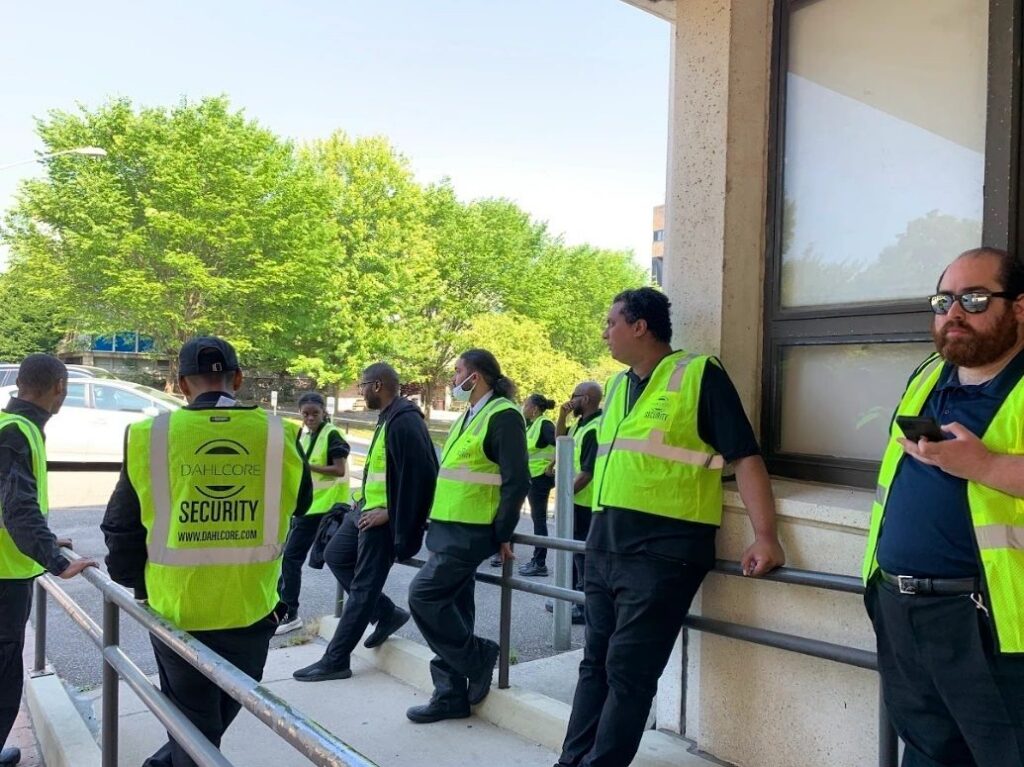
Pros and Cons: Contractor vs In‑House Security
Cost
- Security contractor (outsourced security): Typically lower fixed overhead; you pay for defined coverage and can scale up/down as needed.
- In‑house security team: Higher ongoing payroll, benefits, training, and management costs.
Flexibility
- Security contractor (outsourced security): Easy to adjust guard hours, add mobile response, or expand to new sites under your security contract.
- In‑house security team: Changes require hiring, training, and HR processes for each adjustment.
Expertise
- Security contractor (outsourced security): Access to trained, licensed guards and supervisors with specialized experience.
- In‑house security team: Depends on your ability to recruit and train security staff internally.
Compliance
- Security contractor (outsourced security): Contractor manages licensing, insurance, and training to meet regulations.
- In‑house security team: Your business must manage all licensing and compliance directly.
Coverage
- Security contractor (outsourced security): Backup staffing and 24/7 coverage options through the security service provider’s wider team.
- In‑house security team: Limited to the small internal team you can staff around the clock.
Why Choose Dahlcore as Your Security Contractor
How Dahlcore Delivers Contract Security Services
Dahlcore operates as a full‑service security contractor and security guard company, delivering on‑site guarding, mobile patrols, access control, CCTV monitoring, and virtual guard solutions. The team provides commercial security for businesses, construction sites, and events, with 24/7 monitoring and rapid incident response designed to reduce crime and protect staff and visitors.
Case study snapshots
- Retail loss reduction: A regional retail client facing repeated after‑hours break‑ins implemented Dahlcore’s on‑site guarding, mobile patrols, and CCTV monitoring, leading to a significant drop in incidents and shrinkage over the following quarters.
- Event security success: For a busy public event at a commercial venue, Dahlcore supplied event security contractors to manage access control, bag checks, and crowd flow, helping the organizer run a smooth, incident‑free event.
Dahlcore maintains proper licensing, insurance, and state‑required training for security officers and supervisors, aligning with New Jersey security officer company licensing and SORA standards.
Trust and Next Steps
- Review independent feedback on Dahlcore’s security guard and monitoring services on social and review platforms.
- Dahlcore emphasizes ongoing training, background checks, and adherence to state security regulations to protect your business and reduce liability.
Request a security contractor quote from Dahlcore to schedule a free site security review and receive a tailored proposal for your business or event.

The Role of Government Standards in Security Contracting
Security contractors operate within a framework of regulations and guidelines to ensure professionalism and efficiency. The standards provided by government agencies play a crucial role in shaping security practices and technologies.
For instance, the U.S. Department of Homeland Security (DHS) offers resources and guidelines for private security companies to enhance risk management strategies and preparedness for various threats. Learn more about security measures from DHS.
Additionally, the Occupational Safety and Health Administration (OSHA) provides comprehensive guidelines to ensure safety protocols for security personnel in potentially hazardous environments. Explore OSHA’s security-related safety guidelines.
FAQs About Security Contractors
What does a security contractor do?
A security contractor plans and delivers security for your business by providing guards, patrols, access control, CCTV monitoring, and incident response under a formal contract.
How is a security contractor different from a security guard company?
A security guard company often focuses on supplying guards, while a security contractor acts as a broader security service provider that designs, manages, and supervises your entire security program, including technology and procedures.
When should a business hire a security contractor?
Your business should hire a security contractor when crime risk, compliance requirements, or event‑related crowds create safety and liability concerns beyond what internal staff can handle.
How much does a security contractor cost?
Costs depend on guard hours, risk level, site size, and services such as patrols, CCTV monitoring, and alarm response, with pricing typically quoted per hour of coverage or as a bundled monthly contract.
What qualifications should a security contractor have?
Look for a licensed security officer company with proper insurance, state‑approved guard training, background checks, and management experience in commercial and event security.
Check other blogs:
5 Essential Insights into the World of Security Contractors
