

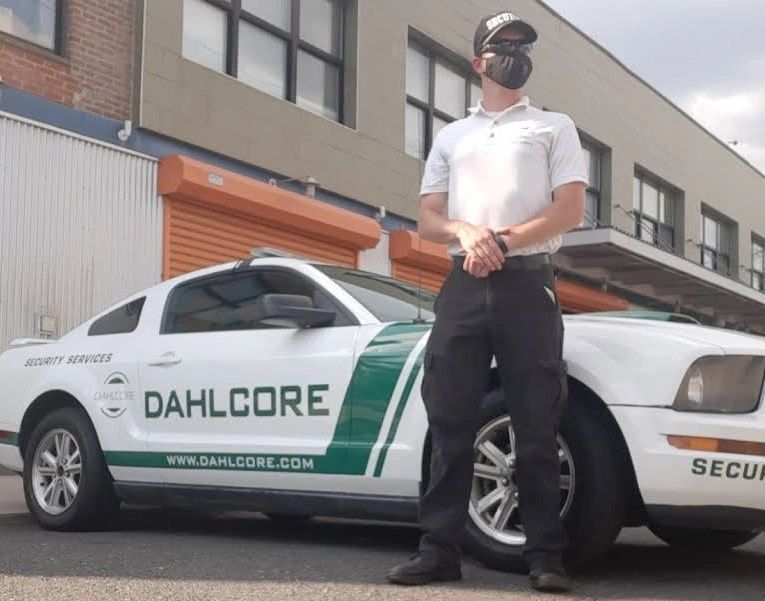
A fire guard is a trained security professional who monitors properties for fire hazards when fire protection systems are compromised or during high-risk activities like welding. Unlike a fireplace screen (also called a “fireguard”), which is a physical barrier for hearths, a fire guard is a human sentinel who patrols your premises, identifies potential fire risks, and takes immediate action to prevent disasters. Fire guards are essential when your fire alarm or sprinkler system is down, during hot work operations, or when construction activities increase fire risk.
Fire Guard Definition
A fire guard (also called a fire watch guard) serves as your frontline defense against fire outbreaks when automated systems cannot. These certified professionals conduct continuous patrols of impaired properties, maintaining detailed logs of their observations and standing ready to detect smoke, heat, or flames. Fire guards are legally mandated by NFPA 101 Life Safety Code and OSHA regulations when fire protection systems are impaired for more than 4 hours in 24 hours.
Quick Facts About Fire Guards
- Required when: Fire systems are impaired >4 hours or during hot work operations
- Cost range: $28-$50+ per hour for standard services; $50-$200+ for emergencies
- Certification: Must complete fire safety training and hold state-specific certifications (e.g., New York F01/F02)
- Patrol frequency: Continuous patrols with no fixed location—must remain mobile and vigilant
- Post-hot work: Must monitor the site for at least 60 minutes after hot work completion
Key Responsibilities of a Fire Guard
Fire guards perform critical duties that go far beyond simple observation:
- Continuous Patrol Monitoring: Fire watch personnel must conduct ongoing surveillance of affected areas, never remaining stationary. They identify fire hazards, combustible materials, and unsafe conditions.
- Immediate Emergency Response: Upon detecting fire, guards alert the fire department and building occupants simultaneously, then initiate evacuation procedures.
- Fire Suppression: When safe, fire guards use portable extinguishers to control incipient fires before they escalate.
- Documentation: Maintain detailed fire watch logs tracking patrol times, observations, and any hazards identified—critical for FDNY compliance.
- Coordination with First Responders: Provide firefighters with building layout, hazard locations, and utility access points upon arrival.
When You Need a Fire Guard: Decision Guide
System Impairments
You must hire a fire guard when:
- Fire alarm/sprinkler systems are down more than 4 hours (NFPA 101)
- Water-based protection is impaired for 10+ hours in 24 hours
- Awaiting fire alarm installation or repairs
Hot Work Operations
Fire guards are legally required during:
- Welding, cutting, grinding, or brazing activities
- Construction and demolition projects
- Industrial maintenance in flammable environments
High-Risk Scenarios
- Special events with dense crowds when systems are compromised
- Healthcare facilities where evacuation is difficult
- Construction sites with temporary heating or power systems
Do You Need a Fire Guard? If your property is in New York and your fire protection system is impaired, the answer is almost certainly yes. Contact Dahlcore at (718) 487-2769 for immediate deployment.
Fire Guard vs Fire Watch: Understanding the Difference
While often used interchangeably, there are distinct differences:
Scope
- Fire Guard: Fixed location monitoring (building, facility)
- Fire Watch: Temporary measure during system impairment
Duration
- Fire Guard: Ongoing assignment
- Fire Watch: Required only when systems are down >4 hours
Primary Focus
- Fire Guard: General fire safety compliance
- Fire Watch: Replicating automated system functions
Deployment
- Fire Guard: Residential/commercial buildings
- Fire Watch: Construction sites, hot work zones, events
Certification
- Fire Guard: State-specific (e.g., NY F01/F02)
- Fire Watch: Fire safety training + site-specific orientation
Bottom line: A fire guard performs fire watch duties, but fire watch is the procedure mandated during specific high-risk situations.
Fire Guard Requirements by State
Fire guard certification varies significantly across jurisdictions:
New York Requirements
- F01 Certificate of Fitness: Required for a fire guard in impaired buildings
- F02 Fire Guard for Shelters: Specialized certification for homeless shelters
- Application fee: $25, renewal every 3 years ($15)
- Requirements: Employer recommendation, ID, fire safety training
General State Variations
- California: Requires Fire Watch certification through State Fire Training
- Texas: Licensed by the Texas Department of Insurance
- Florida: Requires Fire Safety Inspector certification
- Georgia: NICET certification for fire protection professionals
Important: Always check with your local Authority Having Jurisdiction (AHJ) or fire marshal, as requirements can be more stringent than NFPA minimums.
Fire Guard Services by Industry
Different industries require specialized fire guard approaches:
Construction
- Primary Risks: Hot work, temporary heating, combustible materials
- Guard Duties: Continuous patrols, hot work monitoring, hazard removal
- Typical Cost: $35-$60/hour
Healthcare
Primary Risks: Occupant vulnerability, oxygen storage, equipment
- Guard Duties: Evacuation assistance, equipment monitoring, staff coordination
- Typical Cost: $45-$75/hour
Hospitality
- Primary Risks: Guest safety, kitchen hazards, high occupancy
- Guard Duties: Public area monitoring, kitchen inspections, guest evacuation
- Typical Cost: $40-$65/hour
Industrial
- Primary Risks: Flammable materials, high-heat processes
- Guard Duties: Process monitoring, hazardous material patrols, emergency response
- Typical Cost: $50-$85/hour
Events
- Primary Risks: Crowd density, temporary structures, pyrotechnics
- Guard Duties: Crowd monitoring, exit route patrol, pyrotechnic oversight
- Typical Cost: $60-$150/hour
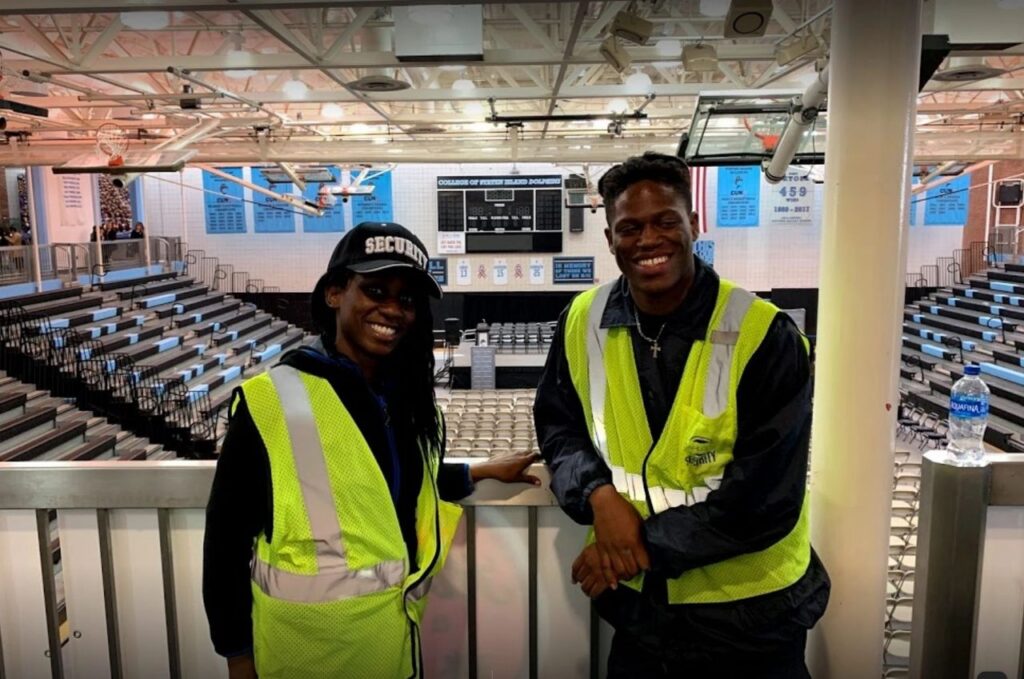
Our Fire Guard Experience: Dahlcore’s 8+ Year Track Record
Certified Fire Safety Professional with 8+ years managing fire watch operations across 500+ NYC properties Dahlcore has provided fire guard services since 2015, protecting New York City’s most vulnerable properties during critical system impairments. Our team has:
- Managed 200+ construction site fire watches during high-rise renovations in Manhattan
- Responded to 150+ emergency system failures with a 2-hour deployment guarantee
- Maintained a 99.8% compliance rate with FDNY fire watch regulations
- Prevented 3 major incidents through early detection and rapid response
Certifications: NY State Security Guard License, F01/F02 Certificates of Fitness, OSHA 30-Hour Construction Safety, NFPA 101 Life Safety Code Training
Fire Guard Equipment and Tools
Professional fire guards utilize specialized equipment:
- Fire Extinguishers: Portable units (ABC, CO2) for incipient fire suppression
- Thermal Imaging Cameras: Detect hidden hot spots behind walls or in ceilings
- Communication Devices: Two-way radios for immediate fire department notification
- Digital Patrol Systems: GPS-enabled logging devices for accurate record-keeping
- Personal Protective Equipment: Heat-resistant gloves, safety helmets, high-visibility vests
- Fire Watch Logs: Detailed documentation templates for FDNY compliance
Legal and Regulatory Framework
Fire guards operate under strict federal and state regulations:
Federal Standards
- OSHA 29 CFR 1926.150: Requires fire protection programs during construction
- NFPA 101 Life Safety Code: Mandates a fire watch when systems are impaired
- NFPA 51B: Governs fire prevention during hot work operations
Local Compliance
Failure to provide required fire watch services can result in:
- Fines: Up to $25,000 per violation in NYC
- Building closure: Immediate vacate orders from the fire marshal
- Legal liability: Full responsibility for any fire-related damages
- Criminal charges: In cases of gross negligence
Always notify your local fire department when initiating a fire watch—this is mandatory under NFPA 101.
Frequently Asked Questions
1. What exactly does a fire guard do?
A fire guard conducts continuous patrols of properties with impaired fire protection systems, monitoring for smoke, heat, or flames. They maintain detailed logs, alert authorities immediately upon detection, assist with evacuations, and may use extinguishers on small fires.
2. When are fire guards legally required?
Fire guards are required when fire alarm/sprinkler systems are impaired for more than 4 hours, during hot work operations (welding, cutting), construction/demolition activities, or when mandated by your local fire marshal.
3. What’s the difference between a fire guard and a fire watch?
A fire guard is the trained personnel; a fire watch is the temporary procedure they perform when automated systems are down. Think of it as the guard conducting the fire watch.
4. How much do fire guard services cost?
Standard fire guard services range from $28-$50 per hour. Emergency services or high-risk industrial sites can cost $50-$200+ per hour. Most companies require a minimum of 4-8 hours.
5. What certifications do fire guards need?
Requirements vary by state. New York requires F01/F02 Certificates of Fitness. Generally, guards need fire safety training, hazard recognition certification, and site-specific orientation. Some states require NICET certification.
6. Can technology replace human fire guards?
No. While thermal cameras and detection systems assist, human judgment, mobility, and decision-making during emergencies cannot be replicated by technology. Fire guards provide the critical thinking and immediate action that automated systems cannot.
7. How do I hire a fire guard in New York?
Contact a licensed security firm like Dahlcore at (718) 487-2769. Ensure they provide FDNY-certified guards, maintain proper insurance, and can deploy within 2-4 hours for emergencies.
Need Immediate Fire Guard Services?
Call Dahlcore 24/7: (212) 208-0900
Email: Ian.Dahlberg@Dahlcore.com
Serving NYC, Brooklyn, Queens, Bronx, and Long Island
– Ensure your fire watch program meets all FDNY requirements.
Check other blogs:
The Art of Theft Prevention: Strategies for Dispensary Security
The Art of Compassionate Employee Termination: Tips for Managers
Ethics of Employee Termination: Balancing Business & Rights
Who Is Responsible for Organizing Fire & Emergency Drills at Work
