

Last updated: December 29, 2025
Security is protection—and in day-to-day life, it’s the set of measures used to guard against crime, attack, or unauthorized activity. When done well, security reduces risk before problems happen, detects issues early, responds fast when something goes wrong, and supports recovery so operations can continue with minimal disruption.
Direct answer
Security protects people, property, and daily operations by preventing and reducing threats, controlling who can access spaces, monitoring for suspicious activity, responding to incidents quickly, documenting what happened, and helping organizations recover. In plain terms: security makes problems less likely, less harmful, and easier to manage when they occur.
What is Security?
- Security = protection.
- It also includes “measures taken to guard against … crime [or] attack.”
- In physical environments, security uses people, procedures, and tools (like access control and surveillance) to protect people and prevent loss or unauthorized access.
In practice, Security Does 6 Things.
- Deter: Discourage threats through visible presence (guards, signage, lighting, marked patrols).
- Control access: Decide who gets in, when, and where they can go (checkpoints, IDs, keycards).
- Monitor & patrol: Observe what’s happening (CCTV, patrol rounds, entry/exit monitoring).
- Respond: Intervene quickly and safely (de-escalation, dispatch, emergency coordination).
- Report & document: Capture facts (incident reports, logs, evidence preservation).
- Recover & improve: Restore normal operations and reduce repeat incidents (post-incident review, updated post orders).
The Framework: Deter, Detect, Delay + Respond, Report, Recover.
A useful way to explain “what security does” is to break it into actions that happen before, during, and after an incident:
- Before: Deter, Detect, Delay (layered controls that prevent or slow harmful events).
- During: Respond (human decisions, communication, coordination).
- After: Report, Recover (documentation + continuity).
This mirrors widely used “detect–respond–recover” lifecycle language in incident response, where “Detect, Respond, and Recover” are treated as core phases of incident handling.
What a Security Guard Does (Day-to-Day)
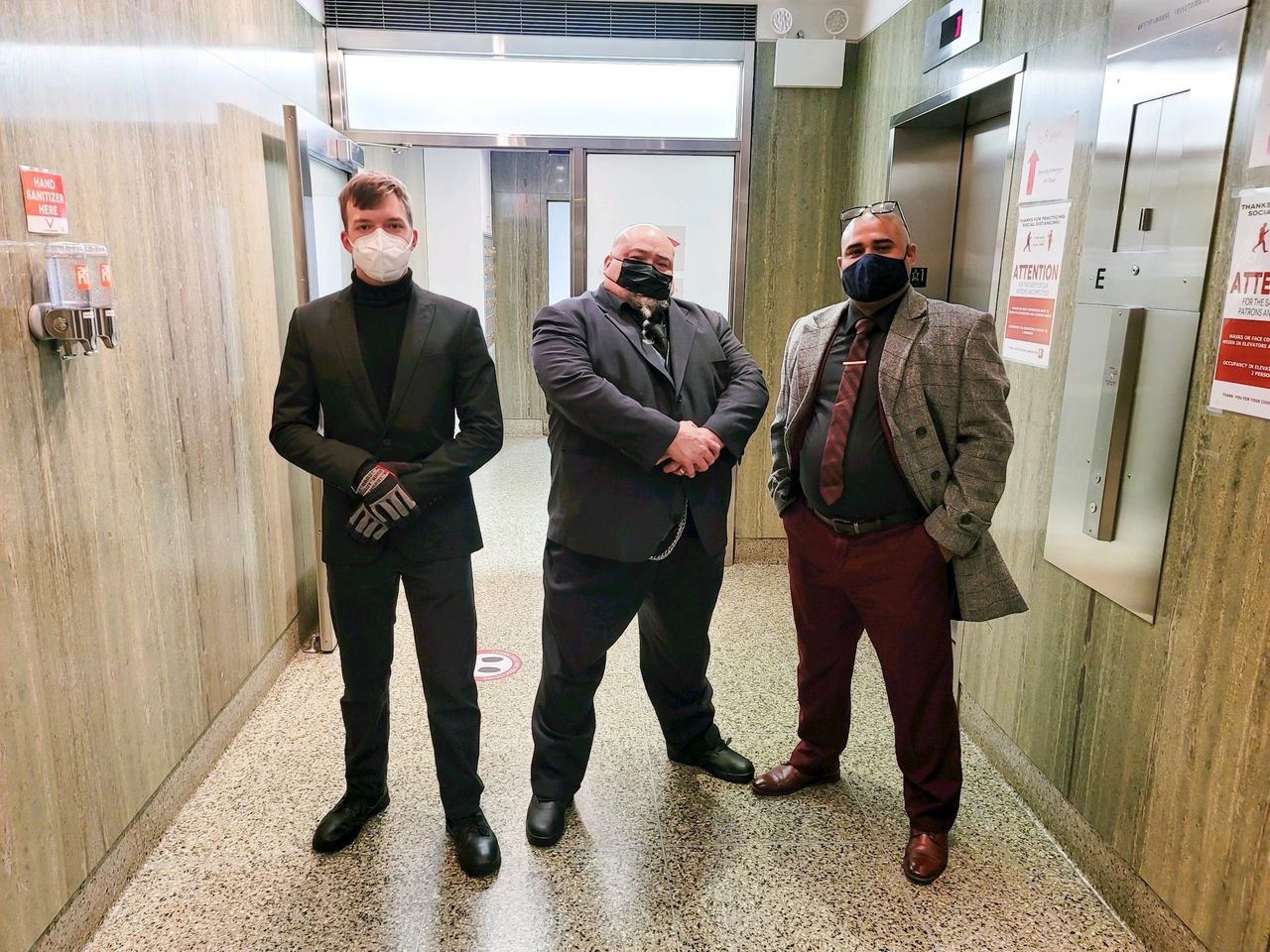
Security guards turn plans into real-world outcomes—especially in places where people, property, and public safety overlap.
Access control (prevent unauthorized entry)
- Verify identity/authorization (IDs, visitor check-in, credential checks).
- Stop “tailgating” and restrict access to sensitive areas.
- Enforce site rules consistently (deliveries, vendors, off-hours entry).
Patrol & visible deterrence (reduce opportunity)
- Conduct scheduled and randomized patrols.
- Watch for unusual patterns (loitering, forced-door attempts, suspicious vehicles).
- Identify hazards early (blocked exits, unsafe conditions, policy violations).
Incident response & communication (reduce harm)
- De-escalate conflicts and respond to disturbances.
- Call and coordinate with police/fire/EMS when needed.
- Assist with evacuation, perimeter control, and scene safety.
Reporting & documentation (create accountability)
- Write clear incident reports (who/what/when/where/actions taken).
- Maintain logs (patrol checks, access issues, alarms, visitor records).
- Preserve evidence appropriately (video timestamps, witness details).
Security Technology (What it Adds)
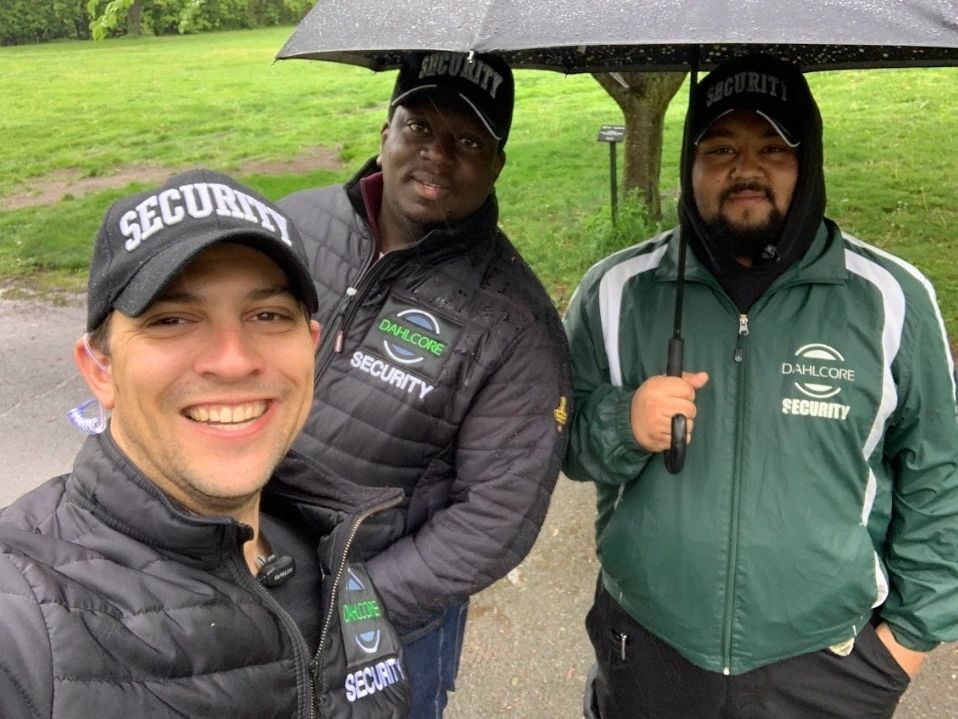
Technology helps security teams scale coverage and respond faster—especially after hours or across large properties.
- CCTV / surveillance: Expands observation and supports investigations.
- Access control systems: Create consistent, auditable entry rules.
- Virtual guarding / remote monitoring: Adds eyes-on capability without requiring a full on-site footprint at every moment.
- Alarm + response procedures: Ensures alerts lead to real action, not just notifications.
What this Looks Like: Mini Scenarios
Scenario 1: Retail theft deterrence + documentation
A visible guard presence and proactive floor patrol reduce theft attempts, and if a theft occurs, the guard helps preserve details for management (time, description, direction of travel, video reference points).
Scenario 2: Unauthorized access attempt at an entry point
An individual attempts to follow an employee through a controlled door (“tailgating”); access control procedures and firm, calm intervention prevent entry to restricted areas.
Scenario 3: Event crowd surge
A crowd surge forms near a choke point; security supports safer flow via crowd control, communication, and rapid coordination with event staff to reduce injury risk.
Scenario 4: Fire watch / hot work watch
During higher-risk activity (or when fire systems are impaired), dedicated watch procedures focus on early detection and rapid escalation to reduce the chance that a small hazard becomes a major incident.
Security Functions → Examples → Dahlcore Services
Security function: Deterrence
- What it means: Make incidents less likely through visible security
- Real-world example: Marked patrols discourage break-ins
- Dahlcore service: Security Guard Services
Security function: Access control
- What it means: Control who enters/exits and where they go
- Real-world example: Stop tailgating at a restricted door
- Dahlcore service: Access Control
Security function: Monitoring
- What it means: Watch activity to spot issues early
- Real-world example: CCTV oversight flags loitering near entrances
- Dahlcore service: Virtual Guard Services
Security function: Loss prevention
- What it means: Reduce shrink, damage, and policy violations
- Real-world example: Retail floor presence + incident logs reduce repeat theft
- Dahlcore service: Loss Prevention
Security function: Crowd control
- What it means: Maintain safe movement and order
- Real-world example: Staffed checkpoints and de-escalation at an event entrance
- Dahlcore service: Event Security
Security function: Life-safety watch
- What it means: Focus on fire risk and escalation readiness
- Real-world example: Temporary watch when alarms/sprinklers are offline
- Dahlcore service: Fire Watch / Hot Work Watch
Security function: Response
- What it means: Act quickly to reduce harm
- Real-world example: Rapid intervention and emergency coordination
- Dahlcore service: On-site / Event Security
Security function: Reporting & recovery
- What it means: Document and improve so incidents don’t repeat
- Real-world example: Incident report leads to updated procedures and better coverage
- Dahlcore service: Security planning consult
Physical Security vs. Cybersecurity (Quick Clarification)
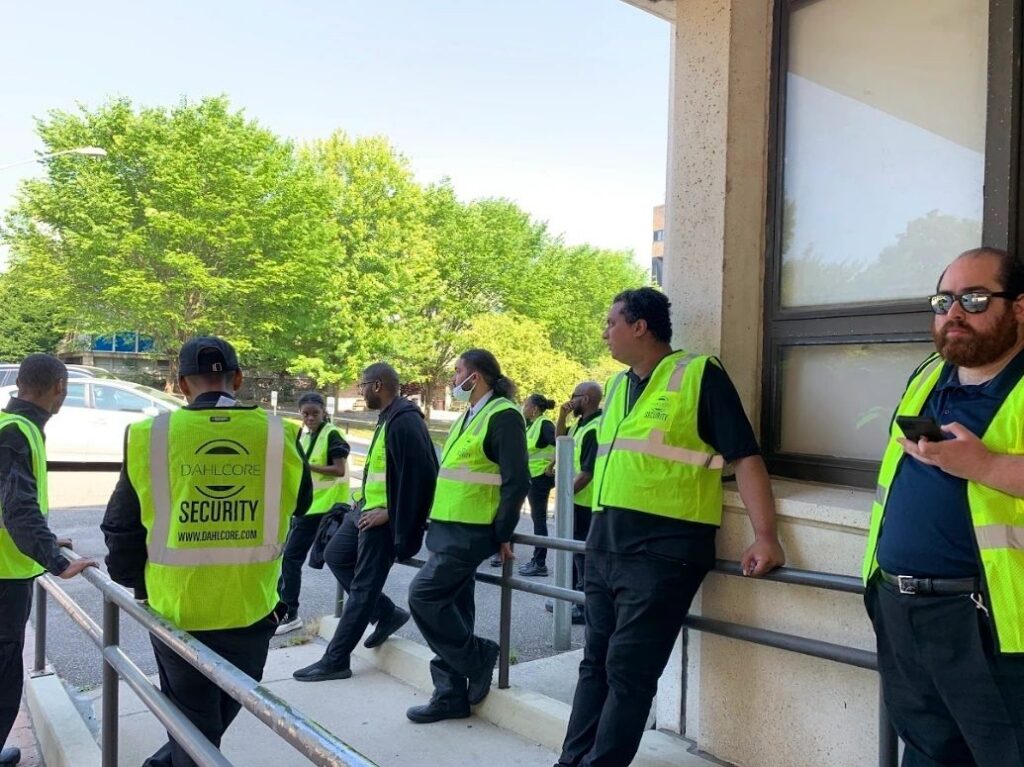
- Physical security protects people and tangible spaces (buildings, job sites, events, inventory, entry points).
- Cybersecurity protects systems and data (accounts, networks, devices).
- Many organizations need both, but this article focuses on physical/private security services and operational safety outcomes.
How Dahlcore Approaches Security (Operationally)
A strong security program is more than “having guards”—it’s consistent procedures and measurable execution.
- Clear post orders and escalation paths (who to call, when, and what to document).
- Access control routines (visitor management, entry/exit monitoring, restricted zones).
- Patrol strategies (scheduled + randomized, with priorities based on risk).
- Reporting standards (incident reports that are factual, complete, and usable).
- Continuous improvement (post-incident review to reduce repeat problems).
Checklist: How to Evaluate a Security Provider
Use this quick checklist when comparing providers:
- Can they explain how they deter, detect, respond, report, and support recovery—in plain language?
- Do they offer a plan for access control (visitor process, credential rules, restricted areas)?
- What does reporting look like (sample incident report, log format, response times)?
- How do they handle events and peak-risk periods (staffing, communication, crowd management)?
- Can they align coverage to your use case (retail loss prevention vs. construction site patrol vs. event security)?
FAQs
Does security prevent crime or just respond?
Good security does both: it reduces the likelihood of incidents through deterrence and access control, and it also responds fast when something still happens.
What should a good security plan include?
A solid plan includes clear goals (what must be protected), access rules, patrol/monitoring coverage, response procedures, reporting requirements, and a recovery/improvement process after incidents.
How do security guards prevent unauthorized access?
They enforce access rules at entry points, verify credentials, stop tailgating, monitor visitor movement, and report repeated issues so the site can strengthen controls.
What’s the difference between physical security and cybersecurity?
Physical security protects people and places (guards, patrols, access control, surveillance). Cybersecurity protects accounts, devices, and networks. Many businesses need both, but they’re different disciplines.
What’s the biggest mistake organizations make with security?
Treating security as a “one-time purchase” instead of an operational program—procedures, training, reporting, and improvement are what make security consistent.
Ensure Access Control Compliance in New York with Professional Security Guard Services!
Is your New York establishment in need of robust access control measures?
Introducing Access Control Guard New York – Your Trusted Partner for Security
Whether it’s a corporate office, a residential complex, or any property, we’ve got your access control needs covered.
Explore our other blog posts here
Security Challenges in Offshore Energy Sector Protection
Executive Personal Protection: Complete Guide to VIP Security
