


Last Updated: January 14, 2026
High schools today face complex safety challenges, from bullying and fights to unauthorized visitors and potential emergencies. In this context, school security guards have become essential to maintaining a safe environment for students and staff. If you are wondering how much high school security guards make, this guide explains typical hourly and annual pay, the day-to-day responsibilities, and the main factors that influence earnings in high school settings.
How Much Do High School Security Guards Make?
Most high school security guards in the U.S. typically earn around 11–13 USD per hour, with more experienced school security officers or higher-responsibility campus roles often earning closer to 17–18 USD per hour. Annualized, that is roughly 23,000–37,000 USD per year for full-time work, depending on hours, seniority, and whether the job is a basic campus security position or a higher-level security officer role.
Compared with the broader occupation, school-specific roles usually sit at the lower end of the overall security guard pay range. Across all industries, general security guard wages cluster around 15–20 USD per hour on many salary sites, with median annual pay often in the mid-30,000 to high-30,000 USD range, and more specialized or higher-risk assignments earning more.
Average Hourly Pay for School Security Guards
For quick reference, here is a concise:
If you are considering a high school campus security job, expect typical hourly pay to start near 11–13 USD/hour for entry-level positions, with experienced or higher-risk school security officer roles trending closer to 15–18 USD/hour in many markets.
Annual Salary for High School Security Officers
When converted to annual figures for full-time schedules, many high school security guard roles fall in the 23,000–27,000 USD/year range on the lower end, while more experienced school security officers often earn between 30,000–37,000 USD/year or more, depending on region, risk level, and responsibilities.
School vs General Security Guard Pay
General security guards across all industries commonly earn a median hourly wage of around the high teens per hour and a median annual salary in the mid-30,000 range, while school security and mall security guards tend to earn slightly less than the overall median. Higher-risk niches like nuclear facilities, celebrities, or specialized corporate security can earn significantly more.
High School Security Guard Salary Table
The table below gives a structured overview that clearly separates high school roles from broader security guard positions.
High school security guard
- Typical hourly pay: ~11–13 USD/hour
- Typical annual range (full-time): ~23,000–27,000 USD/year
School security officer (experienced)
- Typical hourly pay: ~15–18 USD/hour
- Typical annual range (full-time): ~30,000–37,000 USD/year
General security guard (all industries)
- Typical hourly pay: Median ~18–20 USD/hour
- Typical annual range (full-time): Median ~35,000–39,000 USD/year
Figures above draw on national security guard and school security guard data from salary aggregators and national averages.
Top factors that influence pay in high school settings
Several key factors can push a high school security guard’s pay up or down:
- Experience and tenure: More years on the job, especially in school environments, typically lead to higher hourly rates and promotion into officer or supervisor roles.
- Certifications and training: First aid, CPR, de-escalation, use-of-force, active shooter preparedness, and state-specific security licenses can justify higher pay.
- Armed vs unarmed school security: Armed school security officer roles generally pay more than unarmed high school security guard jobs because of higher risk and stricter training and licensing requirements.
- Region and cost of living: Urban districts and high-cost states such as California, New York, and Washington often offer higher wages than rural or low-cost regions.
- Public vs private schools: Some private or charter schools pay a premium for specialized campus security, while others pay closer to local public school scales.
- Shift patterns and risk level: Evening events, game nights, and higher-risk campuses can sometimes come with supplemental pay or overtime opportunities.

What High School Security Guards Do
A high school security guard’s core mission is to keep students, staff, and visitors safe while supporting a positive learning environment. These professionals operate as the first line of defense against physical threats, disruptions, and unauthorized access, while also helping administrators maintain order on campus.
Key responsibilities often include:
- Patrolling school grounds, hallways, entrances, and parking areas during school hours and events.
- Monitoring student behavior and intervening early in cases of bullying, fights, or escalating conflicts.
- Controlling access points and checking IDs to prevent unauthorized entry.
- Monitoring surveillance cameras, alarm systems, and other school security technology.
- Assisting with emergency drills, evacuations, and crisis response procedures.
- Documenting incidents and coordinating with school administrators and law enforcement when needed.
The Role of Security Guards in High Schools
Security guards in high school settings serve as a critical bridge between safety and everyday school life. They do more than watch over the campus; they actively deter dangerous behavior, reassure students and staff, and help keep learning on track.
- Guards patrol the premises, monitor behavior, and respond quickly to any signs of trouble, from fights to suspicious activity.
- Their preventative presence helps stop many incidents before they escalate, allowing school leaders to focus on teaching and student support.
The Need for Security Guards in High Schools
High schools are dynamic environments with large numbers of adolescents, staff, and visitors moving in and out daily. Security guards help manage that complexity and reduce risk.
- Prevention of violence and bullying: A visible security presence discourages physical confrontations and repeated bullying, while giving students a trusted adult to approach about safety concerns.
- Emergency response: Trained guards can respond to health incidents, fights, weather emergencies, and other crises, guiding students and staff to safety.
- Monitoring of unauthorized visitors: By controlling campus access, security personnel help ensure that only approved visitors enter school grounds.
- Safety during non-school hours: After-school activities, clubs, and sports require ongoing security coverage to protect students and property.
- Supporting a safe learning environment: When students feel safe, attendance and engagement improve, helping academic performance across the campus.
Enhancing School Safety
Keeping a high school safe is a top priority for any district. Security guards contribute by constantly scanning for vulnerabilities and responding to potential threats.
- Guards verify that doors and gates are secured, check for unauthorized individuals, and monitor surveillance and alarm systems.
- Their consistent presence reassures students and staff, reducing anxiety about safety so that teaching and learning can stay front and center.
Monitoring and Surveillance
Modern high school security relies heavily on technology, and security guards are the human layer that makes these systems effective.
- Guards monitor camera feeds, assess real-time activity on campus, and respond when they see suspicious behavior or violations of school policy.
- Tools such as metal detectors, visitor management systems, and access control technology help them prevent dangerous items from entering the campus.
Building Trust with Students
Effective high school security is not just about enforcement; it is also about relationships. Students are more likely to share concerns with guards they trust.
- When guards are approachable, respectful, and visible in non-confrontational ways, students feel safer approaching them with problems or tips.
- This trust can uncover issues like bullying, harassment, or threats early, giving the school more time to respond before situations worsen.
Managing Visitor Access
Visitor management is a critical part of school security that directly impacts student safety.
- Security guards ensure visitors sign in, wear visible badges, and remain in approved areas, reducing the risk of strangers roaming campus.
- They coordinate with front office staff to verify appointments and escort visitors when necessary.
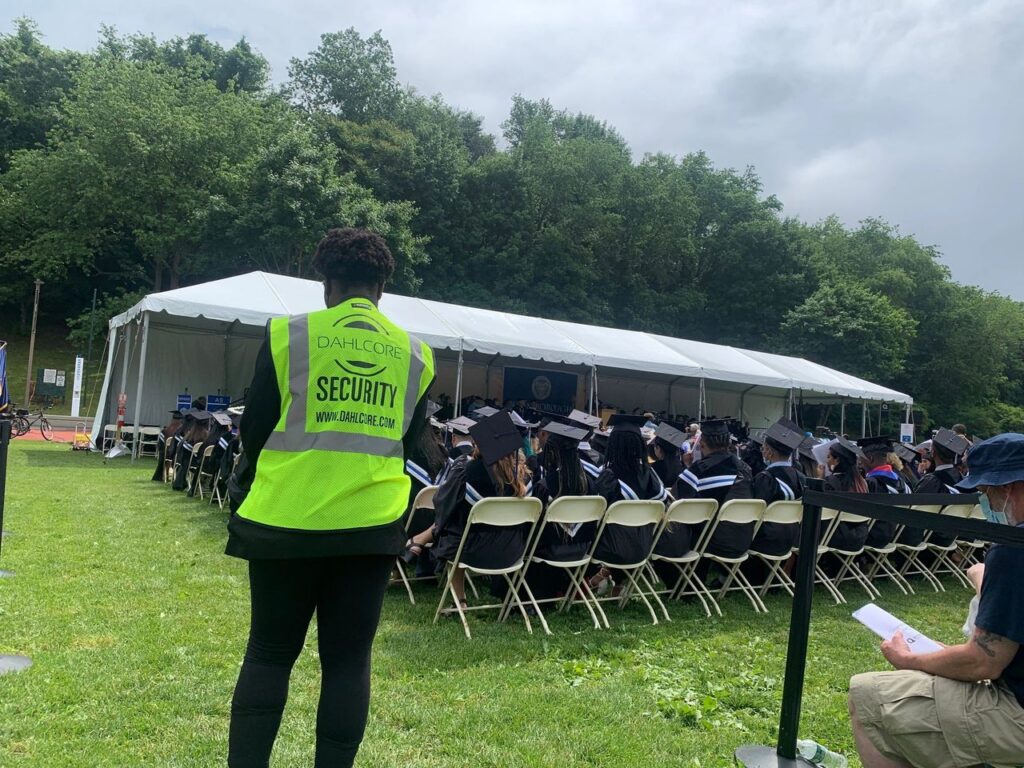
Security Guards and School Events
High school events like sports games, dances, and graduation ceremonies are highlights of the school year, but they also create unique security challenges.
- Crowd control: Guards manage lines, entrances, and exits so that large groups move safely and efficiently.
- Traffic and parking: Security staff often direct vehicles and pedestrians around the campus during busy events.
- Emergency readiness: With large crowds, the chances of accidents, medical incidents, or conflicts increase, so trained guards are essential to manage emergencies.
- Prevention of unauthorized access: Guards help ensure that only authorized guests enter, protecting students and staff during public-facing events.
- Support for event staff: Security personnel coordinate with organizers to implement safety plans and respond to any incidents.
Training, Licensing, and Professional Development
To work effectively in a high school environment, security guards need training that goes beyond basic patrol skills.
- Many states require security guards to hold specific licenses, undergo background checks, and complete mandatory training in areas like use-of-force and de-escalation.
- In school settings, additional training often covers crisis management, emergency medical response, child and adolescent behavior, and conflict resolution.
Ongoing professional development helps school security staff stay current with:
- New security technology and surveillance systems.
- Updated local and state regulations for school security and student privacy.
- Best practices for threat assessment, active shooter response, and restorative approaches to student discipline.
Legal Responsibilities in High School Settings
Security guards in high schools must balance safety with respect for student rights and legal requirements.
- Guards need to understand policies around searches, reasonable suspicion, and coordination with law enforcement so they do not violate student privacy or civil rights.
- Clear protocols help ensure that any use of force, detentions, or searches is appropriately documented and compliant with district policy and state law.
Handling Drugs and Weapons
Unfortunately, some school districts still face risks related to drugs and weapons on campus. School security personnel play a central role in minimizing these threats.
- Through regular patrols, observation of student behavior, and occasional metal detector use, guards help intercept prohibited items before they cause harm.
- When contraband is discovered, guards work with administrators and police to follow proper reporting and disciplinary procedures.
Dealing with Cyber and Digital Threats
As high schools become more connected, security threats are not only physical. Cyberbullying, online harassment, and hacking attempts can all impact student safety.
- While IT teams handle technical defenses, security guards often hear about online threats from students and must know how to escalate these concerns.
- Collaboration between school security, counselors, and IT staff helps address cyberbullying, threats made on social media, and other digital issues that can spill onto campus.
Pay Differences by Location and School Type
When asking how much high school security guards make, it is important to understand how geography and school type influence pay.
- Urban vs rural: Guards in large cities and high-cost metropolitan areas typically earn more than those in rural districts, reflecting higher local wage baselines.
- High-paying states: States such as California, New York, and some parts of Alaska often report higher average wages for school security and general security roles.
- Public vs private: Some private schools and universities invest heavily in specialized campus security teams, while others align more closely with public school scales; wages can vary significantly between institutions.
- District budgets and risk profile: Districts with greater funding or higher perceived risk may allocate more budget to school security officer salaries and training.
Example Scenarios: Entry-Level vs Experienced
- Entry-level unarmed high school security guard: A new guard in a lower-cost state might start around 11–13 USD/hour, working a full-time schedule primarily focused on basic patrols, hallway presence, and door monitoring.
- Experienced or armed school security officer: A guard with several years of experience, additional certifications, and possibly an armed role could earn closer to 17–18 USD/hour or more, especially in higher-cost metro areas or districts with complex security needs.
If you are considering working as a high school security guard, investing in training, certifications, and experience in school-specific environments is one of the most effective ways to move into these higher-paying tiers.
FAQs: High School Security Guard Salary & Career
How much do high school security guards make per hour?
Most high school security guards in the U.S. earn roughly 11–13 USD per hour in entry-level positions, while experienced school security officers or higher-risk campus roles may earn around 15–18 USD per hour or more.
Do high school security guards get benefits?
Many full-time high school security guard positions include common benefits such as health insurance, paid time off, and retirement contributions, but benefit packages vary widely by district, contractor, and state. Part-time or hourly-only roles may offer fewer or no benefits, so always review each employer’s package carefully.
Is being a high school security guard a full-time job?
In many districts, high school security guard roles are full-time during the school year, with schedules centered on school hours and occasional evening or weekend events. Some districts or contractors also offer part-time positions, seasonal roles, or event-based shifts for guards who prefer flexible schedules.
Do armed school security guards earn more?
Armed school security guards and officers typically earn more than unarmed high school security guards because of added risk, stricter licensing standards, and more extensive training requirements. Districts may also pay a premium for prior law enforcement or military experience in these roles.
If your school is reviewing campus safety or considering a new security program, contact us to discuss school security guard services, school security officer pay structures, and scalable campus security solutions tailored to your district’s needs.
Check other blogs
How Can I Tell If My House Is Bugged?
Choosing the Best Intercom Systems for Apartments in 2026
10 Reasons to Use Access Control Systems for Enhanced Security
