


Opening a cannabis dispensary in New York is an exciting opportunity — but it comes with a compliance burden that can’t be underestimated. Among the most complex and consequential requirements are the security mandates issued by the Office of Cannabis Management (OCM). Miss a requirement, and you risk fines, failed inspections, or losing your license entirely before you’ve sold a single product.
This guide cuts through the complexity. Whether you’re preparing your initial license application, building out a retail space, or auditing an existing operation, you’ll find a clear breakdown of OCM cannabis security regulations in NY, a practical compliance checklist, and expert guidance from the team at Dahlcore Security Guard Services — a firm with direct experience supporting cannabis businesses through New York’s licensing and inspection processes.
Let’s start with what you actually need to know.
Understanding OCM Security Requirements
The Office of Cannabis Management is the state agency responsible for regulating all aspects of New York’s cannabis industry under the Marijuana Regulation and Taxation Act (MRTA). This includes licensing, enforcement, and yes — security standards.
OCM’s security requirements apply to all licensed cannabis entities, including adult-use dispensaries, medical dispensaries, microbusinesses, and cultivators. The requirements exist to prevent diversion (cannabis leaving the legal supply chain), protect employees and customers, and maintain public trust in the regulated market.
Key areas OCM security guidelines in NY address include:
- Physical access control to restricted areas and inventory
- Surveillance systems with specific camera coverage and retention requirements
- Alarm systems tied to law enforcement or monitoring services
- Security personnel qualifications and deployment protocols
- Inventory tracking through the state’s seed-to-sale system (currently BioTrackTHC or an OCM-approved equivalent)
- Transportation security when moving cannabis products between licensed locations
OCM publishes its regulations through the New York Codes, Rules and Regulations (NYCRR), and security requirements are primarily found under 9 NYCRR Part 116 for adult-use licensees, with additional guidance for medical operators. Always reference the most current version of OCM’s regulations and any supplemental compliance bulletins, as requirements have continued to evolve since the MRTA’s passage in 2021.
Why Compliance Matters
Failing to meet New York cannabis dispensary security requirements isn’t just a paperwork problem — it’s a business-ending risk.
OCM conducts both scheduled and unannounced inspections. During these visits, inspectors review your security plan, check that your physical setup matches what was submitted during licensing, verify surveillance footage quality and retention, and confirm that your personnel hold any required credentials.
The consequences of non-compliance can include:
- Written warnings and cure periods for minor deficiencies
- Civil penalties and fines for more serious violations
- License suspension pending corrective action
- License revocation for repeated or severe violations
Beyond regulatory penalties, inadequate security leaves your operation exposed to theft, robbery, and liability claims. Cannabis businesses handle significant amounts of cash and high-value inventory — two things that make dispensaries attractive targets. A security failure isn’t just an OCM problem; it can affect your insurance coverage, your staff’s safety, and your community standing.
Getting security right from day one is far less expensive than fixing it under enforcement pressure.
Key Security Measures Required by OCM
Physical Security Protocols
OCM’s cannabis security compliance requirements in NY place heavy emphasis on physical barriers and access control. Here’s what you need to address:
Building Security and Access Control
Every dispensary must restrict access to non-public areas — including storage rooms, vault areas, and back-of-house operations — to authorized personnel only. This typically means:
- Commercial-grade locks on all restricted-access doors
- Electronic access control systems (key fobs, PIN pads, or biometric readers) that create an audit trail of who entered and when
- A customer-facing sales floor that is physically separated from inventory and processing areas
- Perimeter security, including secure exterior doors, reinforced entry points, and adequate exterior lighting
OCM requires that your security plan — submitted as part of your license application — details how access is controlled at every point of your facility. This document needs to be specific. Vague descriptions will delay your approval.
Alarm Systems
Licensed dispensaries must maintain a functioning alarm system that detects unauthorized entry. The system must be monitored 24/7, typically through a licensed alarm monitoring company, and must be capable of notifying local law enforcement directly. Backup power is required so the system stays operational during a power outage.
Surveillance Systems
This is one of the most detailed areas of the OCM security guidelines in NY. Requirements generally include:
- Cameras covering all entry and exit points, the sales floor, all storage areas, parking lots, and points of transaction
- High-definition video quality is sufficient to identify individuals by face
- Continuous 24/7 recording — not motion-triggered
- Minimum 90-day footage retention (verify current OCM guidance, as this requirement has been subject to revision)
- Remote monitoring capability
- Secure, redundant storage for recorded footage
If your camera system has blind spots over required coverage areas, that’s a deficiency an inspector will flag. Map your camera placement against OCM’s required coverage zones before installation, not after.
Security Personnel
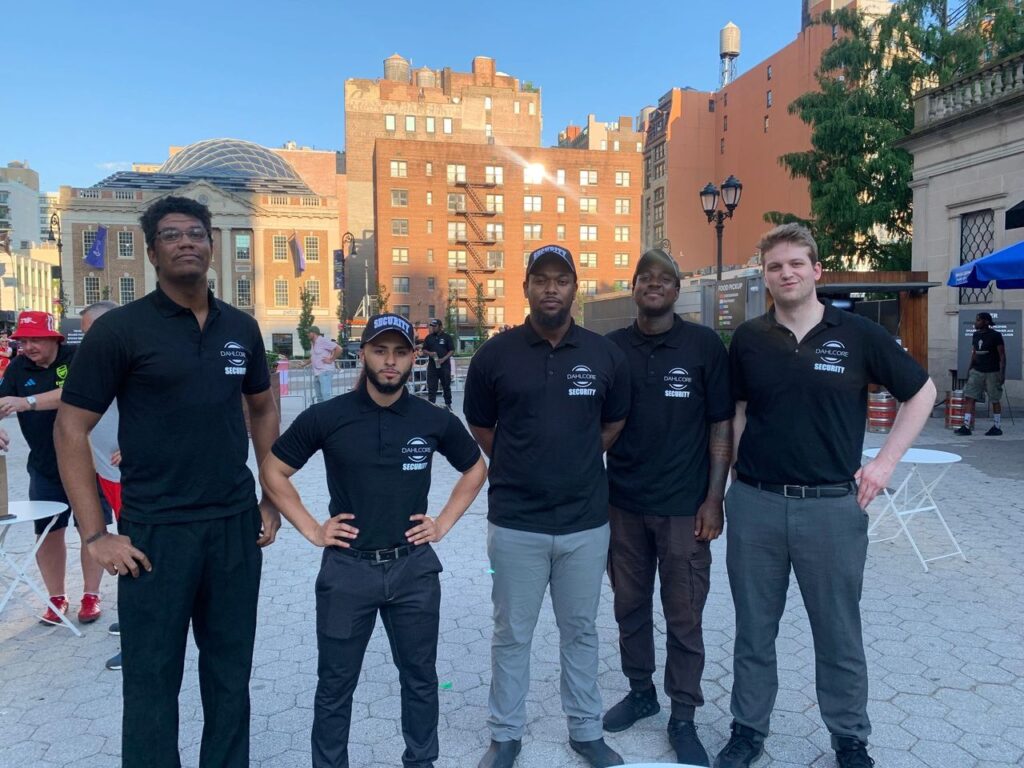
OCM does not universally mandate armed security guards at dispensaries, but it does require that security personnel — if employed — hold appropriate credentials under New York State law. In New York, security guards must be registered with the Department of State under the Security Guard Act and complete required training hours. If you choose armed personnel, they must hold the appropriate armed guard license.
Beyond legal credentials, your security plan should define staffing levels, post positions, and protocols for common incidents like customer disputes, theft attempts, or medical emergencies.
Digital Security Requirements
Physical security is visible and inspectable — but digital security is increasingly part of OCM’s regulatory framework, and it’s an area many dispensary operators underestimate.
Seed-to-Sale Tracking Compliance
Every cannabis product in New York’s legal supply chain must be tracked from cultivation through sale using the state’s designated tracking system. Unauthorized access to or tampering with this system is a serious violation. This means:
- Only authorized employees should have login credentials
- Access should be role-based (not everyone needs full system permissions)
- Credential sharing is prohibited
- Terminated employees must be removed from the system immediately
Secure Data Storage
Your dispensary collects sensitive data — customer information (particularly for medical patients), transaction records, and employee data. OCM regulations and applicable state privacy laws require that this data be stored securely, with access limited to those who need it. Point-of-sale systems and customer databases should use encryption and require multi-factor authentication for administrative access.
Network and Cybersecurity
OCM hasn’t published a standalone cybersecurity framework, but standard industry expectations include:
- Separate network segments for POS systems versus general office use
- Regular software and firmware updates on all connected devices
- Strong password policies are enforced across the organization
- A clear protocol for responding to a data breach
Cybersecurity may not be the first thing inspectors check, but a breach that results in patient data exposure or inventory manipulation will draw regulatory scrutiny fast.
Step-by-Step Compliance Checklist
Use this list as a working tool — not a substitute for reading the actual OCM regulations, but a starting framework for your internal review.
Facility & Physical Security
- Security plan drafted and aligned with current OCM guidelines
- Commercial-grade locks installed on all restricted-area doors
- An electronic access control system is in place with audit logging
- Customer area is physically separated from inventory/storage
- Exterior perimeter lighting is installed and functional
- Alarm system installed, monitored 24/7, with backup power
Surveillance
- Camera coverage mapped against OCM required zones
- All cameras are recording in HD, continuously, 24/7
- Footage retention meets OCM minimum (confirm current requirement)
- Secure, redundant storage for video footage
- Remote monitoring access established
Personnel
- All security guards registered with the NYS Department of State
- Armed guards (if any) hold an appropriate armed license
- Staffing plan documented in the security plan
- Incident response protocols written and trained
Digital & Inventory
- Seed-to-sale tracking access is limited by role
- Former employee credentials were revoked promptly
- POS and customer data systems are encrypted and password-protected
- Network segmentation is in place
Documentation
- Security plan submitted with license application
- Security plan updated whenever physical setup changes
- Training records are maintained for all security personnel
- Inspection-ready documentation folder maintained on-site
Case Study: Common Pitfalls and How to Avoid Them
Based on real-world patterns seen across cannabis compliance in licensed states, here are the situations that most often trip up New York dispensary operators:
Pitfall 1: The Security Plan That Doesn’t Match Reality
An operator submits a detailed, professionally written security plan during the application phase. Then they make layout changes during build-out — moving the vault, adding a back entrance, shifting the camera positions. By opening day, the security plan on file no longer reflects the actual facility.
OCM inspectors compare your submitted plan to what they see. Discrepancies are a compliance violation, even if your actual setup is technically secure. Fix: Treat your security plan as a living document. Any physical change to the facility should trigger an immediate plan update and, if required, notification to OCM.
Pitfall 2: Surveillance Blind Spots
A common and costly mistake is installing cameras based on a contractor’s standard template rather than OCM’s specific coverage requirements. A camera angled slightly wrong can leave a required zone — like the entrance to a vault or a point-of-sale terminal — technically uncovered.
Fix: Before cameras are mounted permanently, walk through the space with your security contractor using OCM’s coverage checklist in hand. Document the coverage map and keep it on file.
Pitfall 3: Undertrained or Uncredentialed Security Staff
Hiring a trusted person who used to work in security — but who isn’t currently registered as a security guard in New York — exposes you to an immediate violation. OCM (and the NYS Department of State) take guard credentialing seriously.
Fix: Verify credentials before onboarding any security personnel. Work with a licensed security company like Dahlcore that manages credentials, training, and compliance as part of their service.
Pitfall 4: Ignoring Digital Access Controls
When employees leave — especially on bad terms — dispensaries sometimes delay removing their system access. This creates both a security risk and a compliance exposure.
Fix: Make offboarding a documented process that includes immediate credential revocation from the POS system, seed-to-sale tracking platform, and any security system logins.
Expert Tips from Dahlcore Security
At Dahlcore Security Guard Services, we work directly with cannabis licensees across New York to build security programs that satisfy OCM requirements and actually protect your operation. Here’s what our team recommends beyond the baseline:
1. Don’t treat the security plan as a one-time document. Your security plan is a compliance asset. Schedule a formal internal review at least annually — or any time regulations are updated or your facility changes. Keep a version log.
2. Train your whole team, not just security staff. Budtenders, managers, and delivery drivers all interact with your security system daily. Brief them on camera coverage zones, access control expectations, and what to do in an incident. Your security is only as strong as the least-informed person on your team.
3. Conduct mock inspections. Before your first OCM inspection, have an outside set of eyes walk through your facility against the compliance checklist. It’s much better to find gaps internally than during an official visit.
4. Choose security personnel with cannabis-specific experience. A guard who has worked retail or hospitality may be qualified under New York law but unfamiliar with cannabis-specific protocols — like handling a seed-to-sale discrepancy or managing a customer who is intoxicated. Relevant experience matters.
5. Build a relationship with your local law enforcement. OCM regulations aside, introducing yourself to the local precinct or sheriff’s department before you open creates goodwill and ensures faster response if you ever need it. Some jurisdictions offer pre-opening walkthroughs for cannabis operators.
Maintaining Compliance Over Time
Getting compliant is a milestone. Staying compliant is the ongoing work.
Schedule Regular Internal Audits. At a minimum, conduct a quarterly internal review of your security systems — check camera functionality, alarm test logs, access control records, and personnel credentials. Don’t wait for OCM to find a problem.
Stay Current on Regulatory Updates OCM continues to issue guidance documents, proposed rule amendments, and compliance bulletins. Subscribe to OCM’s official communications and work with legal counsel or a compliance consultant who tracks regulatory changes as a core function. Requirements that applied at your licensing date may have since been updated.
Invest in Ongoing Training. Security guard training requirements under New York law include both initial and ongoing components. Keep training records current and verify your contracted security firm is meeting its obligations. For your broader team, periodic refreshers on security protocols keep awareness high.
Maintain Inspection-Ready Documentation: Keep a binder or digital folder that contains: your current security plan, camera coverage maps, alarm monitoring contracts, personnel credentials, and training logs. If OCM calls for an unannounced inspection, you want that documentation in hand within minutes — not spread across emails and file cabinets.
Ready to make sure your dispensary meets every OCM security requirement? Contact Dahlcore Security Guard Services for a free security compliance consultation. We’ll review your current setup and identify any gaps before OCM does. Schedule Your Free Consultation →
Key Takeaways
- OCM cannabis security regulations in NY cover physical security, surveillance, alarm systems, personnel credentialing, and digital access controls.
- Non-compliance risks fines, suspension, or license revocation — not just a warning.
- Your security plan must reflect your actual facility at all times — it’s a living document.
- Digital security, particularly around seed-to-sale tracking and POS systems, is a real compliance requirement, not an afterthought.
- Regular internal audits, up-to-date training, and credentialed personnel are the foundation of sustainable compliance.
- Working with a licensed security firm experienced in NY cannabis compliance reduces your risk and your workload.
FAQs
What are the OCM security requirements for dispensaries in NY?
OCM requires cannabis dispensaries to implement physical access control, 24/7 monitored alarm systems, comprehensive HD surveillance with minimum footage retention, qualified security personnel, and digital controls over inventory tracking systems. Requirements are detailed in 9 NYCRR Part 116 for adult-use operators and in supplemental medical program guidance. Always verify against the current published version, as regulations continue to evolve.
How do I ensure my dispensary complies with NY cannabis security laws?
Start with a detailed security plan that maps every requirement to a specific element of your facility. Get the physical buildout reviewed against OCM coverage requirements before finalizing installation. Credential all security personnel through New York’s Department of State. Conduct internal audits regularly, and update your security plan any time your facility changes.
What role does cybersecurity play in NY cannabis security regulations?
Cybersecurity intersects with OCM compliance primarily through seed-to-sale tracking system integrity, POS data security, and patient/customer data protection under applicable privacy law. Role-based access, credential management, and prompt offboarding of former employees are the most immediately relevant practices.
Are there penalties for not following NY cannabis security protocols?
Yes. OCM can issue civil penalties, require corrective action plans, suspend licenses, or revoke them entirely, depending on the severity and frequency of violations. Security deficiencies discovered during inspection are documented and must be remediated within prescribed timeframes.
What resources are available to help dispensary owners with security compliance?
OCM’s official website publishes regulations, guidance documents, and compliance resources. Licensed security firms with cannabis-specific experience — like Dahlcore Security Guard Services — can provide facility assessments and personnel services. Cannabis industry attorneys and compliance consultants can help interpret regulations and prepare documentation. Industry associations in New York also offer member resources and regulatory updates.
Who enforces cannabis security regulations in New York?
OCM is the primary regulatory authority. Inspectors from OCM conduct both scheduled and unannounced site visits. Local law enforcement may also be involved in incident response. The NYS Department of State oversees security guard licensing and registration.
How often should I update my dispensary security plan?
You should update your security plan any time you make changes to your physical facility, staffing structure, or security systems. Independent of changes, a formal annual review is a strong practice. If OCM updates its regulations or issues new guidance, review your plan against the new requirements promptly.
Do I need armed security guards at my NY cannabis dispensary?
OCM does not universally require armed security guards, but it does require that any security personnel you employ meet New York State’s licensing and training standards. Whether armed security is appropriate depends on your location, risk assessment, and operational model. Consult with a licensed security firm to evaluate the right approach for your specific facility.
