

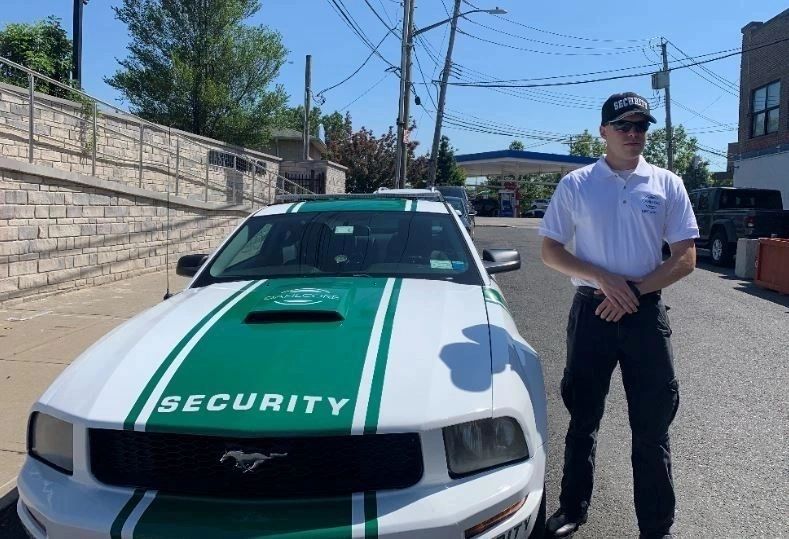
Concert security in New York demands more than basic bag checks and a few guards at the door. It requires expert risk assessment, disciplined crowd control, tight access management, and fast emergency response across busy Manhattan, Brooklyn, Queens, the Bronx, and Staten Island. This guide breaks down 10 must‑know aspects of concert security so New York organizers can protect guests, artists, and staff while partnering with a professional concert security team like Dahlcore.
What Are The 10 Must‑Know Aspects of Concert Security in New York?
Effective concert security in New York hinges on thorough risk assessment, strict access control, disciplined crowd management, strong backstage protection, and clear emergency plans. Professional guards coordinate with NYPD, FDNY, venue staff, and medical teams to monitor the venue, manage entry points, and respond quickly to incidents before they escalate.
Concert security: Why it Matters More Than Ever
Concert security is no longer just about hiring a few guards and hoping for the best; it’s a full system designed to keep fans, artists, and staff safe while the show goes on. In recent years, big events have faced problems like overcrowding, gatecrashing, and people bringing in dangerous items, which can quickly turn a fun night into a serious incident. With larger crowds, more festivals, and tighter regulations, organizers who ignore security risk not only face accidents but also lawsuits, fines, and long-term damage to their reputation.
Strong concert security also makes fans feel more relaxed. When they see clear bag checks, uniforms, and well-organized entry lines, they know someone’s watching out for them. That sense of safety leads to better reviews, fewer complaints, and more ticket sales for future shows. In other words, security isn’t just a cost; it’s part of your brand and your promise to your audience.
Real‑World NYC Event Experience
Dahlcore’s security supervisors have seen the full range of NYC concert challenges firsthand. At a sold‑out Manhattan theater, our guards addressed an overcrowding issue by channeling guests through secondary entry lanes without delaying showtime. During a Brooklyn outdoor festival, we resolved a short weather‑related evacuation and guided fans back in once conditions cleared. At a Queens nightclub concert, our trained guards managed an unruly guest incident calmly, using de‑escalation techniques to prevent escalation. Each experience reinforces why structured crowd control, licensed guards, and fast adaptation are essential for New York concert safety.
Why Concert Security Matters in New York
New York’s concert scene runs on energy and complexity—thousands of fans, crowded venues, tight streets, and strict city rules. Every show balances excitement with accountability. A single security lapse can trigger city fines, permit issues, or negative press that damages a promoter’s reputation.
At Dahlcore, we see security as more than compliance—it’s reputation protection. When guards manage access smoothly, coordinate with NYPD and FDNY, and handle problems quietly, fans notice only the good part: a well‑run event they’ll return to. That’s how smart security becomes part of your brand, not just a safety measure.
NYC‑Specific Risk Assessment for Concert Venues
Before any guard is scheduled or a metal detector is switched on, Dahlcore starts with a New York–specific risk assessment of your concert venue. We look at the neighborhood, nearby transit hubs, typical crowd behavior, and recent NYPD incident data to understand how a Friday night show in Midtown Manhattan differs from an EDM event in Brooklyn or a family‑friendly concert in Queens. By mapping your venue layout, entrances, exits, bottlenecks, and surrounding streets, we identify where surges, conflicts, or gatecrashing are most likely and build a plan tailored to your exact New York concert venue, not a generic template.
How Do You Plan Concert Security for a New York Venue?
Planning concert security for a New York venue starts with a site walk‑through, crowd and artist risk assessment, and review of local regulations. From there, you map access points, screening zones, CCTV coverage, guard posts, and evacuation routes, then align all procedures with NYPD, FDNY, and onsite medical and production teams.
Understanding your Venue and Audience Risk Profile
Why is Understanding Your Venue and Audience Risk Profile Essential?
Before you pick gear or hire guards, you need to understand what kind of risk your event actually carries. A seated classical concert has a completely different risk profile from a standing-room rock show, a hip-hop festival, or an EDM night with heavy alcohol sales. Each crowd behaves differently—some jump and surge toward the stage, others mostly stay seated—so your security plan must fit those patterns.
Venue design matters too. Indoor arenas, open fields, rooftop stages, and small clubs all change how people move and where they might get stuck. You should review site maps, entrances, exits, and bottlenecks to see where crowd crushes or conflicts might start. Think about who’s attending: age range, local culture, and whether people are likely to show up early, queue for hours, or rush the doors. When you put audience behavior and venue layout together, you get a practical picture of what can go wrong—and where security needs to focus first.
Building a Layered Concert Security Plan
How Do You Build a Layered Concert Security Plan?
A strong concert security plan works in layers, so no single failure puts everyone at risk. The outermost layer covers parking lots, drop-off zones, and the streets leading to your venue, where people first gather and line up. The next layers move inward: ticket scanning, bag checks, the main floor, seating areas, and finally backstage and stage access. Each layer should have its own rules, staff, and backup options.
Planning also means writing things down. A proper plan includes a crowd management strategy, staff roles, communication tools, and clear steps for emergencies like fire, severe weather, medical incidents, or fights. You’re not just writing for yourself, but for local police, medical teams, and the venue’s management, so everyone speaks the same language in a crisis. When these layers are tested with real drills, they become second nature to the team and keep the event running smoothly even when something unexpected happens.
Common Concert Security Mistakes in NYC (and How to Avoid Them)
Even experienced organizers make avoidable errors, especially in New York’s high‑pressure settings.
- Under‑estimating crowd size. NYC fans arrive early and line up fast; always plan extra queue space and staff.
- Weak coordination with agencies. Without pre‑event communication between the NYPD, FDNY, and staff, response times slow down.
- Insufficient screening lanes. Too few bag checks or metal detectors cause bottlenecks and irritation outside your venue.
- Unlicensed or undertrained guards. New York requires valid licenses and continuous training—anything less risks fines.
- Poor communication setup. Weak radio coverage across multiple floors or outdoor zones leads to confusion in an emergency.
Dahlcore prevents these mistakes with early coordination, redundancy planning, and clear radio discipline—so nothing falls through the cracks on event night.
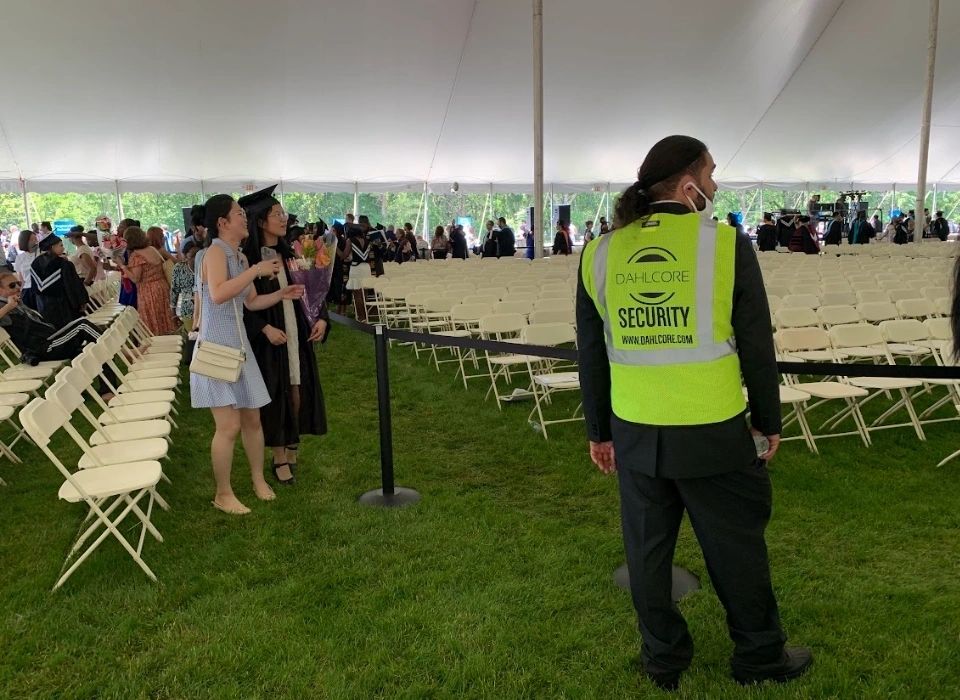
Access Control and Screening for New York Concerts
Why is Access Control Critical at New York Concerts?
Access control is crucial because it manages the flow of guests, prevents overcrowding, and blocks unauthorized entry. In New York venues, security guards and screening tech—like ticket scanners, ID checks, and metal detectors—work together to create seamless yet secure movement from sidewalks to seats.
In New York concert venues, access control is your first major defense against overcrowding, weapons, and disorderly conduct. Dahlcore coordinates ticket checks, ID verification, bag policies, and metal detector screening into one unified system so guests move smoothly from the sidewalk to their seats without weak spots that scalpers, gatecrashers, or bad actors can exploit.
Perimeter Control and Secure Access Points in NYC
In dense New York streets, where fans line up along sidewalks and around corners, strong perimeter control keeps crowds on designated approaches and out of traffic or residential entrances.
Perimeter control is the first physical line of defense in concert security, and it’s where many problems can be stopped before they reach the door. Fences, barricades, and clear boundaries help guide people toward official entry points instead of letting them cluster in random spots where staff can’t see what’s going on. Good perimeter design also discourages tailgating—people slipping through with larger groups, or trying to jump barriers to get in for free.
At each access point, you should combine guards, physical barriers, and technology. Turnstiles or stanchions help shape orderly queues, while visible cameras and lighting let staff monitor behavior. When entrances are clearly marked, with signs explaining bag rules and prohibited items, fans arrive better prepared and lines move faster. In big outdoor shows, extra staff at the perimeter can also help direct traffic, watch for intoxicated guests, and prevent fights or theft before they reach the gate.
Ticket Checks, Entry Lanes, and Anti‑Gatecrashing Tactics
For New York event and concert security guards, ticket checks are not just about scanning QR codes—they’re how we confirm the right guests are entering the right doors, whether it’s a small club in the Bronx or a sold‑out arena in Manhattan.
Ticket checks are more than just scanning QR codes; they’re a vital step in controlling who actually gets inside. Modern systems often combine encrypted digital tickets with anti-fraud features like dynamic barcodes that change over time, making screenshots less useful to scalpers or scammers. Dividing entry into multiple lanes—like VIP, general admission, and staff—keeps lines more organized and makes it easier to spot someone who doesn’t belong in a certain area.
To cut down on gatecrashing, organizers can use extra staff at chokepoints, reinforced barriers near the main entrance, and coordinated responses if a surge starts. Clear communication helps here too; if fans know that jumping fences or forcing doors leads to ejection or contacting authorities, many will think twice. In high-risk events, some venues add biometric checks or ID matching for certain tickets, especially for meet-and-greet passes and backstage access.
Bag Policies, Screening, and Prohibited Items Management
Most New York concert venues now use strict bag checks and clear‑bag rules to keep lines moving and reduce risk from weapons, glass, and contraband.
Bag checks sit at the heart of basic concert security, because so many risks—from weapons to glass bottles and fireworks—arrive inside bags. Most venues now publish a list of banned items and acceptable bag sizes, often limiting guests to small clutches or clear bags to speed up inspections. When fans know in advance that all bags will be searched and certain items mean no entry, they tend to pack lighter and leave risky objects at home.
A consistent, respectful bag-check procedure is crucial. Security staff should know exactly how to ask guests to open bags, where to look first, and what to do if they find something prohibited. There needs to be a clear process for confiscation, storage, or disposal of items, plus rules about refunds or denials of entry. Training should also cover how to keep searches professional and non-discriminatory, focusing on behavior and policy, not on personal bias.
Metal Detectors, Wands, and Visible Deterrence in NYC Venues
At busy NYC arenas, theaters, and nightclubs, walk‑through metal detectors and hand‑held wands are now standard for high‑profile concerts. Dahlcore configures screening lanes, trains concert security guards to interpret alerts correctly, and positions equipment where NYPD and venue management companies often expect it—right at the point where guests shift from public sidewalks into controlled venue space.
Metal detectors and hand-held wands add another layer on top of manual bag checks and help detect weapons or sharp objects. Walk-through portals are common at larger venues, while smaller clubs may rely on portable wands for spot checks or targeted screenings. These tools should be calibrated and staffed by people who know how to interpret alerts and when to conduct further inspection versus when to let someone through.
The presence of this equipment also works as a psychological barrier. When fans see structured screening and professional staff, they understand the event takes safety seriously. That alone can discourage people from attempting to sneak in risky items. Some festivals also combine screening with K-9 units in higher-risk scenarios, particularly where explosives, drugs, or other contraband are a concern.
Crowd Management and Egress Planning for New York Concerts
The best way to handle crowd control at concerts in New York is to combine accurate capacity tracking with smart egress planning. Dahlcore aligns your occupancy limits with NYC Department of Buildings rules and fire codes, then designs routes so guests can move comfortably during the show and exit quickly if the FDNY or venue management team triggers an evacuation.
Crowd Management and Safe Capacity Control
Our teams monitor real‑time counts for pits, balconies, VIP decks, and GA floors, adjusting entry flow before spaces become unsafe.
Crowd management is a major pillar of concert security because most serious incidents come from crushing, pushing, or uncontrolled surges rather than from intentional attacks. Event planners must know the legal capacity of each space, including balconies, pits, and VIP platforms, and they must have a system for counting entries in real time. Once areas reach safe limits, security needs authority to slow or stop crowd flow, no matter how long the line is outside.
Capacity management also involves understanding crowd density and comfort, not just raw numbers. You can have a dangerous situation even below the official limit if people are squeezed near barriers or exits. That’s why it’s important to monitor where people cluster and adjust open routes, bar lines, and merchandise booths to spread them out. Regular walk-throughs by supervisors help catch problems early, like a blocked stairway or a bar queue spilling into an exit path.
How Do Barriers and Flow Routes Prevent Crowd Crushes?
Physical barriers shape how crowds move, and smart design can prevent dangerous build-ups. In front of the stage, strong barricades with pressure-release routes and protected safety lanes give security and medics a way to reach people in distress. Barriers should also separate different zones—like general admission, VIP, and family areas—to keep movement controlled and reduce conflict.
Flow routes are just as important. Wide paths, one-way systems, and clear signage help people find food, restrooms, and exits without cutting through packed areas. At critical points like tunnel entrances or narrow corridors, extra staff should monitor for crowd surges and be ready to slow or stop movement when needed. With thoughtful barrier placement and route planning, you can cut the risk of crush incidents even when the energy is high and the music is loud.
Coordinating with NYPD, FDNY, EMS, and Venue Staff
In New York, no concert security plan is complete without clear coordination among NYPD, FDNY, EMS, and venue management companies. Dahlcore helps you share risk assessments, site maps, and emergency response plans with agency contacts ahead of time so everyone understands egress routes, staging areas, and communication channels before doors open. During the event, our supervisors serve as a dedicated liaison point, relaying real‑time updates between your internal team and external responders if an incident occurs.
Communication Systems, Radios, and Command Post
You cannot control a fast‑moving New York concert without reliable communication. Dahlcore equips concert security guards with two‑way radios and operates a central command center where supervisors monitor radio traffic, CCTV feeds, and incident logs. By assigning dedicated radio channels to perimeter, stage, and medical teams, we keep messages clear even in the loudest NYC arenas.
You can’t run effective concert security if your team can’t talk to each other. Two-way radios, mobile apps, and command centers keep guards, supervisors, and medical staff in sync. Good radio discipline—short, clear messages using shared codes—helps everyone react faster when something happens. Larger events often assign channel groups for different zones, like perimeter, stage, and medical, to avoid clutter.
Communication with fans matters too. Pre-event emails, social posts, and ticket pages should explain bag rules, prohibited items, and entry procedures so guests arrive prepared. Inside the venue, signage and video screens can reinforce safety messages, while public address systems give you a way to guide crowds during emergencies. Some organizers now use mass-notification tools that send SMS or app alerts with instructions during severe weather or security threats.
Why is Coordination with NYPD, FDNY, and EMS Essential for Concert Safety?
Coordinating with New York agencies ensures a rapid response if emergencies happen. Dahlcore shares risk plans, egress maps, and communication channels with NYPD, FDNY, and EMS before events, helping everyone act fast if crowd surges, medical calls, or evacuations occur.
Stage, Backstage, and Artist Protection in NYC
What Does a Concert Security Guard Do at an NYC Show?
At an NYC concert, security guards control entry, check tickets and bags, enforce venue rules, and monitor crowds for early signs of trouble. They protect artists and backstage areas, support medical teams during incidents, and help guide guests during evacuations so the event stays safe, compliant, and on schedule.
High‑profile artists playing in New York City often face elevated risks, from stage rushing to unwanted backstage access. Dahlcore deploys concert security guards at stage fronts, access corridors, loading docks, and dressing room areas, integrating VIP protection with your overall crowd management plan so artists, crew, and special guests can move safely between vehicles, backstage, and the stage itself.
Stage and backstage security focus on protecting performers and crew while keeping the show running smoothly. Only staff with the right credentials should access these areas, and passes must be difficult to fake, duplicate, or casually share. Guards at stage wings, dressing room corridors, and production zones need clear rules about who is allowed through and what to do if someone tries to sneak in.
Physical protections—like sturdy stage barriers and security staff facing the crowd—help stop stage rushes, crowd surfing injuries, and people trying to climb onto the platform. Backstage, locked doors, CCTV, and controlled corridors reduce the risk of theft, harassment, or tampering with equipment. These measures protect not only artists but also vital show infrastructure like lighting boards, sound desks, and power systems.
What is the Emergency Plan for a Concert in NYC?
A concert emergency plan defines who makes decisions, how fans are guided out, and how medical aid is dispatched. In New York venues, security teams work with NYPD, FDNY, and EMS to set safe egress paths, first aid sites, and communication protocols for quick, coordinated responses.
From severe weather and medical emergencies to active‑threat scenarios, every New York concert needs a written emergency response plan. Dahlcore works with venue operators, NYPD, FDNY, and EMS to define who makes decisions, how messages flow, and where guests should go during a partial or full evacuation. We establish clear egress routes, medical station locations, and ambulance access points tailored to the quirks of New York streets and venue layouts.
Even with great planning, things can go wrong, so emergency preparedness is a core aspect of concert security. Written emergency plans should cover everything from fires and storms to violent incidents and power failures. They must specify who makes decisions, how messages are sent to staff and fans, and where people should go if they need to exit quickly.
Medical readiness is just as important. Events should have trained first aiders or professional medical teams on site, clearly marked medical tents or rooms, and clear routes for ambulances. Regular drills help everyone practice their role, from the guard who spots a problem to the supervisor who orders an evacuation. After each event, a debrief can highlight what worked and what needs improvement for next time.
Surveillance, CCTV, and Incident Recording
How Does Technology Strengthen Concert Security in New York?
CCTV, access logs, and body cameras give real‑time visibility into crowd patterns and safety threats. New York venues rely on this technology to monitor high‑risk zones and record incidents for compliance, insurance, and coordination with law enforcement.
Modern NYC concert security services rely on technology as much as on personnel. Dahlcore designs CCTV coverage around entrances, stage fronts, bars, and choke points so supervisors can spot crowd density issues or suspicious behavior before they escalate. Body‑worn cameras and digital incident reporting systems help document interactions and provide clear records for post‑event reviews, insurance, and any follow‑up with NYPD or venue management. We also help lock down access to surveillance systems to reduce the risk of tampering or unauthorized viewing.
As tickets, payments, and fan data move online, digital security has become part of concert security, too. Encrypted ticketing systems, secure payment gateways, and strong access control on Wi‑Fi networks all help prevent fraud and data breaches. If these systems fail, you could face fake tickets, double entries, or leaks of personal information.
Some large events now use biometric tools, such as facial recognition or fingerprint scanning, to tighten access control and reduce ticket sharing. While these technologies can speed up entry and cut gatecrashing, they must be handled carefully to respect privacy laws and local regulations. Cybersecurity teams should also monitor for phishing scams aimed at fans and staff, especially around high-demand tours and festivals.
Training, Licensing, and Culture for Security Teams
Well-trained people are the backbone of concert security. Security guards should receive regular training in crowd management, conflict de-escalation, search procedures, and emergency response. In many places, they must also hold valid licenses or certifications to work at events. Good training makes them more confident and professional, which reassures fans and reduces mistakes.
Licensed Expertise and Compliance
Dahlcore’s New York concert security guards hold active NYS security licenses and complete continuous training in crowd management, de‑escalation, CPR/first aid, and active‑threat awareness. Every team member understands New York City building codes, FDNY evacuation standards, and local event ordinances. Dahlcore also maintains full liability insurance and workers’ compensation coverage, ensuring compliant, documented protection for every client and venue.
Culture matters too. If supervisors encourage guards to speak up about risks, report near-misses, and treat guests with respect, the whole operation runs more smoothly. Security teams should work closely with ushers, bar staff, and volunteers, because those workers often spot problems first. When everyone sees safety as part of their job, not just the security department’s problem, concert security becomes much more effective.
How Many Security Guards are Needed for a Concert?
The right number of guards depends on the venue’s crowd size, design, and risk profile. Small NYC clubs might only need door and stage guards, while larger arenas need layered teams for screenings, patrols, and emergency response.
Trained Security Teams and How Dahlcore Delivers Concert Security in NYC
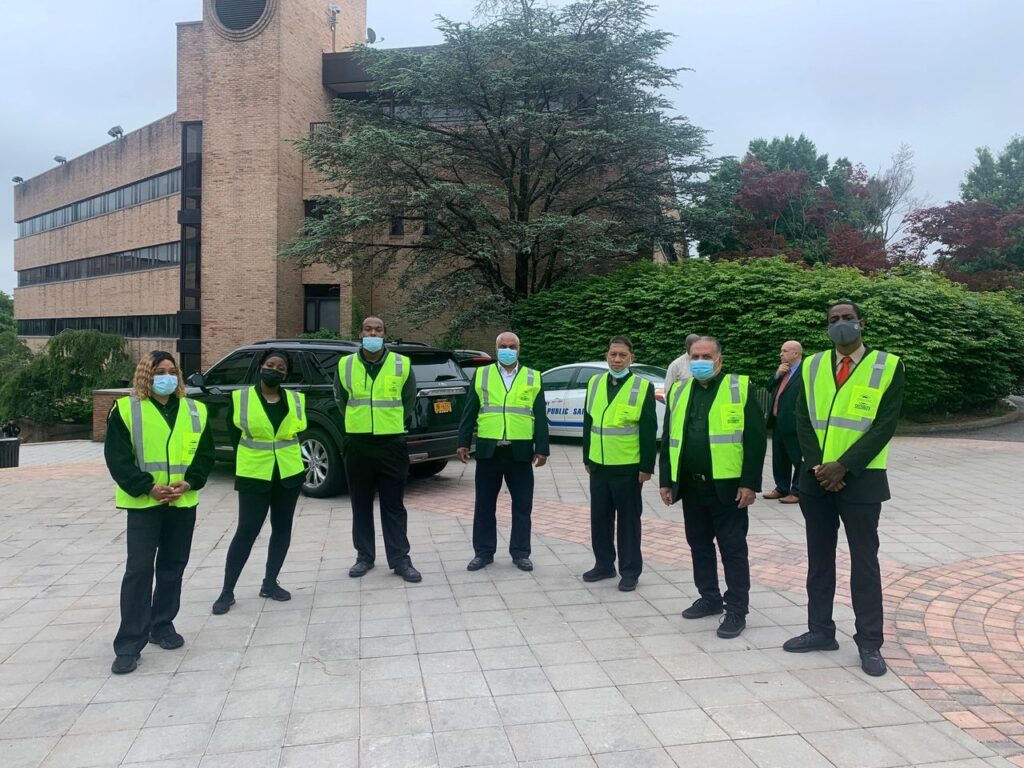
New York event and concert security guards must be properly licensed, trained, and familiar with local laws, building codes, and venue policies. Dahlcore invests in continuous training on crowd management, de‑escalation, incident reporting, and NYC‑specific regulations so our teams can work seamlessly with your staff and agency partners. We also run pre‑event briefings, on‑site walk‑throughs, and post‑event debriefs to capture lessons learned and improve your next concert.
Concert security doesn’t exist in a vacuum; it’s tied to local laws, building codes, and industry standards. Organizers must understand occupancy limits, fire regulations, alcohol service rules, and any city or national guidelines for large gatherings. In some regions, authorities may require formal safety plans or approvals before major shows can go ahead.
Insurance carriers also look closely at security measures. Better risk management can lead to more favorable policies and lower premiums, while repeated incidents or violations might raise costs or make coverage harder to get. Documentation—incident logs, training records, and equipment maintenance—helps prove that you’re following best practices. Staying aligned with local rules protects not just the audience, but also your business over the long term.
3‑Layer Concert Security Model for New York
Dahlcore applies a layered protection model specific to New York venues:
- Perimeter Security — Managing sidewalks, drop‑off zones, and barricades before guests reach the door.
- Entry Control — Coordinating ticket scanning, ID checks, and bag screening at designated lanes.
- Interior Operations — Overseeing crowd flow, stage zones, and backstage protection throughout the event.
This structure allows Manhattan theaters, Brooklyn outdoor festivals, and Queens nightclubs to maintain control in high‑density environments.
Security industry best‑practice resources also recommend layered perimeter–entry–interior protection strategies, similar to this 3‑Layer NYC Concert Security Model, to deter, detect, and respond to threats across multiple zones instead of relying on a single checkpoint.
Why Choose Dahlcore for Concert Security in New York City?
Dahlcore specializes in NYC concert security services for small venues, midsize theaters, and large arenas across all five boroughs. Our teams understand the realities of New York crowds, from early‑line superfans to late‑night departures, and build plans that balance safety with a great guest experience. Because we coordinate directly with venue management, NYPD, FDNY, and EMS, you get a single, accountable security partner rather than a patchwork of vendors. Whether you are securing a 300‑person club in Brooklyn or a sold‑out arena in Manhattan, Dahlcore scales your security detail to match the risk profile and your budget.
Why New York Venues Trust Dahlcore
New York venue managers choose Dahlcore because our guards combine professionalism with adaptability. We coordinate directly with NYPD, FDNY, and venue crews before every show, arriving early for walkthroughs and staying until full load‑out is complete.
“Our Manhattan concert ran smoothly from start to finish—Dahlcore’s team handled fans, staff, and last‑minute changes with total professionalism.” — Venue Manager, NYC Theater.
Dahlcore’s transparent pricing, written safety guarantees, and full insurance documentation give New York promoters confidence that every show will meet or exceed city compliance standards.
Our New York Concert Security Process
Dahlcore follows a clear, step‑by‑step process fine‑tuned for New York venues:
- Consultation & Risk Profiling – We assess your venue layout, crowd type, and NYC regulations.
- Custom Security Plan – We design layered coverage that meets NYPD, FDNY, and venue standards.
- On‑Site Coordination – Dahlcore trains and deploys licensed guards, supervisors, and screeners.
- Live Event Execution – Our command team monitors radio, CCTV, and entry flow in real time.
- Post‑Event Review – We document incidents, feedback, and improvements for your next event.
- This process keeps your team informed and your audience safe while ensuring every requirement matches New York’s operating standards.
How Our NYC Concert Security Process Works
Dahlcore follows a clear, five‑step process for concert security in New York City. First, we start with a discovery call to understand your venue, expected attendance, and artist profile. Second, we conduct an on‑site risk assessment and develop a custom access control and crowd management plan. Third, we assign a trained team of New York event and concert security guards and brief them alongside your venue staff. Fourth, we manage event‑day operations from a central command post, coordinating radios, CCTV, and incident reporting. Finally, we hold a post‑event debrief to review what went well, document incidents, and refine your security playbook for future shows.
Our pricing for NYC concert security services is transparent and scalable. We offer tailored packages for small venues, large arenas, one‑night shows, and multi‑date runs, with clear staffing levels and equipment options (such as metal detectors, bag check stations, and additional supervisors). Reach out with your dates, venue capacity, and risk profile, and we will provide a detailed proposal before you commit.
How to Start Improving Your Concert Security Today
If you’re just starting to upgrade your concert security, begin with a simple risk assessment of your venue and typical events. Map out entrances, exits, and high-traffic areas, and identify where lines, bottlenecks, or blind spots form. Next, review your current bag policies, screening methods, and crowd capacity rules to see where they fall short of modern expectations.
From there, focus on quick wins: clearer signage, better staff briefings, and more consistent bag checks and ticket scanning. Then plan for bigger improvements like more radios, extra barriers, or upgraded ticketing systems over time. Finally, build a culture of learning by holding debriefs after each event, updating procedures, and investing in ongoing training for your team.
Checklist: Day‑of Security Items for New York Concert Organizers
Use this brief checklist to confirm your New York concert is ready for a safe opening:
- Radios and backup batteries are fully charged
- Signage for bag policy and entry lanes posted
- Ticket scanning equipment tested and synced
- Bag check tables and metal detectors are positioned
- Supervisor and NYPD/FDNY contacts confirmed
- First aid and medical stations staffed and stocked
- CCTV feeds are monitored and recorded properly
- Evacuation routes cleared and marked
- Incident report forms are ready and accessible
- Staff briefed on crowd flow and emergency codes
Organizer Tip: Walk each route yourself before gates open. Small obstructions or unclear signs cause the biggest slowdowns when fans start arriving.
FAQs about Concert Security
How much does concert security cost in NYC?
NYC concert security is usually priced per guard per hour, and the real cost depends on whether you need unarmed vs armed staff, screening lanes, supervisors, and any FDNY/NYPD coordination requirements. NYC “event security” is commonly quoted at around $30–$60/hour per guard, while armed guard pricing is often higher (example range $40–$75/hour). For a reality check on labor benchmarks, NYC prevailing wage schedules list unarmed and armed security guard hourly rates with 2025–2026 increases (e.g., armed listed at $32.70–$33.70/hour for certain periods).
Does Dahlcore provide concert security for small venues and festivals in New York?
Yes—per your blog copy, Dahlcore states it provides NYC concert security for small venues, midsize theaters, and large arenas, and also notes it can scale packages for one-night shows and multi-date runs. (If you want “festivals” explicitly covered, your current draft also references “festivals” in the CTA and planning language, so you can keep that wording consistent across the page.)
How do I prevent overcrowding and gate rushes at concerts?
Use a combination of entry-flow design and active crowd management: stagger arrivals, build organized queuing lanes with barriers, run multiple screening lanes to reduce bottlenecks, and use controlled (metered) gate releases instead of letting the front line sprint in as soon as doors open. Also, reduce choke points by adding more entry points or timed/wristband-style access methods where appropriate, and shape movement with barricades/fencing so crowds can’t mass into a single pinch point.
How early should I book concert security for a New York event?
You should book professional concert security as soon as your venue and date are confirmed—ideally 4–8 weeks in advance for NYC. Dahlcore uses this time to coordinate with NYPD and FDNY, draft risk plans, and schedule licensed guards for your show.
Can Dahlcore secure small club shows as well as large arenas?
Yes. Dahlcore scales its New York concert security teams for intimate clubs in Brooklyn as easily as 10,000‑seat arenas in Manhattan. Each site receives a custom plan fit for its layout, crowd energy, and local code requirements.
Does Dahlcore provide armed or unarmed guards for New York concerts?
Dahlcore offers both armed and unarmed New York concert security, depending on the risk profile and venue policy. Each guard is fully licensed and vetted under New York State law.
What information do you need to quote concert security in NYC?
To prepare an accurate quote, Dahlcore needs your venue address, crowd size, event type, artist profile, and schedule. These details help create a New York‑specific risk and staffing plan that fits your budget and compliance standards.
How do Dahlcore guards handle intoxicated or aggressive guests?
Our New York concert security guards use calm, verbal de‑escalation first—keeping incidents contained quietly. If needed, they coordinate with supervisors and venue staff before contacting NYPD or medical personnel to maintain safety and respect.
Do you coordinate with the NYPD and FDNY for larger New York concerts?
Yes. Dahlcore regularly coordinates with NYPD and FDNY for large NYC venue operations. Our supervisors share site maps, egress plans, and contact channels before and during the event for a smooth emergency response.
Can Dahlcore help design the security plan for my New York concert?
Absolutely. Dahlcore creates complete concert security plans for New York events, including risk assessments, access controls, and emergency egress maps aligned with city standards.
Looking for professional concert security guards in New York? Dahlcore provides licensed teams for nightclubs, theaters, and large‑scale festivals, with full risk assessments, access control, and crowd management plans customized for NYC regulations.
New York Uniqueness
Concert security in New York must handle dense crowds, narrow venues, and strict city rules. Dahlcore’s licensed guards work with NYPD, FDNY, and venue managers to control access, manage crowds, and respond fast to emergencies—keeping every performance safe and enjoyable.
Hiring Tip
To hire concert security in New York, choose a licensed, insured company with trained guards and proven local experience. Dahlcore provides New York concert security teams for theaters, clubs, and outdoor festivals—handling everything from bag checks to emergency response so organizers can focus on the show.
Ready to Secure Your Next Concert in New York City?
If you are planning a concert in Manhattan, Brooklyn, Queens, the Bronx, or Staten Island, Dahlcore can help you turn security into a competitive advantage. From risk assessment and access control to crowd management, emergency planning, and post‑event reporting, our NYC concert security services cover every layer of your event. Contact Dahlcore today to schedule a consultation and get a tailored security plan for your next New York concert or festival.
Conclusion: Turning Concert Security into a Competitive Advantage
When you treat concert security as a core part of your event design, you get more than just compliance—you create safer, smoother, and more enjoyable shows that keep people coming back. From clear bag checks and smart barriers to trained teams and digital tools, each aspect of concert security adds a new layer of protection. By staying ahead of trends and regularly reviewing your plans, you can turn safety into a real strength, not a last‑minute headache.
Check other blogs
Managing Access Control in Sensitive Construction Areas
When Is National Security Guard Day? Key Facts and Date Revealed
What is Level 1 Security Guard? Roles, Duties, and Qualifications
