

Updated Date: April 10, 2026
Most hospital security guards in the U.S. earn roughly $32,000–$50,000+ per year, or about $15–$23 per hour, depending on location, experience, shift, and hospital type. National data shows an average hospital security guard salary of around $19 per hour (about $38,000–$40,000 per year), with top-paying cities and senior or supervisory roles regularly reaching the high $40Ks to mid $50Ks. This comprehensive guide to hospital security salaries explains how pay works, how it compares to other security jobs, and what guards and employers can do to stay competitive.
Average Hospital Security Salaries in the U.S.
Across the U.S., hospital security guard salary levels tend to sit slightly above general security guard wages because of higher risk, medical environments, and tighter protocols. National figures for security guards cluster around the high $30Ks annually, while healthcare and hospital security commonly range from about $28,000–$50,500 per year, with the middle of the pack in the high $30Ks to low $40Ks.
For hospital security pay rate specifically, recent datasets and job postings show a typical band of about $15–$22 per hour, with an overall average close to $19/hour for hospital-focused security roles. This aligns with broader security guard medians around $18–$19/hour, but with hospital roles often skewing to the upper end in larger systems and trauma centers.
Quick Salary Snapshot Table (by Experience)
Below uses rounded 2026 estimates for healthcare security officer wages in U.S. hospitals; actual offers vary by employer, union contracts, and market.
Entry-level (0–1 years)
- Estimated hourly pay: $15–$17/hour
- Estimated annual pay: $31,000–$35,000
Mid-level (2–5 years)
- Estimated hourly pay: $17–$20/hour
- Estimated annual pay:$35,000–$42,000
Senior (5+ years)
- Estimated hourly pay: $20–$23/hour
- Estimated annual pay: $42,000–$48,000
Security supervisor
- Estimated hourly pay: $24–$28/hour
- Estimated annual pay: $50,000–$58,000
*Annual ranges assume roughly full-time hours and are rounded for clarity.
Key location-based pay factors
- State and city: Coastal and tech-influenced markets often push wages to the mid-$20s per hour for hospital security officers.
- Hospital size and trauma level: Level I trauma centers and large academic medical centers usually offer higher hospital security pay rates than small community hospitals.
- Union vs. non-union: Collective bargaining agreements can significantly lift base pay and differentials in some systems.

How to Increase Your Hospital Security Salary
Current guards often ask, “How can I earn more?” In hospitals, pay growth usually comes from increasing your value through specialization, leadership, and strategic career moves.
High-impact ways to earn more
- Get healthcare-specific certifications:
- Healthcare security or public safety certifications.
- Crisis intervention, de-escalation, and restraints training for clinical settings.
- Target higher-paying environments:
- Trauma centers, large urban hospitals, and systems in high-paying states.
- ER and behavioral health units that require advanced skills (often with higher differentials).
- Leverage shifts and differentials:
- Night, weekend, and holiday shifts may offer premium pay and overtime opportunities.
- Move into leadership:
- Shift lead, security supervisor, and security manager roles can jump total compensation into the $50Ks and beyond in many markets.
Target higher-paying environments like trauma centers and large urban hospitals – or work with dedicated hospital security providers that specialize in healthcare facilities.
Benefits for hospital security guards
Beyond direct wages, benefits for hospital security guards can add significant value to total compensation. Many hospitals provide:
- Medical, dental, and vision benefits, often at competitive group rates.
- Retirement plans (401(k) or 403(b)), sometimes with employer matching.
- Paid training, tuition assistance, or reimbursement for certifications.
- Paid time off, sick leave, and sometimes union-protected benefit packages.
Related Hospital Security Roles
Hospital security is a laddered career path, not a single job title. Pay and responsibilities generally increase as you move into more specialized or senior roles.
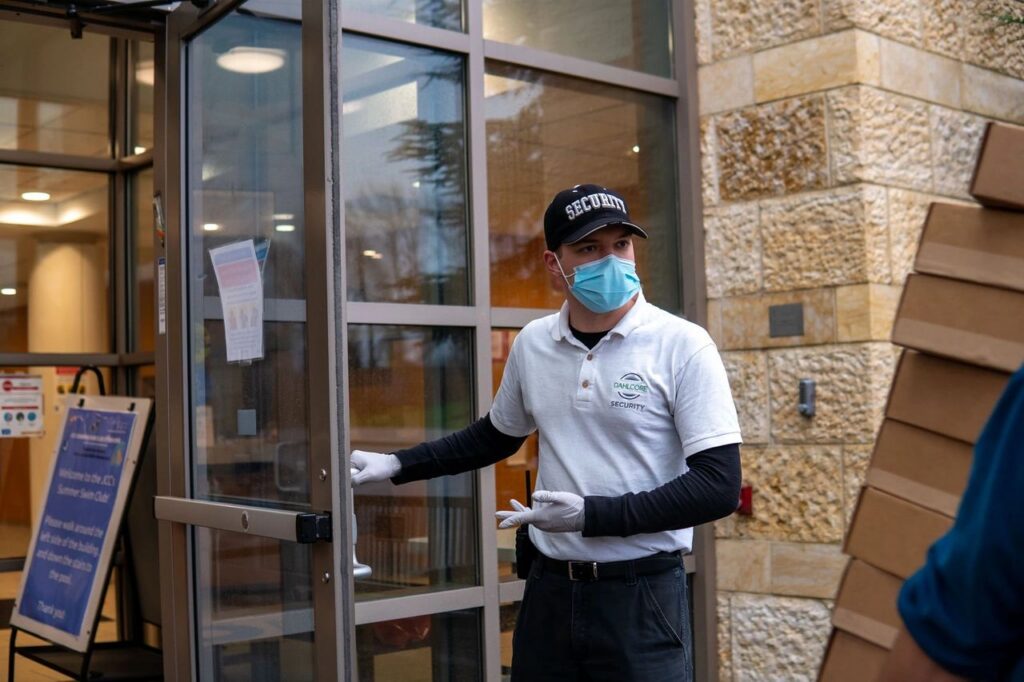
- Security officer/hospital security guard: Frontline role handling patrols, access control, visitor management, and basic incident response.
- Emergency room security officer: Focuses on ER operations and high-acuity incidents; emergency room security pay is often higher due to risk and intensity.
- Armed hospital guard / public safety officer: Works in facilities or regions where armed presence is allowed or required; armed roles typically offer higher pay than unarmed positions.
- Security supervisor/security manager: Oversees teams, scheduling, investigations, and performance; compensation often moves into the $50Ks–$60Ks for supervisors and higher for managers in large systems.
- Specialized roles (access control, investigations, or technology-focused): In some organizations, specialists manage cameras, access systems, or investigations and may receive premium pay.
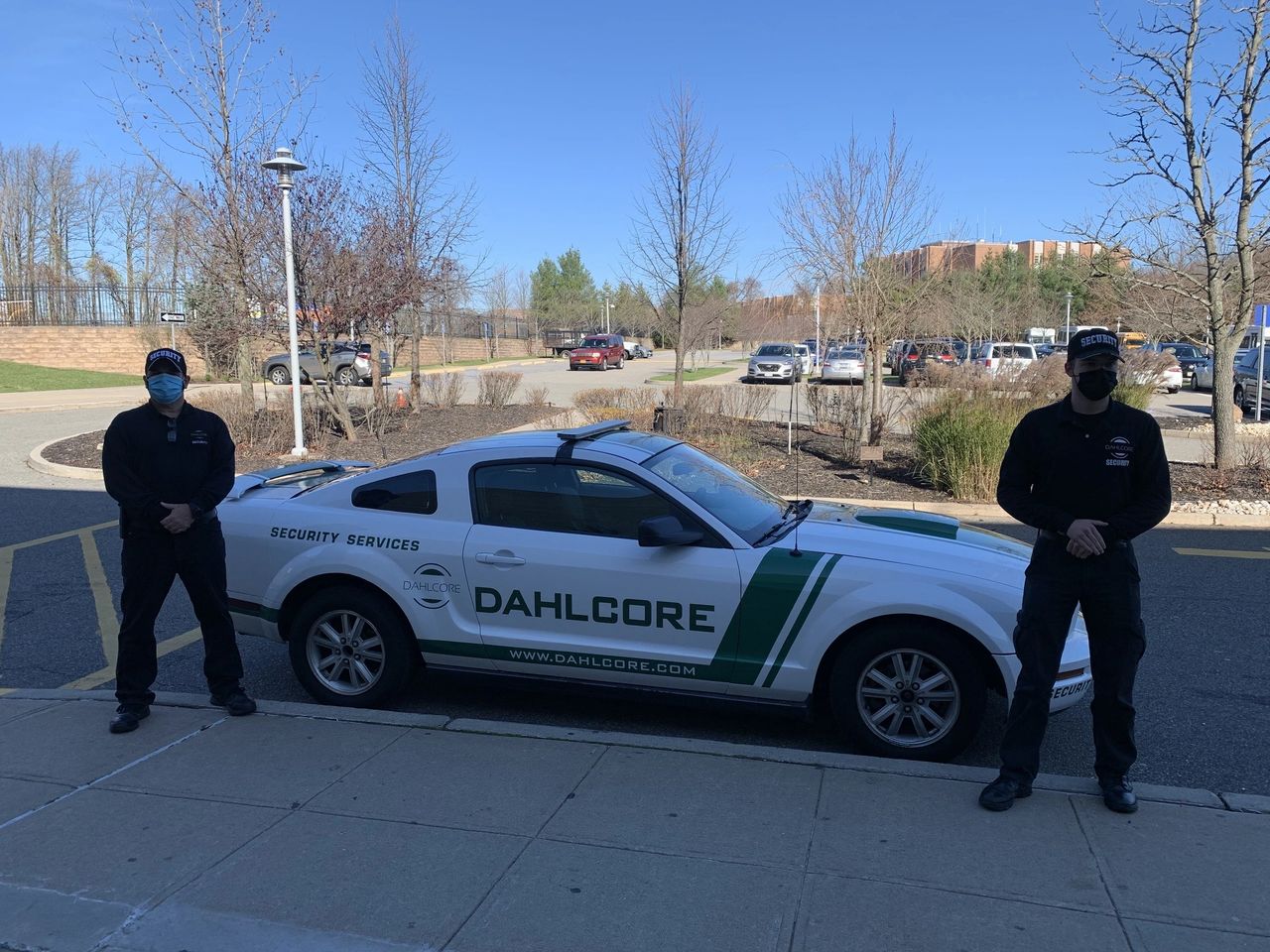
If your facility needs a reliable hospital security partner, explore our dedicated hospital security services page at Dahlcore Hospital Security. Thinking about a hospital security career? This progression shows how entry-level work can grow into stable, well-paid roles in hospital public safety over time.
How much do hospital security guards make per hour?
Most hospital security guards in the U.S. earn roughly $15–$23 per hour, with national averages around $19/hour for hospital-focused roles. Entry-level workers tend to start closer to $15–$17/hour, while experienced guards and supervisors in major metros often land above $20/hour.
Do hospital security salaries pay more than regular security jobs?
On average, hospital security salaries are modestly higher than general security guard pay because hospitals involve medical emergencies, behavioral health, controlled substances, and stricter regulatory requirements. Data for the broader security field suggests median pay around $38,000 annually, while healthcare and hospital security frequently spans from about $28,000 to over $50,000, depending on setting and seniority.
Which cities and states pay hospital security officers the most?
High-paying markets for hospital security officers tend to include parts of California, Washington, Alaska, and the Northeast, as well as certain urban centers where average pay can exceed $22/hour and total compensation can push towards $50,000 per year. Individual city data shows several California and Pacific Northwest metros paying in the low-to-mid $20s per hour on average for hospital security officers.
How do experience, shift, and certifications affect hospital security pay?
Experience, shift type, and certifications all strongly influence healthcare security officer wages. Guards with multiple years of incident-heavy experience, night/weekend availability, and healthcare-specific certifications usually land in the higher bands of posted pay ranges and are more likely to progress into supervisory roles. Employers also tend to pay more for officers who can safely manage psychiatric units, ERs, and other high-risk areas.
Frequently Asked Questions
Is hospital security pay worth it for job seekers?
For job seekers, hospital security can offer better stability and slightly higher pay than many retail or event security roles, especially when including benefits and overtime. The work is more demanding and emotionally intense, but it often comes with stronger long-term career and advancement potential.
Do hospital security guards get overtime and shift differentials?
Many hospitals and contracted providers offer overtime at premium rates and differentials for nights, weekends, and holidays, particularly for ER and inpatient roles. Specific structures vary by employer and union agreements, so always review posted pay details and ask about differentials in interviews.
Are hospital security guards armed?
Whether hospital security guards are armed depends on the hospital’s policies, state law, and threat assessment. Some systems use unarmed guards backed by law enforcement, while others employ armed public safety officers for higher-risk sites; armed roles typically pay more due to added risk and training requirements.
How do hospital security salaries compare to corporate or retail security?
Corporate security can sometimes match or exceed hospital rates at large companies, but hospital roles often beat retail-focused security in base pay and total compensation. Hospitals frequently add robust healthcare benefits, retirement plans, and more predictable scheduling than many event or retail gigs.
What benefits do hospital security guards usually receive?
Typical benefits include health insurance, retirement plans, paid time off, and paid training or tuition support, especially at larger hospital systems. Unionized hospitals may also offer stronger job protections and higher employer contributions to benefits.
Are there good promotion opportunities in hospital security?
Yes. Guards can grow into roles such as field training officer, shift lead, security supervisor, security manager, or even system-level security director, with each step increasing responsibilities and pay. Some experienced professionals later transition into consulting or training roles for healthcare security.
Methodology & Sources
This guide uses a blend of national wage statistics, major salary aggregators, and real-world job postings to estimate hospital security salaries. Data points include national and hospital-specific averages near $19/hour, broader security guard medians around $38,000 annually, and healthcare security ranges from roughly $28,000–$50,500 per year, depending on role and market.
Representative sources include national occupational data, hospital security salary pages, and broader security wage guides, as well as city and state breakdowns showing higher averages in select western and coastal markets. All figures are rounded, intended as guidance rather than guarantees, and may shift with labor markets, union negotiations, and local legislation.
Check other blogs
Is Being a Security Guard Easy? Explore the Realities
Consultant for to Expose Security: Expert Security Solutions
