


To hire security officers in Staten Island, NY, you should 1) assess your risk, 2) define your scope of work, 3) request quotes from licensed local security companies, and 4) compare vetting, pricing, and contract terms. Hiring security officers in Staten Island, NY starts with understanding that all guards must hold a valid New York State security guard license issued through the Department of State. This license requires a minimum of an 8-hour pre-assignment course, a fingerprint-based background check, and formal registration before guards can work on your site. As the client, you don’t process those licenses yourself. Still, you are responsible for making sure the provider only deploys properly licensed personnel, especially if you’re in a regulated setting like a residential building, hospital, or construction site.
From there, you’ll need to choose between hiring guards through a security company or trying to work with independent guards. In New York, most businesses go with licensed security agencies because they carry the insurance, workers’ compensation, supervision, and compliance burden that would otherwise fall on you. Agencies also handle training refreshers, 16‑hour on‑the‑job training, and annual in‑service courses that New York State requires for guards to remain active. For a Staten Island business in neighborhoods like St. George, New Dorp, or Tottenville, this model is usually cleaner and safer than trying to manage guards as direct staff—unless you’re a large property management firm or institution with its own in‑house security department.
Understanding New York Security Guard Licensing
New York security guards are regulated statewide, so the same rules apply in Staten Island as they do in Manhattan or Brooklyn. A guard must be at least 18, legally able to work in the U.S., complete the 8‑hour pre‑assignment course, submit fingerprints, and pass a criminal background check to get registered. After being hired, they must complete a 16‑hour on‑the‑job training course within 90 days, plus annual 8‑hour in‑service refreshers to keep their registration active.
As a buyer, you want copies or confirmation of each guard’s active New York State security guard registration number. Many Staten Island security companies will list “fully licensed and insured” on their site, but you should still ask them to confirm how they monitor guard license status, especially when adding new hires to your account. If you’ll require armed officers, they must also hold appropriate firearm certifications and, in most cases, a New York State pistol permit, which has its own multi‑month process and more stringent vetting. This extra layer is one of the reasons armed security costs considerably more than unarmed coverage. To ensure your provider is compliant, you can learn more about New York’s security guard licensing requirements through the Division of Criminal Justice Services.
Vetting Security Companies in Staten Island
When you’re hiring security officers in Staten Island, start by building a shortlist of local, licensed security guard agencies that actively service the borough. Look for firms with a track record in your specific environment—such as retail plazas in New Dorp, industrial yards by the Goethals Bridge, residential co‑ops in St. George, or construction sites along the Staten Island Expressway—because each has different risk profiles and patrol patterns. Local firms often advertise experience across the five boroughs and may highlight Staten Island‑specific work like warehouse security near the waterfront or event security for community festivals.
You should vet each provider on four core fronts: licensing and insurance, supervision and reporting, training standards, and references. Confirm that the company itself is licensed as a watch, guard, or patrol agency with New York State, and ask for proof of general liability and workers’ compensation insurance at coverage levels that satisfy your landlord or lender requirements. Ask how they supervise guards (field supervisors, GPS check‑ins, random post inspections), what incident reporting system they use, and whether you’ll receive daily activity logs. Finally, request references from similar Staten Island or NYC properties and follow up; these conversations often surface how a provider handles no‑shows, emergencies, and communication.
Vetting Individual Security Officers
Even when you work through an agency, it’s worth vetting the specific officers who’ll be assigned to your site. At minimum, ask your provider to confirm each officer’s active NYS license, completion of required training, and any additional certifications relevant to your environment (such as fire guard certifications for fire watch or CPR/first aid for residential or healthcare sites). Many clients in New York also prefer officers with prior law enforcement, military, or extensive private security experience, especially for high‑risk locations or overnight coverage.
During a walk‑through or kick‑off meeting, pay attention to officers’ communication skills, demeanor, and professionalism, as these will shape how tenants, customers, and visitors perceive your site. Professional appearance—proper uniform, clean grooming, punctuality—matters a lot in Staten Island’s residential and retail settings, where guards often double as customer‑facing personnel. You can also ask your agency how they screen new hires (background checks beyond state requirements, drug testing, employment verification) and whether you can request officer changes if the fit isn’t right. A strong provider will welcome feedback and treat post assignments as long‑term relationships rather than one‑off shifts.
Defining Your Security Scope of Work
A clear scope of work is the backbone of your security contract and has a direct impact on cost and service quality. In Staten Island, typical scopes include a mix of access control, lobby presence, perimeter patrols, parking and gate control, visitor sign‑in, escort services, opening and closing procedures, and incident response. You’ll want to define which tasks you expect on each shift, how often patrols occur, and how officers should escalate issues—whether to building management, NYPD, or emergency services.
A good way to structure the scope is by time and location: what guards do hourly, per shift, and per day, and which areas they must cover, such as loading docks, stairwells, rooftops, or storage areas. Include clear post orders that outline responsibilities like checking doors and alarms, enforcing no‑smoking policies, monitoring CCTV, and documenting any hazards or incidents. By setting expectations up front, you reduce misunderstandings later and give your provider a framework for training their officers specifically for your site. You can always refine the scope after a 30‑ to 60‑day trial period once you see how the post works in real life.
Typical Tasks for Staten Island Security Officers
On Staten Island, security officers often blend traditional guard duties with customer service and basic facilities checks. Common responsibilities include greeting tenants and visitors at lobbies, checking IDs or access cards, logging contractors, and monitoring elevator and stairwell traffic. On construction and industrial sites in areas like West Brighton or near major bridges, guards may be tasked with vehicle gate control, checking delivery tickets, preventing unauthorized access after hours, and doing periodic patrols to deter theft or vandalism. Event security, such as for weddings, festivals, or school events, focuses more on crowd control, bag checks, guest screening, and managing entry and exit points.
Depending on the risk profile, you might also need more specialized tasks like fire watch, where guards patrol and document checks when fire alarm or sprinkler systems are offline, under FDNY or insurance requirements. Some Staten Island properties also use officers to perform parking enforcement, enforce house rules, or support building staff during emergencies like power outages or storms. In all cases, detailed incident reporting—who, what, when, where, and any follow‑up actions—is essential for liability and coordination with police or insurers if something goes wrong.

Armed vs. Unarmed Officers
Choosing between armed and unarmed security officers is one of the biggest strategic and pricing decisions you’ll make. In NYC, including Staten Island, unarmed guards are typically used for lower‑risk environments like residential buildings, retail stores, offices, and basic construction site access control. They’re trained to observe and report, deter problems through presence, manage access, and call NYPD when needed rather than directly intervening in high‑risk situations. Because they don’t carry firearms, insurance and training costs are lower, which keeps hourly rates down.
Armed security officers are more appropriate for high‑value targets or elevated risk—such as cash‑intensive businesses, jewelry stores, pharmacies, or facilities with known threats. These guards must hold both the standard security guard license and additional firearm training, plus a pistol permit, and agencies pay much higher insurance premiums to deploy them. That’s why armed coverage in NYC can cost from the low 40s up to 75 USD per hour or more, depending on experience and risk level. For many Staten Island clients, a strong unarmed presence, cameras, good lighting, and solid procedures provide a better risk‑to‑cost balance than defaulting to armed guards.
Typical Pricing for Security Officers in Staten Island, NY
Unarmed security officers in Staten Island, NY typically cost about 25–45 USD per hour, while armed officers often range from about 40–75 USD per hour, depending on risk, training, and experience. Security guard pricing in Staten Island generally tracks broader NYC rates, with some variation based on risk profile, schedule, and contract size. Those are billable rates you pay to an agency; guards themselves earn less, with the difference covering insurance, supervision, admin overhead, taxes, and profit. Expect higher rates for short‑term engagements, one‑off events, and last‑minute coverage compared with long‑term, steady contracts.
For budgeting, it’s useful to translate hourly rates into monthly spend. A single unarmed guard working 40 hours per week at 30 USD per hour runs about 4,800 USD per month, while the same coverage at 40 USD per hour is roughly 6,400 USD per month. Typical monthly estimates for unarmed guards land in roughly the 4,300–7,800 USD range, while armed guards often run from about 6,900–13,000 USD per month for standard full‑time posts. Around‑the‑clock (24/7) coverage, especially unarmed, can easily reach 18,000–32,000 USD per month, depending on your blended rate and post complexity. These benchmarks give you a reality check when evaluating quotes from Staten Island providers.
Key Pricing Factors You Should Know
Several variables drive where you’ll land within those hourly ranges. First is risk level: higher‑risk posts—late‑night operations, known crime hot spots, high‑value inventory—command higher rates due to increased liability and the need for more seasoned officers. Second is experience and specialization; off‑duty police or highly trained executive protection‑style officers can cost far more per hour than standard unarmed guards, though many Staten Island contracts stay closer to standard armed or unarmed rates. Third is schedule and term: overnight, weekend, and holiday shifts often include premiums, while multi‑year or multi‑post contracts can unlock lower blended rates.
You’ll also see pricing affected by the exact scope, equipment needs, and supervisory expectations. If your guards must handle detailed reporting, access control systems, CCTV monitoring, or frequent tours of large properties, rates will be higher than for a simple lobby sit‑down post. Requests for dedicated field supervisors, frequent post-inspections, and integrated technology (such as tour verification apps, body‑worn cameras, or incident management platforms) may add to the hourly cost but can improve performance and accountability. Finally, keep in mind that “too cheap” quotes in NYC often indicate corners cut in wages, training, or insurance—areas where you don’t want surprises during an incident.
Sample Security Guard Pricing Scenarios
To make the numbers more concrete, here’s an example of how Staten Island security officer pricing might look using typical NYC benchmarks:
Small retail store in New Dorp, business hours only
- Type of officer: Unarmed
- Hours per week: 40
- Approx. hourly rate: 28–35 USD
- Est. monthly cost: 4,800–6,000 USD
Mid‑rise residential lobby in St. George, evenings and weekends
- Type of officer: Unarmed
- Hours per week: 84 (12 hrs/day)
- Approx. hourly rate: 30–40 USD
- Est. monthly cost: 10,900–14,600 USD
Pharmacy with controlled substances, evenings
- Type of officer: Armed
- Hours per week: 40
- Approx. hourly rate: 45–60 USD
- Est. monthly cost: 7,800–10,400 USD
24/7 construction site gate and patrol near the Staten Island Expressway
- Type of officer: Unarmed mix of days/nights
- Hours per week: 168
- Approx. hourly rate: 27–38 USD blended
- Est. monthly cost: 18,000–27,000 USD
These ranges are illustrative, not firm quotes, but they align with typical NYC security pricing and help you benchmark proposals. They also give Staten Island property managers and business owners a quick way to estimate coverage across different neighborhoods.
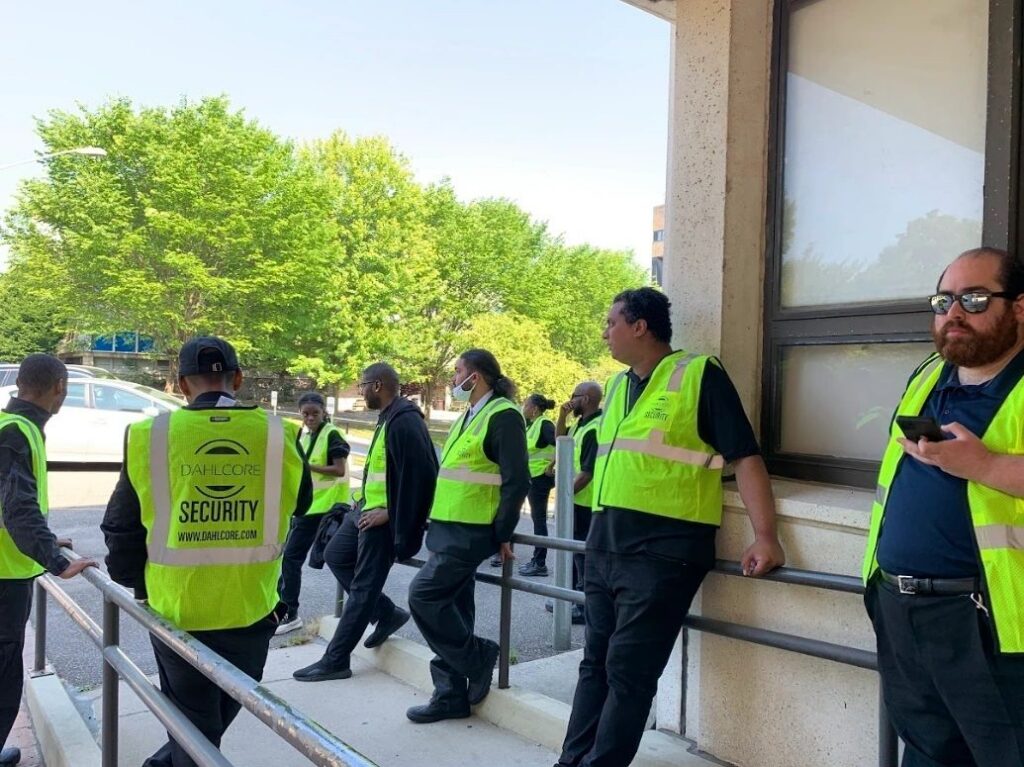
Crafting a Request for Proposal (RFP)
When you’re ready to price out options, create a simple RFP that you can send to three to five Staten Island security providers. Include your property type, address or general neighborhood, operating hours, current issues (theft, trespassing, vandalism, loitering), and any past incidents you’re particularly concerned about. Then describe your desired coverage—number of posts, hours per day, days per week, armed vs. unarmed—and your expectations around patrols, access control, reporting, and communication. The more specific your RFP, the easier it is to compare quotes apples‑to‑apples.
Ask each provider to break out their hourly rate by post and shift, note any premiums for nights, weekends, or holidays, and outline what’s included (uniforms, training, supervision, equipment) versus billed separately. It’s also smart to request sample post orders and a sample daily activity or incident report, so you can see how they document their work. Finally, ask about minimum contract terms, cancellation clauses, and how they handle replacing underperforming officers. These factors can be just as important as the base hourly rate over the life of your contract.
Contract Terms and Legal Considerations
Your contract with a Staten Island security company should clearly spell out the allocation of liability and insurance, in addition to scope and pricing. Confirm that the agency will list your organization and, if applicable, your landlord or property manager as additional insureds on their liability policy. Make sure indemnification language has been reviewed by your legal or risk team, especially if you operate under New York‑specific regulations (for example, certain residential housing or commercial leases that reference security obligations). The contract should also reference that all guards will comply with New York law, maintain proper licensing, and complete required training.
Standard terms often include details on billing cycles, overtime thresholds, rate increases, and how short‑notice call‑outs are handled. Look for language that outlines minimum staffing levels, backup coverage if an officer calls out, and response time for issues at the post. A termination clause—typically 30 to 60 days’ notice—is important in case the relationship isn’t working out. In Staten Island, where security firms may be smaller and more local, you may be able to negotiate more flexible terms than you would with a large national provider, but it’s still worth having counsel review the agreement before signing.
2026 Security Trends Affecting Staten Island
Recent years have seen several trends in physical security that affect Staten Island properties. Hourly rates have risen in step with NYC’s cost of living and minimum wage laws, pushing security guard wages and bill rates higher than in many other U.S. markets. There’s also a growing emphasis on integrating guards with technology—CCTV, access control systems, and cloud‑based incident reporting—to improve situational awareness and build better documentation trails. Many providers now offer smartphone‑based tour tracking so you can view guard patrols on a dashboard in real time.
Another trend is increased demand for flexible coverage, such as short‑term contracts for construction projects, renovations, or special events across Staten Island’s neighborhoods. Some businesses are also shifting from purely reactive security to proactive risk assessments and crime‑prevention‑through‑environmental‑design (CPTED) improvements like lighting, sightlines, and landscaping. When you vet providers, ask how they incorporate these trends and whether they can advise on cameras, lighting, and procedures—rather than just supplying “bodies on post.” A partner who understands both manpower and technology can usually reduce your long‑term security spend while improving results.
FAQs about How to Hire Security Officers in Staten Island, NY
How much does it cost to hire security officers in Staten Island, NY, per hour?
In Staten Island, expect unarmed security officers to fall roughly within broader NYC ranges of about 25–45 USD per hour, while armed officers often range from around 40–75 USD per hour, depending on risk and experience.
Do security officers in Staten Island, NY need a license?
Yes. Guards must hold a valid New York State security guard registration, which requires an 8‑hour pre‑assignment training course, fingerprinting, and a background check, followed by a 16‑hour on‑the‑job course and annual refreshers. Armed officers need additional firearms training and, typically, a pistol permit, plus agency‑level insurance coverage.
Should I hire armed or unarmed security officers in Staten Island, NY?
For most residential, retail, and basic office settings in Staten Island, unarmed officers are sufficient and more cost‑effective. Armed officers are better suited for high‑risk or high‑value environments like cash‑intensive businesses or locations with documented threats, but they come with higher costs and liability.
How do I vet a security company in Staten Island, NY?
Check that the company is licensed and insured in New York, ask for proof of liability and workers’ comp, and confirm that all deployed guards hold active NYS licenses. Review references from similar Staten Island or NYC clients, ask about supervision and reporting processes, and request sample post orders and daily reports.
What should be in the scope of work when I hire security officers in Staten Island, NY?
Your scope should define post locations, hours, key duties (access control, patrols, visitor management, incident response), reporting expectations, and escalation procedures for emergencies or rule violations. Clear post orders aligned with your risks and property layout help agencies train guards and make performance measurable.
Can I get short‑term or event security officers in Staten Island, NY?
Yes, many Staten Island security companies provide short‑term guards for events, construction projects, and temporary needs, often at slightly higher hourly rates due to setup and admin overhead. It’s smart to book in advance, especially for weekends or large public events, when demand for experienced event security can spike.
Conclusion
Hiring security officers in Staten Island, NY, is ultimately about matching a licensed, well‑vetted provider to a clear scope of work and a realistic budget grounded in NYC market rates. When you focus on licensing, training, supervision, and transparent pricing, you dramatically improve both safety and value over the life of your contract.
Explore our other blog posts here
Wedding Security Guards: Coverage, Staffing, and Checklist
