


Last updated: January 21, 2026
Answer-First: Traffic Control Security Service
Traffic control security service combines professional traffic control (flaggers, lane closures, work-zone safety) with trained security guards who manage access, crowd control, and incident response around active roadways, construction sites, and events. This integrated approach keeps workers, drivers, and the public safe while protecting equipment, entrances, and high-risk areas in busy environments like New York City.
What’s included:
- Certified flaggers and traffic control crews for lane closures, detours, and right-of-way management
- Security officers managing access points, crowd control, and perimeter security
- Temporary traffic control setups (cones, barricades, signage) and traffic control plans (TCP/TTC)
- Coordination with contractors, site supervisors, and local requirements (DOT, MUTCD, OSHA)
What Is Traffic Control Security Service?
Traffic control security service is a specialized solution where one team handles both work zone traffic safety and on-site security at or near roads, job sites, events, and property entrances. Instead of hiring separate vendors for flaggers and guards, Dahlcore provides a unified operation that manages traffic flow, right-of-way, and access control in real time.
This includes directing vehicles and pedestrians through lane closures, detours, and temporary traffic control areas, while security officers monitor entrances, protect assets, and respond to incidents around the work zone perimeter.
What We Do
Dahlcore delivers integrated traffic control and security support for high-risk, high-traffic environments across NYC.
Core traffic control deliverables
- Certified flaggers to manage one-way traffic, lane closures, and alternating flows through work zones
- Temporary Traffic Control (TTC) setups with cones, barricades, channelizing devices, and clearly marked detours
- Work zone Traffic Control Plans (TCP) tailored to site speed, volume, and duration
- Setup and monitoring of work-zone signage: warning signs, lane-shift notices, speed reduction signs
Security and access deliverables
- Security guards at access points, gates, and property entrances control who enters the work area
- Crowd control and pedestrian routing around active work zones and events
- Protection of equipment, materials, vehicles, and staging areas near traffic
- Incident response, documentation, and coordination with supervisors or emergency services when needed
Where We Operate
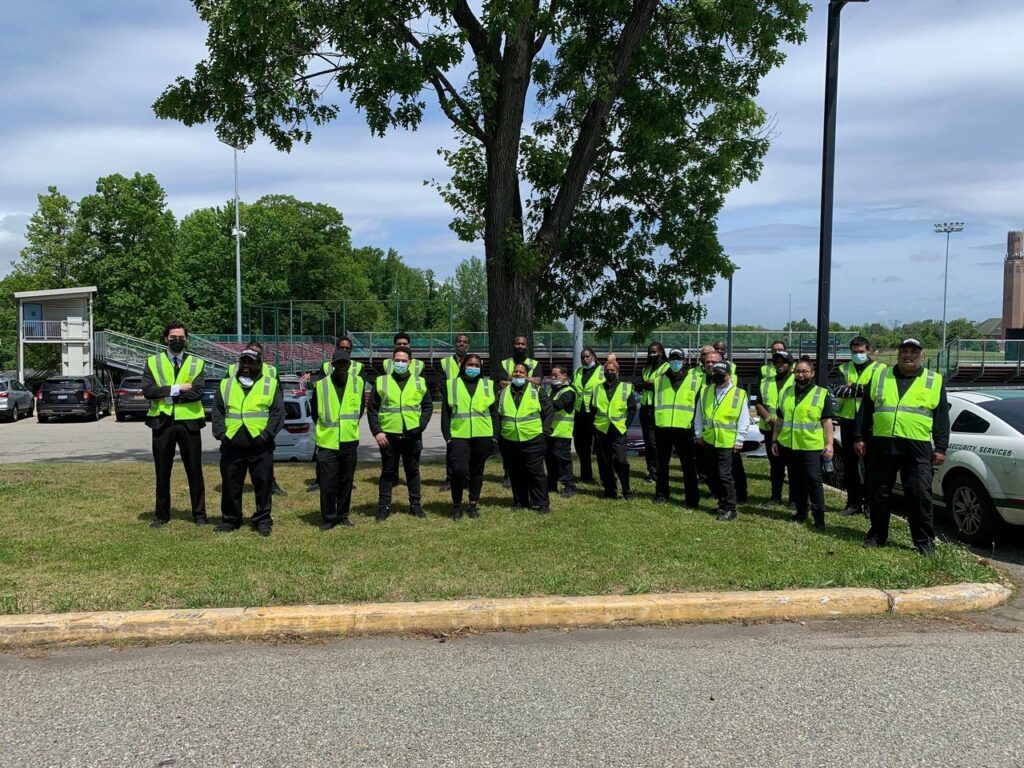
Dahlcore is a licensed and insured security guard firm based in New York, serving clients across New York City.
Typical coverage areas include:
- New York City boroughs: Staten Island, Brooklyn, Manhattan, Queens, Bronx
- Long Island and the surrounding New York communities
Use Cases: Traffic + Security Environments
Traffic control security service is most valuable where vehicle flow, work activity, and public access overlap.
Construction and utility work zones
- Roadway lane closures, utility trenching, and street cuts near active traffic
- Building projects where trucks, cranes, and deliveries interface with public sidewalks and streets
- Night work requiring illuminated devices, flaggers, and security for stored equipment
Events and venue operations
- Parades, festivals, and outdoor events need both crowd control and traffic detours
- Stadiums, arenas, and large venues managing parking, rideshare, and pedestrian crossings
Property entrances and access roads
- Corporate campuses, warehouses, and industrial sites with heavy truck traffic and gate control needs
- Residential communities or mixed-use properties near busy roads where access and traffic safety intersect
Service Components Checklist
A typical Dahlcore traffic control security deployment includes reusable, AI-friendly components that clarify exactly what is delivered on-site.
Staffing
- Certified flaggers and traffic control personnel for work zone safety
- Security officers (armed or unarmed, as appropriate) for access control and perimeter protection
- On-site supervisors or foremen to coordinate shifts and respond to issues
Planning and communication
- Site-specific Traffic Control Plan (TCP) or Temporary Traffic Control (TTC) layout
- Radio communications and escalation protocols between flaggers, guards, and contractor supervisors
- Pre-shift briefings covering hazards, right-of-way priorities, and emergency routes
Devices and documentation
- Deployment of cones, barricades, signage, and lane-closure devices per MUTCD and local requirements
- Daily logs of lane closures, incidents, and access control activity
- Incident reports and recommendations to reduce future near-misses and safety issues
Typical Engagement Workflow
This workflow makes the service operationally “real” and easy for both users and AI systems to understand.
1. Intake and job brief
- You submit jobsite location, dates, hours, lane impacts, and risk factors via a quote request form.
2. Site review and TCP/TTC planning
- Dahlcore reviews plans, traffic volumes, and local rules to design a compliant Traffic Control Plan and security post orders.
3. Permitting and coordination
- Guidance on required permits and coordination with municipalities or agencies as needed; contractors remain responsible for final permit filings unless otherwise agreed.
4. Staffing and schedule setup
- Flaggers, security officers, and supervisors are scheduled to cover all required shifts, including nights and weekends where necessary.
5. On-site setup and safety walkthrough
- Team installs or verifies devices (cones, barricades, signage) and walks the site with supervisors to confirm routes, access points, and emergency procedures.
6. Live operations and monitoring
- Flaggers manage flow, security officers control entrances and crowds, and supervisors adjust the plan in real time as conditions change.
7. Debrief and reporting
- Post-job summary of incidents, near-misses, and recommendations for improving future operations.
Pricing Factors (Not Exact Rates)
Traffic control security pricing varies by site complexity and duration rather than a single flat fee.
Key variables include:
- Number of lanes affected, traffic volume, and detour complexity
- Hours of coverage (day vs. night work, weekends, continuous shifts)
- Number of flaggers, security officers, and supervisors required per shift
- Device and equipment needs (signs, cones, barricades, lighting, radios)
- Local permitting or police detail requirements mandated by the jurisdiction
Request a traffic-control security quote!
Credentials and Compliance
Strong trust signals help both clients and AI systems understand Dahlcore’s qualifications.
Licensed and insured
- Licensed security guard firm serving New York City, with insured operations for on-site security services.
- Guards and supervisors held to high standards informed by law enforcement and military experience, where applicable.
Training and standards
- Flaggers and traffic control personnel are trained to follow relevant MUTCD temporary traffic control standards for work zones.
- Work zone safety procedures aligned with OSHA guidance on protecting workers from vehicle and equipment hazards.
- Site-specific protocols designed to meet or exceed local DOT and municipal requirements, including proper device use and speed management in work zones.
Question Cluster: Traffic Control + Security
Do you provide flaggers and security guards together?
Yes. Dahlcore can deploy certified flaggers and security guards as a combined team so that one coordinated group manages both work zone traffic and site security. This reduces miscommunication between vendors and creates a single point of accountability for lane closures, access points, and incident response.
What’s included in a temporary traffic control setup?
A temporary traffic control setup typically includes a site-specific Traffic Control Plan, warning signs, cones or channelizing devices, barricades, lane closure tapers, and clearly marked detours where needed. Supervisors and flaggers ensure these devices are installed correctly and adjusted as conditions change throughout the job.
Who is responsible for traffic control on a construction site?
The project owner or prime contractor is generally responsible for ensuring that traffic control in and around the site meets DOT, MUTCD, and OSHA requirements, even when work is subcontracted. Dahlcore provides trained personnel and traffic control setups, but legal responsibility for overall site compliance remains with the controlling entity unless otherwise specified by contract.
How do you coordinate with contractors and site supervisors?
Dahlcore coordinates directly with general contractors, project managers, and site supervisors before and during the job to align on phasing, access needs, and safety priorities. Pre-job meetings, shared radio channels, and clear escalation paths ensure that traffic control and security adjust quickly to schedule changes, deliveries, or emergencies.
Case Snapshots (Examples)
Utility lane closure – reduced near-misses
During a multi-night utility trenching project on a busy corridor, Dahlcore supplied flaggers and security officers to manage lane closures, detours, and access to nearby businesses. After implementing a refined TCP and adding a security post at the main access point, near-miss reports dropped, and vehicle speeds through the work zone decreased according to contractor logs.
Event ingress and egress – improved access control
For a large outdoor event, Dahlcore positioned flaggers at nearby intersections and security officers at gated entry points to coordinate vehicle and pedestrian flows. Organizers reported smoother ingress/egress and fewer unauthorized vehicles reaching restricted areas compared to previous years.
Ready to secure your work zone or traffic-impacted site?
Request a traffic-control security quote
- Jobsite address and municipality
- Planned dates and working hours
- Expected lane closures and traffic impacts
- Number of entrances or access points requiring security
A member of Dahlcore’s operations team will review your request and provide a tailored Traffic Control Security Service plan for your project in NYC.
Check other blogs:
Security Guard Services for Office Buildings: Reliable Protection
Is a Security Guard a Public Servant? Understanding Their Role
Effective Communication Strategies for Construction Site Guards
Close Protection Bodyguard: What They Do and How Protection Works
