


Last Updated: January 2, 2026
Quick Answer: What Does a Warehouse Security Guard Do?
Warehouse security guards protect inventory, equipment, and personnel through 8 core responsibilities: access control management, surveillance monitoring, perimeter patrols, incident documentation, emergency response, theft prevention, safety compliance, and employee protection. In NYC, licensed guards earn $18.99-$20.82 per hour on average and must complete state-mandated training, including an 8-hour pre-assessment and a 16-hour on-the-job certification, within 90 days of employment.
Core Responsibilities of Warehouse Security Guards
Access Control Management
Warehouse security guards serve as gatekeepers, verifying identification and maintaining detailed visitor logs at all entry points. This involves checking credentials, issuing visitor badges, and ensuring only authorized personnel have access to restricted areas like inventory storage or mechanical rooms. Guards must coordinate with management about suspicious access requests and maintain timestamped logs documenting the purpose of each visit.
Surveillance and Monitoring
Modern warehouse security requires proficiency with CCTV systems and advanced video analytics. Guards conduct regular patrols while utilizing surveillance tools to monitor activities and identify perimeter breaches. They review recorded footage to identify patterns, recurring security concerns, and potential vulnerabilities. Real-time monitoring enables swift identification of irregularities and immediate response to threats.
Perimeter Patrol Procedures
Regular patrols—both indoor and outdoor—form the backbone of warehouse security operations. Guards walk the perimeter, inspecting for breaches, damage, or unlocked access points. Patrol routes should cover loading docks with heavy traffic, high-value inventory zones, emergency exits, parking areas, and utility rooms containing critical systems. This proactive approach deters intruders and identifies safety hazards before escalation.
Incident Documentation and Reporting
Detailed incident reporting is critical for legal compliance and operational improvement. Guards maintain comprehensive logs of all security events, unusual activities, and safety hazards. They document initial patrol findings, record observations throughout shifts, and provide thorough reports to law enforcement when necessary. Accurate documentation supports investigations and helps identify systemic vulnerabilities.
Emergency Response Protocols
Warehouse security guards must respond swiftly to alarms, fires, medical emergencies, and security breaches. They coordinate with law enforcement, administer first aid when certified, and manage evacuation procedures. Guards test alarm systems and security cameras regularly to ensure functionality. Effective emergency response can mitigate damage and ensure personnel safety during critical incidents.
Theft Prevention Strategies
Professional warehouse security reduces theft by up to 75% through visible presence and active threat prevention. Guards monitor loading docks, protect high-value inventory areas, and implement strict access controls. They screen employees and visitors, conduct bag checks when policy permits, and coordinate with management on internal theft investigations. Surveillance systems and routine checks deter both external and internal theft.
Safety Compliance and OSHA Standards
Guards ensure warehouses comply with safety regulations, including OSHA standards and New York’s Warehouse Worker Protection Act (WWPA), effective June 1, 2025. They conduct regular safety audits, verify emergency exits remain clear, check fire extinguisher placement, and ensure hazardous materials are properly stored. The WWPA requires employers with 100+ warehouse employees to implement injury reduction programs and annual safety evaluations.
Employee and Asset Protection
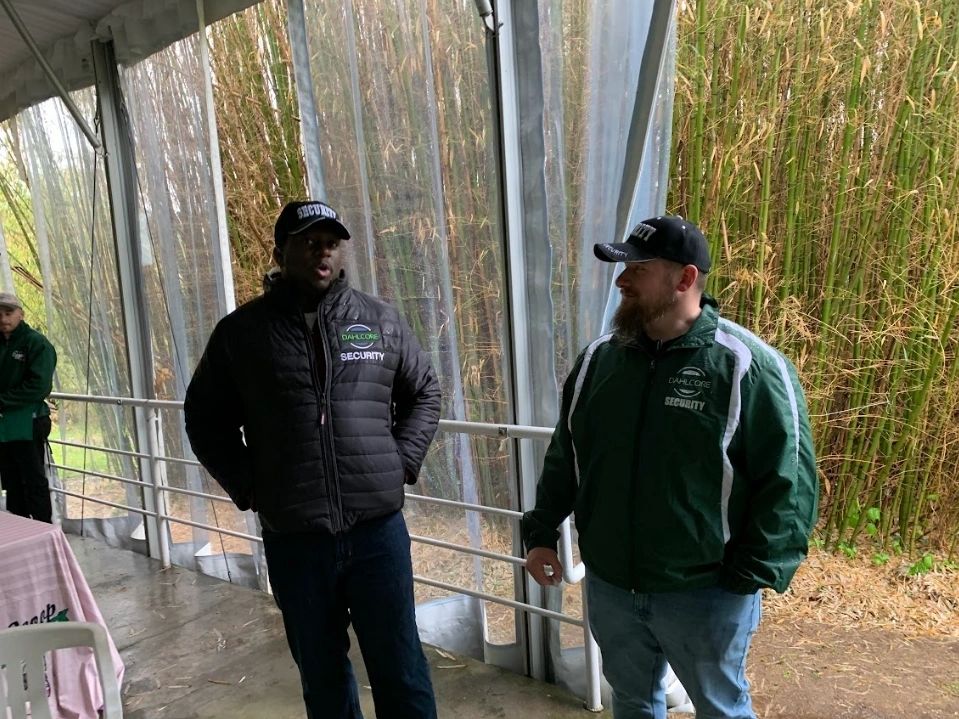
Warehouse security guards protect employees from unauthorized intrusions and violent incidents while safeguarding valuable assets. Their visible presence deters potential perpetrators and provides workforce confidence. Guards serve as first responders during medical emergencies, bridging the gap until professional medical personnel arrive.
Daily Workflow and Procedures
Shift Start Protocol (First 30 Minutes)
- Review the previous shift’s logbook entries and outstanding issues
- Conduct uniform and equipment check: radio, flashlight, keys, identification badge
- Test communication devices and verify alarm systems are active
- Walk perimeter, inspecting for breaches, damage, or unsecured access points
- Check surveillance camera functionality and system login credentials
Mid-Shift Operations (Ongoing)
- Conduct regular patrols at stipulated intervals, covering all checkpoint IDs
- Monitor surveillance systems continuously for suspicious behavior
- Screen visitors and employees, verifying access credentials
- Maintain detailed visitor logs with timestamps and the purpose of the visit
- Respond promptly to security alarms or emergencies
- Document all incidents, observations, and unusual activities
End-of-Shift Handover (Final 30 Minutes)
- Secure all doors, windows, and access points
- Complete a detailed shift report documenting all incidents
- Brief incoming security personnel on outstanding issues
- Update logbook and ensure all documentation is current
- Return keys and equipment, obtain supervisor verification signature
Required Skills and Qualifications
Mandatory NYC Licensing Requirements
All warehouse security guards in New York must obtain a valid security guard license from the New York State Department of State. Requirements include:
- Minimum 18 years old with legal U.S. work authorization
- Completion of 8-hour pre-assessment training at a DCJS-approved school
- Electronic fingerprinting through IdentoGo
- Submission of the NYSDOS form DOS-1206-f with employer attestation
- 16-hour on-the-job training within 90 days of employment
Physical Fitness and Stamina
Guards must maintain peak physical condition for prolonged standing, routine patrols, and swift emergency reactions. Physical fitness enables effective navigation of large warehouse environments and rapid intervention when necessary.
Attention to Detail and Vigilance
Meticulous attention to detail identifies security vulnerabilities and irregularities. Guards must constantly monitor surroundings, spot unlocked doors, safety hazards, or suspicious activity before escalation. Vigilance is crucial for preventing breaches and ensuring safety.
Communication and Coordination
Effective communication skills enable coordination with security personnel, law enforcement, and warehouse staff. Clear communication ensures accurate information conveyance and appropriate action during incidents. Guards often serve as company ambassadors, managing visitor interactions professionally.
Technical Proficiency
Modern warehouse security requires proficiency with access control systems, biometric scanners, electronic locks, and surveillance platforms. Guards must adapt to technological changes and continuously learn new systems.
Warehouse Security Guard vs. Other Security Roles
Primary Focus
- Warehouse Security: Inventory protection, access control, logistics coordination
- Commercial Security: General property protection, visitor management
- Event Security: Crowd control, temporary access management
- Construction Security: Equipment theft prevention, perimeter control
Key Challenges
- Warehouse Security: Large complex layouts, high-value inventory, multiple entry points
- Commercial Security: Tenant relations, parking management, after-hours monitoring
- Event Security: High-volume entry/exit, alcohol management, temporary infrastructure
- Construction Security: Vandalism prevention, material tracking, hazardous area security
Technology Used
- Warehouse Security: Advanced CCTV, access control systems, inventory tracking
- Commercial Security: Basic surveillance, access logs, intercom systems
- Event Security: Metal detectors, bag checks, temporary barriers
- Construction Security: Mobile patrol apps, equipment tagging, drone surveillance
Patrol Area
- Warehouse Security: Extensive indoor/outdoor perimeter, loading docks, storage zones
- Commercial Security: Lobby, corridors, parking structures
- Event Security: Entrances, VIP areas, perimeter fencing
- Construction Security: Entire site perimeter, material storage, equipment yards
Theft Prevention
- Warehouse Security: Internal and external theft, employee screening, cargo security
- Commercial Security: Shoplifting, break-ins, unauthorized access
- Event Security: Ticket fraud, unauthorized entry, merchandise theft
- Construction Security: Equipment theft, material pilferage, vandalism
Common Challenges and Solutions
Managing Large Complex Layouts
Challenge: Warehouses feature extensive footprints with multiple zones, blind spots, and high-traffic areas.
Solution: Implement strategic patrol routes with checkpoint verification, utilize advanced video analytics for coverage gaps, and coordinate with logistics teams during peak operations.
Adapting to Technological Changes
Challenge: Rapid advancement in security technologies requires continuous learning.
Solution: Participate in quarterly training on AI-driven surveillance, drone monitoring, and cybersecurity protocols. Dahlcore provides continuous professional development to keep guards updated.
Coordinating with Logistics Operations
Challenge: Balancing security protocols with fast-paced warehouse operations and delivery schedules.
Solution: Establish clear communication channels with warehouse managers, create expedited screening procedures for verified delivery personnel, and conduct joint training exercises.
Ensuring Personal Safety
Challenge: Guards face potential risks from intruders, violent incidents, and hazardous conditions.
Solution: Maintain situational awareness, use proper personal protective equipment, follow safety protocols, and request immediate backup when confronting suspicious individuals.
Salary and Career Outlook in NYC
Current Compensation Rates
As of 2026, NYC warehouse security guards earn:
- Average hourly pay $18.99/hr
- Another current NYC average $20.82/hr
- Common hourly range $16–$23/hr
- Typical annual range About $35,000–$49,778
- Top earners $23+/hr or about $49,778/year
Factors Affecting Pay
- Armed vs. Unarmed: Armed guards command higher rates due to additional training and certification
- Experience Level: Entry-level positions start at $16-17/hour; experienced guards earn $23+/hour
- Location: Manhattan and the surrounding boroughs offer premium rates compared to other NY regions
- Specialized Skills: Guards with CPR certification, advanced surveillance training, or WWPA compliance knowledge earn more
Career Advancement Path
- Entry-Level Guard: Basic security training and NYC license
- Senior Warehouse Guard: Advanced courses in surveillance and crisis management
- Supervisor/Lead Guard: Oversee multiple guards, coordinate with law enforcement
- Security Manager: Manage entire warehouse security operations, develop protocols
FAQ: Warehouse Security Guard Duties
What’s the difference between armed and unarmed warehouse guards?
Unarmed guards focus on access control, surveillance, and incident reporting. Armed guards undergo additional firearms training and certification, providing enhanced protection for high-value inventory facilities. Both require NYC licensing, but armed guards must meet stricter background checks and complete specialized training.
How do guards handle internal theft vs. external threats?
For internal theft, guards coordinate with management on employee screening, monitor surveillance footage for suspicious behavior, and maintain detailed documentation. External threats require immediate perimeter patrols, access point verification, and law enforcement notification. Professional security reduces both theft types by up to 75%.
What technology do modern warehouse guards use?
Guards operate CCTV systems with advanced video analytics, biometric access control, electronic locks, two-way radios, mobile patrol apps, and drone monitoring systems. Technical proficiency with these tools is essential for effective security management.
What are the New York Warehouse Worker Protection Act requirements?
Effective June 1, 2025, the WWPA requires employers with 100+ warehouse employees to implement injury reduction programs, conduct annual safety evaluations by qualified ergonomists, provide employee training, and offer on-site medical care. Guards must ensure compliance with these safety standards.
How often should security audits be conducted?
Regular security audits should be performed quarterly, including penetration testing, vulnerability assessments, and physical security checks. Annual comprehensive audits by qualified security professionals identify systemic weaknesses and ensure compliance with NYC regulations.
Is Warehouse Security Right for You? Self-Assessment
Consider warehouse security if you:
- Can maintain physical fitness for 8-12-hour shifts with continuous patrols
- Possess strong attention to detail for identifying security vulnerabilities
- Handle high-pressure situations calmly and make quick decisions
- Are comfortable with technology and willing to learn new systems
- Can work independently while maintaining constant vigilance
- Have (or can obtain) NYC security guard license and complete required training
Check other blogs:
What is a Disgruntled Employee? Security Guard Expert Guide
Is It Legal for Security Guards to Track Someone? Legal Guide
Professional Crowd Management & Event Security Services in NYC
Safety and Security: Key Protocols for Large-Scale Hotel Events
