

Last Updated: January 8, 2026
Quick Answer: No, security guards are not law enforcement officers. They are private citizens employed by businesses or individuals to protect property and assets, while police officers are government agents with broad legal authority to enforce laws and make arrests. Understanding this distinction is crucial for property owners, security professionals, and the public.
The Fundamental Difference: Private vs. Public Authority
Security guards derive their authority from property rights and employer contracts, not constitutional mandate. They act as agents of the property owner, limited to protecting specific premises and people within their jurisdiction. Police officers, conversely, serve the public interest with government-granted authority to enforce criminal laws throughout their geographic jurisdiction.
This core difference impacts every aspect of their respective roles—from training requirements to legal powers and accountability measures.
Legal Powers and Limitations
Arrest Authority: Citizen’s Arrest vs. Police Powers
Security guards possess only the same arrest powers as any private citizen. They may detain individuals only when witnessing a felony or certain misdemeanors, and must immediately contact law enforcement. This “citizen’s arrest” authority varies significantly by state:
- New York: Guards may detain for felonies and specific misdemeanors under NY Criminal Procedure Law §140.30
- California: Limited to felonies, breaches of peace, or crimes involving property they guard
- South Carolina: Licensed security officers have deputy powers on protected property, a notable exception
Police officers require probable cause for arrests and can obtain warrants, conduct investigations, and charge individuals with crimes.
Use of Force Regulations
Security guards may use reasonable force to protect themselves or prevent crimes on their property, but excessive force exposes them and their employers to civil liability. They cannot use force to punish or interrogate suspects. Police officers operate under strict constitutional guidelines (Terry stops, Miranda rights) with qualified immunity protections for official actions.

Jurisdictional Variations Across States
Security guard authority differs dramatically across jurisdictions. The table below highlights key variations:
California
- Special Designation: Proprietary Private Security Officer
- Expanded Powers: Limited peace officer status for certain facilities
- Statutory Basis: CA Penal Code §830.7
New York
- Special Designation: Special Patrolman
- Expanded Powers: Enhanced authority for specific locations
- Statutory Basis: NY CPL §2.15
Florida
- Special Designation: Licensed Security Officer
- Expanded Powers: Standard citizen’s arrest only
- Statutory Basis: FL Statute §493
Texas
- Special Designation: Commissioned Security Officer
- Expanded Powers: Firearm authority, no enhanced arrest powers
- Statutory Basis: TX Occupations Code §1702
Most states maintain standard private citizen authority, making it essential to verify local regulations.
Training and Certification Requirements
Security Guard Training
Entry-level security guards typically complete 8-40 hours of initial training covering emergency response, conflict de-escalation, and legal limitations. Armed guards require additional firearms certification and background checks. Dahlcore’s security personnel undergo 80+ hours of monthly scenario-based training exceeding state minimums.
Law Enforcement Training
Police officers complete 600-1,000+ hours at certified academies, covering criminal law, constitutional rights, investigative procedures, physical tactics, and firearms proficiency. They must pass psychological evaluations, background investigations, and ongoing certification requirements throughout their careers.
Collaboration with Law Enforcement
Effective security guard-law enforcement partnerships enhance community safety. Professional security teams serve as force multipliers by:
- Immediate Response: Guards provide the first response to incidents on their property, securing scenes and preserving evidence
- Intelligence Sharing: Regular communication with local precincts about crime patterns and suspicious activities
- Event Coordination: Joint planning for large gatherings, protests, or high-risk events
- Training Integration: Participating in active shooter drills and emergency preparedness exercises
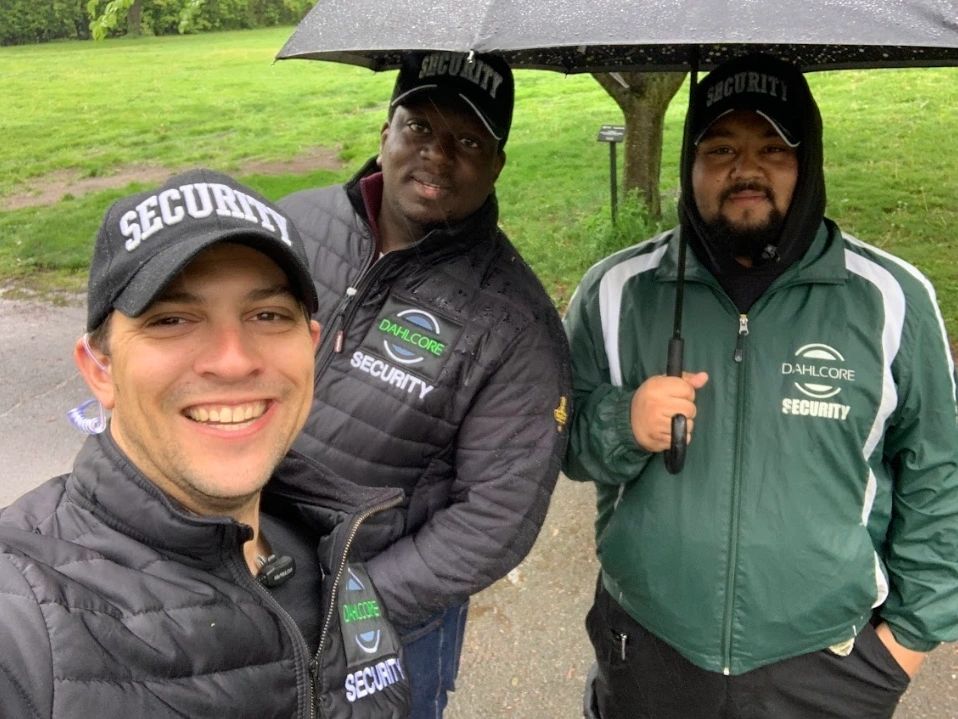
Dahlcore maintains direct communication channels with NYPD precincts and provides detailed incident reports supporting police investigations.
Frequently Asked Questions
What happens if a security guard oversteps their authority?
Guards and their employers face civil lawsuits for false imprisonment, assault, or civil rights violations. Criminal charges may apply for impersonating law enforcement.
Can security guards carry guns?
Only with proper state licensing. Armed security requires additional background checks, firearms training, and employer authorization. Regulations vary significantly by state.
Are security guards considered first responders?
Yes, for incidents occurring on their protected property. They are typically first on scene and must manage emergencies until police, fire, or EMS arrive.
Do security guards have to read Miranda rights?
No. Miranda warnings apply only to custodial interrogations by law enforcement. Security guards cannot conduct legal interrogations.
What should I do if a security guard tries to arrest me?
Remain calm, comply with reasonable detention, and request immediate law enforcement involvement. Document the incident and contact an attorney if you believe your rights were violated.
Can security guards search my belongings?
Only with consent or when a bag search policy is clearly posted, and you choose to enter the property. They cannot conduct forced searches like law enforcement with warrants.
How can I verify a security guard’s legitimacy?
Request their state-issued security license number and employer information. Legitimate guards carry credentials and provide supervisor contact details upon request.
Legal Precedents and Court Cases
Key court decisions establish security guard limitations:
- Miller v. State (1975): Established that private security guards cannot claim the qualified immunity available to police officers
- People v. Zelinski (1979): Ruled security guard searches are subject to Fourth Amendment restrictions when acting as police agents
- Graham v. Connor (1989): While addressing police use of force, this case established objective reasonableness standards that courts apply to security guards
Conclusion
Security guards are essential public safety partners but remain distinct from law enforcement officers. Their authority stems from property rights and citizens’ arrest powers, not governmental mandate. Understanding these legal boundaries protects both security professionals and the public they serve.
For property owners, hiring licensed, well-trained security guards who understand their legal limitations reduces liability while maximizing protection. For security guards, operating within legal boundaries ensures professional credibility and personal protection from civil or criminal liability.
Disclaimer: This information is for educational purposes only and does not constitute legal advice. Consult with a licensed attorney for specific legal situations.
Explore our other blog posts here
Advanced Training Techniques for Maritime Security Personnel
