

A Fire Life Safety Director is an FDNY-certified post, and the requirement for one lives in the current NYC Fire Code. That makes Long Island the one place in our fire-safety coverage where the requirement itself changes at a county line: the buildings that must fill the post are in the five boroughs, while a great many of the owners, developers and management companies responsible for them are in Nassau and Suffolk. Dahlcore Security Guard Services supplies F-89-certified Fire Life Safety Directors and Emergency Action Plan Directors to those city buildings, run from the client’s Long Island office — and, for Long Island buildings whose owners choose to put a trained director on a fire-safety post, the same certified people under the code that governs there. We are a licensed New York security guard agency; the company is veteran-owned, was founded in 2018, and is led by Ian Dahlberg, who brings more than 23 years of security experience. Long Island is served from the Staten Island headquarters and the Manhattan office.
One Owner, Two Fire Codes
The buildings a Long Island owner or manager is responsible for rarely all sit under the same code. Here is how a fire-safety post looks on each side of the line, and where our part of it begins and ends.
Your buildings inside the five boroughs
Whether one of them must have a Fire Life Safety Director turns on its height, its occupancy classification and its certificate of occupancy under the current NYC Fire Code. Where it does, the post is statutory: an F-89 Certificate of Fitness holder who has passed the on-site exam for that building, at the Fire Command Center during the hours the Code requires. That is the post we fill most often for Long Island clients — in Midtown, downtown, and across Brooklyn and Queens — and the paperwork for it comes to your Long Island office, not to a lobby.
Your buildings in Nassau and Suffolk
The F-89 is an FDNY certificate, and it does not reach across the county line. Nassau and Suffolk buildings answer to the New York State Uniform Fire Prevention and Building Code and to their county and town fire marshals, and whether any of them needs a fire-safety post — and what kind — is a question your code official and your own documentation answer, not a web page. Where an owner decides to put a trained, certified director on a Long Island building anyway, we supply the same person, holding the same discipline, under the terms that apply there.
Emergency Action Plan Directors, on either side
Non-fire emergencies — a medical event, a weather shelter-in-place, a threat outside the building — are the Emergency Action Plan Director’s side of the job. In the city the two roles are usually one person; on Long Island the EAP side is often the part an owner actually wants first. We supply directors for both, and the plan says which role is in charge of which kind of event before anything happens.
Impairments and hot work — a different service
When a sprinkler or alarm system is out of service, or a contractor is welding, the requirement that arises is a fire watch, not a director — a different certificate in the city and a different post under the state code. It comes up in every portfolio, and we supply it, but it is its own service: see Fire Watch Guards and Hot Work Watch. A director does not moonlight as one.
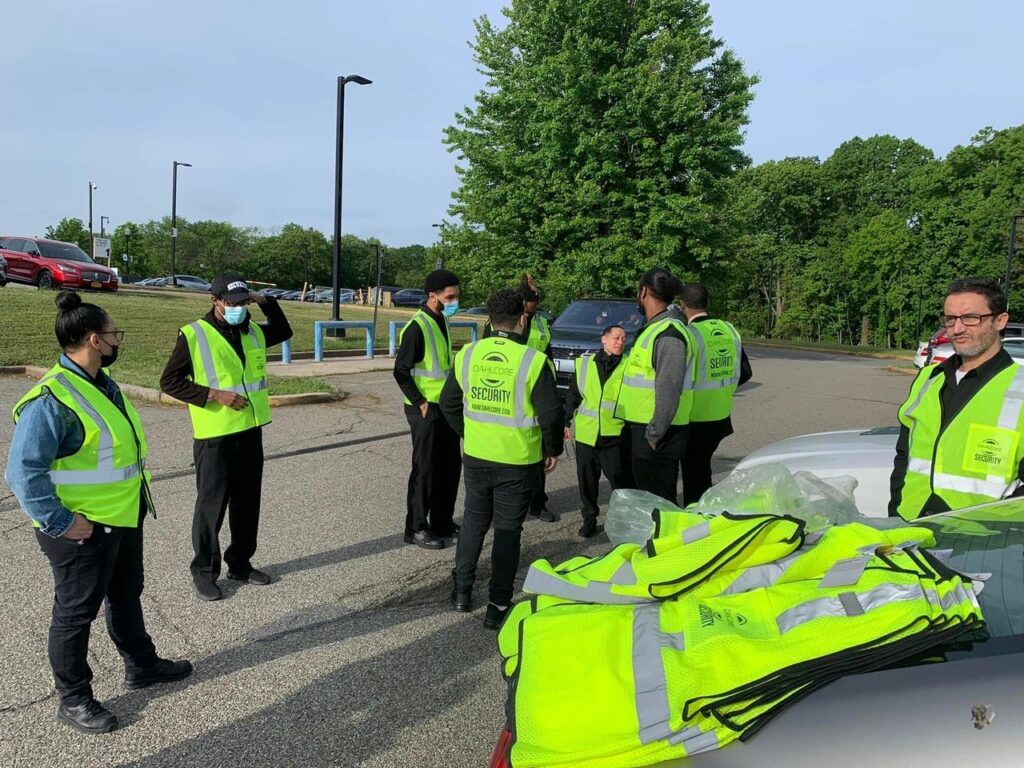
The decision is made in Nassau; the post is in Midtown
Most of our Long Island fire-safety work never involves a Long Island building at all. A management company on the Route 110 corridor, a family ownership in Garden City, a developer in Hauppauge — each responsible for a tower or two in the city that the Fire Code says must have a director on duty during occupied hours. The post is forty miles from the person who is accountable for it. That distance is the whole problem: the director is at a Fire Command Center in Manhattan, the drill log is in a lobby drawer, and the owner finds out how the post is being kept when the FDNY inspection report arrives. We run it the other way round. The records, the drill schedule, the warden roster and the plan revisions come to the owner as they happen, through the reporting portal and a named account manager, and the meetings happen at your office, not ours.
How We Sort the Buildings Before Proposing Anything
A Long Island owner usually brings us a list, not a building. Before a coverage recommendation is written, the list is sorted in this order — because the first step decides everything after it.
Which code governs each building
Every address on the list is placed on one side of the line or the other: inside the five boroughs, where the NYC Fire Code applies and a Fire Life Safety Director may be required; or in Nassau or Suffolk, where the state code and the local fire marshal do. Nothing is proposed for a building until it is clear which set of rules it lives under.
The statutory posts first
For the city buildings, the questions the Fire Code answers: which ones the requirement reaches, the hours the post must be filled, whether the current director holds the F-89 for that specific building, and whether the plan on file describes the building as it stands today. These posts cannot be empty, so they are settled before anything optional is discussed.
The Long Island buildings, by your decision
For the Nassau and Suffolk buildings, the question is what you want, not what the FDNY requires. An owner who wants a written emergency action plan, briefed wardens and a drill they can point to, kept by someone certified to do it, gets a director for that purpose — on the terms your code official sets for the building, which we take from your documentation rather than interpret.
One account manager, one set of records
However the list sorts, it reports as one client. A named account manager who knows every building on it, a single reporting portal login, and records kept in one format across both sides of the line — so the owner in Nassau sees the Midtown drill log the day it is written, and the Long Island building’s plan sits in the same file as the city ones.
Credentials a Long Island Owner Can Check From Their Desk
An owner forty miles from the post has to trust the paperwork more than the handshake. Here is what that paperwork consists of.
The F-89, for the building it names
A Fire Life Safety Director holds the F-89 Certificate of Fitness issued by the FDNY, earned by passing the written exam and then the on-site exam for the specific building — so the certificate is tied to your tower, not carried from post to post. Emergency Action Plan Directors are supplied where the plan calls for one. On the Long Island side, the same training and certificate are what the owner is choosing to put on the post.
A licensed agency, verifiable online
Dahlcore is a licensed New York State security guard agency. Officers are registered under the New York Security Guard Act (General Business Law Article 7-A) with the NY Department of State, Division of Licensing Services, and their training is DCJS-approved. Licensed, insured and bonded, with a certificate of insurance on request naming the owner and its managing agent as required, and public verification of the agency licence at dos.ny.gov — a check that takes an owner two minutes and does not require a visit to the building.
Background-checked, and trained beyond the panel
Every director is background-checked before assignment and certified in CPR, AED and First Aid. They are trained to operate a Fire Command Center and an alarm panel from the FLSD’s post whatever generation of equipment the building runs, and to work with a fire protection contractor without doing that contractor’s job. Directors who move between a client’s city and Long Island buildings are briefed on which code governs the one they are standing in that day.
Records you can read without driving in
Drill logs, warden rosters, plan revisions and incidents are logged as they happen and visible through the reporting portal; attendance at the post is confirmed with GPS and geofenced verification, so the owner knows the Fire Command Center was staffed for the hours the Code requires without asking anyone. A backup and relief bench covers the post through sickness, leave and a resignation, because a statutory post has no acceptable gap.
Where the Long Island building comes in
The Long Island buildings that owners bring to us are not high-rises for the most part. They are office campuses along the corridors of western Nassau and central Suffolk, hospital and medical office buildings, college buildings, and large mixed-use and retail properties — buildings with hundreds of occupants, several tenants, a fire alarm system and, often, no one whose job it is to know what happens after the alarm sounds. What an owner wants there is usually simple to state: a written emergency action plan that describes the building, floor wardens who have been told what it says, a drill that proves it, and records that show all three — kept by someone who holds the FDNY certificate for exactly that discipline. That is a director by the owner’s decision rather than the Fire Code’s, and the plan is written to the code that actually governs the building.
Long Island Fire Life Safety Director FAQ
Answers for owners, developers and management companies based in Nassau and Suffolk. For what an FLSD is, when one is required, the F-89 credential and how coverage is structured, see our main Fire Life Safety Director page.
We are headquartered in Nassau County and our towers are in Manhattan. Who do we actually deal with?
You. The director is at the Fire Command Center in the city, but the account manager, the records and the meetings are yours, at your office on Long Island. We walk the building and the plan with your property manager in the city and put the coverage recommendation in front of the owner in Nassau. The post is in Midtown; the relationship is not.
Does a Long Island office building need a Fire Life Safety Director?
The Fire Life Safety Director requirement lives in the NYC Fire Code, and the F-89 is an FDNY certificate; neither reaches Nassau or Suffolk. What a Long Island building must have is set by the New York State Uniform Fire Prevention and Building Code and your county or town fire marshal, and we will not answer that for your building — your code official and your own documentation do. What we can say is that an owner who wants a certified director on a fire-safety and emergency-action post there can have one, and many do.
Can the same director cover our Manhattan tower and our Nassau office campus?
Usually not as one post, because the Fire Code requires the city post filled for its occupied hours and a director cannot be in two places. What is shared is the discipline, the plan format, the account manager and the reporting portal. The same person can certainly write and keep the Long Island building’s plan and run its drills on days the city post is covered by the bench, and that is often how it is arranged.
Our Long Island building has never had a written emergency plan. Is writing one your job?
Keeping the plan is the director’s job, so yes — a director assigned to the building writes the emergency action plan for it, describing the building as it is, names and briefs the wardens, and runs the drill that tests it. What the plan is written to is the code that governs the building and your fire marshal’s expectations, which we take from your documentation. What the director does not do is inspect or test the systems the plan refers to; that is your fire protection contractor’s work.
We use one fire protection contractor for every building. How does your director work with them?
Side by side and with a clear line between them. The contractor inspects, tests and maintains the alarm, sprinkler and suppression systems; the director operates them from the Fire Command Center, keeps the plan and the records, and knows what the contractor found because it goes in the log. In the city, where the Fire Code requires an impairment to be covered by a fire watch, the director is the one who knows the system is down and who tells you a fire watch is now needed — but supplying that watch is a separate service.
Do you deal with the Nassau or Suffolk fire marshal on our behalf?
No. The relationship with your fire marshal is the owner’s, and so is the responsibility for what the building must have. A director on a Long Island building keeps the plan, the drills and the records that your fire marshal may ask to see, and is present and prepared when they visit — the same way an FLSD stands with a city building at an FDNY inspection. We do not represent you to a code official or interpret what they require.
We have a sprinkler impairment and a hot-work job at one building this month. Is that the director’s job?
It is the director’s job to know about it and to log it; it is not the director’s job to be the watch. An impairment and hot work each raise a fire watch requirement — a different certificate in the city, a different post under the state code — and we supply those through our fire watch and hot work watch services, as separate posts with their own people. Asking the director to cover both leaves the Fire Command Center empty, which is the one thing the Code does not allow.
Is your director based on Long Island, or driving out from Staten Island?
Dahlcore has no Long Island office; the company runs from its Staten Island headquarters and its Manhattan office. Directors are assigned to a building, not to an office, and for a Long Island post we assign one who can reliably hold its hours. For a city post that a Long Island owner is responsible for, the director is where the building is. Consultations and account meetings are held at your office on Long Island, because that is where the person accountable for the post sits.

Where on Long Island the conversation starts
With the owners: the management companies and ownerships of western Nassau, the developers and property groups along the Route 110 corridor and around Hauppauge, and the health systems, colleges and retail owners across both counties whose responsibilities include a building the NYC Fire Code reaches. The first meeting is nearly always about a city post — who holds the F-89 for it, whether the plan describes the building as it now stands, and how the owner will know the post is kept. The Long Island buildings tend to come into the conversation second, once the owner has seen what a properly kept post looks like on paper and asks whether their campus in Suffolk could have the same.
What Clients Say About Dahlcore
Explore real feedback from clients on how Dahlcore handles the relationship from the first consultation onward, and on how the team performs once a post is live.
“Throughout the years, I’ve used several security firms for various reasons. What separates Dahlcore from the rest was the personal attention provided by both the management and security staff. From our initial consultation through “go live” we were impressed.”
“These guys know what they’re doing, they are reliable and go above and beyond to make sure they do what they gotta do no matter what problems come up.”
“Reliable, professional and courteous service. A definite go to for any security needs.”
Bring Us the List of Buildings
Tell us where you are based, which buildings you are responsible for and where each one is, and who holds the fire-safety post in each today. We will sort the list by the code that governs each building, walk the city posts with your property manager, and put a coverage recommendation in front of you at your Long Island office before you commit. Consultations are free.
Direct Contact
212-208-0900Serving Nassau & Suffolk · Dispatch 24/7
Office Hours: 8:00 AM – 8:00 PM · Dispatch available 24/7
Our Offices
1110 South Avenue, Staten Island, NY 10314
250 Park Avenue, New York, NY 10177
Long Island · Manhattan · Brooklyn · Queens · The Bronx · Staten Island