
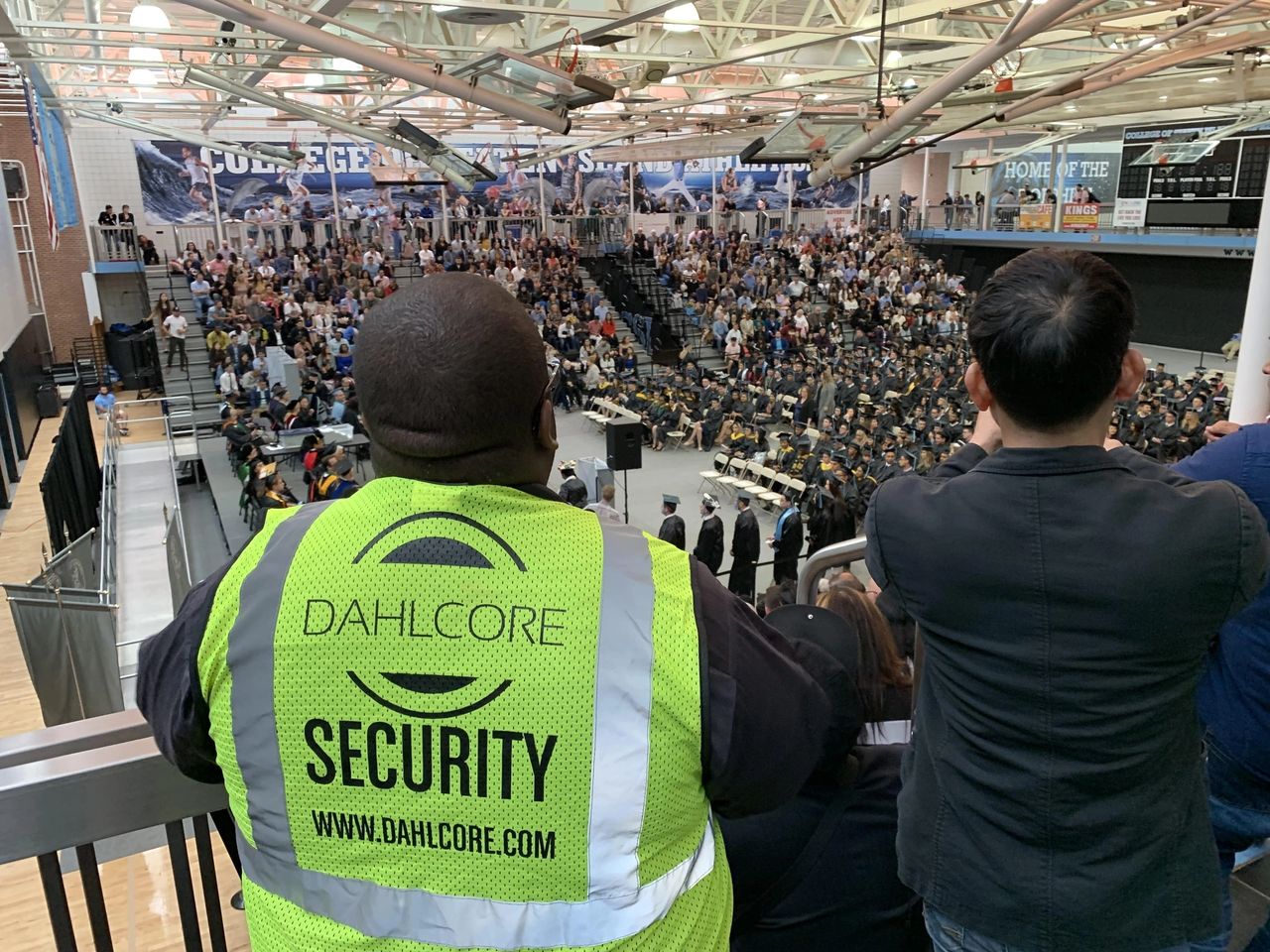
A Midtown tower knows who belongs in it: a landlord’s system, thirty tenants’ HR departments and a printed list that is mostly right. Brooklyn’s buildings often do not. A converted factory in Bushwick let by the studio to sixty makers and their assistants; a coworking floor in Williamsburg whose member list changes every week; a Downtown Brooklyn rental tower whose residents bring guests to a roof deck the building does not staff; a last-mile depot in East New York whose drivers are not employees and were not there yesterday. In those buildings the access list is out of date the day it is printed, and the reader on the door does exactly what it is told by a list that is wrong. Dahlcore Security Guard Services supplies access-control officers for Brooklyn buildings like these — officers who operate whatever system the building already owns, keep the population current with the manager, and decide the cases the system cannot. We install, sell and service no systems. We are a licensed New York security guard agency; the company is veteran-owned, was founded in 2018, and is led by Ian Dahlberg, who brings more than 23 years of security experience. Brooklyn is served from the Staten Island headquarters and the Manhattan office.
Five Things That Make Brooklyn Access Hard to Run
None of them is solved by a better reader. Each is solved by an officer with a current list, a post order and the manager’s number.
Turnover
A coworking floor gains and loses members weekly; a maker building’s studios change hands; a small company on a converted floor hires three people and lets two go in a month and tells nobody at the front desk. The officer’s first job is to keep the population current — a standing arrangement with the building’s manager or the coworking operator to update the list, and an eye for the face the list has never heard of.
After-hours
Makers, studios, small production companies and coworking members in Bushwick, Gowanus and Greenpoint work at eleven at night and on Sundays, and the building’s readers let them in — along with whoever they hold the door for. After-hours is when a Brooklyn building has the fewest people who know who belongs and the most who could be anyone, and it is the shift an access officer changes most.
The shared freight door
One loading door and six tenants — a furniture maker, a coffee roaster, a photo studio, a distillery — each with their own deliveries, contractors and hours, none of them responsible for the door when it is someone else’s truck. The officer at the door checks every crew against the schedule and the building’s certificate-of-insurance list, and is the one person in the building for whom the door is their door.
Amenities and guests
The roof deck, the gym, the lounge, the bike room of a Downtown Brooklyn or DUMBO rental tower: residents bring guests, guests bring friends, and the fob that opened the lobby did not decide who came up to the roof. The officer at the amenity floor works the building’s guest rules and its own guest system, and is the reason a resident’s Saturday does not become the whole block’s.
The subtenant
Brooklyn floors are sublet, desks are shared, a studio is split three ways and the building’s list still shows the original tenant. The officer notices the population the lease does not describe, raises it with the manager rather than acting on it alone, and keeps the desk honest about who is actually in the building — which is what an insurer and a landlord’s counsel will eventually want to know.
The list is wrong. The officer is the list.
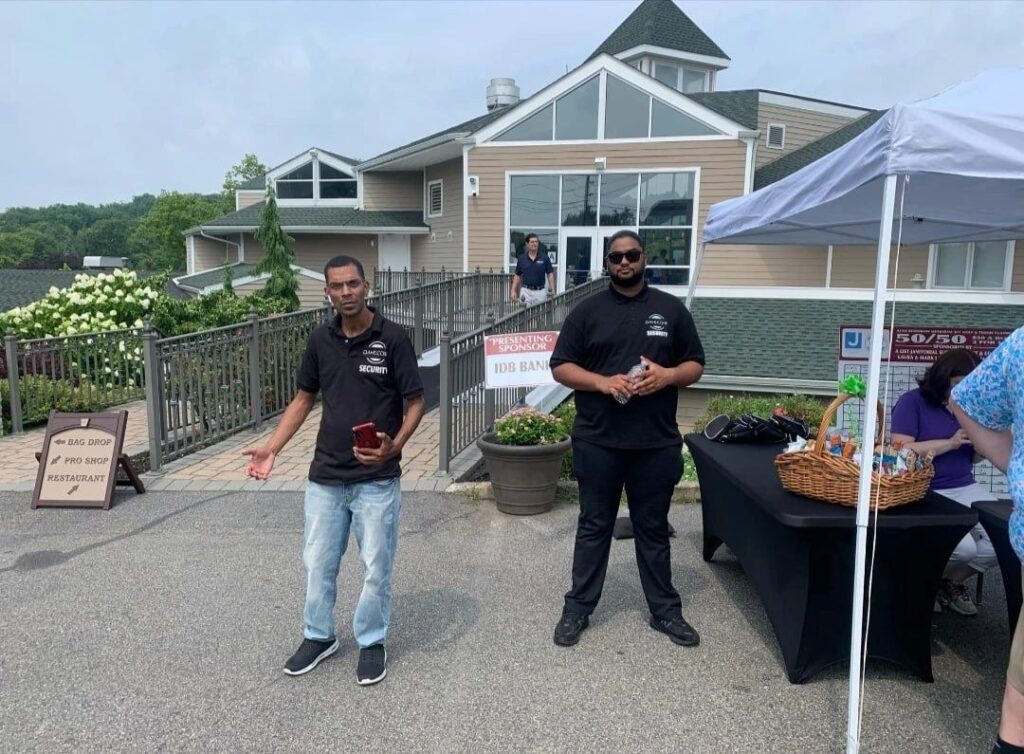
In a building where the population changes weekly, the access list is never right, and a system that faithfully enforces a wrong list is worse than no list at all: it lets in the ex-member whose fob was never cancelled and locks out the new hire whose fob was never issued, and the manager hears about both. A Dahlcore officer on a Brooklyn access post is the list made current. They keep a standing arrangement with the coworking operator, the managing agent or the studio landlord to receive changes as they happen; they know the population by face within a fortnight; they issue the building’s temporary credential against ID for the person the system does not know yet, and they flag the fob that opened the door for someone who left in March. The system does what it is told. The officer decides what it should be told, with the manager, and writes down the cases in between.
Four Brooklyn Buildings That Need an Officer on the Door
Different stock, different systems, and the same underlying problem: the building cannot tell who belongs without someone who knows.
Converted industrial: studios, makers and coworking
The factory floors of Williamsburg, Bushwick, Greenpoint, Gowanus and Sunset Park let by the studio, the suite and the desk to makers, small companies, production crews and coworking operators. Dozens of occupiers, a shared lobby and freight door, work at all hours and a list that changes weekly. The officer keeps the population current with the operator, works the shared door, and is the building’s memory of who is actually in it.
Downtown Brooklyn and DUMBO towers
The office and residential towers of Downtown Brooklyn and the converted warehouses of DUMBO, with turnstiles or fobs, a visitor system, amenity floors and a landlord who expects a Manhattan-standard desk. The officer runs the visitor procedure in the building’s own platform, holds the turnstile line, works the amenity rules for residents’ guests, and coordinates with the building’s doormen where it has them.
Large rental and condo buildings
The new rental and condominium buildings of Downtown Brooklyn, Williamsburg, Greenpoint, Fort Greene and Prospect Heights, with package rooms, roof decks, gyms and a guest policy the board or the manager sets. The officer applies that policy at the lobby and the amenity floor, keeps the package log the building uses, and handles the guest who was never registered with a call to the resident rather than a scene.
Last-mile depots and warehouses
The delivery depots and distribution buildings of East New York, Canarsie and Sunset Park, where hundreds of drivers who are not employees come through a gate on a shift pattern that changes daily, and where the site’s own driver system is only as good as the person checking it. The officer runs the gate — driver against the roster or the app the site uses, vehicle against the bay, ID for the driver the system has never seen — and logs every entry, because a depot’s biggest exposure is the vehicle that left with something it should not have.
The Officer on a Brooklyn Access Post
What a landlord, a coworking operator or a depot manager can ask for before an officer is trusted with the building’s population.
Registered, and trained beyond the State’s hours
Registration with the NY Department of State, Division of Licensing Services, under General Business Law Article 7-A, is the floor: every officer holds it, has completed DCJS-approved training to the State’s 8 / 16 / 8 hours (pre-assignment, on-the-job, annual in-service) and has been through Dahlcore’s own instruction in visitor procedure, de-escalation and the A.L.I.V.E. active-shooter programme on top. The agency itself is a licensed New York State security guard agency, and anyone can confirm that at dos.ny.gov before signing anything.
Checked, and trained on the building’s platform
A thorough background check before any assignment, and training on the building’s own access, visitor or driver system before the first shift, with the post order naming what the officer may do in it. Officers are certified in CPR, AED and First Aid and trained to administer naloxone — the door of a maker building at midnight is a place where that has mattered.
Kept current, and kept honest
The post order sets the arrangement by which the population is kept current — who sends changes, how often, in what form — and field supervisors check on unannounced visits that the list the officer is working from is the list the manager thinks they are. A named account manager owns the post and is the person the operator or the managing agent calls when the building changes.
Insured, recorded and relieved
Dahlcore is licensed, insured and bonded, with a certificate of insurance on request naming the landlord, the operator or the depot’s tenant as their agreement requires. Each decision the officer makes — a pass issued, a crew held at the door, a fob flagged as one that should have died — is logged in the reporting portal for the client to read, with GPS and geofenced verification behind the attendance record. Illness and leave are covered by a backup and relief bench trained on this building and this system, never by a stranger to either.
The after-hours building
Brooklyn’s converted buildings are busiest at the hours a Manhattan office is empty. A woodworker finishing a commission at midnight, a photo studio breaking down a shoot at one, a coworking member with a deadline at three, a distillery’s night shift — all of them legitimately in the building, all of them holding the door for whoever is behind them, and none of them the building’s responsibility for the door. The evening and overnight access post is where an officer earns the arrangement: they know the night population by face because they see the same faces every night; they check the person they do not know against the list and the ID rather than the confidence with which they walked in; they run the freight door for the late delivery and the early one; and they are the person the manager can call at two in the morning who can say who is in the building. The building’s readers were open all night either way. The difference is that someone was reading the door.
Brooklyn Access Control FAQ
Answers about running access in Brooklyn’s shared and multi-occupier buildings. For what guard-managed access control is, working with your existing system and visitor screening in general, see our main Access Control page; for the credential lifecycle in a conventional office building, see Access Control in Manhattan.
We run a coworking floor and our member list changes every week. How does your officer keep up?
By arrangement, not by luck. The post order sets how your community team sends changes — a shared list, an export from your membership platform, a daily message — and the officer works from that, updated as often as you update it. Between updates the officer knows the regulars by face, checks anyone new against the list and their ID, and issues the day pass your floor uses for a guest a member is expecting. A member whose fob still works after they have left is flagged to you the day it is noticed, not at the end of the month.
Our makers work at 2 a.m. and hold the door for each other. What does an officer change?
The door gets read. The people holding it open are not the problem; the person they did not look at is. An overnight officer knows the night population, greets the ones they know, checks the one they do not — courteously, against the list and an ID — and runs the freight door for the late delivery. Your makers keep their hours and their habits; the building stops being open to anyone who walked in behind a woodworker at midnight.
Six tenants share one loading door and nobody owns it. Whose officer is it?
The building’s, and the post order says so. The landlord or the managing agent engages the post, sets the door’s hours and the rule for each tenant’s deliveries and contractors, and keeps the certificate-of-insurance list the officer checks crews against. Each tenant gets the same treatment at the same door, the log shows every truck with the tenant it came for, and the six-way argument about whose delivery blocked the bay has a record to settle it.
Residents keep bringing crowds to our roof deck. Can an officer control that?
Yes, with the guest rule the building already has — the officer enforces the board’s or the manager’s policy, not their own. Typically that means a guest limit per resident, a sign-in at the amenity floor in the building’s own guest system, and the officer turning away the guest of a guest with a call to the resident rather than an argument on the stairs. Where the building has no written guest policy, we say so to the manager, because an officer cannot enforce a rule that was never made.
Our depot’s drivers are gig workers who change every day. How do you control a gate like that?
With the site’s own driver system as the list and the officer as the check. The officer at the gate confirms each driver against the roster or the app the site uses, verifies ID for the driver the system has never seen, matches the vehicle to the bay and the window, and logs every entry and exit. Where the site’s system is down or wrong — and depot systems often are at six in the morning — the officer keeps a manual log and calls the shift lead rather than waving the queue through. The gate’s job is as much the vehicle leaving as the driver arriving.
We found out a tenant sublet half their floor and the building never knew. What should the officer have done?
Exactly what ours are briefed to do: notice, log, and raise it with the manager — not act on it alone. An officer who sees a population the lease does not describe tells the managing agent, who decides what to do about the lease; in the meantime the officer knows who is actually on the floor, which is more than the building knew before. The post order says what the officer does with an unregistered occupier until the manager decides: usually, treat them as a visitor of the tenant, with ID, and keep the record.
I own a brownstone in Park Slope. Can you install a smart lock and a video doorbell?
No — and not because we are too busy. Dahlcore does not install, sell or service locks, doorbells, cameras or any system, for a house or for a tower; that is a locksmith’s or an integrator’s trade. What we provide is officers who operate the systems a building already has, and a single-family home is not a building that needs one. For a private residence what we offer is residential security, which is a different service. We would rather say that plainly than sell you something we do not do.
One of our tenants wants to put their own reader on their floor. Does that change what your officer does?
Only if the building wants it to. A tenant’s own reader is that tenant’s system, installed by their integrator; our officer can operate it — issue the tenant’s visitor pass, check the tenant’s list — if the tenant and the building agree and the post order is amended to say so, and is trained on it like any other platform. What the officer will not do is treat a tenant’s reader as a reason to stop checking the building’s own door. Two systems, one officer, one post order that names both.
Where in Brooklyn the access posts are
The converted industrial buildings of Williamsburg, Bushwick, Greenpoint, Gowanus and Sunset Park; the office and residential towers of Downtown Brooklyn, DUMBO and Brooklyn Heights; the large rental and condominium buildings of Fort Greene, Prospect Heights, Crown Heights and Bed-Stuy; and the depots and warehouses of East New York, Canarsie and the Sunset Park waterfront. Wherever the door is, the officer runs the system the building already owns, keeps the population current with the manager, and the account manager who holds the post order works from the Staten Island headquarters or 250 Park Avenue.
What Clients Say About Dahlcore
Explore real feedback from clients on the company and on the officers it puts on a door.
“Ian and Dahlcore are the best. Professional, courteous and the staff really seem to be passionate and enjoy their job. Highly recommend Dahlcore for security.”
“Great company lead by a great man. Would highly recommend Ian and Dahlcore!”
“One of the best security companies in the NYC area !!!”
Put Someone on the Door Who Knows Who Belongs
Tell us the building, the system it already has, who is in it and how often that changes, and where the door is failing — the fob that still works, the freight door nobody owns, the roof deck on a Saturday. A supervisor walks the building with your manager or operator, the post order is drafted with them, and the recommendation is yours to approve before anyone starts. There is no system in it to buy, because we have none to sell. Consultations are free.
Direct Contact
212-208-0900Serving all of Brooklyn · Dispatch 24/7
Office Hours: 8:00 AM – 8:00 PM · Dispatch available 24/7
Our Offices
1110 South Avenue, Staten Island, NY 10314
250 Park Avenue, New York, NY 10177
Brooklyn · Manhattan · Queens · The Bronx · Staten Island · Long Island