

Manned guarding vs remote guarding in New York is best viewed as a spectrum: for many NYC buildings, a hybrid security model that mixes on‑site guards and remote monitoring delivers stronger protection, better service, and tighter cost control than either method on its own. In a city where every square foot and every minute counts, the smartest move is usually to compare manned guarding, remote guarding, and hybrid security side by side before you decide.
Manned Guarding vs Remote Guarding in New York
Manned guarding vs remote guarding in New York describes two core ways to secure a property: using licensed security officers physically on‑site versus using off‑site operators to monitor your cameras and alarms. In the five boroughs, this choice plays out in busy Midtown office towers, SoHo retail stores, Queens warehouses, and Brooklyn mixed‑use developments.
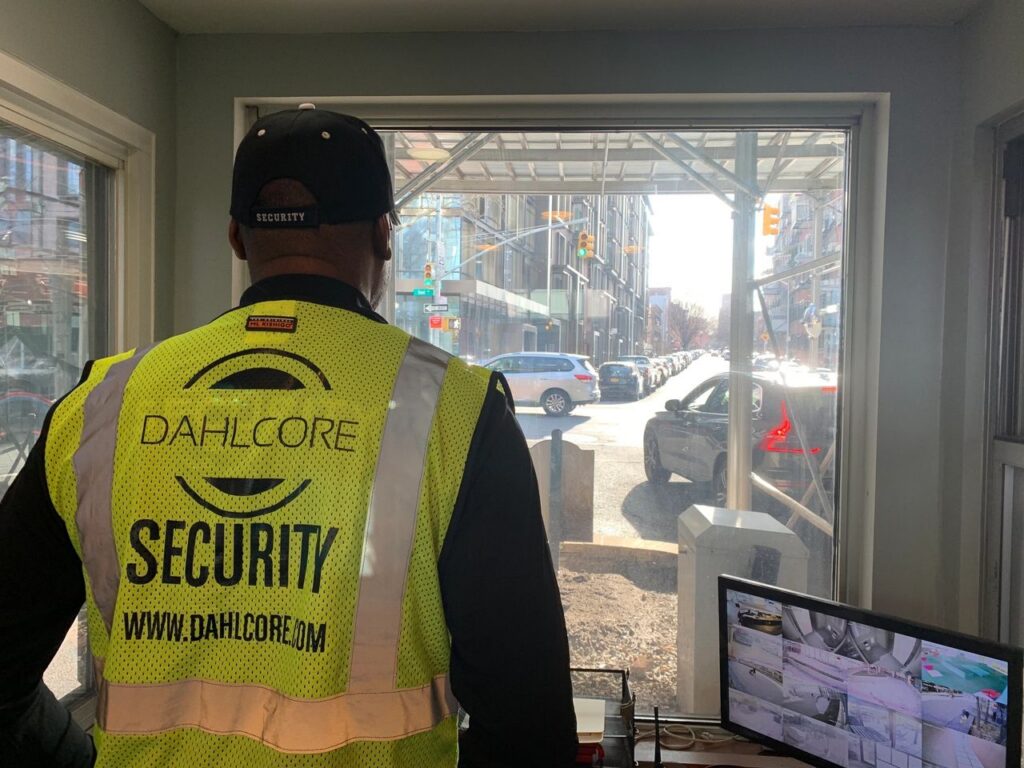
Manned guarding in New York means having trained, licensed guards stationed at your entrances, lobbies, loading docks, concierge desks, or patrol routes. They check IDs, handle visitors, manage deliveries, and respond the moment something happens. Remote guarding, on the other hand, uses high‑definition cameras, analytics, audio talk‑down, and centralized monitoring to provide a “virtual guard” for your building. Instead of a guard watching a single lobby monitor, a remote team can watch multiple sites at once and react instantly to verified issues.
Core Differences for NYC Properties
For New York properties, the difference between manned guarding and remote guarding shows up in three main areas: presence, coverage, and cost.
Manned guarding emphasizes visible, human presence. Tenants entering a Manhattan office or a luxury condo expect a person—someone who can answer questions, calm tense situations, and recognize regular faces. Remote guarding emphasizes coverage and efficiency. It’s well‑suited to watching multiple entrances, parking areas, and rooftops across several buildings in different boroughs, especially when you want 24/7 surveillance without paying for a full team of on‑site guards at every location.
Manned vs Remote Guarding in New York at a Glance
Presence
- Manned guarding in New York: Licensed guards physically on‑site, visible to tenants and visitors in NYC buildings.
- Remote guarding in New York: Off‑site operators monitoring New York properties over cameras, speakers, and alarms.
Coverage
- Manned guarding in New York: Strong in lobbies, entrances, elevators, loading docks, and high‑touch areas.
- Remote guarding in New York: Strong for perimeters, garages, rooftops, alleys, and multi‑site portfolios.
Response
- Manned guarding in New York: Immediate physical intervention by someone already inside the building.
- Remote guarding in New York: Live audio warnings, alarm verification, and fast dispatch of on‑site staff or police.
Cost
- Manned guarding in New York: Higher ongoing labor and overtime costs in the NYC market.
- Remote guarding in New York: Lower per‑site staffing cost; scales across several New York locations.
Tenant experience
- Manned guarding in New York: Concierge‑style interaction and visible reassurance clients can see.
- Remote guarding in New York: More discreet, behind‑the‑scenes protection with less face‑to‑face contact.
Why New York Pushes Toward Hybrid Security
In New York, the real question is less “manned guarding vs remote guarding” and more “how do we combine them in a layered, hybrid security model?”
A hybrid security model blends on‑site guards and remote guarding so each covers what it does best. For example, a Midtown office tower might use manned guarding to run the main lobby, manage tenant access, and oversee the loading dock during business hours. At the same time, remote guarding can watch stairwells, side entrances, rooftops, and parking areas, then take over more of the coverage overnight. This approach lets building owners reduce redundant posts without sacrificing safety or tenant confidence.
When Manned Guarding Wins in New York
There are clear situations where manned guarding is still the strongest option for New York properties.
Class A office buildings, high‑end residential towers, and flagship retail stores in areas like Fifth Avenue or Hudson Yards often rely heavily on uniformed guards as part of their brand identity. In those spaces, guards deliver more than security; they provide a calm, controlled, professional atmosphere and help maintain building standards. High‑risk or highly regulated environments—such as financial institutions, high‑value retail, and critical infrastructure—also tend to favor on-site guards who meet NYC security-guard standards and can coordinate directly with NYPD.
Why Remote Guarding Is Booming Among New York Businesses
Remote guarding has become increasingly attractive to New York businesses as the cost and complexity of security rise.
Around‑the‑clock activity and high wages make staffing every post with guards expensive, especially when you factor in overtime and coverage for absences. Remote guarding helps by centralizing much of the monitoring work in a secure operations center that can watch multiple NYC properties at once. An operator might oversee cameras on a Brooklyn warehouse, a Queens distribution site, and a Manhattan storefront in the same shift, using analytics to highlight real threats instead of background noise. That combination of wide coverage and lower labor cost is a big reason remote guarding continues to grow.
Why a Hybrid Security Model Wins for New York Properties
For many owners, the best answer to the manned guarding vs remote guarding question is a hybrid security model that combines both.
In a hybrid setup, you assign guards to “high‑touch” and “high‑risk” zones where people, reputation, and complex decisions are involved: lobbies, front desks, loading docks, and key internal areas. Remote guarding then covers areas where visibility and early detection matter most—such as stairwells, rooftops, alleys, parking garages, and secondary entrances. When something looks wrong, a remote operator can issue a live audio warning, call the guard on duty, or escalate to emergency services with detailed information.
New York–Specific Factors That Shape Your Choice
New York’s unique environment makes this hybrid thinking even more important.
The city’s density and mixed‑use layouts mean one building might host ground‑floor retail, several floors of offices, and residential units above. Each layer faces different risks and operates on different schedules. As official NYPD crime statistics show, patterns vary significantly by neighborhood, and street-level glass storefronts deal with vandalism and theft; office floors care about access control and visitor management; residences focus on privacy and resident comfort. Add in strict fire and life‑safety regulations, rising insurance expectations, and high foot traffic, and you can see why a flexible mix of manned guarding vs remote guarding is often the best fit.
How a Hybrid Model Works Day-to-Day in NYC
A day‑to‑day example makes hybrid security in New York easier to picture.
Imagine a 20‑story mixed‑use building in Downtown Manhattan with retail on the ground floor, several levels of offices, and apartments above. During the day, manned guards manage the main lobby, oversee visitor access for tenants, and keep an eye on the loading dock. Cameras and remote monitoring quietly cover stairwells, side doors, and the garage. At night, on‑site staffing can be reduced, but remote operators continue to watch live feeds, handle access control alerts, and coordinate with any remaining on‑site staff or mobile patrols. The same model can scale to portfolios with buildings in Manhattan, Brooklyn, Queens, the Bronx, and Staten Island.
FAQs About Manned Guarding vs Remote Guarding in New York
What is the main difference between manned guarding and remote guarding in New York?
Manned guarding in New York uses licensed security officers physically present at your property, while remote guarding relies on off‑site operators who monitor cameras, access control, and alarms to protect your site.
Is manned guarding vs remote guarding more cost‑effective for NYC buildings?
For broad coverage, remote guarding is usually more cost‑effective than staffing multiple guard posts, especially in New York, where labor and overtime costs can climb quickly.
Does a hybrid model improve security compared to just manned guarding vs remote guarding in New York?
Yes. A hybrid model typically improves security by combining the visible presence and judgment of on‑site guards with the wide‑area, 24/7 surveillance capabilities of remote guarding.
When should I choose manned guarding vs remote guarding for my New York business?
Choose manned guarding when you need high‑touch service, complex risk handling, or a strong front‑of‑house presence; choose remote guarding when you want broad, efficient coverage for perimeters, garages, rooftops, or multiple locations.
Is remote guarding reliable enough for New York’s high‑risk environment?
Remote guarding can be very reliable when it uses quality cameras, stable connectivity, and clear procedures, especially when it’s paired with manned guarding for on‑the‑ground response.
Is a hybrid approach future‑proof compared to only manned guarding vs remote guarding in NYC?
A hybrid approach is generally more future‑proof because it can absorb new technologies—like advanced analytics and cloud monitoring—while still depending on experienced guards where human presence matters most.
How to Choose Between Manned Guarding and Remote Guarding in New York
To choose between manned guarding vs remote guarding in New York, start by mapping your building and dividing it into high‑touch, high‑risk, and low‑risk zones. High‑touch spaces like lobbies, concierge desks, and customer‑facing retail areas usually benefit from on‑site guards. Perimeters, stairwells, rooftops, and garages often make more sense for camera‑led, remotely monitored protection.
Then, weigh your budget, operating hours, tenant expectations, and risk tolerance. Many New York owners land on a hybrid model, using manned guarding in the spaces where people and reputation are central, and remote guarding where broad coverage and around‑the‑clock visibility are the priority. As your tenant mix, occupancy, or neighborhood crime trends change, revisit that balance and adjust your security design.
Explore our other blog posts here
Building Security Risk Assessment: Practical Walkthrough + Gaps
Daily Activity Report (DAR) for Security: Patrol Logs and Audits
