


In New York, a roving (roaming) guard is best when you need mobile patrols across larger or multiple sites, while a static guard is better when you must protect specific entrances, lobbies, or high‑risk zones full‑time. The ideal setup for most NYC properties is a hybrid that combines both, tuned to your building type, borough, and risk level.
If you’re managing an office tower in Manhattan, a mixed‑use building in Brooklyn, or a warehouse in Queens, your real question is, “Where do I need security the most – everywhere, or at key chokepoints?” Roving guards deliver moving coverage and fast response, while static guards provide constant control at doors, desks, and gates. Many New York property managers, facility directors, and HOA boards end up with a custom mix to balance risk, tenant expectations, and cost.
What is a Roving (Roaming) Security Guard?
A roving (roaming) security guard in New York is a mobile officer who patrols multiple areas or sites instead of staying at a single post, providing wide‑area visibility, deterrence, and rapid response.
These guards may patrol on foot inside office towers and high‑rise condos or use vehicles in industrial zones, retail strips, and gated communities around NYC and nearby counties. They follow set or semi‑random routes, checking entrances, loading docks, stairwells, garages, rooftops, and perimeter fencing. Their unpredictable presence makes it harder for intruders, vandals, or opportunistic thieves to time their actions.
In practice, one roving guard can cover several buildings in a portfolio, multiple storefronts in the same district, or a large campus‑style property. That’s why mobile patrols are popular with New York property managers who need coverage across several addresses without staffing each one with a full‑time static guard.
Core Duties and Patrol Patterns of a Roving Guard
A roving guard’s core duties in New York focus on patrol, detection, and response. They constantly move through assigned zones, scanning for suspicious behavior, maintenance issues, and safety hazards.
Typical NYC roving guard duties include:
- Patrolling lobbies, corridors, stairwells, rooftops, and parking levels.
- Checking doors, gates, loading docks, and alley access points to verify they’re secured.
- Responding to alarms, tenant complaints, or calls from static posts, then stabilizing the situation until NYPD, FDNY, or EMS arrives.
- Documenting activity through time‑stamped digital reports and photos that building management can review.
Routes can be scheduled, randomized, or a mix, depending on crime patterns, incident history, and building design. In New York’s busier neighborhoods, patrol frequency often increases during evenings and weekends when offices empty out, and street‑level risk rises.
Key Benefits of Mobile Patrol Security for Modern New York Sites
Mobile patrol security brings several advantages to New York properties where space is spread out, and security budgets must work hard. One roving (roaming) guard can cover multiple buildings, storefronts, or outdoor areas, which can be more economical than placing static guards at every single door.
This model is particularly helpful for:
- Office and residential complexes with garages, service corridors, and rooftop spaces.
- Retail corridors and strip centers that need visible checks after hours.
- Industrial parks and warehouse clusters where perimeters and yards need attention.
Because roving guards are always on the move, they tend to pick up issues cameras may miss, like broken lighting, unusual vehicles, or people lingering in stairwells. Their patrol vehicles and uniforms also provide visible deterrence on the street, which matters in dense parts of Manhattan, Brooklyn, Queens, the Bronx, and Staten Island.
What is a Static Security Guard?
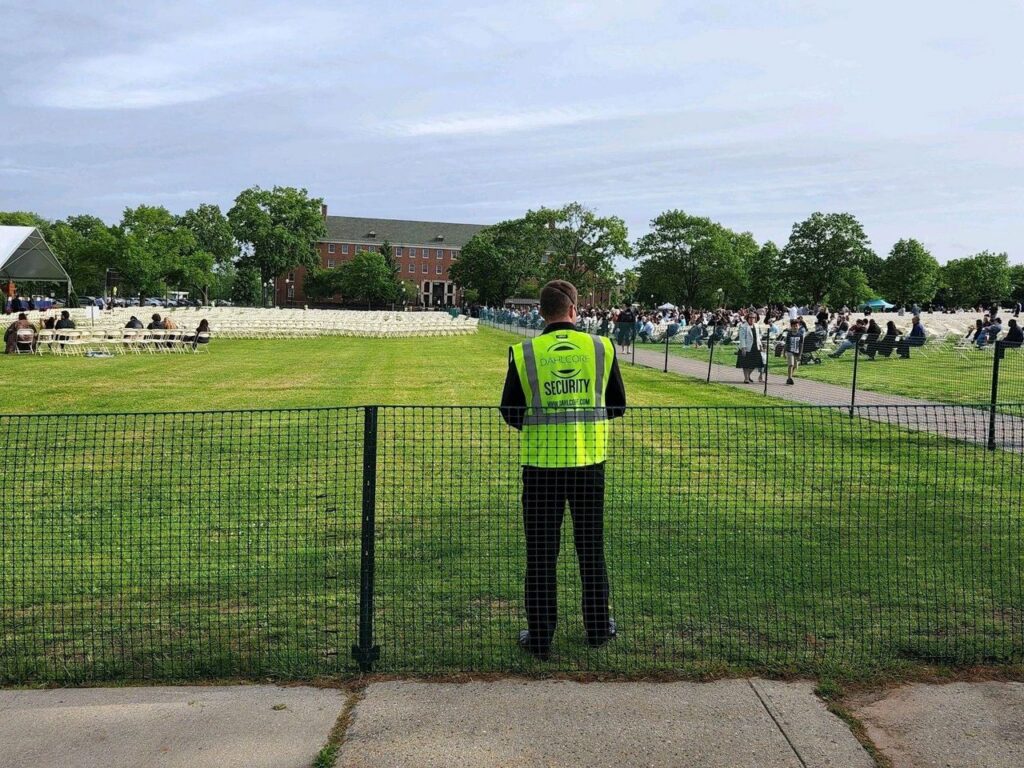
A static security guard in New York is assigned to a fixed post, such as a lobby desk, entrance gate, reception area, or loading dock, where they maintain continuous presence and control over who enters and exits.
Static guards are the familiar faces you see in high‑rise lobbies, condo entrances, and gatehouses across the city. They may take short local walks within their zone, but their main job is to remain at that post, greet people, verify access, and watch for problems. In NYC, they often work closely with building staff and concierges, blending customer service with security.
Because static guards stay in one spot, they quickly learn regular tenants, employees, and vendors. That familiarity makes it easier for them to spot someone who doesn’t belong, a visitor acting strangely, or behavior that doesn’t match the building’s normal rhythm.

Core Duties and Responsibilities of Static On-Site Guards
Static guards in New York carry a tightly focused set of responsibilities tied to their specific posts. They act as the first line of defense at doors and desks where people and vehicles cross into your property.
Their responsibilities often include:
- Checking IDs, badges, QR codes, and visitor passes when people arrive.
- Managing sign‑in and visitor management systems, including issuing and collecting badges.
- Enforce building policies around deliveries, contractor access, and use of elevators or loading bays.
- Monitoring nearby CCTV feeds, door alarms, and intercoms, then escalating issues to management or roving guards.
When something happens at or near their post – a disturbance, a medical emergency, or a fire alarm – static guards respond immediately, coordinate with 911, and help control crowds or traffic in the affected area.
How Static Guards Strengthen Access Control and Compliance
Static guards give New York properties strong access control and compliance at the points where it matters most. Positioned at lobby desks, gatehouses, or loading docks, they enforce the rules that electronic systems alone can’t fully handle.
They confirm that visitors and contractors are expected, ensure that they sign in, and verify they’re going to the correct tenant or department. In sensitive environments like banks, law firms, hospitals, and government offices, static guards help uphold regulatory requirements by making sure only authorized people enter restricted zones.
They also support building operations: monitoring for tailgating at turnstiles, watching for unauthorized filming or photography, and stepping in early if a situation looks like it could escalate. That constant human filter adds a layer of judgment that keycards, turnstiles, and cameras don’t have on their own.
Side‑By‑Side Comparison: Roving Guard vs Static Guard Coverage
Below is a quick comparison tailored to New York properties:
Primary role
- Roving (roaming) guard in New York: Mobile patrols, wide‑area coverage, alarm and incident response across one or more sites
- Static guard in New York: Fixed‑post access control, lobby/front‑desk presence, continuous monitoring at a specific point
Coverage area
- Roving (roaming) guard in New York: Large buildings, campuses, or multiple locations on a route
- Static guard in New York: Single lobby, gate, dock, or sensitive internal zone
Deterrence
- Roving (roaming) guard in New York: Strong in open areas, garages, and outdoor spaces due to visible patrols
- Static guard in New York: Strong at entrances and chokepoints with constant eyes on traffic
Best for
- Roving (roaming) guard in New York: Garages, exterior grounds, industrial yards, multiple small locations, after‑hours
- Static guard in New York: Office lobbies, condo entrances, loading docks, data rooms, cash‑handling areas
Cost profile
- Roving (roaming) guard in New York: Often more cost‑effective for wide or multi‑site coverage than staffing many posts
- Static guard in New York: Higher per‑post cost but critical where any access failure is expensive
In day‑to‑day terms, roving (roaming) guards are ideal when you need frequent checks across a larger footprint, while static guards are essential where you cannot afford to “miss” a single risky person walking through the door.
When a Roving Guard is the Better Fit for Your New York Site
A roving guard is often the better choice when your New York property is large, spread across multiple structures, or consists of several smaller locations. If you manage a cluster of warehouses in Brooklyn or Queens, a group of neighborhood retail units, or a residential complex with multiple towers and garages, you likely need mobile coverage more than a static guard at every entrance.
Roving patrols are also ideal when your building is quiet for long stretches, such as after business hours or on weekends. During these times, you mainly need visible deterrence, checks on doors and gates, and a fast response to alarms or tenant calls. Mobile patrols let you cover all that without paying multiple full‑time static posts.
If you’ve experienced vehicle break‑ins, loitering in stairwells, or vandalism in side alleys, a roving (roaming) guard can be the first upgrade from cameras alone, providing a human presence where trouble tends to start.

Best‑Fit Sites for Mobile Patrols: Large Areas, After‑Hours, and Low Foot Traffic
Mobile patrols work especially well in New York environments where space is wide, but foot traffic is lighter or concentrated in predictable windows. Examples include:
- Logistics yards, warehouse campuses, and industrial parks in outer boroughs and nearby counties.
- Self‑storage facilities, vehicle depots, and large surface lots.
- Vacant or partially occupied buildings await new tenants.
In these settings, roving guards can sweep the perimeter, check loading docks and entrances, and verify that lighting and locks are in good condition. They can also move between properties that are close to each other, allowing one patrol to protect an entire small portfolio of sites.
For gated communities, HOAs, and residential developments around the metro area, mobile patrol officers support static gate guards by circulating through interior streets, amenity spaces, and parking areas, especially at night.
Cost and Efficiency Advantages of Roving Patrols Over Multiple Fixed Posts
From a cost perspective, roving (roaming) guards can be a very efficient way to protect New York properties. Instead of hiring separate static guards for each smaller site or entrance, you can use one mobile patrol to cover several locations, particularly outside peak hours.
This model is attractive for:
- Property managers with multiple smaller apartment buildings or walk‑ups.
- Retail brands with several storefronts in the same neighborhood.
- Office and medical building owners who mainly need security in the evenings and overnight.
Because the same patrol officer visits each site on a route, you get consistent eyes across your portfolio and centralized reporting. This can reduce payroll without sacrificing coverage where it matters, especially when paired with existing CCTV and alarm systems.
When a Static Guard is the Better Fit for Your New York Site
Static guards are the better fit when your highest risk sits at very specific points in your New York property. If you run a Manhattan office tower lobby, a luxury condo entrance, or a busy loading dock, you need someone standing there all the time – not just passing through now and then.
These posts often involve high volumes of people, valuable assets, or strict access rules. In such cases, a roving patrol can support, but it cannot replace, the guard whose sole responsibility is to watch that doorway, verify everyone who enters, and act immediately if something is wrong.
If your insurers, regulators, or corporate policies require strict visitor logging, badge enforcement, or visual verification of IDs, static guards are usually non‑negotiable at certain entry points.
Best‑Fit Sites for Static Coverage: Entrances, Lobbies, and High‑Risk Zones
Static coverage is a natural fit for classic New York scenarios like:
- Midtown and Downtown office lobbies have steady streams of employees, visitors, and couriers.
- Condo and co‑op entrances in Manhattan, Brooklyn, Queens, and the Bronx, where residents expect a consistent front‑desk presence.
- Loading docks and receiving areas where deliveries, freight, and contractors constantly move in and out.
Static guards also protect internal high‑risk zones such as server rooms, cash rooms, and sensitive storage spaces. When these areas are critical to your business, a dedicated guard often works alongside card access, turnstiles, and CCTV, forming a tight security envelope around your most important assets.
The Role of Static Guards in Visitor Screening and Incident Control
In New York buildings, static guards carry much of the load for visitor screening and incident control. They check IDs and appointments, issue visitor badges, and ensure guests follow building rules about where they can go and whom they can see.
When something goes wrong – from a disruptive visitor to a medical emergency or evacuation – the static guard at that post is often the first to react. They can lock down doors, notify building management and 911, and guide people toward exits or safe areas. Their constant presence at that point means there’s no delay waiting for a patrol to arrive from another part of the property.
They also coordinate closely with roving guards, using what they see on CCTV, access logs, and the lobby floor to direct mobile officers to problem spots quickly.
Hybrid Coverage: Combining Roving and Static Guards for Layered Protection in New York
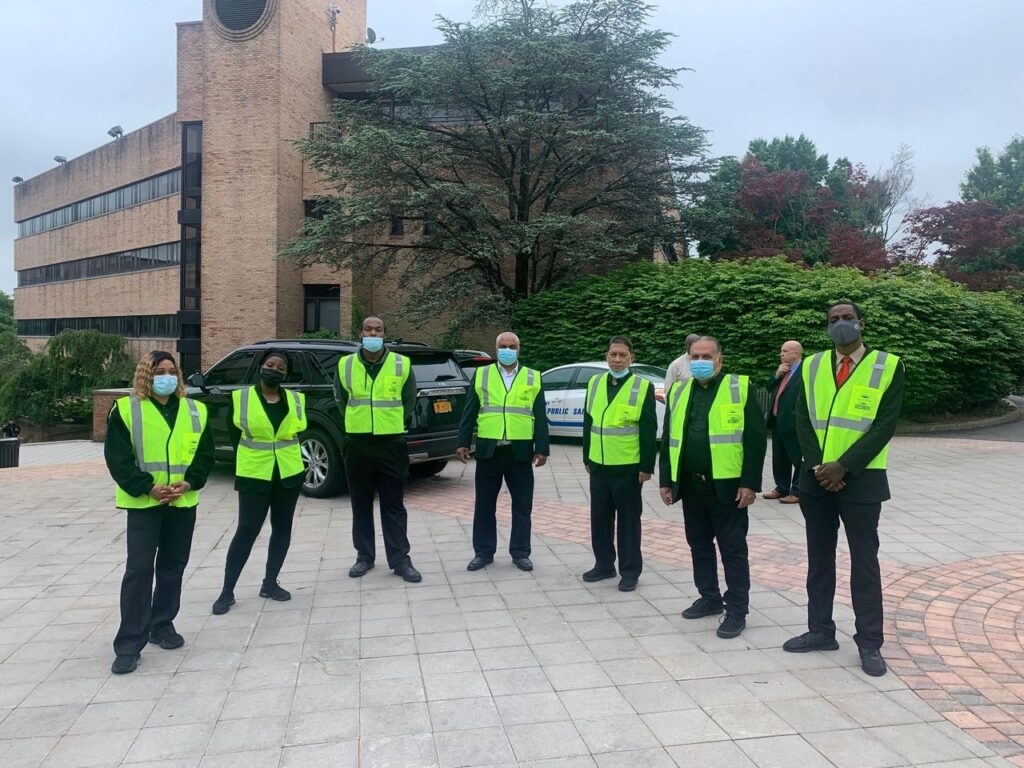
Most New York properties benefit from a hybrid model, rather than choosing only roving (roaming) or only static guards. Static guards concentrate on entrances, lobbies, and critical internal zones, while roving guards extend your reach into garages, back‑of‑house areas, rooftops, and exterior grounds.
This layered design:
- Keeps your most important doors and desks under constant control.
- Extends deterrence and response capability across the rest of your property.
- Let’s you adjust coverage as crime patterns, occupancy, and tenant needs change.
For example, you might keep the lobby fully staffed during weekday business hours, then shift some hours from static to roving in the evenings when fewer people come through the front door, but garages and exterior spaces remain vulnerable.
Sample Hybrid Security Setups for New York Offices, Warehouses, and Construction Sites
Here are some New York‑specific examples of hybrid setups:
- Midtown office tower: Static guards at the main lobby and loading dock, plus a roving guard who patrols upper floors, stairwells, and garages after 6 p.m. and on weekends.
- Outer‑borough warehouse cluster: Static guard at the main gate checking drivers and trucks, supported by a roving patrol vehicle that circulates around perimeters, parking areas, and loading docks overnight.
- Urban construction site: Static guard at the main gate managing workers and delivery access during the day, with roving patrols around fencing, equipment, and storage areas after hours to prevent theft and trespassing.
These combinations use static guards where they’re essential and roving guards where flexible coverage delivers better value.
Integrating Guards with CCTV, Alarms, and Access Control Systems
In New York, the most effective security programs combine guards with cameras, alarms, and access control. Static guards often sit near CCTV monitors and access panels, watching real‑time video and door status while managing visitors at the desk. If they see or receive an alert about something unusual, they can call a roving guard to investigate.
Roving (roaming) guards, in turn, confirm what cameras detect: they go to the scene, check the situation physically, and report back with context. This human‑plus‑technology loop helps you cover more ground without simply adding more static posts everywhere.
When these elements are integrated, you can reduce blind spots, shorten response times, and use your guard hours more strategically.
New York–Specific Considerations: Crime, Building Types, and Regulations
New York properties face a mix of challenges: street‑level theft, vandalism, vehicle crimes in garages, trespassing on rooftops, and internal risks in high‑traffic lobbies. Each borough and neighborhood has its own pattern, influenced by building design, foot traffic, and nearby transit.
Local regulations, union rules, and insurance requirements can all affect how you deploy guards. High‑rise buildings, for example, may need specific evacuation and emergency procedures that guards must be trained on, while certain commercial occupancies have additional fire and life‑safety obligations.
Many owners also coordinate with local NYPD precincts, Business Improvement Districts (BIDs), and neighborhood associations to stay current on area‑specific risks and best practices. All of this should feed into how you balance roving and static coverage.
2026 Trends in Mobile Patrol and Static Guard Services in New York
By 2026, New York security guard services will be increasingly data‑driven. Patrol routes and post assignments are adjusted using patterns from incident logs, tenant feedback, and neighborhood crime data.
Mobile patrols now commonly use GPS‑verified checkpoints and app‑based reporting, giving property owners and managers near real‑time visibility into where guards have been and what they’ve found. Static posts are being upgraded with better visitor management systems and integration into building access control and CCTV platforms.
At the contract level, more clients are asking for flexibility – the ability to shift hours between roving and static roles as tenant mix, occupancy, and risk evolve, rather than being locked into a fixed pattern for years.
Technology Upgrades: GPS Tracking, Digital Reporting, and Real‑Time Alerts
Technology is making it easier to prove and optimize guard coverage in New York. Roving (roaming) guards scan checkpoints using smartphones or tags, creating time‑stamped logs that show exactly when and where they patrolled.
Static guards use digital visitor systems to capture names, photos, and visit details, improving both security and record‑keeping. Many providers also push real‑time alerts to clients when serious incidents are logged, doors are found unsecured, or alarms are verified.
These tools don’t replace guards but help you verify performance, justify spend, and refine where roving versus static coverage has the biggest impact.
Data‑Driven Patrol Planning and Smarter Post Assignments
With months of data from your New York properties, you can start to see which areas generate the most incidents, near misses, and tenant complaints. In spots where issues keep recurring, you might add more roving patrol passes or even upgrade from roving checks to a dedicated static post.
On the flip side, if certain static posts rarely encounter activity, you may be able to reduce hours there and convert some of that budget into roaming coverage that protects multiple low‑risk locations. Over time, this data‑driven refinement helps you build a security program that matches real‑world risk instead of assumptions.

How to Decide: Questions to Find the Right Security Coverage for Your New York Site
When you’re deciding between a roving (roaming) guard and a static guard for your New York property, ask yourself questions like these:
- Which doors, lobbies, or docks are absolutely critical to control every minute of the day?
- How many buildings, entrances, garages, and outdoor areas are there, and where are the blind spots?
- When is your property busiest – weekday mornings, evenings, weekends, or late night?
- What kinds of incidents have you actually seen in the past 12–24 months?
- Where would a single serious incident hurt you most: at the front door, in the garage, or out in the yard?
The answers will point you toward where static coverage is essential and where roving patrols can do the job at a lower cost.
Example Scenarios: Which Security Coverage Fits Your New York Site Best?
Here are a few simple New York scenarios:
- Midtown multi‑tenant office: Building lobby already has static guards. You add roving guards mainly for stairwells, rooftops, and garages during evenings and nights.
- Brooklyn warehouse with yard: A static guard manages the gate, truck entries, and driver verification; a roving guard patrols the perimeter, loading docks, and parking areas after hours.
- Queens residential tower: A static concierge/security guard stays at the main entrance around the clock, while roving guards focus on mailrooms, amenities, and parking areas during higher‑risk times.
Each example uses static guards where a missed entry would be costly, and roving guards where flexible, moving coverage is enough.
How to Implement a Roving or Static Guard Program Step By Step
To put a new program in place or adjust your current one:
- Walk the property with a New York–experienced security provider and map entrances, blind spots, and critical assets.
- Review incident history, tenant feedback, and neighborhood conditions to identify patterns.
- Decide which posts require static guards and where roving patrols can provide coverage.
- Write clear post orders and patrol routes, including schedules and escalation procedures.
- Set up digital tools for visitor logging, patrol verification, and reporting.
- Review data and feedback regularly and adjust the roving (roaming) guard vs static guard balance as needed.
This process keeps your decisions grounded in how your building actually operates, not just what feels safest.
Scoping, SLAs, and KPIs for New York Security Guard Contracts
For New York security contracts, detail matters. Clearly define how many static posts you’ll have, where they’re located, and their exact hours, along with how many mobile patrols you expect per shift and when they should occur.
Include service‑level expectations such as:
- Response time targets for alarms or tenant calls.
- Minimum patrol completion rates and checkpoint compliance.
- Standards for incident reports, including timing and information quality.
With these KPIs in place, you can hold your provider accountable and adjust posts or patrols based on performance and outcomes.
Onboarding, Training, and Ongoing Performance Reviews
Solid onboarding helps guards succeed at your New York property. Before starting, they should receive a site tour, meet key building staff, and review building‑specific rules and emergency procedures. Static guards need extra comfort with front‑of‑house interactions and visitor systems; roving guards must know routes and checkpoints inside out.
Schedule regular performance reviews and joint walkthroughs with your provider to address new risks, recurring issues, or tenant complaints. If your building’s occupancy, tenant mix, or neighborhood conditions change, update post orders and patrol routes quickly so your coverage stays aligned with reality.
FAQs About Roving Guard vs Static Guard Security Coverage in New York
What is the main difference between a roving (roaming) guard and a static guard in New York?
A roving guard patrols multiple areas or sites, while a static guard stays at a fixed post, such as a lobby, gate, or front desk, to control access and monitor that location continuously.
Which is more cost‑effective in New York, a roving (roaming) guard or a static guard?
For wide or multi‑site coverage, a roving guard is usually more cost‑effective because one officer can cover several locations. For critical entrances where a single mistake is costly, a static guard is often the smarter investment.
Are roving guards enough for high‑security New York buildings?
Usually not. High‑security buildings in New York rely on static guards at key access points plus roving patrols, cameras, and access control for layered protection.
When should I choose a static guard instead of a roving guard in New York?
Choose a static guard when you have a busy or high‑risk entrance, lobby, or dock that requires constant ID checks, visitor screening, and immediate response right at that location.
Can I use both roving and static guards on the same New York site?
Yes. Many NYC properties use static guards at lobbies and gates and roving guards in garages, rooftops, and exterior grounds, creating a flexible, layered security program.
How do I know if my current roving (roaming) guard vs static guard mix is working in New York?
Track patrol logs, incident reports, and feedback from tenants or residents. If certain areas experience repeated problems, you may need more patrols there or a dedicated static post; if others stay quiet, you might be able to reduce coverage.
Conclusion: Choosing the Right Mix of Roving and Static Security Guards in New York
For New York properties, the best answer to the roving (roaming) guard vs static guard question depends on your entrances, footprint, and real‑world risk. Roving guards provide flexible, wide‑area coverage at a competitive cost, while static guards secure your most important doors and desks with constant human presence.
The most effective New York security programs blend both, tailoring the mix to building type, borough, tenant expectations, and evolving neighborhood conditions. By revisiting your setup regularly and using data to guide changes, you can keep people safe and protect assets without overspending on the wrong kind of coverage.
Explore our other blog posts here
Burglar Alarm Response in NY: Guard Procedures and False Alarms
Hotel Employee Theft in NY: Prevention Controls & Investigations
Airport/Aviation Security Guard: Duties, Qualifications & Careers
