

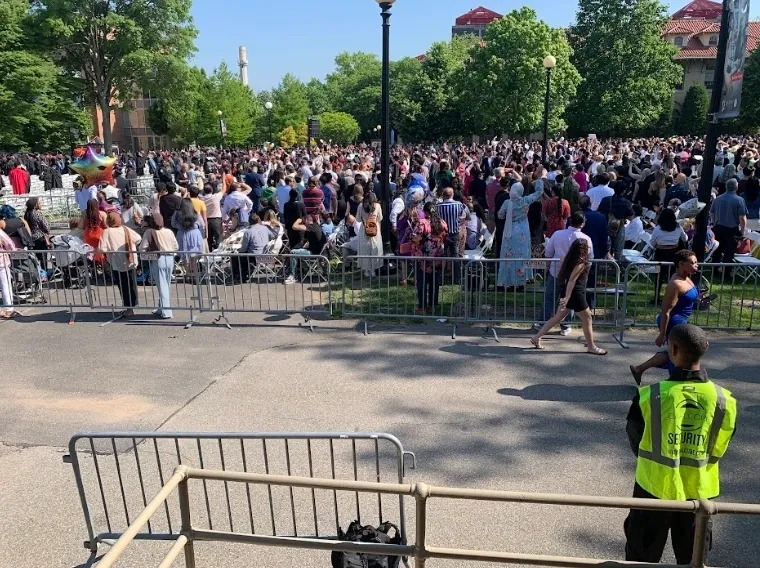
A security officer is a trained protective professional who safeguards people, property, and information by monitoring sites, controlling access, and responding to incidents. A security officer—often called a security guard, protective officer, or protective services officer—acts as a visible deterrent to crime, enforces rules, and provides calm, on‑site support during emergencies.
Key Definition and Takeaways
What is a security officer?
A security officer is a licensed professional responsible for maintaining safety and order at a specific location, such as an office building, hospital, residential property, or event venue. They do this through patrols, surveillance monitoring, access control, incident reporting, and emergency response.
Key takeaways
- Definition: A security officer (or security guard/protective officer) protects people, property, and information at a defined site using a mix of observation, access control, and incident response.
- Primary duties: Patrolling, monitoring CCTV and alarms, checking doors and gates, verifying IDs, writing incident reports, and coordinating with police, fire, or EMS when needed.
- Where they work: Corporate offices, apartment complexes, hospitals, retail stores, construction sites, warehouses, government buildings, and public or private events.
- Why they matter: Their presence deters crime, reduces risk, and provides fast, on‑site response before and alongside law enforcement and emergency services.
What is a Security Officer?
A security officer is a private protective services professional hired to prevent, detect, and respond to safety and security risks on behalf of a client or employer. Employers may use titles such as security guard, patrol officer, loss prevention officer, protective agent, or security supervisor, depending on the setting and level of responsibility.
Security officers combine observation, communication, and physical presence to deter crime, enforce site rules, and support a safe experience for employees, residents, customers, and visitors.
Core Duties of a Security Officer
While every site is different, industry sources consistently highlight a core set of responsibilities for security officers.
Common day-to-day duties include:
- Monitoring entrances, exits, and restricted areas
- Verifying IDs, badges, and visitor credentials
- Patrolling buildings, parking lots, and grounds
- Watching CCTV and alarm systems for suspicious activity
- Responding to alarms and reported disturbances
- Writing incident and daily activity reports
- Assisting visitors, employees, and contractors with directions or escorts
Real-world example from Dahlcore
For example, on a busy afternoon at a downtown office building, a Dahlcore security officer might notice someone attempting to “tailgate” through a controlled door without a badge. The officer calmly stops the person, verifies identity against the visitor log, and prevents unauthorized access to a sensitive floor while keeping the interaction respectful and low-key.
Emergency Response Responsibilities
Security officers are often the first to recognize and respond to on-site emergencies, even before police, fire, or EMS arrive.
Typical emergency responsibilities include:
- Quickly assessing what is happening and notifying the correct responders
- Activating alarms or mass-notification systems
- Guiding occupants through evacuation or shelter-in-place procedures
- Providing basic first aid or CPR within the scope of their training
- Securing the scene to protect people and preserve evidence
- Coordinating with public emergency services and relaying accurate information
A calm, trained security officer can make the difference between a minor disruption and a serious incident by responding decisively and following established emergency plans.
Access Control & Patrols
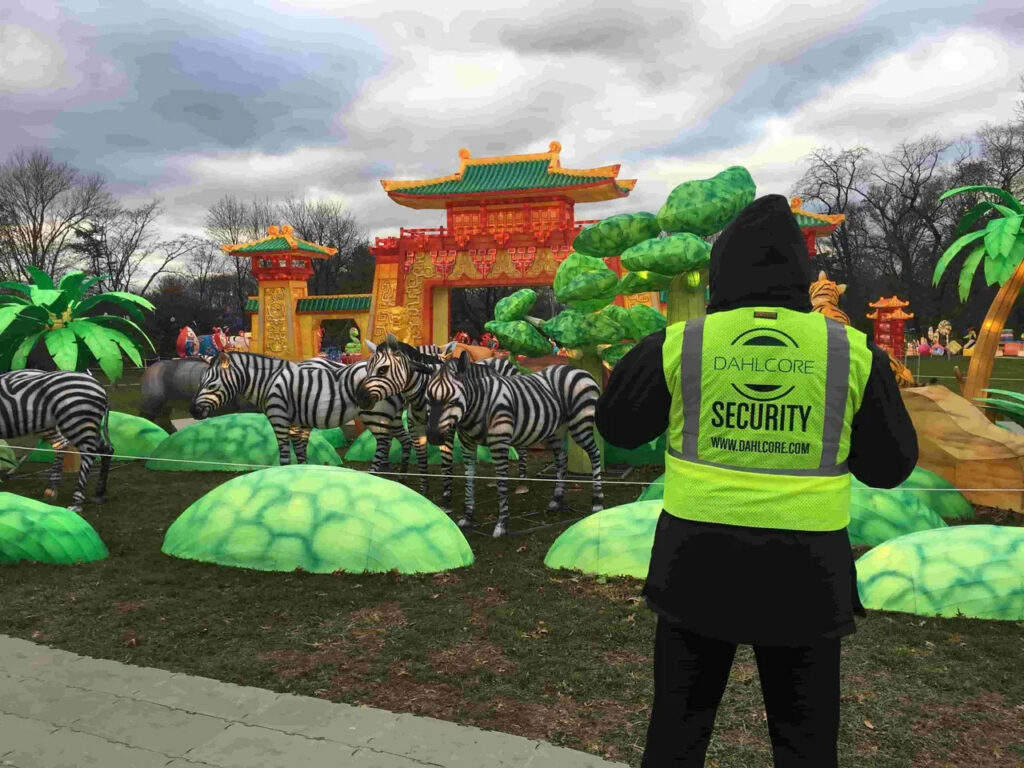
Access control and visible patrols are two of the most important ways security officers reduce risk.
Access control tasks:
- Checking IDs, visitor passes, and delivery paperwork
- Operating keycards, PIN pads, or biometric readers
- Enforcing sign-in/sign-out processes
- Denying entry to unauthorized or banned individuals
- Escalating issues when someone refuses to comply
Patrol and inspection tasks:
- Walking or driving set routes at regular intervals
- Checking doors, windows, gates, and loading docks
- Inspecting fire exits, lighting, and safety equipment
- Looking for hazards like leaks, spills, or damaged equipment
- Documenting observations in a patrol or guard-tour system
By combining strict access control with consistent patrols, officers deter trespassing, theft, vandalism, and workplace disruptions.
Security Officer vs. Security Guard
In many workplaces, “security officer” and “security guard” describe the same protective services role, and employers use them interchangeably in job postings and career guides. However, some organizations use “security officer” for more senior roles that include supervising guards, managing post orders, or overseeing control rooms.
A security officer may:
- Lead or coordinate a team of guards
- Write or update site procedures and post orders
- Liaise with management and law enforcement
- Oversee incident reporting and investigations
When in doubt, always read the job description to understand the responsibilities tied to the specific title.
Types of Security Officers
Security work spans many environments, with titles reflecting the primary focus or setting.
Common types include:
- Corporate or office security officer: Protects office buildings, lobbies, parking structures, and employees.
- Hospital or healthcare security officer: Manages access, patient and visitor safety, and challenging situations in medical settings.
- Retail or loss prevention officer: Focuses on shoplifting, fraud, and inventory shrinkage in stores and shopping centers.
- Event security officer: Handles crowd management, ticket checks, and backstage or VIP access at concerts, sports, and conferences.
- Residential or concierge officer: Watches entrances, garages, and amenities in apartments, condos, and gated communities.
- Mobile patrol officer: Conducts scheduled and random patrols across multiple client locations.
- Executive protection / protective agent: Provides close protection for individuals at higher risk, often with advanced training.
- Specialized or corporate security officer (cyber, data centers, transit): Works in niche environments with additional technical or regulatory requirements.
Required Skills and Traits
Career and industry sources emphasize that effective security officers blend people skills with situational awareness and sound judgment.
Key skills and traits include:
- Vigilance and strong observational skills
- Clear verbal and written communication
- Calm decision-making under pressure
- Conflict de-escalation and customer service mindset
- Integrity, reliability, and respect for confidentiality
- Basic physical fitness and stamina for standing, walking, and occasional physical intervention
- Familiarity with radios, CCTV, access control, and incident-reporting software
Supervisory and senior roles (such as security supervisor or protective services officer) also require leadership, scheduling, documentation review, and coaching skills.
Training & Licensing Requirements
Exact requirements vary by state or country, but most professional security roles follow a similar pattern.
Typical steps include:
- Being at least 18 years old (21+ for some positions)
- Having a high school diploma or equivalent
- Passing a criminal background check and, in some cases, drug screening
- Completing a state-approved security training course (unarmed or armed)
- Obtaining a security guard or officer license, where required
- Maintaining certifications such as first aid/CPR, use-of-force training, or firearms permits for armed roles
In many regions, licenses must be renewed periodically with refresher training to keep skills current and stay compliant with regulations.
Where Security Officers Work
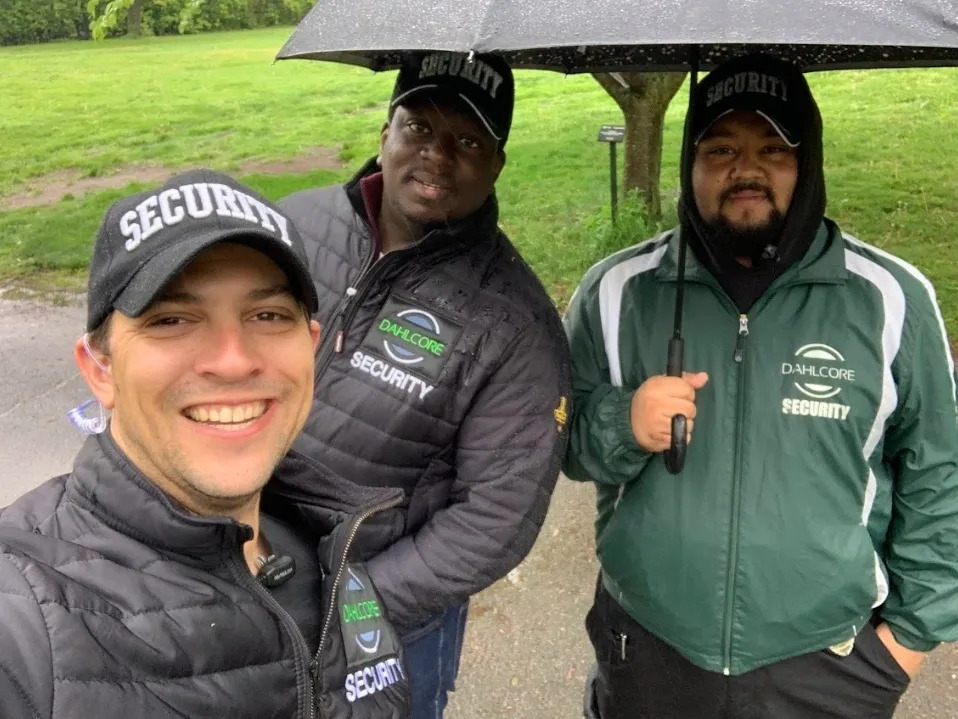
Security officers follow people, assets, and critical operations, so they appear in almost every sector of the economy.
Common workplaces include:
- Office buildings, corporate campuses, and business parks
- Hospitals, clinics, and long-term care facilities
- Retail stores, shopping centers, and malls
- Warehouses, logistics hubs, and manufacturing plants
- Apartment complexes, condominiums, and gated communities
- Airports, transit stations, and transportation yards
- Schools, universities, and training campuses
- Stadiums, arenas, theaters, and event venues
Dahlcore frequently supports clients in environments like hospitals, corporate offices, residential communities, and special events, adapting officer post orders to each site’s risk profile.
Typical Shift Scenarios
Security officers work days, nights, weekends, and holidays, often on 8–12-hour shifts to provide continuous coverage.
Example day shift (corporate office):
- Open lobby, verify systems are functioning
- Check badges at entry gates and handle visitors
- Patrol the parking garage and loading dock
- Respond to access-control alerts and service contractors
- Assist with minor medical incidents or disruptions
Example night shift (warehouse or industrial site):
- Conduct perimeter and interior patrols
- Monitor cameras for trespassing or theft
- Verify trucks and drivers against dispatch lists
- Check doors, gates, and lights before dawn
Example event shift (arena or convention center):
- Manage entry lines and ticket or credential checks.
- Monitor crowds for disorderly behavior.
- Protect restricted and backstage areas.
- Assist in evacuations or medical responses if needed.
Career Path & Pay
Security officer roles offer multiple entry points and paths for advancement.
Typical progression includes:
- Entry-level unarmed security officer or security guard
- Field training officer (mentoring new hires)
- Security supervisor or site lead
- Account manager or security operations manager
- Specialized roles (loss prevention officer, executive protection agent, control room operator, or protective services officer)
Government career profiles show that pay ranges widely by region, sector, and responsibility level, with higher earnings in sectors like government, transportation, and complex industrial or healthcare environments. Experience, specialized training, and supervisory duties usually increase compensation over time.
How Dahlcore Can Help
Dahlcore focuses on professional, reliable security staffing and support tailored to each client’s risk profile and environment. Whether you need a single lobby officer or a full team across multiple sites, Dahlcore can design, staff, and manage a program that aligns with your policies and budget.
Recommended next steps for businesses:
- Review your risk profile and hours of operation
- Identify whether you need unarmed, armed, event, or specialized officers
- Speak with Dahlcore about site assessments, staffing options, and post orders
Related Resources
For readers who want neutral, external references, consider linking to a small set of recognized, non-competing resources:
- U.S. Bureau of Labor Statistics – Security Guards profile
- BLS article on security guard workplaces and hazards
- National Careers Service – Security officer overview (UK)
These sources reinforce that Dahlcore’s definitions and guidance align with widely accepted industry descriptions.
FAQs about security officers
What does a security officer do day to day?
A security officer’s day-to-day work includes monitoring entrances, checking IDs, patrolling the property, watching CCTV, responding to alarms, and writing incident or activity reports. They also assist visitors and employees, helping maintain a safe and orderly environment.
Is a security officer the same as a security guard?
In many companies, “security officer” and “security guard” are interchangeable job titles describing the same protective role. Some organizations reserve “officer” for positions with added supervisory or administrative duties, so always read the description carefully.
What qualifications do you need to be a security officer?
Most entry-level roles require a high school diploma or equivalent, a clean background check, and completion of any state-required security training and licensing. Employers may also ask for first aid/CPR, de-escalation training, or a valid driver’s license.
Do security officers carry weapons?
Some security officers are unarmed and rely on communication, observation, and reporting, while others are authorized to carry batons, pepper spray, or firearms, depending on laws and client needs. Armed roles require additional training, permits, and ongoing proficiency checks.
Where do security officers typically work?
Security officers commonly work in offices, hospitals, warehouses, retail stores, residential buildings, schools, transit hubs, and event venues. These locations rely on officers to protect people, property, and critical operations around the clock.
What skills make a good security officer?
Strong observation, communication, and conflict de-escalation skills are essential, along with integrity, reliability, and calm decision-making under pressure. Many employers also value basic computer literacy and familiarity with CCTV, access control, and reporting tools.
Explore our other blog posts here
The Role of Maritime Security in New Jersey’s Ports
Security Training for Handling Sensitive Maritime Operations
