
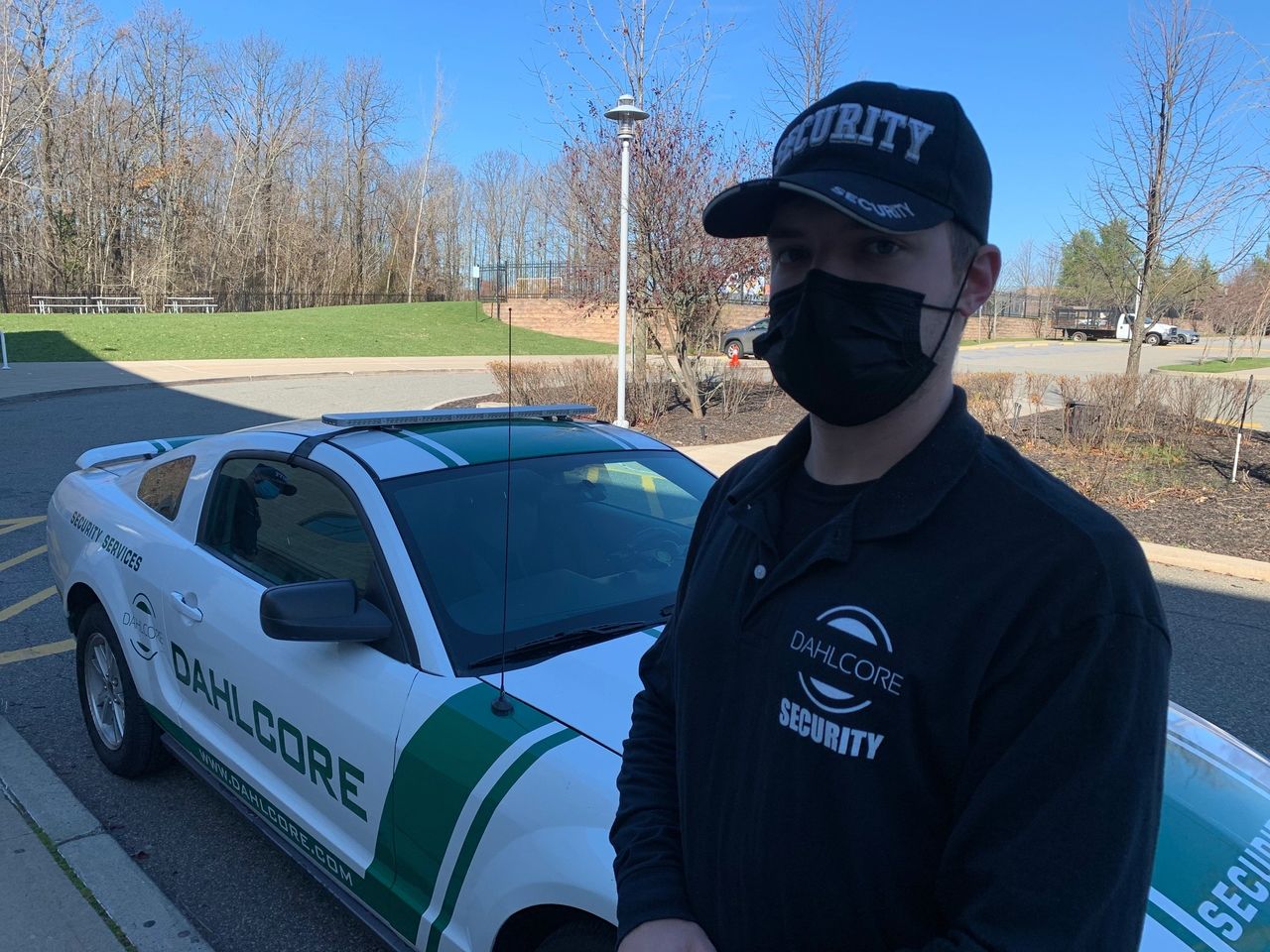
A fire watch does not stop at the city line. When a sprinkler, standpipe or alarm system is out of service in a Nassau office campus or a Suffolk warehouse, or a contractor is welding on a roof in either county, the New York State Uniform Fire Prevention and Building Code and the local fire marshal expect a watch to be kept — just as the NYC Fire Code does in the five boroughs. What changes across the line is who requires it, which certificate is asked for, who arrives when the guard calls 911, and what the record is for. Dahlcore Security Guard Services supplies fire guards for both sides of that line: in the city, F-01 and F-02 FDNY Certificate of Fitness holders as the Fire Code requires; on Long Island, the same guards, holding the same certificates and trained to the same standard, posted under the state code and the terms your county or town fire marshal sets. We are a licensed New York security guard agency; the company is veteran-owned, was founded in 2018, and is led by Ian Dahlberg, who brings more than 23 years of security experience. Long Island is served from the Staten Island headquarters and the Manhattan office. We post the watch, walk the rounds and keep the log. We do not design, install, inspect, test, monitor or maintain any fire system, in either county or anywhere else.
The Same Watch Under a Different Code
The guard walks the same rounds and keeps the same kind of log on either side of the city line. Six things around the guard are different, and a Long Island owner or contractor should know which.
In the five boroughs
- Who requires it: the current NYC Fire Code, enforced by the FDNY
- The certificate: an FDNY Certificate of Fitness is mandatory — F-01 for a system out of service, F-02 for hot work — and the guard carries it on the post
- Who arrives on a 911 call: an FDNY engine and ladder company, career firefighters, from a firehouse the guard is briefed on
- What the record is for: the FDNY, which may ask to see the log during or after the impairment
- Hot work: permitted and supervised under the Fire Code’s hot-work provisions, with the F-02 guard named on the permit
- What we do not interpret: whether the Fire Code requires the watch — the building’s responsible person declares it
In Nassau or Suffolk
- Who requires it: the New York State Uniform Fire Prevention and Building Code, administered by the county fire marshal or the town’s or village’s fire marshal and building department
- The certificate: no FDNY certificate applies off the five boroughs; we send guards who hold the F-01 and F-02 anyway, because it is the standard we train to and the one an owner can verify
- Who arrives on a 911 call: the local volunteer fire department, dispatched through county fire communications — see below for what that changes
- What the record is for: your fire marshal, if they ask, and — very often — the property’s insurer, whose impairment conditions may be the reason the watch exists
- Hot work: the state code and, commonly, the owner’s or contractor’s own hot-work permit programme; the watch runs to that permit
- What we do not interpret: what your code official requires for your building — we take it from your documentation and your fire marshal’s instruction, not from a web page
What the volunteer fire service changes for the guard
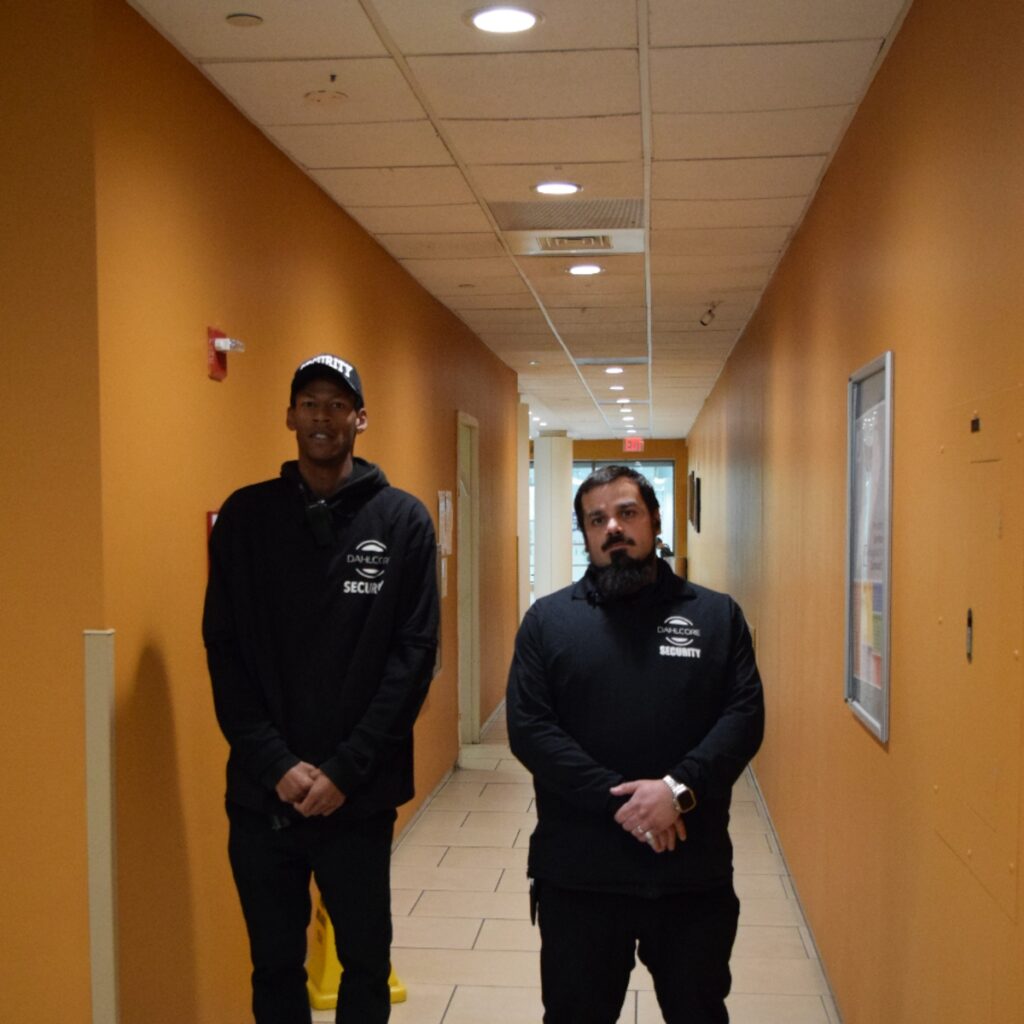
Nassau and Suffolk are protected almost entirely by volunteer fire departments — dozens of independent companies, each covering its own district, dispatched through the county’s fire communications centre and turning out from home or work rather than from a staffed firehouse. It is a capable system, and it is a different one, and a fire guard on a Long Island post is briefed on it. The 911 call goes to county dispatch, not to a borough firehouse; the guard knows which department covers the property and where its apparatus will come from; and the one thing that matters most does not change at all — the guard’s first duties on discovering a fire are to raise the alarm, call 911, and start the evacuation the building’s plan calls for, and then to meet the arriving officer with the log and the location. Where the guard’s rounds are the building’s only working detection while the system is out, that first call is the whole point of the post, and the brief treats it that way.
The Long Island Properties That Book a Watch
Four kinds of property account for most of the fire-watch and hot-work posts we are asked for in Nassau and Suffolk.
Office campuses and corporate parks
The multi-building office campuses of western Nassau and the Route 110 corridor — several buildings on one site, one facilities manager, a sprinkler or alarm programme that moves from building to building, and tenants who are at their desks throughout. The watch works to the campus’s facilities office and its insurer’s impairment conditions, and the log is kept in the format that office already uses.
Warehouses, distribution and light industry
The industrial parks of central Suffolk around Hauppauge and along the Long Island Expressway, and the distribution buildings of the South Shore from Bay Shore to Patchogue — high racking, sprinkler systems designed for what is stored, and standpipe or riser work that puts a large floor plate out of service for weeks. Rounds are zoned from the floor plan so that every part of the floor is passed on the interval, and the log is written for the tenant’s insurer as much as for the fire marshal.
Hospital, college and senior-living campuses
Institutions across both counties with a facilities or safety office of their own. That office owns the declaration and the hours, names the building, and tells us who is in it — patients, students, residents — so the rounds are walked around them. Our guard works under its officer for the duration, keeps the log in the format it already uses, and is HIPAA-aware wherever the post sits next to patients and records.
Retail centres, hotels and mixed-use
The shopping centres and hotel properties of Nassau and Suffolk, where alarm and sprinkler work is scheduled after closing or in the off-season so trading is not disturbed — an overnight post in an empty or nearly empty building, with a store or hotel manager as the responsible person and a regional office reading the log in the morning. Where a Long Island hotel or office chooses to put a certified Fire Life Safety Director on a post, that is a separate conversation, covered on our Long Island FLSD page.
What a Long Island Owner or Contractor Can Verify
Off the five boroughs there is no FDNY to check a fire guard’s certificate for you. These are the four things worth checking yourself, and what the answer is for Dahlcore.
The certificate, even where it is not required
Every fire guard we post on Long Island holds an FDNY Certificate of Fitness — the F-01 for a system out of service, the F-02 for hot work — and carries it on the post. The state code does not ask for it, but it is the standard the guard was trained and examined to, and it gives a facilities manager or a fire marshal something concrete to look at. Where a Long Island owner wants an F-89 Fire Life Safety Director on a post by choice, we supply that too.
A licensed agency, verifiable from your desk
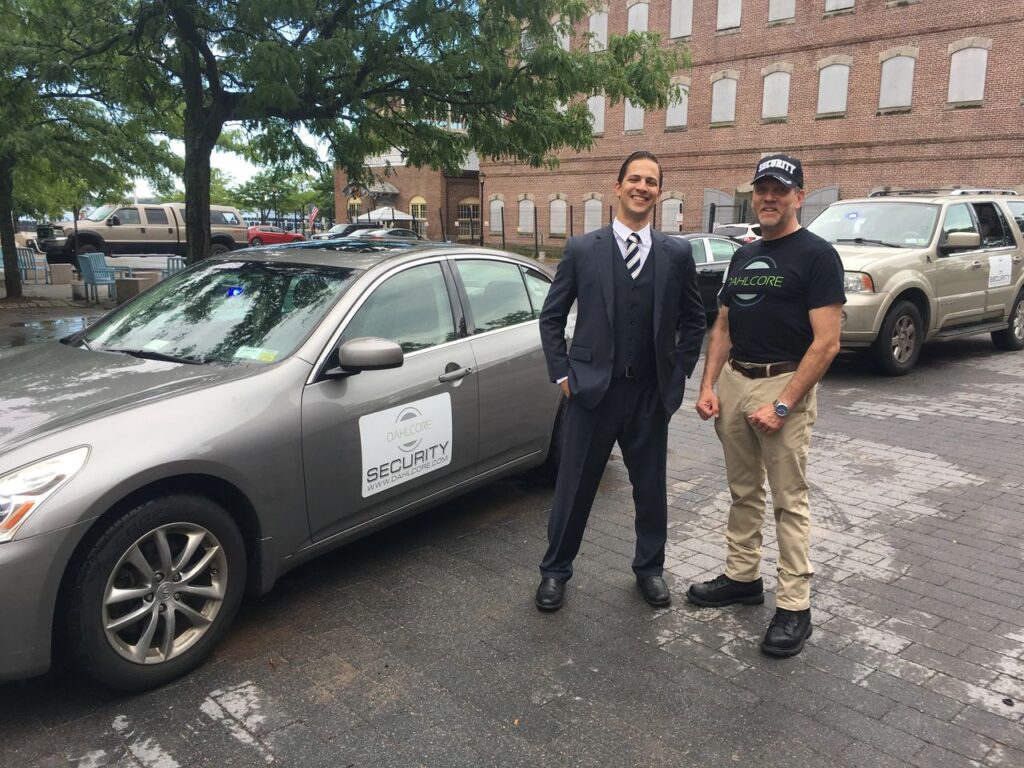
Dahlcore is a licensed New York State security guard agency. Officers are registered under the New York Security Guard Act (General Business Law Article 7-A) with the NY Department of State, Division of Licensing Services, and their training is DCJS-approved. The agency licence can be checked at dos.ny.gov. Licensed, insured and bonded, with a certificate of insurance on request naming the owner, the contractor or the campus as additional insured in the form their agreements specify — which, on Long Island, is usually the first document the insurer asks for.
A guard briefed on the district, not just the building
Guards are background-checked before assignment and hold CPR, AED and First Aid certification. Ahead of a Long Island post the brief covers the declaration, the responsible person and their number, the area and interval, the cooling period for any hot work, the building’s plan — and the fire district the property sits in and how its department is dispatched. Guards know the line between their job and the sprinkler contractor’s, and stay on their side of it.
A log written for whoever will read it
Each round, each permit check and each cooling-period entry goes into the reporting portal as the guard writes it — time, area, what was seen, who saw it — and GPS and geofenced verification confirm the guard was where the log says. On Long Island the reader is as likely to be the insurer’s loss-control representative as the fire marshal, and the log is kept so that either can follow it. A named account manager knows every post we are covering for you, and a backup and relief bench covers illness and a schedule that overruns.
Distance, honestly
Dahlcore has no Long Island office. Dispatch is at the Staten Island headquarters and the account managers work from there and from 250 Park Avenue; the guards who hold Long Island posts are assigned to the building, not to an office, and for a post that runs weeks we assign guards who can reliably hold its hours from where they live. What that means in practice: a planned impairment or a permit known a week ahead is covered with a guard who has walked the building beforehand; an unplanned one — the riser that fails on a Friday in Hauppauge — goes to the bench, and whether a guard can be on the floor tonight or first thing tomorrow is something we say on the phone, once we know what is already posted, rather than promise in print. Dispatch answers around the clock. What we will not do is claim to be around the corner from Riverhead when we are not.
Long Island Fire Protection Security FAQ
Answers for Nassau and Suffolk facilities managers, contractors, owners and campus safety offices. For what fire protection security is, the F-01 and F-02 credentials, what triggers a watch and what the log contains, see our main Fire Protection Security Services page.
Our sprinkler contractor says we need a fire watch while the system is down. Is that a real requirement on Long Island, or a city thing?
It is real on Long Island. The New York State Uniform Fire Prevention and Building Code, which governs Nassau and Suffolk, expects a fire watch when a fire protection system is out of service, and your county or town fire marshal administers it; your insurer’s impairment conditions very often require one as well. What we will not do is tell you the hours, thresholds or interval that apply to your building — that comes from your code official, your contractor’s impairment notice and your insurer, and we post the watch to what they say.
Do your guards need an FDNY certificate for a job in Suffolk County?
No — the F-01 and F-02 are FDNY certificates and apply in the five boroughs. We send guards who hold them anyway, because it is the standard we train to and examine against, and it gives your facilities manager or fire marshal something concrete to check. If your fire marshal or insurer asks for a particular qualification for the watch, tell us and we will confirm before the post rather than after.
Our insurer, not the fire marshal, is the one asking for the watch. Does that change what you do?
It changes who reads the log. An insurer’s impairment conditions usually set the hours and the interval, and its loss-control representative may want to see the record afterwards; we take those conditions as the brief, keep the log in a form they can follow, and give the owner a portal login so the record exists from the first round rather than being reconstructed for a claim. The watch itself — the rounds, the certificate, the 911-first duty — is the same.
We are a general contractor with a hot-work programme of our own. Can your guard work to our permit?
Yes, and on Long Island that is the usual arrangement. Your permit sets the scope, the start and finish, and the fire-watch period after the work; our F-02 guard is at the torch before the first cut, stays through the period your permit sets, and signs the area off with your foreman. We keep our own log of it, referenced to your permit number, and it goes to you and to the property.
Who does your guard call if they find a fire at our Nassau County building?
911, first and immediately, which reaches county fire communications and turns out the volunteer department that covers your district. Then the responsible person you named at the brief. The guard is briefed before the post on which department covers the property and how it is dispatched, meets the arriving officer with the log and the location of the fire, and does not attempt to fight it. That call is the reason the post exists while the building’s own detection is out.
Our campus has several buildings and a sprinkler programme running for most of the year. Is that one watch or many?
One assignment, run building by building. Your facilities office declares each building’s impairment as the programme reaches it; a core roster follows the work with a relief bench briefed on the same campus; one log format runs across every building; and one account manager tracks the contractor’s programme against the watch each week. Buildings clear one at a time as the contractor restores each and your office confirms it.
Can you also write our emergency plan and train our staff while you are here?
No. Writing an emergency plan and training staff as a consulting service is not something we offer, and a fire guard on a watch is not in a position to do it. Where a building has a Fire Life Safety Director post — in the city by requirement, on Long Island by the owner’s choice — keeping the plan and briefing wardens are that director’s duties, and our Long Island FLSD page covers it. A fire watch is a watch.
Do you cover the East End?
Our confirmed coverage is Nassau and Suffolk Counties, from the Staten Island headquarters and the Manhattan office. For a property well out east, distance is the honest constraint — a planned watch can be staffed with a guard who can hold its hours; an unplanned same-day one depends on the bench that day, and we say which on the phone. Ask, with the address and the dates, and you will get a straight answer.
Where on Long Island the watch gets posted
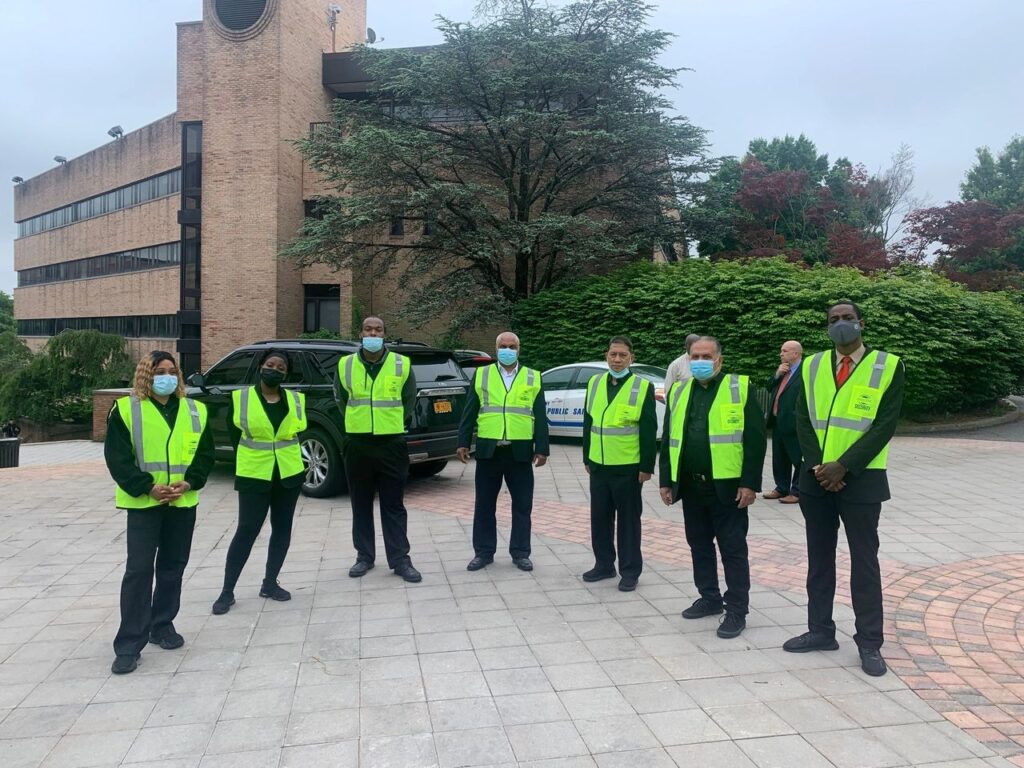
The office campuses of western Nassau and the Route 110 corridor; the industrial parks of central Suffolk around Hauppauge and the distribution buildings of the South Shore from Bay Shore to Patchogue; the hospital, college and senior-living campuses across both counties; and the retail centres and hotels from Garden City and Hempstead to Huntington and Islip. Wherever the property is, the same three things are settled before the first round: what the declaration or the permit says, who the responsible person is, and which fire district the guard is standing in.
What Clients Say About Dahlcore
Explore real feedback from clients on how reliably the team holds a post and how it conducts itself on site.
“Reliable, professional and courteous service. A definite go to for any security needs.”
“These guys know what they’re doing, they are reliable and go above and beyond to make sure they do what they gotta do no matter what problems come up.”
“The security guards with dahlcore are professional and made me and my family feel safe in the large crowd at the lantern festival!”
Post the Watch at Your Long Island Property
Tell us which system is coming out of service or what hot work is planned, the address, the hours, who the responsible person is, and what your fire marshal, your contractor’s impairment notice or your insurer has asked for. We will set the post out in plain terms, agree the brief, and give you a coverage recommendation to approve before anyone starts. If the system has already failed, call dispatch now. Consultations are free.
Direct Contact
212-208-0900Serving Nassau & Suffolk · Dispatch 24/7
Office Hours: 8:00 AM – 8:00 PM · Dispatch available 24/7
Our Offices
1110 South Avenue, Staten Island, NY 10314
250 Park Avenue, New York, NY 10177
Long Island · Manhattan · Brooklyn · Queens · The Bronx · Staten Island