
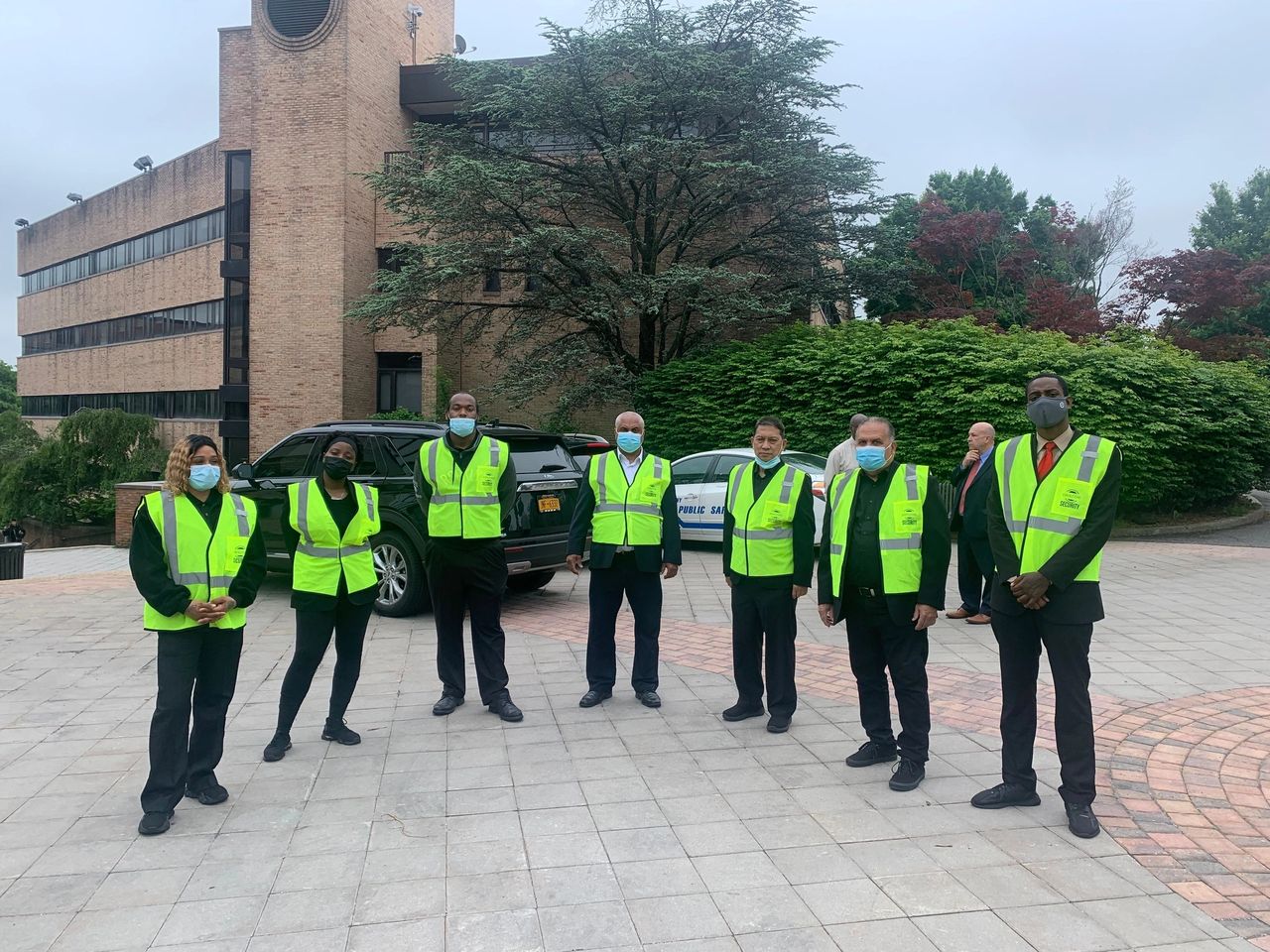
A large share of Bronx events are put on by organisations, not individuals — a hospital foundation’s gala, a college’s open day, a business improvement district’s street festival, a housing body’s community day, a nonprofit’s annual fundraiser. These clients do not need to be told what a security guard is. They have a security department, a procurement office and an emergency plan already, and what they need from event staffing is people who fit inside all three without friction. That is what Dahlcore Security Guard Services supplies: registered security officers and trained event staff who work to your institution’s rules, with the paperwork your finance office will ask for. We are veteran-owned, were founded in 2018, and are led by Ian Dahlberg, who brings more than 23 years of security experience. Bronx events are run from our Staten Island and Manhattan offices with a named account manager on every booking.
Who Books Event Staff in the Bronx
Four kinds of organisation, each with its own security already in place — and each with a different reason for bringing in more.
Hospitals and healthcare foundations
Donor evenings, staff recognition events, community health days and foundation galas, often on or next to a working campus. Officers are HIPAA-aware and briefed on where patients and clinical areas are, and the event team is kept clearly separate from the hospital’s own security so nobody is guessing who owns which door.
Colleges and schools
Open days, orientation, commencement, athletics and evening events with a young crowd and, sometimes, alcohol for the over-21s. We work alongside campus security rather than around them, support the institution’s own documentation and reporting requirements, and stay out of roles that belong to the college’s compliance staff.
Business improvement districts and associations
Street festivals, holiday markets and promotional days that run across a dozen storefronts on a closed block, with a permit held by the BID and a dozen business owners who each think they are in charge. One supervisor who liaises with all of them, and officers who hold the closure points and the emergency lane.
Nonprofits, housing bodies and foundations
Annual fundraisers, resident community days, award evenings and board events where a funder or a board will later ask what was spent and what happened. Staff who are discreet with donors and residents alike, and a written record afterwards that answers the question before it is asked.
You already have security. We are not here to replace it.
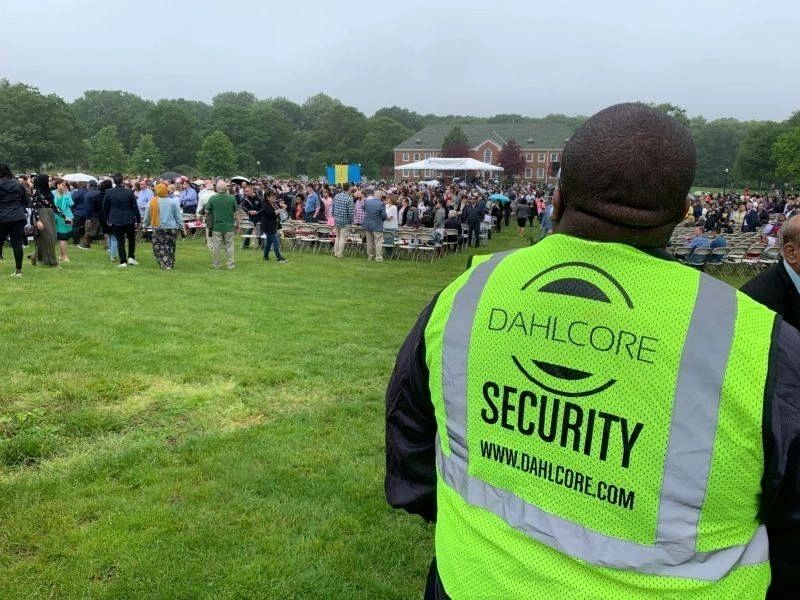
The most common failure at an institutional event is not a gap in coverage — it is two security teams on one site who were never introduced. Your in-house department knows the building, the alarms, the people and the history. Our team knows your event. The split that works is simple and it gets written down before the day: your people keep the building, ours run the event, and the two supervisors are on the same channel with an agreed escalation path. Our supervisor introduces the team to yours on arrival, and nothing that happens at the event goes unreported to the department that will still be there on Monday.
What We Agree With Your In-House Team Before the Day
Six things to settle with your security department, facilities office or events lead at the brief. Each one is a problem on the night if it is left to be discovered there.
1. Where their responsibility ends and ours begins
By door, by floor, by time. The lobby is theirs and the ballroom is ours; the campus is theirs and the marquee is ours; the building is theirs until six and ours from six to midnight. Vague here means two teams both assuming the other had it.
2. Whose emergency plan we follow
Yours. An institution has a fire, evacuation and lockdown plan already and its own people trained on it. Our staff are briefed on that plan and their role inside it, rather than bringing a second plan that contradicts it at the worst moment.
3. The radio channel and the escalation path
Who our supervisor calls, who theirs calls, and at what point an incident becomes the institution’s rather than the event’s. Agreed as names and a sequence, not as a sentiment about working together.
4. Credentialing and access for our own staff
Whether our people need to be badged by your security office, escorted in restricted areas, or listed with your desk in advance. Most institutions require it and most bookings forget it until the morning.
5. What must not be photographed, entered or discussed
Clinical areas, residence halls, donor lists, minors, a chancel — every institution has parts of itself that an event walks past. Staff are told what those are before they arrive.
6. What documentation you need afterwards
A funder, a board, a compliance office or a risk manager will ask what happened and who was where. We ask which of them at the brief, and write the post-event report to answer that reader rather than a generic one.
Why Bronx Institutions Book Dahlcore
The things a procurement office, a risk manager and a security director each check before they will sign off a vendor.
Licensed, insured, and verifiable
Dahlcore is a licensed New York State security guard agency. Officers are registered under the New York Security Guard Act (General Business Law Article 7-A) with the NY Department of State, Division of Licensing Services, and their training is DCJS-approved. Licensed, insured and bonded, with a certificate of insurance on request — with additional-insured wording where your institution requires it — and public verification of the licence at dos.ny.gov, which is what your compliance office will actually check.
Screened to a standard a security director will accept
Every person is background-checked and trained before assignment, meets the New York State training requirements, and officers are certified in CPR, AED and First Aid, with naloxone training where an overdose is suspected. Officers are unarmed by default; armed coverage is available only on documented request following a risk assessment.
Accountable to one name, with cover behind it
Ian Dahlberg owns the company and manages officers personally, in the office and in the field. You get a named account manager, and we hold a backup and relief bench so a no-show is ours to solve — which matters when your event is on a calendar a board approved six months ago.
Documented the way an institution documents
Positions are written into post orders before the day. Attendance and patrols are confirmed with GPS and geofenced verification, you get a reporting portal login, and the written post-event report is addressed to whoever in your organisation will actually read it — a funder, a risk manager, a board.
The paperwork is the first shift
With an individual client the booking starts when they call. With an institution it starts when their finance office opens a vendor file, and nothing happens on the night until that file is complete — a certificate of insurance with the right additional-insured wording, proof of the agency licence, a W-9, sometimes a signed vendor agreement, sometimes a background-check attestation for anyone working near patients or students. We treat that package as the first shift of the booking rather than an obstacle to it, and we would rather send it the week you enquire than the week of the event.
Bronx Event Staffing FAQ
Answers for organisations booking event staff in the Bronx. For roles, ratios and booking lead time, see our main event staffing page.
We already have an in-house security team. Where do your people fit?
Alongside them, with the line drawn before the day. Your department keeps the building and everything it already owns; our team runs the event inside it. The two supervisors are introduced on arrival, share a channel and an agreed escalation path, and anything that happens is reported to your department as well as to you — because they are the ones still on site on Monday.
Our finance office needs vendor onboarding before we can book. What do you provide?
The usual package: a certificate of insurance with the additional-insured wording your institution specifies, proof of the New York State agency licence, a W-9, and a signed vendor agreement where one is required. Send us your requirements sheet at the first call and we complete it then, so the booking is not held up by paperwork in the final week.
The event is on a hospital campus with patients nearby. What changes?
The briefing. Officers are HIPAA-aware and are told where clinical areas, patient routes and ambulance access are so the event never gets in the way of the hospital, and they are briefed to be discreet with anyone who may be a patient or a family member rather than a guest. Coordination with the hospital’s own security is settled in advance, since they hold the building and its alarms.
It is a student event — the crowd is eighteen to twenty-two and there is alcohol for some. How do you handle that?
To your rules, not ours. Officers check ID at the bar or the entry as your policy requires, watch for guests being served past the point they should be, and handle removals quietly. Campus security keeps the wider campus and is on the same channel. We support the institution’s own documentation and reporting where an incident has to be recorded, and stay out of roles that belong to your compliance staff.
Our BID is running a street event across a dozen storefronts. Who coordinates with the businesses?
Our supervisor, so you do not have to. Each business will have its own view of where the barriers should be and when the music should stop; one person from our side liaises with all of them and with your organisers, while officers hold the closure points and keep the emergency lane open along the whole block. The street-closure permit stays with the BID; we staff what it covers.
Our funder requires an incident record and attendance log for the grant report. Can you provide that?
Yes, and tell us at the brief who will read it. Attendance is confirmed with GPS and geofenced verification rather than a sign-in sheet, incidents are logged as they happen, and the post-event report is written for the funder, board or risk manager who will actually use it — which is a different document from a generic summary.
Can your staff work to our institution’s emergency and evacuation plan rather than bringing their own?
That is the only way we do it. An institution’s fire, evacuation and lockdown procedures are already written and its own people are trained on them; a second plan from an outside team is a liability at the worst possible moment. Our staff are briefed on your plan and their role inside it, and follow your security department’s lead when it is invoked.
Our board has to approve vendors. What can we show them?
The things a board actually asks about: that the agency is licensed in New York State and that anyone can verify it at dos.ny.gov; that it is insured and bonded and a certificate of insurance is on file; that officers are registered with the Department of State and DCJS-trained; that the company is veteran-owned and has been operating since 2018; and that a named account manager, not a call centre, is responsible for the booking. All of it is documentation on request rather than a claim on a web page.
Bronx neighbourhoods we staff
Hospital, college and institutional events across Fordham, Belmont, Tremont and the university corridor; Mott Haven, Melrose and the South Bronx business districts; Riverdale and Kingsbridge campuses and community organisations; Hunts Point and Morrisania nonprofits; Pelham, Throggs Neck and Co-op City housing and association events. Different organisations with the same three questions — who owns which door, whose plan we follow, and what the file needs to contain.
What Clients Say About Dahlcore
Explore real feedback from clients who booked Dahlcore across multiple sites and on short notice.
“Extremely pleased with the service Ian and his Dahlcore firm gave us and continues to give us on multiple NYC project locations. Guards are always on time – in fact a little early and Dahlcore works with you as shifts change etc. Speak with Ian and you can tell he cares about his company and his men but most of all the service they give you.”
“I want to thank Ian and his team of professional security staff. I needed assistance in a project I was working on and Ian came through in a pinch. His security officers were attentive and accomplished my goals with zero complaints. Thanks again.”
“Dahlcore security is amazing! They always make you feel safe but handle any situation in a discreet and respectful manner . Definitely recommend!!!”
Staff Your Bronx Event
Tell us the organisation, the venue, the date, and what your security department and finance office each need from a vendor. We will complete your vendor file, walk the site with your in-house team, and put a staffing recommendation in front of you before you commit. Consultations are free, and our team is reachable 24/7 for events already on the calendar.
Direct Contact
212-208-0900Serving all the Bronx · Event dispatch 24/7
Office Hours: 8:00 AM – 8:00 PM · Dispatch available 24/7
Our Offices
1110 South Avenue, Staten Island, NY 10314
250 Park Avenue, New York, NY 10177
The Bronx · Manhattan · Brooklyn · Queens · Staten Island · Long Island