

Last Updated: January 13, 2026
Which Strategy Defuses Potentially Harmful Situations? Hybrid Security Explained
When you face a potentially harmful situation, the most effective strategy for defusing it is a hybrid security model that pairs trained security guards with smart, real-time technology. This approach gives you both human judgment for de-escalation and technology for rapid detection, communication, and documentation, dramatically improving response times and reducing the chance that a tense situation turns violent.
In this guide, you will see how hybrid security works in real-world incidents, why it outperforms traditional guard-only or camera-only setups, and how it helps your team safely defuse conflicts before they escalate. You will also learn step‑by‑step de-escalation protocols, force multiplier techniques, and practical checklists you can use at your properties or job sites.
What Is a Hybrid Security Strategy?
A hybrid security strategy combines on-site guards, remote monitoring operators, and integrated security technology—such as cameras with analytics, access control, and real-time incident software—into one coordinated response system. Instead of relying on a single layer of protection, you get overlapping human and technology layers that work together to spot, assess, and calm down threats quickly.
For defusing potentially harmful situations, that means your guards are never “on an island.” Remote operators can see what’s happening through live video, push clear instructions, summon backup, and document every step, while on-site personnel focus on verbal de-escalation and safe positioning.
Force Multiplication Effect
Hybrid security acts as a force multiplier, allowing a smaller team of guards to safely manage more locations and more complex situations without sacrificing response quality. Real-time GPS tracking, panic alerts, and live camera feeds help supervisors coordinate support within minutes instead of leaving one officer to handle a volatile person alone.
When you pair this technology layer with guards who are certified in verbal de-escalation and nonviolent crisis intervention, you dramatically reduce the need for physical force and improve safety for everyone involved—staff, residents, and the subject in crisis.
De-escalation Advantages of Hybrid Security
Hybrid security models are particularly effective at neutralizing tense situations before they become violent. They support core de-escalation principles—early detection, calm communication, and graduated response—through both tools and trained people.
Key de-escalation advantages include:
- Faster threat recognition: AI-assisted video and incident apps alert your team to aggression, trespassing, or crowding patterns earlier, giving guards more time to defuse the situation with words instead of force.
- Calmer, coordinated response: Remote operators can guide on-site guards with real-time information (“subject is alone, hands visible, no weapon seen”) so officers avoid overreacting and maintain non-threatening body language.
- Reduced violent outcomes: Facilities that combine early warning technology with formal conflict-resolution training have documented meaningful reductions in violent incidents compared to training or technology alone.
Technology–Human Integration
Video Surveillance Protocols
In a hybrid model, your video system shifts from passive recording to proactive intervention. Smart analytics can detect loitering, aggression, or perimeter breaches and immediately alert a remote operator, who then assesses the threat and coaches the on-site guard on the safest approach.
This protocol supports de-escalation by ensuring the first contact is informed and intentional rather than rushed or reactive. When guards walk in already knowing who is involved, where the exits are, and whether weapons are visible, they can focus on calm communication instead of improvising under pressure.
Communication Coordination
Hybrid security relies on clear communication between field guards, remote monitoring, and supervisors. Mobile incident apps, secure radios, and predefined escalation matrices make sure the right people get notified in the right order, minimizing confusion during tense moments.
This real-time coordination allows one guard to focus on active listening and empathy while another handles crowd control, documentation, or emergency services contact, which reduces the risk of miscommunication that can inflame an already unstable situation.
Threat Assessment Frameworks
Your hybrid program should follow a structured threat assessment framework that weighs behavior, environment, and history before escalating force. This aligns with best-practice security standards that emphasize risk assessment, human rights, and proportional response in private security operations.
By documenting each step—from initial behavior cues to resolution—you not only improve your internal protocols but also demonstrate compliance with industry-recognized standards for quality, accountable security operations.
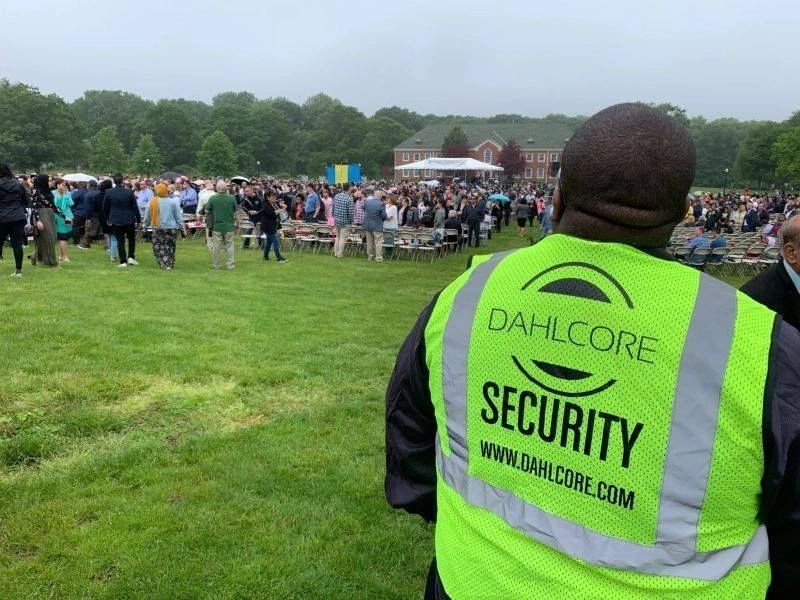
De-escalation Protocols in Hybrid Security Models
Real-Time Threat Neutralization
When a potentially harmful situation emerges, the hybrid response focuses on neutralizing the threat with minimal force and maximum communication. Technology helps identify risk and summon help quickly, while trained guards apply verbal and nonverbal de-escalation skills.
Core real-time neutralization actions include:
- Remote triage: Monitoring staff quickly classify risk level using live video and prior incident data, preventing over- or under-response.
- Guard guidance: Remote operators provide specific instructions (“maintain distance,” “keep hands visible,” “use calm tone”) to keep on-site guards aligned with crisis protocols.
- Escalation control: Supervisors activate law enforcement or medical support only when needed, reducing unnecessary confrontations while still protecting people on-site.
Hybrid vs. Traditional Security for De-escalation
How Hybrid Security Defuses Threats Better
Early threat detection
- Hybrid Security (Guards + Tech): AI analytics and remote monitoring flag aggression or anomalies in real time.
- Traditional Guard-Only / Tech-Only: Guards may notice late; cameras often just record after the fact.
Response time to incidents
- Hybrid Security (Guards + Tech): Coordinated alerts and GPS/location tools speed deployment and backup.
- Traditional Guard-Only / Tech-Only: Individual guards or basic alarms create slower, less organized response.
De-escalation capability
- Hybrid Security (Guards + Tech): Guards trained in nonviolent crisis intervention guided by live intel.
- Traditional Guard-Only / Tech-Only: Either uncoordinated guard effort or tech with no verbal de-escalation.
Use-of-force likelihood
- Hybrid Security (Guards + Tech): Structured de-escalation plan reduces need for physical interventions.
- Traditional Guard-Only / Tech-Only: Higher risk of force when guards work alone or arrive too late.
Documentation & compliance
- Hybrid Security (Guards + Tech): Digital incident logs support audits, training, and legal protection.
- Traditional Guard-Only / Tech-Only: Paper logs or fragmented footage are harder to audit and improve.
In practice, this combination of early warning, structured communication, and de-escalation training makes hybrid security the most reliable strategy for diffusing dangerous situations in workplaces, residential sites, and public venues.
5 Steps to Defuse Threats Using Hybrid Security
When your team faces a potentially harmful situation, this simple five-step hybrid process keeps everyone aligned:
1. Detect and Triage
Remote monitoring receives an alert from video analytics, access control, or a panic button and quickly reviews live feeds to understand what is happening and how severe it is.
2. Inform and Deploy
Operators notify the nearest guard with a concise brief—location, number of people involved, visible risks, and recommended approach—so the responding officer arrives prepared, not surprised.
3. Engage with De-escalation First
The on-site guard uses trained skills such as calm tone, non-threatening posture, active listening, and clear boundaries, following nonviolent crisis intervention principles to calm emotions before considering hands-on measures.
4. Coordinate Support and Containment
If the situation escalates or involves multiple parties, additional guards or supervisors coordinate crowd control, medical checks, and, when necessary, law enforcement response, all while maintaining verbal efforts to lower tension.
5. Document, Review, and Improve
Once resolved, guards and operators complete digital incident reports with time-stamped notes and video clips, supporting internal reviews, liability protection, and continuous improvement of your de-escalation playbook.
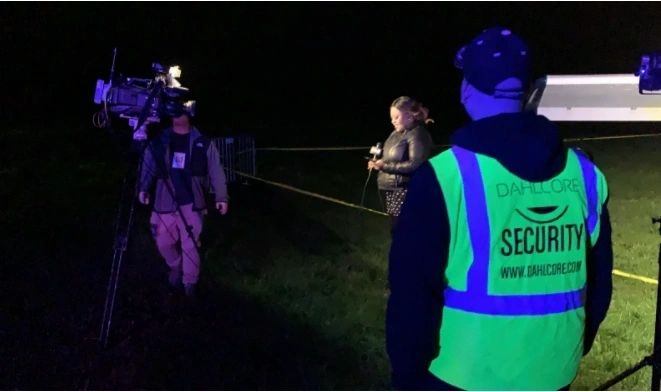
Scenario-Based De-escalation in Hybrid Security
Defusing Intoxicated Individuals
When you have an intoxicated guest or trespasser, a hybrid team can monitor the person on camera, confirm whether they are armed, and direct guards to use distance, clear boundaries, and calm repetition to encourage voluntary compliance. This lowers the risk of sudden surprises and unnecessary physical force.
Remote operators can also track exits and nearby bystanders on video, guiding the on-site guard to safer positions, and call medical or police support if the subject’s condition or behavior deteriorates.
Managing Aggressive Trespassers
For aggressive trespassers at construction sites, warehouses, or retail properties, live video lets remote staff observe behavior before guards make contact. That enables a measured approach—verbal warnings via speaker, controlled guard contact, and, if needed, coordinated backup—rather than a rushed confrontation.
By documenting each step and following a consistent escalation matrix, your team stays aligned with recognized security management standards while proving that every reasonable effort was made to resolve the conflict peacefully.
De-escalating Employee Terminations
During high-risk employee terminations, hybrid setups allow HR and security to quietly monitor entrances, parking lots, and common areas for warning signs while a trained guard remains nearby to intervene if emotions spike. This discreet presence supports safety without escalating the employee’s stress.
If behavior begins to escalate, your guard can use conflict-resolution techniques—such as active listening, empathy, and focused options-giving—while remote monitoring keeps an eye out for other staff, visitors, or potential weapons in the environment.
Human Training and Security Culture
De-escalation Training for Guards
Hybrid systems only reach full potential when your guards receive certified training in crisis prevention and de-escalation. Leading programs teach officers how to recognize early signs of agitation, use nonverbal cues correctly, and apply step-by-step strategies to calm behavior before it turns violent.
These certifications emphasize empathy, respect, and safety, helping security staff resolve more incidents verbally and significantly reducing the need for physical intervention or restraint.
Building a De-escalation Culture
An effective hybrid security program treats de-escalation as part of company culture, not just a policy. That means practicing incident plans, running drills, and making it clear that the goal is always to prevent violence, protect human rights, and maintain dignity for everyone involved.
By aligning guard behavior, technology use, and management expectations around this principle, you turn your security operation into a proactive safety partner instead of a reactive enforcement-only resource.
Overcoming Labor and Operational Challenges
Hybrid security also helps you overcome labor shortages and coverage gaps by using technology as a force multiplier for your existing team. Remote monitoring and automated check-ins let fewer guards oversee more locations without sacrificing safety, especially during off-hours or in remote areas.
Structured training, clear career paths, and modern tools make security roles more attractive and sustainable, improving retention while giving guards the support they need to handle stressful encounters professionally.
Pre‑Incident, During‑Incident, and Post‑Incident Checklists
Pre-Incident Planning Checklist
Before something goes wrong, your hybrid program should ensure:
- Clear de-escalation policies and escalation matrices are documented and accessible to guards and remote operators.
- All cameras, access control points, and panic buttons are mapped to specific response playbooks and contacts.
- Guards receive recurring training refreshers in verbal de-escalation, crisis communication, and situational awareness.
During-Incident Communication Protocol
While an incident is unfolding, your team should:
- Maintain one primary communicator with the subject, while others focus on safety, observation, and documentation.
- Use calm, respectful language, clear instructions, and non-threatening body posture aligned with de-escalation best practices.
- Keep remote and on-site teams synced via radio or incident software so everyone shares the same picture of risk.
Post-Incident Documentation Requirements
After the situation has been defused, your process should include:
- Time-stamped incident reports with behavior descriptions, actions taken, and outcomes, supported by video or photos where available.
- Internal reviews that compare the response to company policy and relevant industry standards, identifying improvements for future events.
- Optional anonymized summaries that feed into training, case studies, and continuous improvement of your hybrid security program.
FAQs: Defusing Potentially Harmful Situations with Hybrid Security
Which security strategy best defuses potentially harmful situations?
The most effective strategy for defusing harmful situations is a hybrid security model that combines trained guards, remote monitoring, and integrated technology for early detection, coordinated communication, and structured de-escalation.
How does remote monitoring help de-escalate threats?
Remote monitoring teams can spot warning signs earlier on camera, provide real-time guidance to guards, and call in backup as needed, allowing on-site officers to focus on calm communication instead of scrambling for information.
What training do hybrid security guards receive for conflict resolution?
Hybrid security guards benefit most from formal crisis prevention and nonviolent intervention programs that teach verbal de-escalation, behavior recognition, and safe, stepwise responses that minimize the need for force.
When should you choose an armed vs. an unarmed response?
Armed response is generally reserved for high-risk scenarios where credible threats of serious violence exist, while unarmed, de-escalation-focused guards are appropriate for most day-to-day conflicts, trespassing, and disorderly behavior. In hybrid setups, technology and remote operators help you match response level to actual risk rather than reacting to fear alone.
How does hybrid security improve response times?
Because alerts, video, GPS, and communications are integrated, hybrid systems reduce the lag between detection, dispatch, and on-scene action, enabling faster, better-informed interventions that stop incidents from escalating.
Check other blogs:
Importance of Security Guards for Residential Communities
20 Reasons To Hire Private Security Guards
How Technology is Transforming Mall Security
The Evolving Landscape of Hospital Security & Patient Protection
