

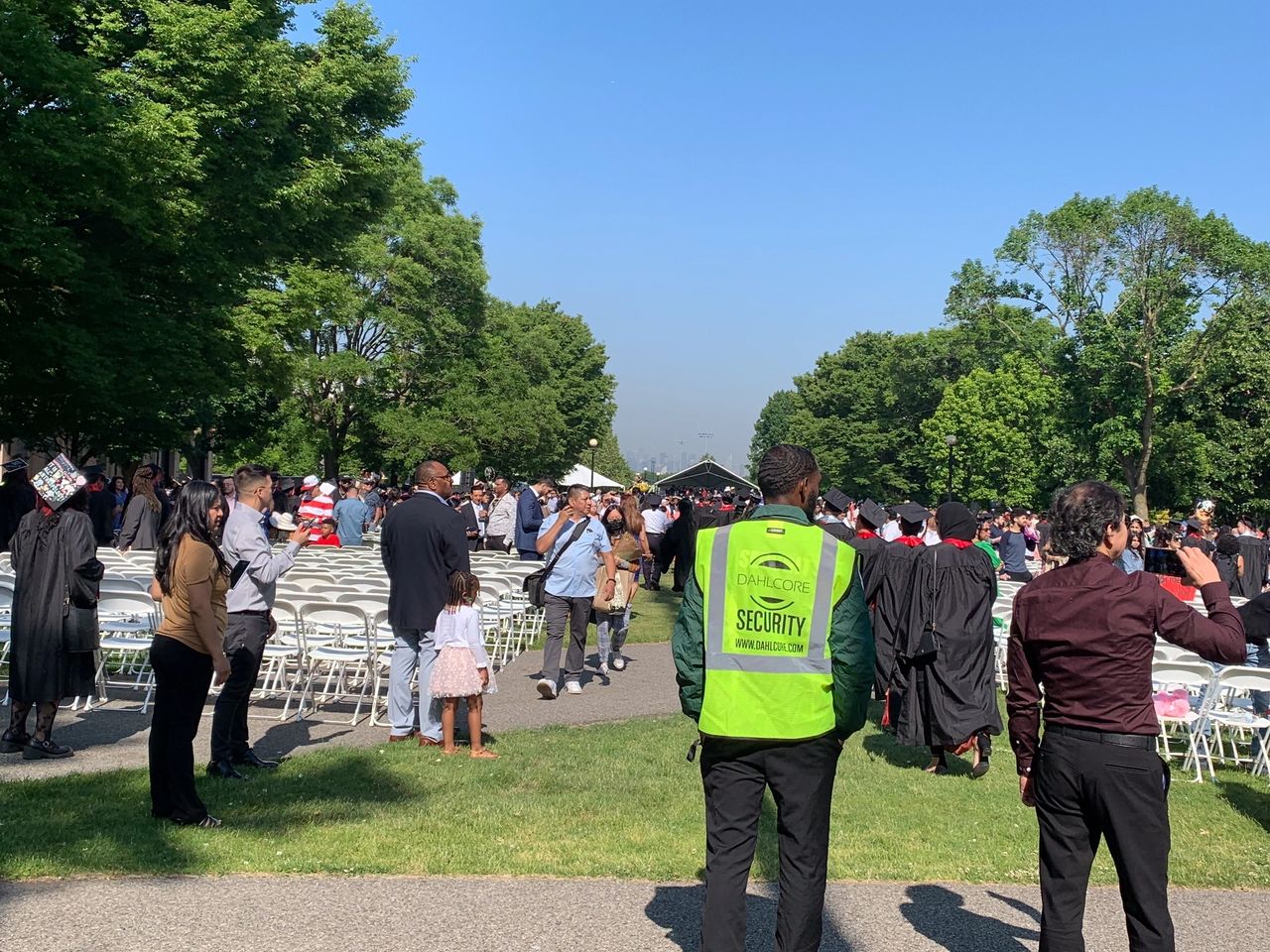
In simple terms, a fire watch is the temporary condition, a fire guard is the certified person doing the watch, and a Fire and Life Safety Director (FLSD) is the senior professional managing fire and emergency plans in larger NYC buildings. A fire watch happens when your fire alarm, sprinkler, or standpipe system is out of service, and trained fire guards must continuously patrol and log conditions until systems are restored. By contrast, an FLSD is required in certain high‑rise offices, hotels, and other occupancies and is responsible for the building’s fire safety plan, drills, and emergency coordination with the FDNY.
What is a Fire Watch in NYC?
A fire watch in NYC is a temporary safety measure ordered or required when your fire protection system is impaired, such as a sprinkler, standpipe, or fire alarm being out of service. During a fire watch, one or more certified fire guards patrol the affected area continuously, looking for signs of smoke, fire, or unsafe conditions and ready to manually alert occupants and call 911 if needed. FDNY fire code requires hourly patrols at a minimum, with each fire guard covering no more than a defined floor area (often capped at about 50,000 square feet unless FDNY tightens it due to layout or risk). The fire watch remains in place until the system is repaired, inspected, and officially returned to service, making it a bridge between normal automated protection and full impairment.
What Does a Fire Guard Do Under FDNY Rules?
In NYC, a fire guard is an individual holding a relevant FDNY Certificate of Fitness—such as F‑01 for general fire guard duties—authorized to conduct fire watch activities. Their main tasks include patrolling assigned areas, checking exits and fire equipment, documenting rounds in a log, and sounding alarms and calling FDNY if they detect smoke or fire. They must stay in the building, remain alert, and cannot perform unrelated duties that distract from monitoring, because the whole point is early detection and immediate response when automated systems aren’t fully reliable. In event or construction settings, specific fire guard COFs (like F‑60 or S‑60) cover hot work and other specialized risks, but the underlying responsibility—continuous fire safety monitoring—stays the same.
What Is a Fire and Life Safety Director in NYC Buildings?
A Fire and Life Safety Director in NYC is a senior safety professional responsible for a building’s fire and emergency preparedness, holding an FDNY F‑89/T‑89 Certificate of Fitness. This role exists mainly in high‑rise office buildings, large hotels, and other occupancies that must have a comprehensive Fire Safety and Emergency Action Plan approved by the FDNY. The FLSD oversees fire safety procedures, coordinates evacuations, manages the fire command center, trains floor wardens, and runs regular fire and emergency drills. Unlike a fire guard, the FLSD is a permanent management role inside the building’s safety structure, not just a temporary presence during system outages or events.
When NYC Law Requires a Fire Watch Service
You’ll need a fire watch whenever a required fire protection system is out of service, unless the FDNY directs you to fully evacuate instead. That typically includes:
- Sprinkler systems are down for repairs or testing
- Standpipe systems are out of service
- Fire alarm systems disabled, offline, or not yet commissioned
FDNY’s fire code section on impairments states that the building must either be evacuated or maintained under fire watch until systems are restored, and fire guards must follow specific patrol and documentation rules. For property managers, that means planning for fire watch coverage anytime scheduled maintenance or unexpected failures put key systems offline, so you don’t end up with a violation or forced closure.
Fire Watch for Impaired Sprinkler or Alarm Systems
When your sprinkler, standpipe, or alarm system is impaired, FDNY expects you to notify them and your insurance carrier, and then establish a compliant fire watch. Fire guards must patrol all affected floors at least once every hour, carry communication means (like radios or phones), and know how to alert occupants and call FDNY quickly. Each guard’s patrol area can’t exceed the size set in code, and the FDNY can further limit it based on the building’s layout, occupancy type, or specific fire risks. This is why many NYC buildings rely on specialized fire watch security companies that already understand these rules and can scale staffing up or down as needed.

Fire Watch for Construction, Renovation, and Hot Work Sites
Construction and renovation work often triggers fire watch requirements, especially where hot work like welding or cutting takes place or when fire systems are temporarily out of service due to modifications. On these sites, fire guards monitor the hot work area during operations and for a period after work stops, watching for smoldering materials or delayed ignition. Vacant or partially occupied buildings under construction can also need a fire watch, since they’re vulnerable to arson, debris fires, or unsafe temporary electrical setups. Developers and general contractors in NYC usually build fire watch costs into project budgets because failing to do so risks stop‑work orders and significant penalties.
Fire Watch for Vacant Properties and High‑Risk Areas
Vacant buildings, especially in dense NYC neighborhoods, present unique fire risks due to trespassing, illegal occupancy, and deteriorated systems, making fire watch a common mitigation tool. FDNY or your insurer may require staffed fire watch coverage until the property is secured, systems are restored, or occupancy changes. High‑risk zones—like storage areas with combustible materials or temporary seasonal displays—can also be assigned extra fire watch during peak risk periods. For owners with multiple borough properties, using one vendor for coordinated fire watch can simplify compliance, reporting, and response planning.
When NYC Requires Certified Fire Guards on Site
Certified fire guards are required in several scenarios, including:
- Fire watch during system impairments in occupied buildings
- Construction or demolition sites, especially with hot work
- Large public events, film shoots, and temporary assembly spaces
FDNY uses Certificates of Fitness to ensure that guards understand equipment, evacuation procedures, and local fire code. Fire guards may be in‑house staff or contracted from security firms, but either way, they must hold the right active COF for the task and follow the FDNY’s patrol and log requirements.
Fire Guards for Events, Film Shoots, and Crowded Venues
For concerts, festivals, film sets, and nightlife venues, NYC often requires one or more fire guards to work alongside nightclub security services to monitor exits, crowd density, special effects, temporary electrical setups and nightclub security services. These guards make sure exit routes stay clear, occupancy limits aren’t exceeded, and high‑risk equipment is used safely during the event. Event organizers typically coordinate with the FDNY and their venue to determine the number of guards and their exact posts, especially in Manhattan, Brooklyn, and Queens, where crowding can be intense, and understanding how fast you can deploy fire guards in NYC is critical for permitting and last‑minute changes. Skipping required fire guards can delay permits or lead to shutdowns mid‑event, which is why experienced production companies plan fire safety early.
FDNY Certificates of Fitness (F‑01, F‑60, S‑60) Overview
NYC’s Certificate of Fitness system covers various fire safety roles, including fire guards for general premises, construction, and hot work. The F‑01 is commonly used for fire guards in non‑fire‑alarm buildings or where general fire watch is required, while F‑60 and S‑60 are tied more to construction and torch/hot work oversight. Each certificate requires an exam, an application fee, and, in some cases, employer or worksite documentation, ensuring guards know emergency procedures and relevant code sections. Property managers should always verify a guard’s COF number and expiration date before allowing them to operate on site.
Staffing, Patrol Frequency, and Reporting Duties for Fire Guards
FDNY requires that fire guards maintain continuous coverage, which usually means 24/7 shifts when the building is occupied and systems are offline. Guards must patrol each affected floor at least once per hour and document the time, name, and conditions in a logbook or digital system available for inspection. They also ensure fire doors are closed, exits are unblocked, and fire extinguishers and other equipment remain accessible and in working order. When they see a problem, guards either correct it on the spot or escalate it to management and, in emergencies, directly to FDNY.
NYC Building Types That Must Have an FLSD (F‑89)
FDNY requires a Fire and Life Safety Director in specific occupancies, including many high‑rise office buildings, hotels, and buildings with special fire alarm systems. Typical triggers include:
- Office buildings over a specified height (often 100 feet or more)
- Hotels or buildings with occupancy over 100 people
- Buildings that must maintain a Comprehensive Fire Safety and Emergency Action Plan
If your property falls into these categories, you must have an FLSD present during business hours and for certain special events, or you risk violations and enforcement actions.

Daily Responsibilities of a Fire Safety Director in High‑Rise Buildings
An FLSD’s day‑to‑day work centers on keeping the building’s emergency plan live, not just on paper. They monitor fire alarm and communication systems, coordinate with security and engineering teams, and supervise floor wardens and other fire safety staff. They also organize and lead fire drills, train occupants on evacuation or in‑place strategies, and maintain documentation required for FDNY inspections. In an actual emergency, the FLSD becomes the on‑site coordinator, communicating with FDNY from the fire command center and directing building responses.
FLSD Qualifications, Training, and FDNY Compliance
To become an FLSD, candidates must meet experience requirements in fire safety, building maintenance, property management, or related fields, then pass written and on‑site FDNY exams. Experience can come from roles like firefighter, fire inspector, building engineer, or building evacuation supervisor, among others. After training and certification, FLSDs must keep their credentials current and stay updated on code changes, such as 2026 FDNY amendments that tighten training and drill requirements in high‑rises. For owners and managers, working with a properly certified FLSD is essential for passing FDNY inspections and avoiding costly enforcement.
Fire Watch vs Fire Guard vs Fire Safety Director (NYC): Side‑by‑Side Comparison
Fire Watch
- What It Is: Condition (continuous monitoring) during system impairment
- When Required: When sprinklers, standpipes, or alarms are out of service
- Typical Scope: Hourly patrols, logs, manual alarms, 24/7 coverage as needed
Fire Guard
- What It Is: Certified individual performing watch
- When Required: Fire watch, construction, events, hot work
- Typical Scope: Patrol, hazard detection, communication with FDNY
Fire & Life Safety Director
- What It Is: Senior building safety manager
- When Required: High‑rise offices, large hotels, special alarm systems
- Typical Scope: Plans, drills, command center, staff training
In NYC, the phrase “fire watch vs fire guard vs fire safety director (NYC)” refers to a temporary measure, the personnel who carry it out, and the permanent leader who manages building-wide safety.
Temporary vs Permanent Fire Watch in NYC
A fire watch may be temporary, such as for a 24-hour sprinkler repair, or effectively permanent if a building lacks the required fire protection systems and cannot be upgraded immediately. Temporary fire watch usually spans days or weeks and is tied to a specific impairment, while permanent fire watch can last months or longer in older properties. Costs scale dramatically with duration; a 30‑day, 24/7 two‑guard setup may run in the mid‑four‑figure range, while a full‑year configuration can exceed hundreds of thousands of dollars, making timely system repairs or upgrades far more economical. FDNY can reclassify a “temporary” fire watch as ongoing if repairs drag on without proper extensions, so planning is crucial.
Choosing the Right Service for Your Risk and Budget
If your main problem is a short‑term system outage, you likely need a compliant fire watch staffed by certified fire guards, not an FLSD. For major office towers, hotels, or mixed‑use high‑rises, you almost certainly need an FLSD on top of any short‑term fire watch measures during impairments. Event organizers, production companies, and contractors usually focus on fire guards and hot‑work supervision, while landlords with older, unsprinklered buildings may weigh the long‑term cost of permanent fire watch against capital upgrades. A quick consultation with a local fire watch or life safety firm or a professional security consultant can help map your exact obligations and avoid over‑ or under‑spending and professional security consultant.
How to Decide: Which One Do You Need for Your NYC Property?
Ask yourself:
- Is my fire alarm, sprinkler, or standpipe system impaired right now? If yes, you likely need a fire watch with certified fire guards.
- Is my building tall, busy, or complex enough to trigger an FLSD requirement? If yes, you need a Fire and Life Safety Director.
- Am I running a construction site, hot work, or a large event? If yes, dedicated fire guards and possibly additional fire watch posts will be required.
For many NYC properties, the answer isn’t either/or; you might have an FLSD on staff and still bring in fire guards during a system outage or major renovation.
Common Mistakes That Lead to FDNY Violations and Fines
Frequent missteps include delaying fire watch after a system goes offline, using unlicensed personnel as “guards,” and failing to maintain proper patrol logs. Some owners also misclassify long‑term impairments as “temporary,” only to see costs balloon and enforcement tighten when deadlines are missed. Others assume an FLSD alone covers all fire watch needs, even though separate guards are still required when systems are out of service or hot work is in progress. With FDNY fines reaching into the tens of thousands, prevention through proper staffing and documentation is far cheaper than paying penalties.

Practical Scenarios: Office Towers, Hotels, Construction Sites, and Small Businesses
- High‑rise office in Midtown: Needs an FLSD on site during business hours; if the alarm system goes down for a day, the building also sets up a fire watch with certified fire guards.
- Boutique hotel in Manhattan: Likely requires an FLSD due to height and occupancy; may add fire guards and dedicated hotel security services during renovations or large events. and hotel security services.
- Construction site in Brooklyn: Uses F‑60/S‑60 fire guards for hot work and general fire watch, especially when permanent systems aren’t fully installed.
- Small storefront in Queens: Probably doesn’t need an FLSD but must still comply with fire code and may need a fire watch if a required alarm or sprinkler is taken offline.
These examples show how “fire watch vs fire guard vs fire safety director (NYC)” plays out differently depending on the building type and life cycle stage.
NYC‑Specific Codes, 2026 Updates, and Local Best Practices
NYC fire code section 901.7.2 sets out the basic framework for fire watch during system outages, including patrol frequency and coverage limits. Recent FDNY updates have emphasized faster response to impairments and more rigorous training and drills in high‑rises, contributing to measurable reductions in fire incidents. Best practice for NYC owners includes keeping an updated impairment plan, pre‑arranging fire watch vendors, and coordinating closely with your FLSD and insurance broker. Proactive compliance also helps during FDNY inspections, which have increasingly focused on documentation and real‑world readiness, not just posted plans.
How to Hire Fire Watch, Fire Guards, or a Fire Safety Director in NYC
When hiring, look for companies that specialize in NYC fire watch and can show FDNY Certificates of Fitness for all guards assigned to your site. For FLSD roles, verify the candidate’s F‑89/T‑89 status, relevant experience, and familiarity with your building’s occupancy type and systems. Your contract should spell out response times, staffing levels, patrol routes, log formats, training, and insurance coverage, including general liability and workers’ compensation. Checking references and asking for sample logs or plans is a simple way to separate seasoned providers from general security firms with limited fire code knowledge.
FAQs About Fire Watch vs Fire Guard vs Fire Safety Director (NYC)
Do I need a fire watch or a fire guard if my alarm is down in NYC?
If a required fire alarm or sprinkler system is out of service, you must either evacuate or maintain a fire watch staffed by certified fire guards until it’s restored.
When is a Fire and Life Safety Director legally required in NYC?
You need an FLSD in many high‑rise offices, larger hotels, and buildings with comprehensive fire safety and emergency action plans mandated by the FDNY.
Can one person act as both a fire guard and an FLSD in NYC?
If an individual holds both the proper FLSD and fire guard certificates and can perform all duties without conflict, one person may cover multiple roles, but staffing must still satisfy FDNY requirements.
How much does a fire watch service cost in NYC in 2026?
Costs vary, but an example scenario shows that 30 days of 24/7 coverage with two guards can land in the low thousands, while a full year may exceed several hundred thousand dollars. Exact pricing depends on guard rates, number of posts, and building complexity.
What happens if I skip the required fire watch or guards in NYC?
You risk FDNY violations, fines that can reach tens of thousands of dollars, insurance issues, and potential civil or criminal liability if a fire occurs without required protections.
How fast do I need to start fire watch after a system impairment?
FDNY expects prompt action; in practice, you should initiate fire watch as soon as a required system is declared out of service and FDNY is notified, with recent guidance pushing for faster responses and better documentation.
Conclusion: Protecting Your NYC Building with the Right Fire Safety Role
For most NYC properties, the smart move is to treat fire watch, fire guards, and your Fire and Life Safety Director as a coordinated system, not isolated choices. Use fire watch and fire guards to cover temporary risks like system outages, construction, and events, and rely on an FLSD to manage your long‑term fire and life safety strategy.
Explore our other blog posts here
Start A Security Company In NY/NJ: Licensing, Insurance, Policies
