

If you manage a pharmaceutical facility in New York City, DEA compliance isn’t a checkbox exercise. It’s a continuous operational responsibility—one where a single lapse can trigger federal scrutiny, costly penalties, or even license revocation. And yet, many compliance officers treat physical security as an afterthought, something to address after the regulatory paperwork is done.
That’s a costly mistake.
DEA compliance and physical security are inseparable. The Drug Enforcement Administration’s regulations don’t just govern how controlled substances are documented or dispensed—they set explicit requirements for how those substances are physically protected. For pharmaceutical companies operating in a dense, high-traffic environment like New York City, meeting those requirements demands a more layered and deliberate approach than what works in a suburban warehouse or a lower-density market.
This guide breaks down what DEA compliance actually requires, how physical security fits into that framework, and what New York City-specific challenges you need to account for when building or auditing your security plan.
Understanding DEA Compliance
DEA compliance refers to a pharmaceutical company’s adherence to the Controlled Substances Act (CSA) and the regulations enforced by the Drug Enforcement Administration under Title 21 of the Code of Federal Regulations (21 CFR). Any entity that manufactures, distributes, dispenses, imports, or exports controlled substances must be registered with the DEA, and maintaining that registration means operating within a defined set of rules at all times.
For pharmaceutical companies, this goes beyond inventory tracking and record-keeping. DEA compliance encompasses how controlled substances are stored, who can access them, how losses or thefts are reported, and critically, what physical safeguards are in place to prevent diversion.
Diversion is the term regulators use when controlled substances leave their intended legal distribution channel—whether through theft, fraud, or negligence. The DEA’s primary concern is preventing diversion, and physical security is one of its key tools for doing so.
Non-compliance carries serious consequences: administrative penalties, suspension or revocation of DEA registration, civil liability, and, in cases involving negligence or willful misconduct, criminal exposure. For a pharmaceutical company, losing DEA registration is effectively a business-ending event.
Key DEA Regulations Affecting Physical Security
The regulations most directly tied to physical security fall under 21 CFR Part 1301. Here’s what you need to know:
- 21 CFR § 1301.72 – Storage of controlled substances: Schedules I and II must be stored in a securely locked, substantially constructed cabinet or safe. Schedules III–V must be stored in a securely locked cabinet or dispersed throughout the stock in a manner that obscures the quantity. The DEA also allows Schedule III–V substances to be stored in a vault or safe meeting specific standards.
- 21 CFR § 1301.74 – Other security controls: Registrants must provide effective controls against theft and diversion. The regulation requires a complete and accurate inventory, reporting of significant loss or theft to the DEA within one business day using DEA Form 106, and notification to local law enforcement.
- 21 CFR § 1301.75 – Physical security controls for practitioners: Sets storage requirements for practitioners, including hospitals, clinics, and pharmacies.
- Vault and safe specifications: For facilities storing large quantities of Schedule I and II substances, 21 CFR § 1301.72 specifies detailed vault construction standards—including wall thickness, door specifications, and alarm requirements.
These aren’t suggestions. They are minimum standards. Your physical security infrastructure needs to meet or exceed them.
The Role of Physical Security in Compliance
Physical security is the first line of defense against diversion, theft, and unauthorized access. It’s also one of the most visible indicators DEA inspectors evaluate when assessing a facility’s compliance posture.
When a DEA diversion investigator walks into your facility—whether for a routine inspection or an incident investigation—they’re looking at more than paperwork. They’re assessing whether your physical environment makes it easy or difficult to divert controlled substances. Are your storage areas secured? Is access controlled and logged? Is your surveillance system operational and covering critical areas? Do your employees follow actual procedures, or just the procedures on paper?
From a compliance risk management perspective, physical security also reduces liability exposure. If a theft or diversion event does occur, your ability to demonstrate that you had robust safeguards in place—and that you responded correctly—significantly affects how regulators, insurers, and courts view your organization’s culpability.
In New York City specifically, the density of foot traffic, the volume of deliveries, and the complexity of multi-tenant commercial buildings all amplify the risk of unauthorized access and internal theft. A pharmaceutical facility on a busy Manhattan block faces different real-world risks than one in an industrial park. Your security strategy has to reflect that reality.

Developing a DEA-Compliant Security Strategy
A DEA-compliant security strategy isn’t just about installing cameras and calling it done. It requires a structured, documented plan that aligns with regulatory requirements and addresses the specific risks of your facility.
Here’s a practical framework:
Step 1: Conduct a Security Risk Assessment. Before building or updating your security plan, assess your current vulnerabilities. Where are controlled substances stored? Who has access, and how is that access documented? What are your entry and exit points? What’s your current detection and response capability if a breach occurs?
Step 2: Map Regulations to Your Facility’s Schedule Classifications. Not all controlled substances require the same level of security. Schedule I and II substances require the most stringent controls. Identify which schedules you handle and cross-reference the applicable 21 CFR requirements for each.
Step 3: Design Security Layers. Effective pharmaceutical security is layered. No single control is sufficient on its own. Your plan should address perimeter security, access control at controlled substance storage areas, surveillance, alarm systems, and human security personnel.
Step 4: Document Everything. Your security plan must be documented and accessible for DEA review. Maintain records of access logs, alarm tests, security training, and any incidents. If you can’t prove it happened, in a regulatory context, it didn’t happen.
Step 5: Train Your Staff. Human error and insider threats are two of the most common vectors for diversion. Every employee with access to controlled substances needs to understand their responsibilities under your security plan and the consequences of violations.
Step 6: Schedule Regular Audits. Your security plan is not a one-time document. Set a schedule for internal audits and consider engaging an outside security consultant for periodic independent assessments.
Security Layers and Barriers
A layered physical security approach for a pharmaceutical facility typically includes:
- Perimeter Controls: Controlled entry points to the facility, secure loading docks, and monitored exterior access. For NYC facilities in multi-tenant buildings, this includes working with building management on shared entry security.
- Access Control Systems: Electronic access control (keycard, PIN, or biometric) at controlled substance storage areas with logged entry records. Access should be role-based—only personnel with a legitimate need should have access.
- Surveillance (CCTV): Camera coverage of all storage areas, access points, and dispensing areas. Cameras should record continuously with adequate retention periods (typically 30–90 days, though you should verify against your DEA registration requirements and any applicable state standards).
- Vaults and Safes: Compliant with 21 CFR § 1301.72 specifications. This means UL-listed safes for smaller quantities and vault construction meeting the federal standards for larger volumes of Schedule I and II substances.
- Intrusion Detection and Alarm Systems: DEA regulations require alarm systems for facilities handling Schedule I and II substances. Alarms should be monitored 24/7 and connected to law enforcement response.
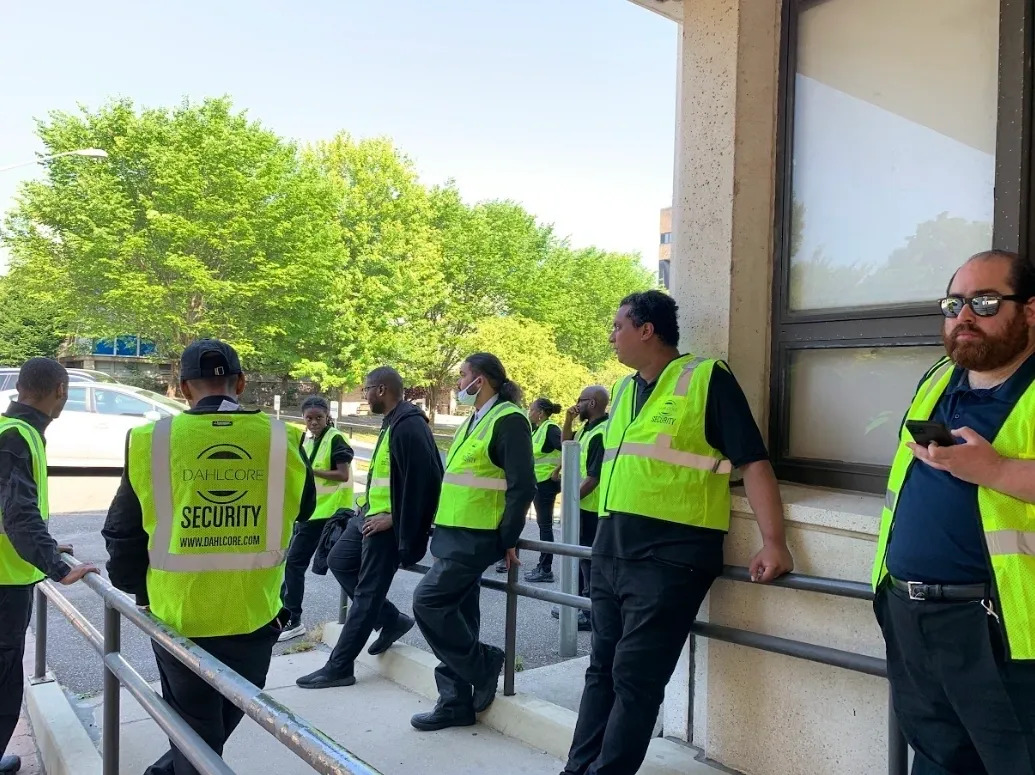
- Security Personnel: Trained, licensed security officers provide a physical deterrent and human response capability that technology alone cannot replicate. At Dahlcore Security Guard Services, we work directly with pharmaceutical clients to ensure on-site personnel understand the specific protocols DEA compliance requires—including incident documentation, chain of custody awareness, and coordination with compliance teams.
Implementation Tips for New York City Facilities
New York City pharmaceutical facilities face a set of challenges that don’t show up in the federal regulations:
Multi-Tenant Building Complexity: Many NYC pharmaceutical operations are housed in commercial buildings shared with unrelated tenants. This creates shared access points, shared loading docks, and, in some cases, shared HVAC and utility access that can compromise perimeter security. Work with your building management to establish clear agreements about controlled access to your floor or suite.
High-Volume Receiving Operations: NYC facilities often receive frequent, high-volume deliveries in congested urban environments. Each receiving event is a vulnerability window. Ensure that receiving areas have dedicated surveillance coverage and that chain-of-custody protocols are strictly followed during deliveries.
Staff Turnover and Contractor Access: NYC’s labor market means higher employee turnover in some roles, and pharmaceutical facilities frequently use contractors for everything from janitorial services to IT. Background screening and access provisioning/deprovisioning procedures need to be airtight.
Local Regulatory Layers: Beyond the DEA, New York State has its own controlled substance regulations enforced through the New York State Department of Health’s Bureau of Narcotic Enforcement. New York City may also have local fire code and building code requirements that affect how you construct or modify storage areas. Make sure your security plan accounts for all three regulatory layers—federal, state, and municipal.
Integration with NYPD and Emergency Response: Know your local precinct. For serious theft or diversion events, you’ll be coordinating with the NYPD in addition to notifying the DEA. Establishing a relationship before an incident occurs makes the response faster and more effective.
Common Compliance Pitfalls and How to Avoid Them
Even well-intentioned pharmaceutical companies make security and compliance mistakes. Here are the most common ones:
1. Treating the minimum as the goal. 21 CFR sets minimums. Facilities that engineer their security to just barely meet those minimums are one equipment failure or procedural gap away from a violation. Build to exceed the minimum—especially in a high-risk urban environment.
2. Failing to update the security plan after operational changes. When you add a new product line, change storage locations, hire new staff, or renovate the facility, your security plan needs to be updated to reflect those changes. Outdated plans are a red flag during DEA inspections.
3. Poor access control hygiene. Shared access credentials, terminated employees who still have badge access, and contractors with broader access than their role requires are all common findings during security audits. Implement a formal access review process every quarter at a minimum.
4. Inadequate incident documentation. When a loss or discrepancy is discovered, how it’s documented matters. Vague or incomplete records create compliance exposure even when the underlying incident was minor. Train staff on exactly what to document and how to escalate.
5. Siloing compliance and security teams. In many pharmaceutical organizations, the compliance function and the physical security function operate separately and communicate rarely. This creates gaps. DEA compliance officers need to be part of security planning conversations, and security personnel need to understand what compliance requires of them.
6. Skipping employee background screening. Insider theft is a significant diversion risk. Comprehensive background screening—including criminal history and previous employment verification—should be required for any role with access to controlled substances.

Evaluating Security and Compliance
Implementing security measures is only half the job. You also need a process for verifying that those measures are working.
Internal Audits: Conduct regular walkthroughs to verify that physical controls are in place and functioning—locked storage, camera operability, alarm tests, access log reviews. Document the results and track remediation of any findings.
Mock DEA Inspections: Simulate a DEA inspection by reviewing your facility against the 21 CFR Part 1301 requirements and your own documented security plan. Identify gaps before an actual inspection does.
Penetration Testing and Access Audits: For higher-risk facilities, consider engaging a qualified security consultant to test your access controls and identify vulnerabilities that routine internal reviews might miss.
Security KPIs: Track metrics like alarm response times, access control exceptions, incident reports, and staff training completion. These metrics give you early warning indicators before a compliance problem becomes a regulatory problem.
Third-Party Security Assessments: An independent review of your security posture—particularly from a firm with pharmaceutical sector experience—provides objectivity that internal teams often can’t achieve on their own.
Conclusion
DEA compliance and physical security are not separate concerns—they’re two sides of the same operational requirement. For pharmaceutical companies in New York City, getting this right means understanding federal regulations in detail, designing security infrastructure that meets and exceeds those standards, and accounting for the specific physical and logistical challenges that come with operating in one of the country’s most complex urban environments.
The cost of compliance is real, but it’s predictable and manageable. The cost of a compliance breach—penalties, reputational damage, potential loss of DEA registration—is neither.
At Dahlcore Security Guard Services, we partner with pharmaceutical companies across New York City to build physical security programs that satisfy DEA requirements and hold up under real-world conditions. If your current security posture has gaps, now is the time to address them—before a regulatory inspection or a diversion event forces your hand.
Key Takeaways
- DEA compliance requires explicit physical security measures under 21 CFR Part 1301—not just recordkeeping.
- Schedules I and II substances require the most stringent storage and access controls; know which schedules you handle.
- Effective pharmaceutical security is layered: perimeter controls, access control, surveillance, alarms, vaults, and trained security personnel.
- New York City facilities face additional challenges: multi-tenant buildings, high delivery volumes, state-level regulations from NYSDOH’s Bureau of Narcotic Enforcement, and complex emergency response coordination.
- Compliance gaps most often come from outdated security plans, poor access control hygiene, and siloed compliance and security teams.
- Regular audits—both internal and third-party—are essential for validating that your security measures are working as intended.
- Physical security personnel who understand DEA requirements are a force multiplier for your compliance program.
Frequently Asked Questions
What is the process for ensuring DEA compliance in New York City?
DEA compliance in NYC involves meeting federal requirements under 21 CFR Part 1301, obtaining and maintaining your DEA registration, implementing the required physical security measures for your controlled substance schedules, maintaining accurate records, and reporting any theft or significant loss within one business day using DEA Form 106. You also need to account for New York State’s Bureau of Narcotic Enforcement requirements, which run parallel to federal rules. An annual internal audit against the 21 CFR framework is a good baseline practice.
Which security measures are essential for pharmaceutical facilities?
At minimum: securely locked, substantially constructed storage for Schedule I and II substances (meeting the safe or vault specifications in 21 CFR § 1301.72), electronic access control with logged records, CCTV surveillance covering storage and dispensing areas, an intrusion detection alarm system monitored 24/7, and documented procedures for receiving, handling, and inventorying controlled substances. For larger facilities or higher-risk environments, on-site security personnel are also strongly advisable.
How can a facility audit improve compliance?
A facility audit—whether internal or conducted by a third party—identifies gaps between your documented security plan and actual on-the-ground conditions. Audits catch things like cameras that are offline, access credentials that haven’t been revoked for former employees, or storage that doesn’t meet the physical specifications required by regulation. Identifying these gaps proactively is far less costly than having them identified during a DEA inspection.
What are the consequences of failing DEA compliance in NYC?
Consequences range from warning letters and fines to suspension or revocation of DEA registration. In cases involving willful violations or significant diversion, criminal charges are possible. For a pharmaceutical company, DEA registration revocation effectively halts operations. Beyond federal penalties, non-compliance may also trigger action from the New York State Bureau of Narcotic Enforcement.
Are there specific DEA resources for New York-based companies?
Yes. The DEA’s Diversion Control Division operates field offices across the country, including in the New York Division, which covers New York State and parts of New Jersey. The DEA’s Diversion Control website (dea.gov/drug-diversion) provides regulatory guidance, forms, and registration tools. The New York State Department of Health’s Bureau of Narcotic Enforcement is the parallel state-level resource for state-specific controlled substance requirements.
How often should a pharmaceutical facility review its security plan?
At a minimum, annually. But the plan should also be reviewed and updated any time there is a significant operational change—new products, new staff, facility renovations, changes in storage locations, or following any security incident. Treat the security plan as a living document, not a static filing.
What’s the difference between DEA Schedule II and Schedule III storage requirements?
Schedule II substances require storage in a securely locked, substantially constructed cabinet—typically a DEA-compliant safe or vault. Schedule III, IV, and V substances have slightly more flexibility: they can be stored in a securely locked cabinet or dispersed within general stock in a way that obscures the quantity on hand. In practice, most compliance-focused organizations store Schedules III–V in locked cabinets as well to minimize risk.
Does using a licensed security guard company help with DEA compliance?
Yes, in meaningful ways. Security personnel provide physical deterrence, real-time incident response, and documented patrol or monitoring records that support your compliance documentation. They also serve as a first line of detection for access control violations. However, they need to be briefed on your DEA-specific protocols—understanding the chain of custody, incident documentation requirements, and who to notify in the event of a suspected theft matters as much as the physical presence itself.
