


Last Updated: December 9, 2025
Legal disclaimer: This guide is for general information only and does not constitute legal advice. Trespassing, citizen’s arrest, and use-of-force rules vary by state, province, and country. Always consult a qualified lawyer or local legal aid service for advice about your specific situation.
You’re stopped by a security guard and told you’re trespassing. Can they really keep you from leaving? In many jurisdictions, a security guard can briefly detain you for trespassing under specific legal conditions, but their powers are more limited than the police and usually rely on citizens’ arrest, shopkeeper’s privilege, or trespass-to-property laws rather than full law‑enforcement authority. In Dahlcore’s primary service region of New York, guards operate mainly on private property and depend on these limited legal tools while involving the police as quickly as possible.
Key takeaways
- Security guards can usually ask you to leave private property, and in some situations, may detain you briefly if they have reasonable grounds to believe you are trespassing or committing a crime and you refuse to leave.
- A guard’s authority typically comes from citizens’ arrest rules, shopkeepers’ privilege in retail settings, and trespass-to-property laws, not from the same powers police have.
- Detention must be reasonable in length (generally just long enough to investigate and wait for police) and reasonable in force; excessive or prolonged detention risks claims of false imprisonment and civil liability.
- You retain key rights: to know why you’re being held, to remain silent, to refuse most searches, and to ask that police be called.
- Property owners and security companies should have clear security company policies, signage, and training so guards manage trespassing safely, lawfully, and in a way that protects both the public and the business.
Key terms explained
- Trespassing: Entering or staying on private property without permission, or remaining after being asked to leave; some regions also treat certain restricted public areas (like closed parks or construction zones) as trespass sites under specific statutes.
- Detain: Temporarily stopping someone’s movement so they are not free to leave, usually while an incident is investigated or police are called, without necessarily placing them under formal arrest.
- Citizen’s arrest: A limited legal power allowing private persons—including security guards—to arrest or detain someone in tightly defined situations, such as when they directly witness certain offences or have reasonable grounds to believe a crime involving their property has just occurred, and then promptly turn the person over to the police.
- Shopkeeper’s privilege: A legal concept in many states that lets merchants and their agents (including security guards) briefly detain suspected shoplifters on or near the premises, if they have reasonable grounds and act in a reasonable manner and for a reasonable time, usually until police arrive.
- Reasonable force: Only the minimum force needed to protect people, prevent escape, or prevent serious property damage, taking into account the risk, the person’s behavior, and local law; deadly or clearly excessive force is rarely justified in ordinary trespass situations.
- False imprisonment: Unlawfully restraining someone’s freedom of movement, such as detaining them without reasonable grounds, for too long, or with excessive force, which can lead to civil liability and sometimes criminal charges.
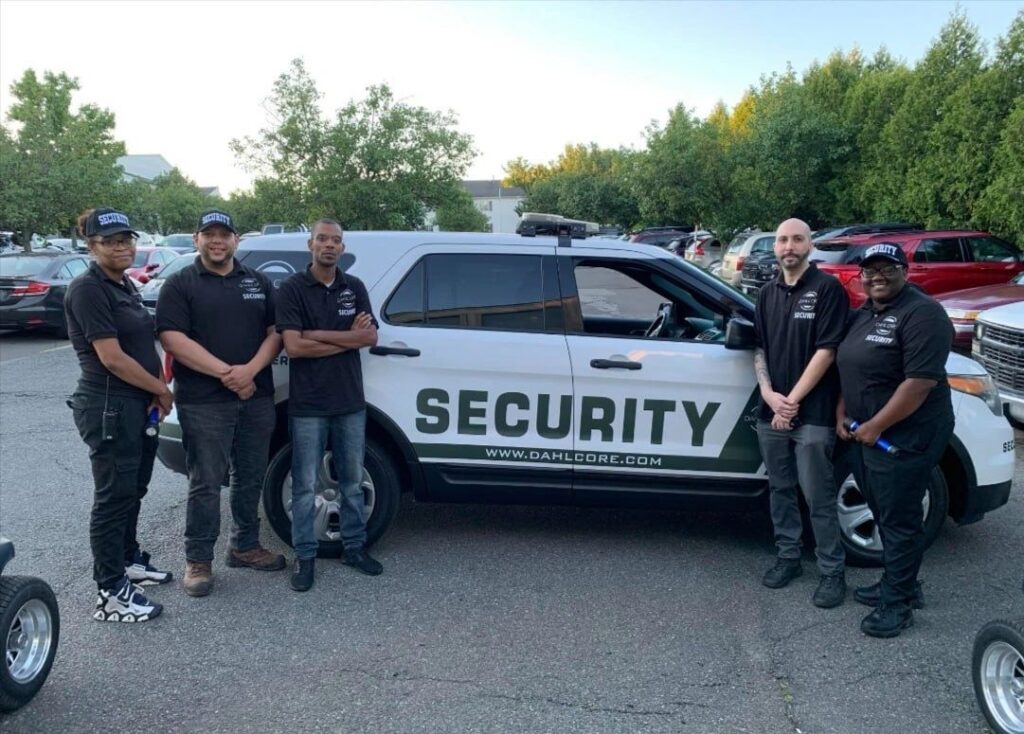
When security guards can detain you for trespassing
In most regions, a guard can always ask you to leave private property, and you become a trespasser if you refuse after being clearly told to go. On many New York commercial properties, for example, guards will first rely on verbal instructions and clear “No Trespassing” or “Private Property” signage before escalating.
Asking you to leave vs. actually detaining you
A security guard may move from a request to a detention when:
- You are on private property without permission and refuse to leave after a clear warning.
- There are reasonable grounds to believe you’re committing or have just committed an offence, such as vandalism, theft, or aggressive behavior toward staff or customers.
- The situation fits local citizens’ arrest or shopkeeper’s privilege rules (for example, a suspected shoplifter inside a store).
In those cases, the guard may lawfully hold you in a reasonable way while contacting police, instead of simply escorting you out.
How long can a security guard hold you for trespassing?
Detention should last only as long as reasonably necessary to:
- Verify basic facts (for example, check a receipt in a store or confirm you were told to leave).
- Call the police and wait for officers to arrive and take over.
Keeping someone much longer than needed—especially if police are not called—can quickly become unreasonable and expose the guard and their employer to claims of false imprisonment and civil liability.
Can a security guard hold you for trespassing?
Yes, a security guard may hold you for trespassing when they have reasonable grounds to believe you are unlawfully on private property, have refused to leave, and local trespass-to-property or citizen’s arrest laws allow a private person to detain you in that scenario. In practice, reputable companies like Dahlcore train guards to call police promptly, document the incident, and avoid any detention that goes beyond what local law clearly allows.
Detain vs. arrest: what’s the difference?
- Detained: Temporary; you are not free to leave, but the guard’s role is to stabilize the situation and wait for the police, not to charge you.
- Arrest: Formal deprivation of liberty backed by criminal law powers; this is normally reserved for police officers, while guards act as private citizens using citizens’ arrest rules only in narrow circumstances.
Security guards in New York and most other jurisdictions cannot create criminal charges on their own; they must hand you over to law enforcement if they believe an offence occurred.
What security guards cannot legally do
Even when dealing with trespassers, a guard’s authority is not unlimited. Overstepping boundaries can lead to complaints, lawsuits, and regulatory trouble for the guard and the security company.
Limits on physical force, restraint, and searches
Generally, guards cannot:
- Use excessive force, such as chokeholds, weapons, or painful compliance techniques, unless force at that level is clearly justified under local self‑defence or defence-of-others rules.
- Use handcuffs or physical restraints in a way that is unnecessary, dangerous, or prolonged relative to the threat.
- Conduct full searches of your body or bags without your consent, except in rare situations where law or a narrow safety exception allows it; even then, many policies require waiting for police.
Security company policies often set stricter limits than the law itself (for example, restricting certain holds or weapons entirely) to reduce risk and protect both the public and clients.
ID, questioning, and impersonating police
Security guards can ask for your name, ID, or an explanation, but in many places, you are not legally required to answer unless a specific law says otherwise or police instruct you to do so. Guards also must not:
- Impersonate police, wear uniforms that intentionally mislead, or claim powers they do not legally have.
- Threaten criminal charges they know are baseless or use coercion to force confessions or consent to searches.
If a guard crosses these lines, their actions may be challenged later in court or in complaints to regulators and the security company.

Your rights if you’re detained for trespassing
Even during a detention, you retain important rights designed to prevent abuse and ensure due process.
Core rights during a security guard detention
- Right to know why: You can calmly ask, “Am I being detained, and if so, for what reason?” Guards should be able to state their grounds (for example, suspected trespassing after a refusal to leave).
- Right to remain silent: In many jurisdictions, you are not required to answer questions beyond basic identifying information if local law requires that.
- Right to refuse most searches: You can usually say no to bag or pocket searches by private guards, unless you clearly consent or a specific law or court order applies.
- Right to timely police involvement: A reasonable detention typically includes a prompt call to police, not an open‑ended hold under guard control.
- Right to seek legal help afterward: If you believe the detention was unlawful or force was excessive, you can consult a lawyer, contact legal aid, or file a complaint with the property owner, security company, or relevant regulator.
What to do if you’re detained: practical checklist
If a security guard detains you for alleged trespassing:
- Stay calm and avoid physical resistance. Sudden movements or aggression can escalate the situation and increase legal risk.
- Ask clearly if you are being detained and why. Politely request the specific reason (for example, “You are being detained for trespassing after refusing to leave”).
- Do not argue on the spot about the law. You can state that you disagree, but the safest place to challenge legality is later, through a lawyer or complaint process.
- Ask that the police be called if they have not already been. A timely police response helps ensure your rights are respected, and the situation is documented by authorities.
- Avoid volunteering extra information. You may choose to provide basic ID where required by law, but you generally do not need to answer detailed questions.
- Observe and, when safe, document details. After the incident, write down times, locations, names, badge numbers, what was said, and whether cameras or witnesses were present.
- Seek legal advice and consider reporting. If you believe you were unlawfully detained, talk to a lawyer and consider complaints to the business, the security agency, or a government oversight body.
If the detention occurred on a Dahlcore‑protected property and you believe a guard acted improperly, Dahlcore encourages you to report the incident so it can be reviewed under its quality and compliance systems.
For property owners, businesses, and security guards
Trespassing incidents affect not only the public but also property managers, construction firms, retailers, and HOAs that are trying to protect assets without creating legal exposure.
Best practices for handling trespassers
Property owners and security companies can reduce risk and improve safety by:
- Post clear signage and control access (fences, gates, “No Trespassing” notices) so people have fair warning, and your legal position is stronger.
- Using verbal de‑escalation first, with calm, professional instructions to leave before considering detention.
- Having written security company policies that define when guards may rely on a citizen’s arrest or shopkeeper’s privilege, when they must call police, and what types of force are prohibited.
- Training guards regularly on local trespass laws, reasonable force, documentation, and body‑camera or incident‑report use.
Dahlcore’s Security Officer Program is designed to match guard deployment and procedures to each site’s risk profile, including construction sites, residential buildings, offices, and retail locations across New York.
Scenario-based examples (in brief)
- Mall trespasser: A banned individual returns to a Staten Island shopping center; guards confirm the prior ban, ask them to leave, and only detain if they refuse and pose a risk, calling NYPD immediately.
- Parking lot dispute: Two drivers argue late at night; guards separate the parties, ask any non‑customers to leave, and involve police if threats or assaults occur instead of trying to “resolve” a criminal matter alone.
- Construction-site intruder: Someone climbs a fence at a closed Manhattan construction site; guards use lights, loud verbal commands, and cameras, and if the intruder refuses to exit safely, they coordinate with police while avoiding dangerous physical confrontations whenever possible.
For more property-side strategy, Dahlcore’s blog covers “Strategies for Dealing with Trespassing and Vandalism” and “How to Stop Trespassers: 10 Tips and Handling Unauthorized…”, which dive deeper into prevention and site design.
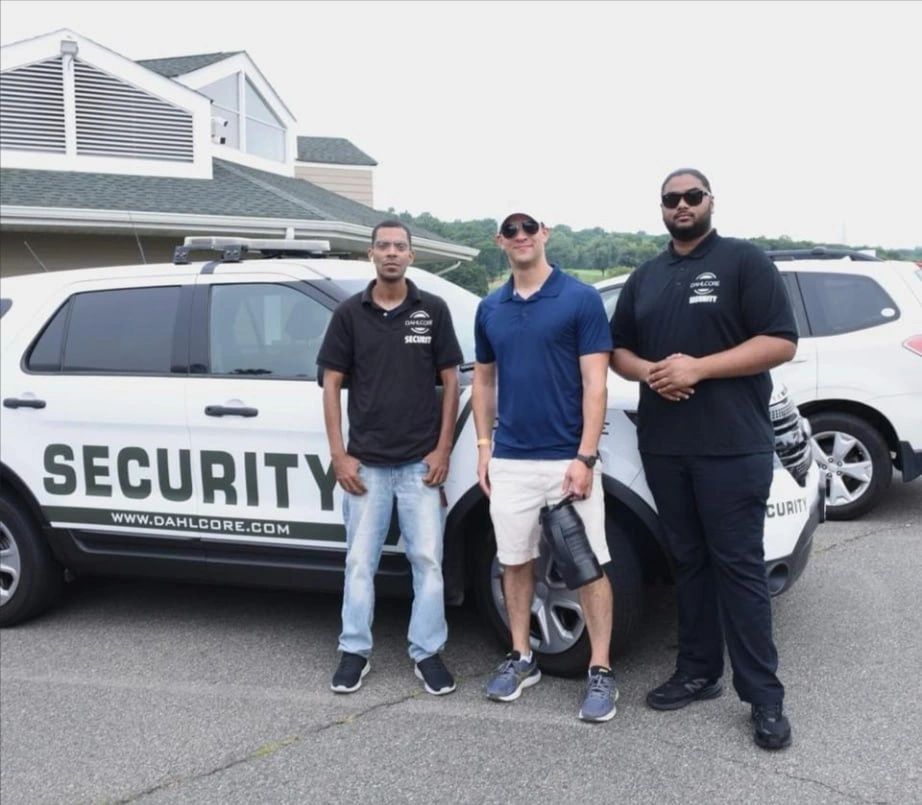
When to call Dahlcore Security Services
Businesses in New York City and the surrounding boroughs often juggle safety, liability, and customer experience when dealing with trespassers. Dahlcore helps by combining trained on‑site guards with clear policies, so your team knows when to ask someone to leave, when to document and call police, and when a limited detention may be justified.
Property owners and managers should reach out to Dahlcore when:
- Past trespassing, vandalism, or theft incidents suggest a rising risk at their site.
- Staff feel unsure about trespassing and detention laws and want guard coverage plus clear procedures.
- They need integrated solutions such as access control, camera monitoring, and patrols, especially around high‑risk assets like construction sites, warehouses, and retail stockrooms.
For the public, Dahlcore offers transparent channels to raise concerns if you believe you were treated unfairly on a Dahlcore‑protected property, reinforcing accountability and community trust.
- For property owners: Talk to Dahlcore about compliant trespass and detention policies, on‑site guards, virtual guarding, and incident documentation tailored to your New York properties.
- For the public: If you believe you were unlawfully detained on a site protected by Dahlcore, contact the company with the date, time, and location so the incident can be reviewed under internal quality controls.
FAQs about trespassing and security-guard detention
- Q1. How long can a security guard detain you for trespassing?
A guard may only detain you for a reasonable time, typically just long enough to investigate the basic facts and wait for police to arrive; holding someone much longer, especially without involving law enforcement, can look like false imprisonment.
Q2. Can a security guard detain you for trespassing?
Yes, but only in narrow situations where local trespass-to-property, citizen’s arrest, or shopkeeper’s privilege rules apply, and the guard has reasonable grounds to believe you are unlawfully on the property or committing an offence, and you refuse to leave.
Q3. Can a security guard touch you or use handcuffs?
Guards may use reasonable force—including guiding you or, in some cases, handcuffs—only when necessary to protect safety or prevent escape in a lawful detention, and many companies strictly limit when restraints may be used. Excessive or unnecessary force can lead to complaints, civil liability, and even criminal charges.
Q4. Do you have to show ID to a security guard?
In many places, you are not legally required to show ID to a private security guard, although there can be exceptions (for example, age‑restricted venues or sites with specific legal rules), and police may have greater powers to demand identification. Even if you choose to identify yourself, you generally do not have to answer detailed questions about the incident.
Q5. What should you do if you think a security guard unlawfully detained you?
After the incident, write down what happened, seek legal advice, and consider filing complaints with the business, the security company, and any relevant regulator or licensing body. If injuries or serious rights violations occurred, a lawyer can help you explore civil claims or other remedies.
Q6. Can a mall or store security guard keep you from leaving?
Retail security guards often rely on shopkeepers’ privilege or citizens’ arrest rules, which may allow them to briefly hold suspected shoplifters with reasonable grounds, in a reasonable manner and for a reasonable time, until police arrive. Detentions based only on profiling or weak suspicion, especially if forceful or lengthy, are more likely to be considered unlawful.
Check other blogs:
What Does FDNY Require For Fire Watch?
How Fast Can You Deploy Fire Guards in NYC? Facts You Must Know
