

Last updated: January 14, 2026
Legal disclaimer: This article is general information, not legal advice. Detention laws vary by state, province, and country. Always consult a licensed attorney in your area for guidance on your specific situation.
TL;DR: How Long Can Loss Prevention Detain You?
In most situations, loss prevention can detain you for a reasonable time only, typically around 20–60 minutes, to briefly investigate suspected retail theft or wait for police to arrive. How long store security can hold you depends on local “shopkeeper’s privilege” laws, whether there is probable cause, and how long it reasonably takes to investigate or for law enforcement to respond.
What Is Loss Prevention and Shopkeeper’s Privilege?
Loss prevention refers to store security efforts to prevent retail theft, fraud, and inventory loss, often carried out by a loss prevention officer (LPO) or store security team. Under a legal concept called shopkeeper’s privilege, many jurisdictions allow merchants to detain a suspected shoplifter for a short, reasonable time if they have probable cause or reasonable grounds to believe theft occurred.
Key concepts you’ll see in this article:
- Shopkeeper’s privilege: Limited right for a merchant to detain a suspected shoplifter in a reasonable manner and for a reasonable time to investigate or call the police.
- Probable cause / reasonable suspicion: Specific, observable facts (e.g., concealment, non-payment) that would make a reasonable person believe retail theft occurred.
- False imprisonment: Holding someone against their will without legal justification or beyond a reasonable time can lead to civil claims or even criminal charges.
How Long Can Loss Prevention Legally Detain You?
When you ask “how long can loss prevention detain you” or “how long can store security hold you,” the law rarely sets an exact number of minutes; it uses the standard of reasonable time. Courts generally look at whether store security only held you long enough to conduct a brief investigation or wait for police, not to punish, pressure you, or keep you for hours without need.
Typical detention ranges in practice.
While there is no universal time limit, many retail and security policies aim to keep detention within about 20–60 minutes, depending on circumstances and police response times. Holding someone for several hours just to coerce a confession or demand immediate payment is often cited as unreasonable and may be considered false imprisonment.
Factors that affect how long store security can hold you
- Waiting for police: Time needed for officers to arrive after being called.
- Brief investigation: Verifying receipts, reviewing CCTV, checking recovered merchandise.
- Paperwork and incident reports: Some additional time for LPOs to document events.
- Complexity: Multiple suspects, organized retail theft, or conflicting stories can extend the reasonable period.
If loss prevention holds you longer than necessary once items are recovered, the situation calms down, or police decline to attend, the detention can start to look unreasonable.
How “Reasonable Time” Is Decided
“Reasonable time” is decided case by case, usually by a judge or jury reviewing what happened, not by a fixed rule. They consider whether the merchant had reasonable grounds, used a reasonable manner, and only kept the person as long as needed to investigate or hand over to law enforcement.
Common examples:
- Reasonable: Detaining someone for about 20–45 minutes while reviewing video and waiting for police after observing concealment and non-payment.
- Possibly unreasonable: Holding a person in a back room for several hours after merchandise is recovered, police are not coming, or there is little evidence.

Conditions Required to Detain You (Shopkeeper’s Privilege)
For loss prevention to legally detain you under a shopkeeper’s privilege or similar laws, several conditions usually must be met.
Typical conditions:
- Reasonable suspicion / probable cause:
- LPO or store security personally observed concealment of merchandise.
- Observed you skipped payment or bypassed checkout.
- Saw tampering with security tags or devices.
- On or near store premises:
- Detention occurs inside the store or immediately outside after exiting with suspected unpaid goods.
- Reasonable manner:
- Minimal, necessary force only if you try to flee or pose a threat.
- No excessive violence, humiliation, or unnecessary restraint.
- Reasonable time:
- Only long enough to investigate or await police, not to punish or interrogate for hours.
If these conditions are not met, detention may be unlawful and could support a false imprisonment claim.
Your Rights If Store Security Detains You
When you wonder “what are my rights if loss prevention detains me,” you are really asking how to protect yourself during a stressful situation without escalating it. Laws vary, but several principles are common.
Typical rights for detained shoppers:
- Right to know why: You can calmly ask why you are being detained and what you are accused of.
- Right to be free from excessive force: LPOs should not use unnecessary physical violence or restraints unless reasonably needed for safety.
- Right not to answer investigative questions: You can usually identify yourself, but decline to answer further questions until speaking with a lawyer.
- Right to a reasonable time limit: Detention should not continue once the investigation is complete and no police are involved.
- Right to seek legal help afterward: If you believe you were held too long or treated improperly, you can consult an attorney about possible claims like false imprisonment.
What Loss Prevention Can and Cannot Do
Here is a simple table to clarify legal vs. likely illegal detention behavior in many jurisdictions. Exact rules depend on local law, but these patterns appear repeatedly in guidance and case discussions.
Detain with reasonable suspicion of retail theft
- Generally Legal if Conditions Met: Yes, under shopkeeper’s privilege and similar laws.
- Generally Illegal or Risky Behavior: No detention if there is no specific basis beyond a hunch or bias.
Duration of detention
- Generally Legal if Conditions Met: Limited to a reasonable time to investigate or await police.
- Generally Illegal or Risky Behavior: Holding for hours with no need or police involvement.
Use of force
- Generally Legal if Conditions Met: Minimal force only if necessary to prevent escape or harm.
- Generally Illegal or Risky Behavior: Excessive force, violence, or restraints when there is no safety threat.
Location
- Generally Legal if Conditions Met: On or near store premises soon after suspected theft.
- Generally Illegal or Risky Behavior: Chasing long distances or detaining off-site without clear justification.
Demanding confessions or payments
- Generally Legal if Conditions Met: Brief questioning is sometimes allowed.
- Generally Illegal or Risky Behavior: Coercing confession or payment by prolonged detention or threats.
Holding after merchandise recovered & issue resolved
- Generally Legal if Conditions Met: Short time to finish documentation may be okay.
- Generally Illegal or Risky Behavior: Continuing to hold when there is no ongoing investigation or threat.
Unlawful detention can expose stores and security staff to complaints, lawsuits, and in serious cases, criminal charges.

What To Do If You’re Detained by Loss Prevention
If loss prevention stops you and you are asking yourself, “How long can a shop stop detain you, and what should I do?” focus on safety, clarity, and documentation.
Step-by-step guidance:
1. Stay calm and don’t run
- Sudden attempts to flee can escalate force and make you look more suspicious.
2. Politely ask why you are being detained
- “Can you please explain why I’m being stopped?”
3. Ask whether you are free to leave
- Calmly say, “Am I being detained, or am I free to go?”
4. Decide what to say
- You may give basic ID information, but you can decline detailed questioning until you speak with a lawyer.
5. Avoid physical confrontation
- Physical resistance can lead to injury or additional charges, even if the detention later proves wrongful.
6. Document the situation afterward
- As soon as you can, write down times, names, what was said, witnesses, and any video references.
7. Consult an attorney if you believe detention was illegal
- Especially if you were held for a long time, physically harmed, or humiliated.
What to say if asked to go to the back room:
- “I’m willing to talk here in public view. Am I legally required to go to a back room?”
- If you feel unsafe, you may ask that conversations occur in view of cameras or near other staff.
When Detention Becomes Illegal
Detention can cross the line into false imprisonment when store security goes beyond what a shopkeeper’s privilege allows.
Signs detention may have become illegal:
- You were held for an excessively long time with no active investigation or police response.
- There was no clear probable cause, just vague suspicion or discriminatory profiling.
- Excessive force, threats, or restraints were used when you were not resisting.
- You were pressured for hours to confess, sign documents, or pay money on the spot.
If a court finds that there was no legal justification or that the time or manner of detention was unreasonable, you may have a viable claim for damages.

People Also Ask: Loss Prevention Detention FAQs
Can loss prevention detain you without evidence?
Loss prevention generally needs reasonable suspicion or probable cause, based on specific observations like concealment and non-payment, not just a hunch. Detaining you with no concrete basis risks being treated as false imprisonment.
Can you refuse to go to the back room with loss prevention?
You can calmly ask to stay in a more public area or near cameras, especially if you feel uncomfortable. However, if there is valid probable cause and you refuse all cooperation, store security may still detain you briefly on the premises while waiting for police, as long as they act reasonably.
Can loss prevention physically restrain you?
Many policies allow only minimal, necessary force to prevent escape or protect safety, and only when there is reasonable suspicion of retail theft. Excessive force or restraint that goes beyond what’s needed can support legal claims against the store.
What happens if loss prevention is wrong?
If loss prevention detains you and it turns out there was no theft, the store may still be protected if it acted on reasonable suspicion in a reasonable way and for a reasonable time. If they lacked a proper basis, held you too long, or used excessive force, you may be able to pursue a false imprisonment or related claim.
Can loss prevention legally detain you until police arrive?
In many places, shopkeepers’ privilege allows stores to hold a suspect only long enough for a reasonable police response, not indefinitely. If police decline to respond or the delay becomes excessive, continuing to hold you can become unlawful.
What is a reasonable amount of time for detention?
Courts usually describe this as only the time needed to conduct a brief investigation and, if appropriate, wait for officers to arrive, often in the range of minutes, not many hours. Internal policies and legal guides often treat about 20–60 minutes as a practical upper range in typical shoplifting incidents, but it always depends on the facts.
When to Talk to a Lawyer / Hire a Professional Security Expert
You should consider talking to a lawyer if:
- You were detained for what feels like an unreasonably long time.
- You suffered physical injury, humiliation, or serious emotional distress.
- You believe you were targeted or profiled without real evidence.
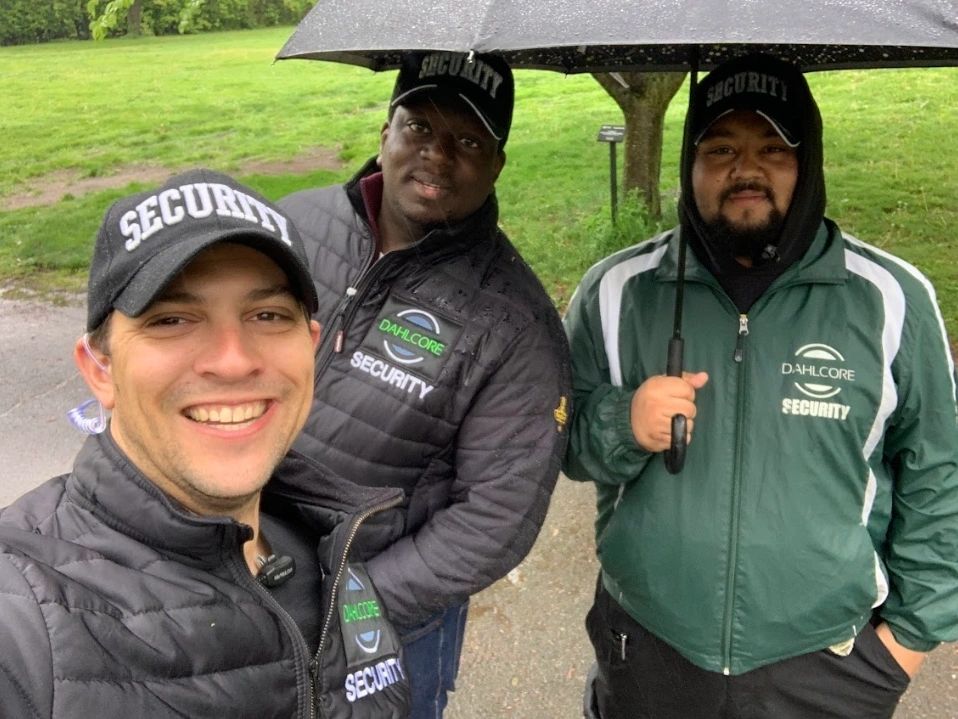
If you are a store owner or manager, professional loss prevention services and trained security guards help your team apply shopkeeper’s privilege correctly and reduce legal risk. Dahlcore provides professional loss prevention services and trained security guards to help retailers design lawful store security policies, staff training, and shoplifting response procedures that respect both safety and legal boundaries.
Learn more:
- About our professional loss prevention services.
- About our trained security guards and security patrol services.
- Our security experience and certifications.
Check other blogs
Role of Fire Protection Engineer: Ensuring Safety and Innovation
12 Strategies: Effective Emergency Response with Security Teams
The Comprehensive Guide to Starting a Personal Security Business
