

Last Updated: December 18, 2025
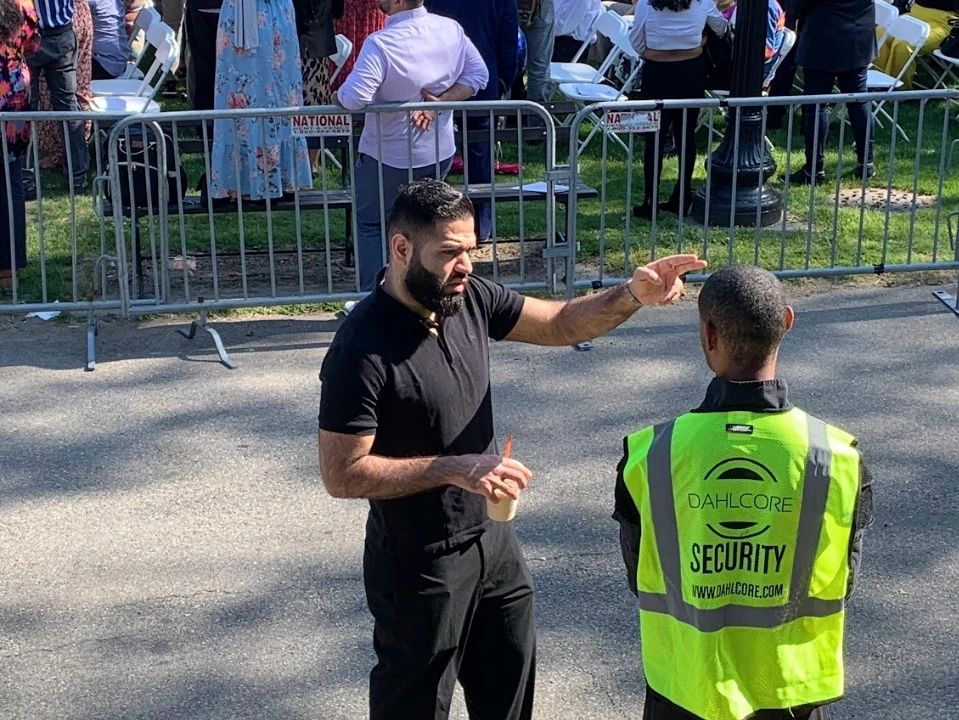
A Level 4 security guard is a highly trained personal protection officer who works directly beside a client—often an executive, VIP, or high‑risk individual—to prevent threats before they happen, manage routes and venues, and respond instantly if danger appears.
In Texas, this advanced role lines up with the Texas DPS Level IV Personal Protection Officer (PPO) license, which is the top tier above Level II (unarmed) and Level III (armed) security officers.
Core Responsibilities:
- Providing close physical protection and staying within arm’s reach of the client in public settings.
- Planning secure routes, arrivals, and departures for meetings, events, and travel.
- Conducting ongoing threat and vulnerability assessments for locations, schedules, and public appearances.
- Coordinating with local law enforcement and venue security when appropriate.
- Managing emergency response and evacuation if a threat escalates.
- Maintaining strict discretion and confidentiality around the client’s movements and personal information.
Different Levels of Security Guards in New York (Including Level 4 Security Guards)
What Is a Level 4 Security Guard?
A Level 4 security guard is an advanced personal protection professional who specializes in guarding individuals—not just buildings or assets—by staying close, anticipating threats, and managing every stage of the client’s movements. In the Texas licensing framework, this role corresponds to the Texas DPS Level IV Personal Protection Officer (PPO) authorization, which is the highest level above Level II non‑commissioned (unarmed) guards and Level III commissioned (armed) guards. In New York, clients typically think of this as an executive protection officer or VIP bodyguard, but the underlying skill set mirrors the Texas Level IV/PPO standard: advanced training, higher risk, and closer day‑to‑day contact with the client.
Core duties of a Level 4 / PPO guard
- Close protection for executives, high‑net‑worth individuals, and public figures in New York.
- Advance work: scouting venues, reviewing floor plans, and coordinating secure access points.
- Route planning and secure transportation support for commutes, events, and business travel.
- Continuous situational awareness in crowds, public spaces, and media environments.
- De‑escalation, defensive tactics, and—where lawful and licensed—advanced firearms handling.
- Liaison with company leadership, event organizers, and local authorities to keep plans aligned.
Typical environments and clients
- Corporate headquarters and off‑site meetings for senior executives.
- Red‑carpet premieres, conferences, shareholder meetings, and high‑profile public events.
- High‑risk terminations, sensitive negotiations, or situations with known threats or stalking concerns.
- Discreet residential and lifestyle protection for VIPs and their families.
Who Should Hire a Level 4 guard?
Businesses and individuals in New York should consider a Level 4 / executive protection officer when there is a credible risk tied to public visibility, sensitive decisions, layoffs, valuable intellectual property, or contentious legal matters. High‑profile leaders, celebrities, and high‑net‑worth families also benefit from a Level 4 presence during travel, major announcements, or public appearances where crowd and media exposure increase risk.
For Guards: How to Move Toward Level 4
In states that follow a Texas‑style structure, guards typically progress from Level II (unarmed) to Level III (armed/commissioned) and finally to Level IV Personal Protection Officer after completing additional training and background checks. Even if you work in New York, building toward Level 4–equivalent roles usually means gaining experience in lower‑risk posts, adding defensive tactics and medical certifications, and then specializing in executive protection and close protection assignments.
Levels 2–4 Overview and Comparison
Brief hierarchy explanation (aligns article with Level 4 intent):
Most modern private security frameworks treat Level II as the starting point, Level III as the step into armed or higher‑risk site security, and Level IV as the top tier focused on personal and executive protection. Level II and Level III roles are important foundations, but they are best understood as stepping stones toward the advanced responsibilities, closer client contact, and higher threat complexity handled at Level 4.
Simple Comparison for Levels 2–4
Level II (Unarmed)
- Typical authorization: Observation and reporting; no firearms.
- Approx. training focus & hours: Foundational classroom training on law, ethics, report writing, and basic procedures (often 6–8 hours or more, depending on state and school).
- Typical duties: Lobby posts, patrols, access control, incident reporting in lower‑risk environments such as offices, residential buildings, and schools.
- Risk level & client proximity: Lower risk; general visibility and some public interaction, but limited direct personal protection.
Level III (Armed)
- Typical authorization: Commissioned/armed officer; may carry firearms under state license.
- Approx. training focus & hours: More intensive weapons, use‑of‑force, and defensive tactics training, commonly 40+ hours of instruction and range time with periodic recertification.
- Typical duties: Higher‑value sites like banks, high‑risk retail, and critical infrastructure; responding to incidents, deterring armed threats, and securing perimeters.
- Risk level & client proximity: Moderate to high risk; closer engagement with potential threats but still focused on property and site protection.
Level IV (Personal Protection Officer)
- Typical authorization: Advanced personal protection authorization; often tied to Texas DPS Level IV PPO license and executive/bodyguard work.
- Approx. training focus & hours: Specialized personal protection curriculum, typically around 15+ hours of additional training beyond Levels II and III, covering threat assessments, advance work, protective formations, and legal responsibilities.
- Typical duties: Executive and VIP protection, secure travel, high‑profile events, and assignments where an individual—not just a location—is the primary asset.
- Risk level & client proximity: Highest risk and closest proximity—guards remain near the client at all times and manage complex, dynamic threats.
*Training hour ranges are based on common Texas and private‑training‑provider patterns and may vary by state, school, and current regulations.
Within your Level 2 and Level 3 sections on the page, add one short bridging line such as:
- Level II: “This unarmed role builds the observation and communication skills needed before moving into armed Level III or personal protection Level 4 positions.”
- Level III: “This armed level is often the final step before specializing in Level 4 personal and executive protection assignments.”
Level 4 Training, License, and Career Paths
Training and licensing context (Texas DPS framework, used as benchmark):
Under the Texas Department of Public Safety Private Security Program, security officers normally complete Level II training, then qualify as Level III commissioned officers before taking the Level IV Personal Protection Officer course, which satisfies the state’s training requirement for a PPO license. Level IV courses from approved schools commonly cover legal responsibilities, use of force in close‑protection scenarios, threat and risk assessments, planning, motorcade and route security, defensive tactics, and emergency medical response.
You can mirror this structure in your New York content by explaining that Dahlcore’s advanced executive protection officers follow a similar progression—starting with core guard skills, then armed/site security, and finally specialized close‑protection training aligned with Texas Level IV/PPO best practices. Mention that many Level 4‑equivalent guards also hold CPR/First Aid certifications, have advanced conflict management and de‑escalation training, and often bring prior law enforcement, military, or extensive security experience.
Jobs, Assignments, and Earning Potential
Level 4 / PPO‑equivalent guards frequently work on executive protection details, celebrity and influencer security, private details for high‑risk business leaders, and specialized assignments such as high‑profile terminations or crisis‑driven relocations. These roles usually come with higher hourly rates or salaries than standard guard posts because of the elevated risk, higher training investment, and significant planning and travel time involved.
You can add a short anonymized case example, such as a New York executive whose risk profile increased after a public acquisition; a Level 4 style protection plan might include route planning, secure car and driver coordination, discreet escorts between office and residence, and visible support only when necessary.
FAQs: What Is a Level 4 Security Guard
What is a Level 4 security guard?
A Level 4 security guard is a highly trained personal protection officer who works directly with an individual client—such as an executive, VIP, or high‑risk professional—to prevent, detect, and respond to threats in real time. In Texas, this is formally tied to the Texas DPS Level IV Personal Protection Officer license, the top tier above Level II and Level III security officers.
Is a Level 4 security guard the same as a bodyguard?
In everyday language, most people use “Level 4 guard,” “bodyguard,” “executive protection officer,” and “Personal Protection Officer (PPO)” interchangeably, but professional executive protection focuses more on advanced planning and risk management than simply reacting to attacks.
How do you get a Level 4 security license in Texas?
In Texas, candidates generally need to meet eligibility requirements, complete Level II and Level III training, be employed or sponsored by a licensed security company, finish an approved Level IV PPO course, and apply for the license through the Texas Department of Public Safety Private Security Program.
Can Level 4 security guards be armed?
Many Level 4 / PPO assignments involve both advanced unarmed defensive tactics and lawful use of firearms, but whether a guard is armed depends on state law, licensing, and the client’s risk profile and preferences.
How much training does a Level 4 guard need?
Training requirements vary by state, but Texas commonly requires Level II and Level III instruction plus an additional specialized Level IV PPO course that covers threat assessments, advanced work, legal duties, and hands‑on protective exercises.
What do Level 4 security guards do day to day?
Daily work can include reviewing itineraries, scouting venues, traveling with the client, monitoring crowds, coordinating with drivers and event staff, and adjusting plans in real time as risks change.
Do I need a Level 4 guard for my situation?
If you or your organization face specific threats, frequent public exposure, controversial decisions, or high‑stakes events in New York, a Level 4 / executive protection team is often the safest option compared with general on‑site security alone.
Check other blogs:
Becoming a Pro Fire Watch Guard: Skills, Training, Certification
How to Select the Right Fire Watch Guard Service for Businesses
Can I Cancel an Insurance Claim Under Investigation?
Perimeter/Approach Lights vs Blind Spot Detection: Safety Guide
